
 My Inquiry
 My Account


Integrated Circuit Guide: Analog, Digital, Semiconductor and IC Design Basics
Article Details
An integrated circuit, also called an IC or chip, is a compact electronic circuit built on a semiconductor material, usually silicon. It combines many electronic components into a small package, including transistors, resistors, capacitors, diodes, and logic gates.
Integrated circuits are used in smartphones, industrial equipment, automotive electronics, communication systems, medical devices, computers, and almost every modern electronic product. Understanding IC basics also helps explain related topics such as analog integrated circuits, digital integrated circuits, semiconductor technology, transistor integration, and IC design flow.
What Is an Integrated Circuit?
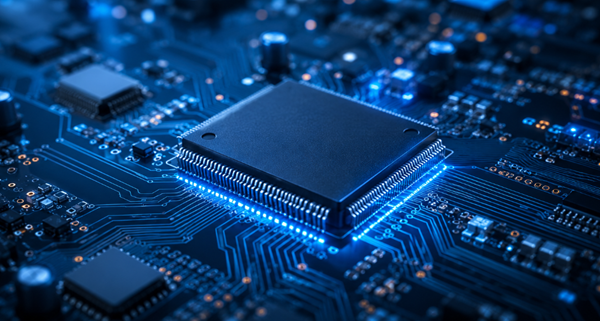
An integrated circuit is a miniaturized electronic circuit formed on a semiconductor wafer. Instead of building a circuit from many separate components on a board, an IC places multiple circuit elements inside one small chip.
| Feature | Description |
|---|---|
| Full Name | Integrated Circuit |
| Common Name | IC, chip, microchip |
| Main Material | Silicon semiconductor |
| Core Elements | Transistors, resistors, capacitors, diodes |
| Main Purpose | Process, control, amplify, store, or convert electrical signals |
Semiconductor and Integrated Circuit Relationship
A semiconductor is the material foundation of an integrated circuit. Silicon is widely used because its electrical behavior can be controlled during manufacturing.
The phrase semiconductor and integrated circuit is often used because ICs are manufactured by creating active and passive circuit structures on semiconductor wafers.
Transistor and Integrated Circuit Connection
The transistor is the basic active element inside most integrated circuits. A simple IC may contain only a few transistors, while advanced processors can contain billions.
| Component | Role in Electronics |
|---|---|
| Transistor | Switches or amplifies electrical signals |
| Integrated Circuit | Combines many transistors and circuit elements into one chip |
The relationship between transistor and integrated circuit technology is central to modern electronics. IC development is largely a story of integrating more transistors into smaller areas while improving speed, power efficiency, and reliability.
Main Types of Integrated Circuits
Integrated circuits can be grouped in different ways, but the most common classification is based on signal type.
| IC Type | Signal Type | Common Examples |
|---|---|---|
| Analog Integrated Circuits | Continuous signals | Op-amps, voltage regulators, amplifiers |
| Digital Integrated Circuits | Binary signals | Logic ICs, memory, CPUs, microcontrollers |
| Mixed-Signal ICs | Analog and digital signals | ADCs, DACs, sensor interface ICs |
Analog Integrated Circuits
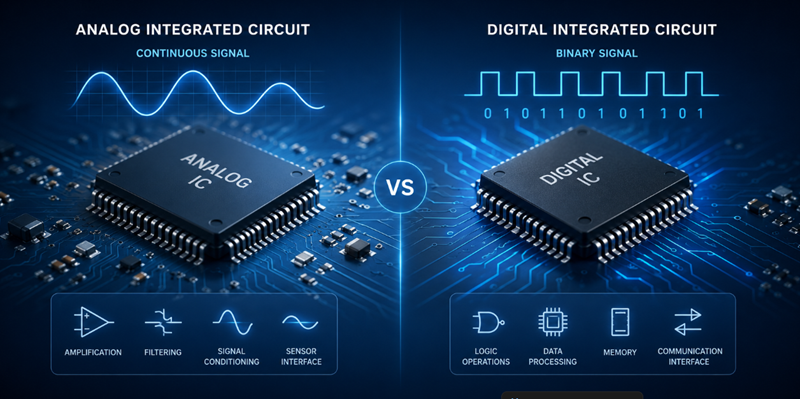
Analog integrated circuits process continuously changing electrical signals. These signals may represent sound, temperature, pressure, voltage, current, light, or radio frequency energy.
Common analog ICs include:
- Operational amplifiers
- Voltage regulators
- Audio amplifiers
- RF amplifiers
- Analog filters
- Voltage references
Analog ICs are important because many real-world signals are analog before they are converted into digital data.
Digital Integrated Circuits
Digital integrated circuits process information using binary states, usually represented as 0 and 1. They are the basis of computing, data storage, digital control, and communication systems.
Common digital ICs include:
- Logic gates
- Microcontrollers
- Microprocessors
- Memory chips
- Digital signal processors
- Programmable logic devices
Analog and Digital Integrated Circuits
Modern systems often use analog and digital integrated circuits together. A sensor may generate an analog signal, an amplifier may condition that signal, and a digital processor may analyze the converted data.
| System Function | Typical IC Type |
|---|---|
| Sensor input | Analog IC |
| Signal conversion | Mixed-signal IC |
| Data processing | Digital IC |
| Power control | Analog or mixed-signal IC |
Analysis and Design of Analog Integrated Circuits
The analysis and design of analog integrated circuits focuses on how real electrical signals behave inside semiconductor devices. Analog IC design is often more sensitive to noise, temperature, transistor mismatch, and layout effects than basic digital design.
Important analog IC building blocks include:
- Current mirrors
- Differential amplifiers
- Operational amplifiers
- Bandgap references
- Active filters
- Bias circuits
Integrated Circuit Design Flow
Integrated circuit design follows a structured process from specification to final silicon testing.
| Design Stage | Main Purpose |
|---|---|
| Specification | Define performance, voltage, power, speed, package, and application requirements |
| Architecture Design | Choose the overall circuit structure |
| Schematic Design | Create transistor-level or gate-level circuits |
| Simulation | Check electrical behavior before fabrication |
| Layout Design | Convert the circuit into a physical chip layout |
| Verification | Check design rules, timing, power, and layout correctness |
| Fabrication | Manufacture the chip on semiconductor wafers |
| Packaging and Testing | Protect the die, create external connections, and verify final performance |
Computer-Aided Design of Integrated Circuits
Modern IC design relies heavily on electronic design automation tools. These tools support schematic capture, simulation, layout, timing analysis, power analysis, physical verification, and manufacturing preparation.
Computer-aided design of integrated circuits is essential because modern chips are too complex to design manually.
Logic Gates and Digital Integrated Circuits
Logic gates are basic building blocks of digital integrated circuits. An AND gate integrated circuit, for example, produces a high output only when all required inputs are high.
| Logic Gate | Basic Function |
|---|---|
| AND | Output is active only when all inputs are active |
| OR | Output is active when at least one input is active |
| NOT | Output is the inverse of the input |
| NAND | Inverse of AND |
| NOR | Inverse of OR |
Difference Between Integrated Circuit and Microprocessor
A microprocessor is a type of integrated circuit, but not every integrated circuit is a microprocessor.
| Feature | Integrated Circuit | Microprocessor |
|---|---|---|
| Meaning | A broad category of electronic chips | A specific type of digital IC |
| Function | Can amplify, regulate, store, switch, convert, or process signals | Executes instructions and performs calculations |
| Examples | Op-amps, voltage regulators, memory ICs, timers, logic ICs | CPU, MPU |
| Signal Type | Analog, digital, or mixed-signal | Primarily digital |
This is the simplest way to understand the difference between integrated circuit and microprocessor: a microprocessor belongs to the integrated circuit family, but ICs include many more device types.
Why Metals Are Not Used as Transistors in Integrated Circuits
Metals are excellent conductors, but they cannot provide the controlled switching behavior required for transistors. A transistor must be able to switch, amplify, and control current flow. Semiconductor materials can be modified through doping, allowing engineers to create regions with different electrical behavior.
This is why semiconductors, not metals, are used to build transistors and integrated circuits. Metals are still used inside ICs, mainly for interconnects that carry signals and power between circuit elements.
Operational Amplifier Integrated Circuits
Operational amplifiers are widely used analog integrated circuits. They are common in signal conditioning, filtering, sensing, feedback systems, and control circuits.
Typical applications include:
- Sensor signal amplification
- Audio circuits
- Active filters
- Voltage followers
- Instrumentation amplifiers
Differential Amplifier Integrated Circuits
Differential amplifiers compare two input signals and amplify the difference between them. This structure is important in analog IC design because it helps reject common noise and improves signal accuracy.
Differential amplifier circuits are often used inside operational amplifiers, data converters, RF circuits, and precision measurement systems.
Analog Integrated Circuits and Signal Processing
Analog integrated circuits and signal processing are closely connected. Before a signal can be digitized or analyzed, it often needs amplification, filtering, buffering, or level shifting.
Examples include:
- Microphone signal amplification
- Sensor signal conditioning
- RF signal filtering
- Audio preamplification
- Data converter input conditioning
Integrated Circuits in PCB Design
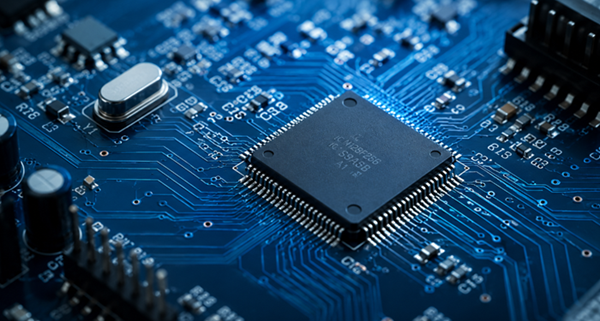
Integrated circuits are mounted onto printed circuit boards. The PCB provides electrical routing, mechanical support, thermal paths, and connections to other components.
Good PCB design considers:
- Power supply stability
- Signal integrity
- Grounding
- Thermal management
- Component placement
- Package footprint accuracy
Common IC Package Types
IC packaging protects the semiconductor die and provides external electrical connections.
| Package Type | Common Use |
|---|---|
| DIP | Through-hole circuits, prototyping, education |
| SOIC | General surface-mount circuits |
| QFN | Compact electronics and thermal-efficient layouts |
| QFP | Microcontrollers and digital ICs with many pins |
| BGA | Processors, memory, high-pin-count ICs |
Common Applications of Integrated Circuits
| Industry | Typical IC Applications |
|---|---|
| Consumer Electronics | Smartphones, TVs, wearables, audio products |
| Automotive | ECUs, sensors, battery management, motor control |
| Industrial Automation | PLCs, drives, power control, monitoring systems |
| Medical Equipment | Monitoring, sensing, imaging, portable instruments |
| Telecommunications | RF circuits, baseband processing, networking devices |
| Computing | CPUs, GPUs, memory, storage controllers |
Integrated circuits continue evolving through smaller semiconductor process nodes, higher transistor density, improved packaging technology, and better power efficiency. Analog, digital, and mixed-signal ICs will remain essential building blocks in consumer electronics, industrial systems, communication equipment, automotive platforms, and future computing technologies.


