
 My Inquiry
 My Account


Analog Devices: Amplifiers, ADCs, DACs, Sensors and Power ICs Explained
Article Details
Analog devices are electronic components or integrated circuits that process continuous signals such as voltage, current, temperature, sound, pressure, light, vibration, and radio frequency energy. In most electronic systems, these devices form the bridge between the physical world and digital processors. A sensor may detect a real-world condition, an amplifier may condition the signal, an ADC may convert it into digital data, and a microcontroller or processor may then analyze or control the system.
The phrase "analog devices" can also refer to Analog Devices, Inc., often abbreviated as ADI, one of the major manufacturers of analog, mixed-signal, RF, data converter, power management, and sensor ICs. For component selection, the important question is usually not only who makes the IC, but what function it performs in the signal chain and whether its electrical parameters match the circuit requirement.
This guide explains the main types of analog devices, including amplifiers, ADCs, DACs, sensors, voltage references, power ICs, interface ICs, and mixed-signal components. It also covers practical selection factors such as noise, offset, bandwidth, input range, resolution, sampling rate, power supply, package, temperature grade, lifecycle, and sourcing details for ADI and other analog IC families.
What Are Analog Devices?
An analog device works with signals that vary continuously rather than in only two logic states. A temperature sensor output, microphone signal, current-shunt voltage, battery monitor voltage, photodiode current, motor feedback signal, or RF input signal is usually analog before it is digitized or processed.
Digital circuits are excellent at logic, storage, control, and computation, but they usually need analog front-end circuits to interact with real-world signals. This is why analog ICs remain important even in highly digital systems. A smartphone, electric vehicle, industrial controller, medical instrument, smart meter, or data acquisition module may contain many digital ICs, but it still relies on analog devices to measure, amplify, filter, regulate, isolate, convert, and protect signals.
| Real-World Signal | Example Source | Analog Device Role |
|---|---|---|
| Temperature | Thermistor, RTD, temperature IC | Signal conditioning, filtering, ADC conversion |
| Sound | Microphone, audio input | Low-noise amplification and filtering |
| Current | Shunt resistor, Hall sensor | Current sense amplification and protection |
| Battery voltage | Power rail, battery pack | Voltage scaling, monitoring, ADC input |
| Light | Photodiode, optical sensor | Transimpedance amplification |
| RF signal | Antenna, wireless front end | Amplification, mixing, filtering, conversion |
In a typical design, the analog portion is where signal quality is created or lost. If the front-end amplifier adds noise, if the reference voltage drifts, if the ADC input is not settled before sampling, or if the power rail is noisy, the digital processor cannot fully correct the problem later.
Analog Devices vs Analog Devices Inc. / ADI
"Analog devices" can mean the general category of analog components, but it is also commonly used as a brand search for Analog Devices, Inc. This difference matters because the search intent may be broad. Some users are looking for the company, while others are looking for amplifiers, ADCs, DACs, RF ICs, sensors, or ADI part numbers.
In engineering and sourcing work, Analog Devices Inc. is often encountered through part numbers, datasheets, application notes, evaluation boards, and reference circuits. ADI components are common in precision measurement, industrial automation, medical instruments, communications, automotive electronics, RF systems, data acquisition, isolated systems, and power management.
This article focuses on the technical meaning of analog devices and the IC types commonly associated with analog and mixed-signal design. Company history, stock price, careers, and investor information are separate search intents and are not useful for selecting components in a circuit.
Main Types of Analog Devices
Analog devices cover a wide range of functions. Some are simple building blocks, such as operational amplifiers or voltage references. Others are mixed-signal ICs that combine analog front ends, ADCs, digital interfaces, calibration, and control logic in one package.
| Device Type | Main Function | Important Parameters | Typical Applications |
|---|---|---|---|
| Operational amplifier | Amplifies, buffers, filters, or conditions analog signals | Offset voltage, noise, GBW, slew rate, input range | Sensor front ends, filters, audio, control loops |
| Instrumentation amplifier | Amplifies small differential signals with high common-mode rejection | CMRR, gain error, offset drift, input range | Medical instruments, current sensing, bridge sensors |
| Comparator | Compares an analog input against a threshold | Propagation delay, hysteresis, input range, output type | Protection circuits, zero-crossing, threshold detection |
| ADC | Converts analog signals into digital data | Resolution, sampling rate, ENOB, SNR, INL, DNL | Data acquisition, monitoring, measurement systems |
| DAC | Converts digital codes into analog voltage or current | Resolution, settling time, output range, INL, DNL | Control outputs, waveform generation, calibration |
| Voltage reference | Provides stable reference voltage | Accuracy, drift, noise, load regulation | ADC/DAC reference, precision measurement |
| Power IC | Regulates, monitors, or manages power rails | Efficiency, dropout, ripple, transient response, noise | System rails, analog supplies, battery-powered circuits |
| Sensor IC | Detects physical signals and outputs analog or digital data | Accuracy, range, interface, response time, drift | Industrial, automotive, consumer, medical electronics |
| Isolation IC | Transfers signals across isolation barriers | Isolation voltage, CMTI, data rate, propagation delay | Industrial systems, power converters, motor drives |
For a robust design, these parts should not be selected independently. A low-noise amplifier may be wasted if the ADC reference is unstable. A high-resolution ADC may not deliver useful resolution if the front-end source impedance is too high. A fast DAC may create errors if the output amplifier cannot settle before the next control update.
Amplifiers: Op Amps, Instrumentation Amplifiers and Comparators
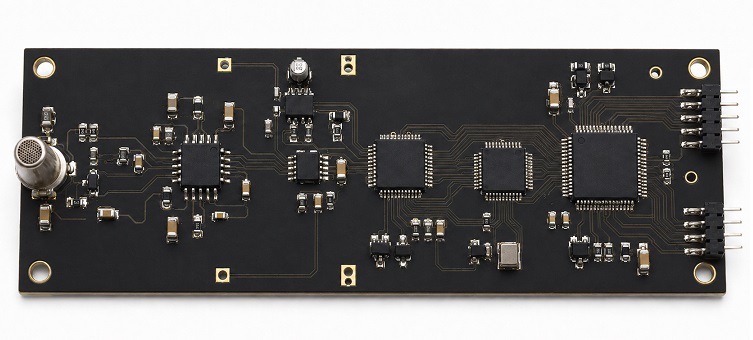
Amplifiers are among the most common analog devices. They are used to increase small signals, buffer high-impedance sources, implement active filters, drive ADC inputs, process audio, and condition sensor outputs. The operational amplifier, or op amp, is the most flexible member of this category.
Choosing an op amp by supply voltage and bandwidth alone is usually not enough. Precision applications may need low offset voltage, low offset drift, low input bias current, low 1/f noise, and stable operation across temperature. High-speed applications may need gain bandwidth, slew rate, distortion performance, output drive, and layout control. Battery-powered applications may prioritize quiescent current and rail-to-rail operation.
High-speed op amp selection requires more than a single bandwidth number. Input and output swing, gain bandwidth, slew rate, distortion, feedback stability, load capacitance, and PCB layout can all affect whether the amplifier behaves correctly in the final circuit. (Texas Instruments, Selecting High-Speed Operational Amplifiers Made Easy)
| Amplifier Type | Best Used For | Selection Notes |
|---|---|---|
| General-purpose op amp | Basic buffering, gain stages, filters | Check supply voltage, output swing, bandwidth, and package. |
| Precision op amp | Accurate sensor and measurement circuits | Check offset voltage, drift, bias current, and low-frequency noise. |
| Low-noise op amp | Audio, sensors, photodiodes, low-level signals | Check voltage noise, current noise, source impedance, and bandwidth. |
| High-speed op amp | Video, RF, fast ADC drivers, wideband signal chains | Check gain bandwidth, slew rate, distortion, layout, and stability. |
| Instrumentation amplifier | Small differential signals | Check CMRR, gain accuracy, input common-mode range, and drift. |
| Comparator | Threshold detection and switching decisions | Use a real comparator instead of forcing an op amp into comparator service. |
A common error is using a general-purpose op amp as a comparator. Op amps are designed for linear operation with feedback. Comparators are designed to switch between output states quickly and predictably. In protection circuits, threshold detection, zero-crossing circuits, and logic-level outputs, a comparator is usually the correct device.
Data Converters: ADCs and DACs
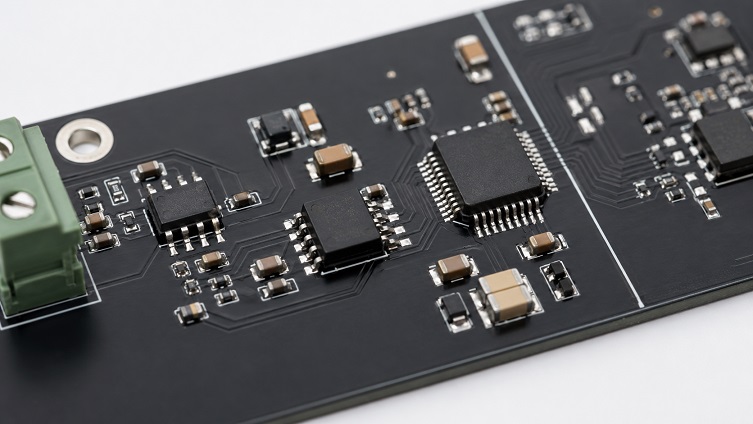
Data converters connect analog signal chains to digital control or processing. An ADC converts an analog voltage or current into a digital code. A DAC converts a digital code back into an analog voltage or current. These components are used in data acquisition, industrial control, instrumentation, audio, communications, test equipment, motor control, and calibration systems.
The most common mistake in ADC selection is looking only at nominal bit count. A 16-bit ADC does not automatically provide 16 usable bits in a noisy system. Effective number of bits, noise, distortion, reference quality, input settling, source impedance, layout, and sampling architecture all affect real measurement quality.
ADC performance should be evaluated with parameters such as noise, effective resolution, ENOB, SNR, and the actual signal level at the converter input. These practical measurements often describe usable converter performance better than nominal resolution alone. (Analog Devices, Understanding Noise, ENOB, and Effective Resolution in ADC Circuits)
| ADC Parameter | Meaning | Why It Matters |
|---|---|---|
| Resolution | Number of output bits | Defines ideal code granularity, but not full real-world accuracy. |
| ENOB | Effective number of bits | Shows usable dynamic performance after noise and distortion. |
| Sampling rate | Samples per second | Determines how quickly the signal can be measured. |
| SNR | Signal-to-noise ratio | Indicates how much noise affects the measured signal. |
| INL / DNL | Linearity error | Affects accuracy across the conversion range. |
| Input architecture | Single-ended, differential, SAR, sigma-delta, pipeline, etc. | Determines front-end requirements and suitable applications. |
DAC selection has a similar problem. The nominal resolution is only one part of the decision. Settling time, glitch energy, output range, drive capability, linearity, reference input, noise, and output amplifier requirements may matter more than the number of bits in a control loop or waveform generator.
| DAC Parameter | Why It Matters |
|---|---|
| Resolution | Defines the smallest ideal output step. |
| Settling time | Determines how quickly the output reaches final accuracy after a code change. |
| INL / DNL | Affects monotonicity and output accuracy. |
| Output type | Voltage-output and current-output DACs require different external circuits. |
| Reference input | Reference quality directly affects output accuracy. |
Power and Signal Chain Devices
Analog design is often described as a signal chain. A signal chain is the complete path from the physical input to the processed output. For example, a temperature measurement circuit may start with a sensor, pass through an amplifier and filter, enter an ADC, and then reach a microcontroller. A control output may leave the processor through a DAC, pass through an amplifier or driver, and then control an actuator.
A useful signal chain view is:
Sensor → Amplifier → Filter → ADC → MCU
MCU → DAC → Driver → Actuator
In this path, the voltage reference and power supplies are not secondary details. They directly affect measurement accuracy, noise, stability, and repeatability. A precision ADC with a noisy reference will not produce precision results. A low-noise amplifier powered by a noisy regulator may still pass supply-related noise into the signal path.
| Signal Chain Block | Device Examples | Design Concern |
|---|---|---|
| Sensor input | Temperature sensor, bridge sensor, current shunt | Signal level, impedance, common-mode voltage, protection |
| Signal conditioning | Op amp, instrumentation amplifier, filter | Gain, offset, drift, noise, bandwidth |
| Conversion | ADC or DAC | Resolution, sampling rate, linearity, settling |
| Reference | Voltage reference | Initial accuracy, drift, noise, load regulation |
| Power regulation | LDO, DC/DC converter, supervisor, monitor | Ripple, dropout, transient response, efficiency |
| Interface | Isolator, RS-485, CAN, SPI, I2C level shifting | Noise immunity, isolation, timing, EMC |
Signal-chain density is also an important practical issue. As systems move toward more channels and smaller form factors, engineers may use integrated signal-chain modules, multi-channel ADC architectures, or ADC-per-channel designs to maintain performance while reducing board area. (Analog Devices, Improving Precision Data Acquisition Signal Chain Density Using SiP Technology)
Sensors, Interface ICs and Mixed-Signal Devices
Many modern analog devices are no longer purely analog. A sensor IC may include an analog sensing element, signal conditioning circuit, ADC, calibration memory, digital filter, and I2C or SPI interface. An isolated gate driver may combine analog isolation, protection, timing, and power-stage control. A power monitor may include analog measurement circuits and a digital telemetry interface.
This is why the term mixed-signal IC is common. A mixed-signal device contains both analog and digital circuitry in the same component. It may still be selected for analog performance, but its output or control interface may be digital.
| Mixed-Signal Device | Analog Function | Digital / System Function |
|---|---|---|
| Digital temperature sensor | Measures temperature with an internal analog sensor | Outputs calibrated data over I2C or SPI |
| Current monitor | Measures shunt voltage or bus voltage | Reports current, voltage, or power digitally |
| Isolated ADC | Measures analog signal across an isolation barrier | Sends data safely to a controller |
| RF transceiver | Processes RF and analog baseband signals | Interfaces with digital baseband or processor |
| Power monitor | Measures rails and currents | Provides telemetry and fault reporting |
For sourcing and design, mixed-signal parts require extra attention. The analog specifications determine measurement quality, while the digital interface determines firmware compatibility, timing, address conflicts, and system integration.
How to Choose Analog Devices for a Circuit
Analog device selection should start from the circuit requirement rather than from a preferred brand or a familiar part number. The required signal level, frequency range, source impedance, accuracy target, power supply, environment, and production lifetime should define the part choice.
Supply Voltage and Input Range
Supply voltage is one of the first checks, but it is not enough by itself. The input common-mode range and output swing must also match the circuit. A rail-to-rail op amp may not behave perfectly at both rails under all load conditions. Some devices can accept inputs near ground but cannot drive the output close enough to the rail for the next stage.
For ADC inputs, the allowed voltage range, input impedance, sampling capacitor behavior, and reference voltage must be checked together. A sensor output that looks correct at DC may still produce conversion errors if the ADC input does not settle fast enough during sampling.
Accuracy, Offset and Drift
Accuracy is not one number. It includes initial tolerance, offset, gain error, linearity, drift over temperature, reference accuracy, resistor tolerance, and noise. In a precision sensor front end, amplifier offset and drift can become a large part of the total error budget.
For example, a low-offset amplifier may be necessary when measuring microvolt-level shunt signals. A low-drift reference may matter more than ADC resolution in a precision measurement system. A high-resolution converter with a poor reference will not deliver a high-accuracy measurement.
Noise and Bandwidth
Noise must be evaluated against the signal bandwidth and source impedance. Low-frequency sensors may be affected by 1/f noise. Wideband circuits may be affected by integrated broadband noise. High source impedance may make current noise more important. Audio, sensor, RF, and high-speed acquisition circuits all have different noise priorities.
Bandwidth should not be oversized without reason. A much wider amplifier bandwidth may pass unnecessary noise into the ADC. A filter that is too slow may distort or delay the signal. The correct choice depends on the actual signal frequency, required response time, and noise target.
Speed and Settling Time
Speed-related specifications appear in several analog device categories. Op amps have gain bandwidth and slew rate. ADC drivers need to settle before conversion. DACs need settling time after code changes. Comparators need propagation delay. Isolation devices and interface ICs have timing limits.
In sampled systems, settling is often more important than small-signal bandwidth. If an amplifier output has not settled to the required accuracy before the ADC samples, the converter result can be wrong even though the DC gain and nominal bandwidth look acceptable.
Package, Temperature and Availability
Package selection affects layout, thermal behavior, assembly process, and replacement options. A small package saves board space but may be harder to inspect, rework, or dissipate heat from. A larger package may be better for prototyping or industrial service.
Temperature grade also matters. Consumer, industrial, automotive, and extended-temperature versions of a similar IC may have different suffixes and availability. For long-term production, lifecycle status, alternate sources, and package continuity should be checked early.
ADI Component Selection and Sourcing Notes
ADI components are often used in precision analog, data converters, RF, sensors, power management, isolation, and mixed-signal systems. When sourcing Analog Devices Inc. parts, the full part number matters. A small suffix difference can indicate package, temperature range, accuracy grade, reel packaging, lead finish, or qualification level.
| Sourcing Check | Why It Matters |
|---|---|
| Full part number suffix | Determines package, grade, temperature range, and sometimes packaging format. |
| Datasheet revision | Prevents outdated parameter assumptions during redesign or replacement. |
| Package and pinout | Similar function does not guarantee drop-in compatibility. |
| Electrical limits | Supply range, input range, output swing, and protection ratings must match the design. |
| Temperature grade | Industrial and automotive systems may require wider temperature qualification. |
| Lifecycle status | Important for production planning and long-term support. |
| Reel, tray, or tube packaging | Affects manufacturing, assembly, and purchasing requirements. |
Replacement selection should be handled carefully. An alternative op amp may have the same supply voltage and package but different input bias current, output swing, noise, offset drift, or stability behavior. An ADC substitute may match resolution and interface but differ in input type, reference requirements, timing, or conversion latency. A voltage reference may share the same nominal output voltage but differ in drift, noise, load regulation, and package thermal behavior.
Common Mistakes When Selecting Analog ICs
Analog components often fail in subtle ways. A digital IC may either communicate or not communicate, but an analog IC can appear to work while producing extra noise, offset, distortion, drift, or intermittent errors. Many design problems come from treating analog specifications as typical values instead of limits across operating conditions.
- Choosing an ADC only by bit count and ignoring ENOB, noise, reference quality, and input settling.
- Selecting an op amp by bandwidth only and ignoring slew rate, output swing, offset, input range, and stability.
- Using a general-purpose op amp as a comparator in a threshold detection circuit.
- Ignoring input common-mode range in single-supply circuits.
- Assuming "rail-to-rail" means perfect operation at both rails under all loads.
- Choosing a low-noise amplifier without checking the source impedance and current noise.
- Using a precision ADC with a noisy or drifting voltage reference.
- Replacing an ADI part with a similar IC without checking pinout, package, and timing behavior.
- Ignoring temperature drift in industrial or outdoor systems.
- Forgetting that layout, grounding, decoupling, and shielding are part of analog performance.
Good analog selection is less about finding the most advanced part and more about matching the device to the signal, environment, and system error budget. In many cases, a moderate-cost IC with the right input range, noise behavior, package, and availability is better than a higher-spec part that is difficult to stabilize or source.
Quick Reference: Choosing Analog Devices by Design Need
| Design Need | Recommended Analog Device Type | Key Parameters to Check |
|---|---|---|
| Measure a small sensor voltage | Precision op amp or instrumentation amplifier | Offset, drift, bias current, noise, CMRR |
| Measure current through a shunt | Current sense amplifier | Common-mode range, gain error, offset, bandwidth |
| Convert analog data for a microcontroller | ADC | Resolution, ENOB, sampling rate, input range, reference |
| Generate an analog control voltage | DAC | Resolution, settling time, output range, linearity |
| Provide a stable converter reference | Voltage reference | Accuracy, drift, noise, load regulation |
| Power a sensitive analog rail | Low-noise LDO or filtered regulator | Noise, PSRR, dropout, load transient response |
| Detect a voltage threshold | Comparator | Propagation delay, hysteresis, input range, output logic |
| Communicate across an industrial interface | Isolator, RS-485, CAN, or transceiver IC | Isolation rating, CMTI, protocol, EMC behavior |
Analog devices remain essential because real-world signals are rarely digital at the point of measurement. A well-designed signal chain uses the right amplifier, converter, reference, power supply, interface, and sensor IC for the job. For ADI components and other analog ICs, the most reliable selection process is to start with the signal requirement, then check the electrical limits, noise behavior, accuracy, package, temperature rating, and availability before finalizing the part number.
Whether the design uses Analog Devices Inc. components, TI devices, or another analog IC family, the same engineering rule applies: the complete signal chain determines performance. The best part is not always the highest-resolution ADC, the fastest op amp, or the lowest-noise reference. It is the device that fits the signal, the layout, the power rail, the production requirement, and the long-term sourcing plan.


