
 My Inquiry
 My Account


KG to LBS Conversion: Kilograms to Pounds Calculator
Article Details
Kilograms and pounds are two of the most commonly used weight units in product specifications, shipping documents, warehouse systems, and international trade. Kilogram, abbreviated as kg, is the standard metric unit of mass, while pound, often written as lb or lbs, is widely used in the United States and in many logistics and retail systems.
Because many products, parcels, components, tools, instruments, and equipment are moved across regions that use different unit systems, kg to lbs conversion is often needed when checking datasheets, shipping labels, packing lists, freight quotations, and product documentation. A small conversion mistake can affect shipping cost, weight limits, carton planning, or specification comparison.
The calculator below converts kilograms to pounds and pounds to kilograms instantly. Common conversions such as 15 kg to lbs, 80 kg to lbs, 100 kg to lbs, 140 lbs to kg, and 150 lbs to kg can be obtained easily using the calculator or the quick conversion table below. For more detailed weight unit conversion, you can also use our Weight Unit Calculator, which supports additional units such as grams, ounces, milligrams, metric tons, US short tons, and stone.
KG to LBS Calculator
Convert kilograms to pounds or pounds to kilograms for shipping weight, product specifications, package weight, equipment weight, and general technical reference.
KG to LBS Formula
To convert kilograms to pounds, multiply the kilogram value by 2.2046226218.
To convert pounds to kilograms, multiply the pound value by 0.45359237.
For most shipping, product specification, and engineering reference work, two decimal places are usually enough. For laboratory, calibration, or formal documentation, use the decimal precision required by the original specification.
Common KG to LBS Conversions
| Kilograms | Pounds |
|---|---|
| 10 kg | 22.05 lbs |
| 15 kg | 33.07 lbs |
| 20 kg | 44.09 lbs |
| 23 kg | 50.71 lbs |
| 32 kg | 70.55 lbs |
| 50 kg | 110.23 lbs |
| 60 kg | 132.28 lbs |
| 65 kg | 143.30 lbs |
| 80 kg | 176.37 lbs |
| 100 kg | 220.46 lbs |
Common LBS to KG Conversions
| Pounds | Kilograms |
|---|---|
| 130 lbs | 58.97 kg |
| 140 lbs | 63.50 kg |
| 150 lbs | 68.04 kg |
| 160 lbs | 72.57 kg |
| 170 lbs | 77.11 kg |
When KG to LBS Conversion Is Used
KG to lbs conversion is common when metric and imperial weight references appear in the same workflow. In electronics and industrial sourcing, this can happen when comparing shipping weight, carton weight, package specifications, equipment weight, rack-mounted hardware, mechanical parts, tools, test instruments, and international product documentation.
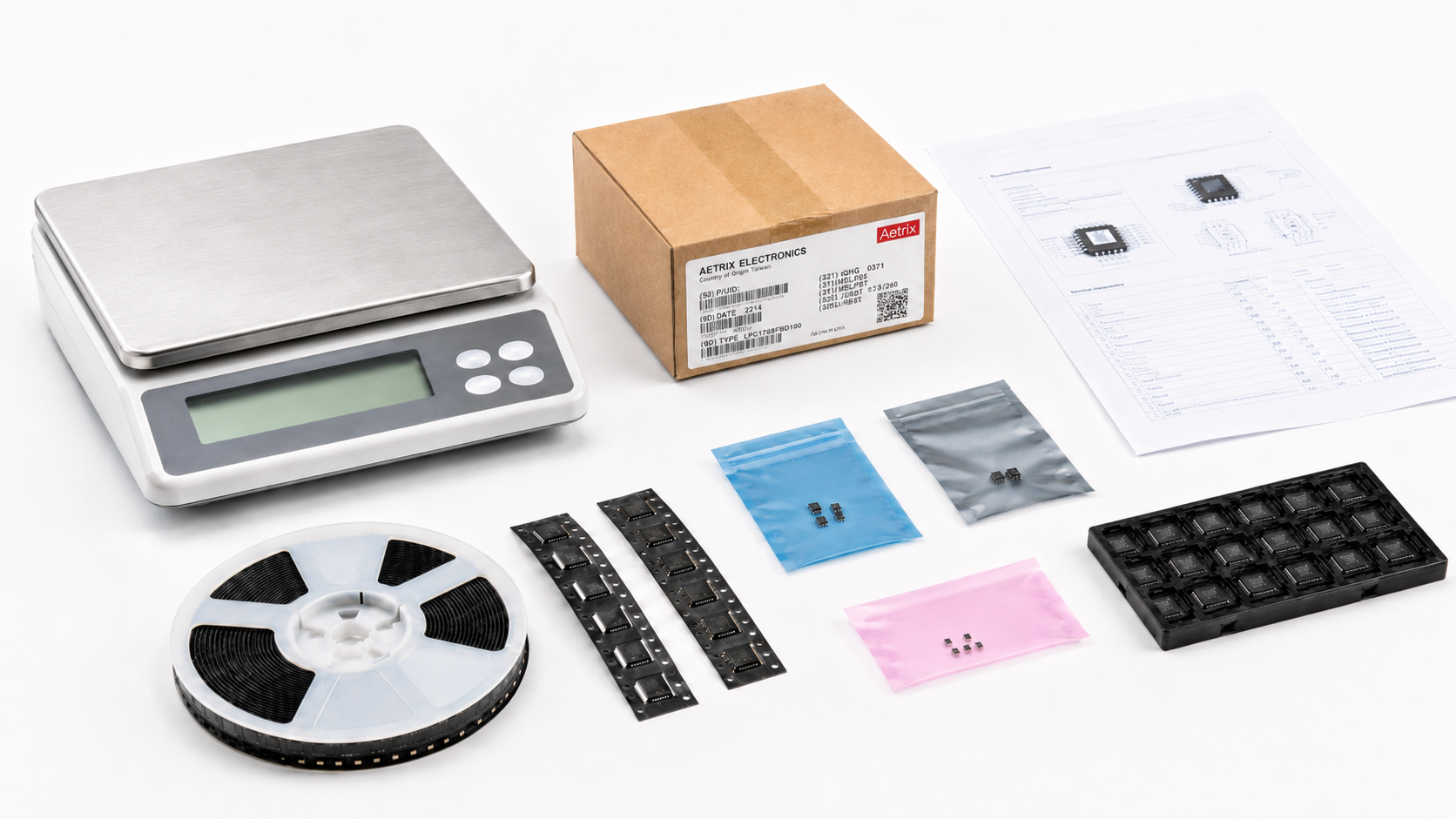
For example, a product datasheet may list the mass in kilograms, while a logistics document or courier system may require pounds. A shipment from an overseas supplier may use kilograms on the packing list, while a warehouse or freight quotation may use pounds. A fast conversion tool reduces manual calculation errors and helps keep purchasing, logistics, and engineering documentation consistent.
KG vs LBS
Kilogram, abbreviated as kg, is the standard SI unit of mass. Pound, abbreviated as lb or lbs in common use, is widely used in the United States and in many shipping, retail, and industrial contexts. Although people often say "weight" in daily use, many technical documents use mass and weight more carefully depending on the application.
In practical conversion pages, kg to lbs and lbs to kg are usually used for everyday weight comparison, package weight, product weight, and shipping weight. For force calculations, mechanical load, or physics work, the exact engineering context should be checked before treating mass and force as interchangeable.
Why a KG to LBS Tool Works Better Than a Long Article
Most users searching for "kg to lbs" want an immediate result rather than a long explanation. That is why this page places the converter near the beginning, followed by formulas, common conversion tables, and practical reference notes. The article content supports the calculation instead of delaying it.
This structure is also useful for long-tail searches such as "32 kg to lbs," "80 kg to lbs," "100 kg to lbs," "140 lbs to kg," and "150 lbs to kg." Users can get the direct conversion from the table or enter any custom value in the calculator.
Frequently Asked Questions
How many lbs is 1 kg?
1 kg equals 2.2046226218 lbs. For most practical use, 1 kg is often rounded to 2.2 lbs.
How do you convert kg to lbs?
Multiply kilograms by 2.2046226218. For example, 80 kg × 2.2046226218 = 176.37 lbs.
How do you convert lbs to kg?
Multiply pounds by 0.45359237. For example, 150 lbs × 0.45359237 = 68.04 kg.
What is 80 kg in lbs?
80 kg equals 176.37 lbs.
What is 100 kg in lbs?
100 kg equals 220.46 lbs.
What is 150 lbs in kg?
150 lbs equals 68.04 kg.
Is kg a mass or weight unit?
Kilogram is an SI unit of mass. In daily use, kg is often used when discussing body weight, package weight, or product weight, but in physics and engineering, mass and force should be distinguished when necessary.


