
 My Inquiry
 My Account


Infineon Technologies C161PILMCABXUMA1
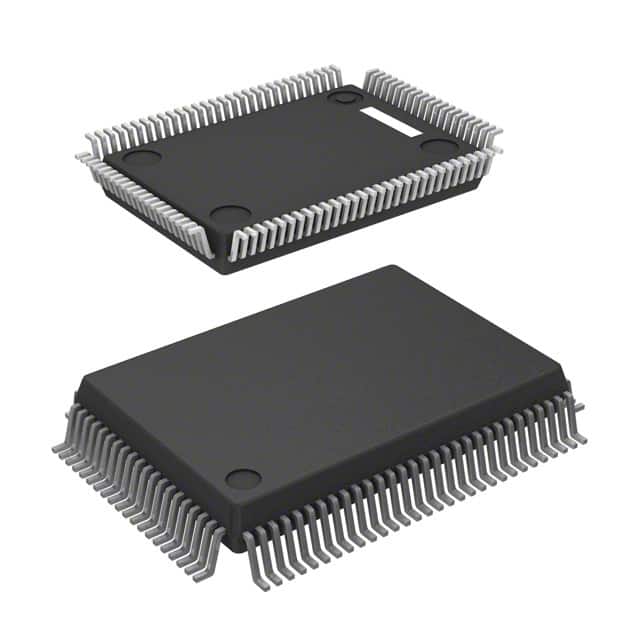
- Part No.:
- C161PILMCABXUMA1
- Manufacturer:
- Infineon Technologies
- Category:
- Microcontrollers
- Package:
- 100-BQFP
- Datasheet:
-
 C161PILMCABXUMA1.pdf
- Description:
- IC MCU 16BIT ROMLESS 100MQFP
- Quantity:
- Payment:

- Shipping:

Inventory:2,014
Please send an inquiry. Send us your inquiry, and we will respond immediately.
Product details
Overview
C161PILMCABXUMA1 from Infineon Technologies is a 16-bit single-chip microcontroller in the C166 family, featuring a 4-stage pipeline CPU delivering 8 MIPS at 25 MHz, integrated 10-bit ADC (7.8 µs conversion), dual serial channels (including I²C at 400 kHz), and on-chip PLL clock generation with selectable multiplication ratios (1.5× to 5×). It serves as a cost-optimized control unit for industrial motor drives and embedded automation systems requiring deterministic real-time response.
For engineers reviewing the C161PILMCABXUMA1 datasheet, C161PILMCABXUMA1 pinout, C161PILMCABXUMA1 application, or C161PILMCABXUMA1 equivalent, this page provides verified technical context, validated pin functions, confirmed peripheral timing constraints, and documented alternative selection guidance for legacy C166-based designs.
Technical Context
The C161PILMCABXUMA1 implements a Harvard-architecture 16-bit CPU with register-based design, single-cycle context switching, and 16 MByte linear address space. Its interrupt system supports 27 sources across 16 priority levels, with minimum sample rate of 40 ns and hardware-assisted PEC for single-cycle data transfers.
On-chip peripherals include two multi-functional timer units (5 timers total), dual synchronous/asynchronous serial interfaces, and an I²C controller supporting 10-bit addressing. Clock generation uses an internal PLL with programmable dividers, enabling stable 25 MHz operation from a 5–10 MHz crystal input.
Key Specifications
| Parameter | Value and Actual Design Meaning |
|---|---|
| CPU Architecture | 16-bit C166 core with 4-stage pipeline, 80 ns instruction cycle at 25 MHz |
| ADC Resolution & Speed | 10-bit SAR ADC with 7.8 µs minimum conversion time per channel |
| I²C Interface | Two-channel I²C bus controller supporting 400 kHz data rate and 10-bit addressing |
| Timer Resources | Five independent timers across two general-purpose timer units (GPT1/GPT2) |
| External Bus | Programmable 8/16-bit multiplexed/demultiplexed bus supporting up to 8 MBytes external memory |
| Interrupt Latency | 40 ns minimum interrupt sampling period with 16-level priority nesting |
| Package | 100-pin MQFP/TQFP with 0.5 mm pitch and exposed thermal pad |
Pinout & Package
The C161PILMCABXUMA1 is housed in a 100-pin MQFP (Metric Quad Flat Package) with 0.5 mm lead pitch and thermally enhanced construction. Pin assignments are identical between MQFP and TQFP variants per Infineon's 1999-07 datasheet.
| Pin/Terminal | Circuit Role | Design Meaning |
|---|---|---|
| P5.0 / AN0 | Analog Input Channel 0 | Dedicated Schmitt-trigger input for 10-bit ADC, usable only as analog input or external interrupt source |
| P3.0 / SCL0 | I²C Clock Line 0 | Open-drain output with internal pull-up; supports 400 kHz standard-mode I²C communication |
| P3.1 / SDA0 | I²C Data Line 0 | Open-drain bidirectional line synchronized to SCL0; shares port with other peripheral functions |
| P3.15 / CLKOUT/FOUT | Programmable Clock Output | Provides divided or PLL-synchronized clock signal for external synchronization or test measurement |
| XTAL1 / XTAL2 | Crystal Oscillator Interface | Drives internal oscillator amplifier; accepts 5–10 MHz fundamental-mode crystals or external CMOS clock |
| EA / ALE / RD / WR/WRL | External Memory Control | Enables external code/data access, latches address, and controls read/write strobes for 8/16-bit bus modes |
Key Features
| Feature | Design Value |
|---|---|
| Single-Cycle Context Switching | Reduces RTOS task-switch overhead to one CPU cycle, enabling sub-100 ns deterministic response in interrupt-driven control loops |
| Peripheral Event Controller (PEC) | Performs DMA-like data transfers without CPU intervention, freeing processor bandwidth for computation-intensive tasks |
| Programmable Watchdog + Oscillator Watchdog | Dual independent watchdogs prevent lockup from software faults or crystal failure, meeting IEC 61508 SIL-2 requirements |
| Real-Time Clock (RTC) | Integrated calendar-clock module with battery-backed operation, eliminating need for external RTC IC in time-stamped logging |
| Bootstrap Loader | Enables field firmware updates via UART without external programming hardware, reducing service costs |
Applications
| Industrial Motor Drive | Automated Test Equipment |
|---|---|
Use Scenario: Closed-loop control of 3-phase BLDC motors using sensorless commutation algorithms. IC Role / Device Role / Timing Role: Real-time execution of PWM generation, ADC sampling, and position estimation with ≤40 ns interrupt latency. Use Value: On-chip PEC offloads ADC-to-PWM synchronization, enabling 20 kHz switching frequency while maintaining 12 µs control loop jitter. |
Use Scenario: Multi-channel signal acquisition and stimulus generation in benchtop instrumentation. IC Role / Device Role / Timing Role: Simultaneous management of I²C sensor reads, UART command parsing, and high-speed serial stimulus output. Use Value: Dual serial channels and 10-bit ADC allow concurrent sensor polling and waveform generation without external glue logic. |
| Energy Metering Interface | Legacy Industrial PLC Module |
Use Scenario: Isolated metering front-end interfacing with metrology ICs and display drivers. IC Role / Device Role / Timing Role: SPI/I²C bridge between energy measurement ASIC and LCD controller, with RTC timestamping. Use Value: Integrated RTC and 10-bit ADC eliminate discrete RTC and reduce BOM count by two components in Class 0.5S meter designs. |
Use Scenario: Replacement controller for discontinued C161RI-based PLC I/O modules. IC Role / Device Role / Timing Role: Drop-in functional upgrade with identical pinout and memory map, preserving legacy firmware compatibility. Use Value: Direct replacement for C161RI with improved ADC speed (7.8 µs vs. 12 µs) and extended temperature range support. |
Equivalent & Alternatives
The following parts are listed as comparable options for similar 16-bit microcontroller applications.
| Alternative Part | Technical Difference | Application Difference | Selection Advice |
|---|---|---|---|
| C167CR-LM | Enhanced C166 derivative with 32-bit ALU, 2 KByte XRAM, and extended peripheral set including CAN 2.0B | Supports CAN-based distributed control networks; requires PCB layout changes due to different pinout | Select when CAN interface or higher computational throughput is required; not pin-compatible |
| SAB-C161PI-LF | Same core and peripherals, but in lead-free TQFP package with −40°C to +85°C operating range (vs. −25°C to +70°C for LM variant) | Meets RoHS compliance and extended industrial temperature requirements without firmware change | Preferred for new designs targeting environmental compliance and wider ambient operation |
Compared with C161PILMCABXUMA1, the C167CR-LM adds CAN and processing headroom at the cost of board redesign, while the SAB-C161PI-LF offers identical functionality in a RoHS-compliant, thermally robust package-making it the optimal drop-in replacement for production continuity.
Availability
C161PILMCABXUMA1 is available at Aetrix Electronics and suitable for industrial motor drives, automated test equipment, energy metering interfaces, and legacy PLC module replacements requiring stable component supply and long-term obsolescence mitigation.
Supply support for C161PILMCABXUMA1 includes scheduled delivery planning, volume procurement assistance, BOM continuity management, traceable sourcing, and lifecycle availability coordination for OEM customers, industrial embedded developers, connected-device designers, and electronics production programs.
Manufacturer
Infineon Technologies AG is a German semiconductor manufacturer specializing in power management, automotive ICs, and industrial microcontrollers, founded in 1999 as a spin-off from Siemens.
The C161PI belongs to the C166 microcontroller family, designed specifically for cost-sensitive, real-time embedded control applications in industrial automation and motor control where deterministic timing and peripheral integration outweigh raw processing power.
FAQ
What is the maximum operating frequency supported by the C161PILMCABXUMA1?
The C161PILMCABXUMA1 achieves 25 MHz CPU clock frequency using its internal PLL with external crystal inputs between 5 MHz and 10 MHz. The PLL supports multiplication ratios of 1.5×, 2×, 2.5×, 3×, 4×, or 5×, allowing stable 25 MHz operation from a 5 MHz crystal. AC timing specifications confirm 80 ns instruction cycle time at this frequency.
Does the C161PILMCABXUMA1 support in-system programming (ISP)?
No-the C161PILMCABXUMA1 does not support ISP. It features an on-chip bootstrap loader that enables firmware updates via UART after initial programming, but requires external programming hardware (e.g., Infineon's DASL programmer) for first-time ROM loading. Mask-ROM variants like this part are programmed during wafer fabrication and cannot be reprogrammed in-circuit.
How many analog input channels does the integrated ADC support?
The C161PILMCABXUMA1 integrates a 10-bit successive-approximation ADC with four dedicated analog input channels: AN0 through AN3, mapped to pins P5.0–P5.3. These pins are input-only with Schmitt-trigger characteristics and share physical connections with Port 5, limiting simultaneous digital use of those pins when ADC is active.
Is the C161PILMCABXUMA1 pin-compatible with the earlier C161RI?
Yes-the C161PILMCABXUMA1 is a direct functional and pin-compatible successor to the C161RI. Infineon explicitly states in the 1999-07 datasheet that the C161PI replaces the C161RI, with identical pinout, memory map, and instruction set. Key improvements include faster ADC (7.8 µs vs. 12 µs), updated PLL description, and revised absolute maximum ratings.
C161PILMCABXUMA1 Specifications
- Product attributes
- Attribute value
- Manufacturer:
- Infineon Technologies
- Package/Case:
- 100-BQFP
- Series:
- C16xx
- Packaging:
- Tape & Reel (TR)
- Product Status:
- Obsolete
- Programmable:
- Not Verified
- Core Processor:
- C166
- Core Size:
- 16-Bit
- Speed:
- 20MHz
- Connectivity:
- EBI/EMI, I2C, SPI, UART/USART
- Peripherals:
- POR, PWM, WDT
- Number of I/O:
- 76
- Program Memory Size:
- -
- Program Memory Type:
- ROMless
- EEPROM Size:
- -
- RAM Size:
- 3K x 8
- Voltage - Supply (Vcc/Vdd):
- 4.5V ~ 5.5V
- Data Converters:
- A/D 4x10b
- Oscillator Type:
- Internal
- Operating Temperature:
- 0°C ~ 70°C (TA)
- Grade:
- -
- Qualification:
- -
- Mounting Type:
- Surface Mount
- Supplier Device Package:
C161PILMCABXUMA1 FAQ
1.How can I place an order for C161PILMCABXUMA1 through Aetrix?
Please submit a Request for Quotation (RFQ) for C161PILMCABXUMA1 on Aetrix. Our sales agent will provide a competitive quotation and guide you through the order confirmation once you accept the terms.
2.Are the price and stock information for C161PILMCABXUMA1 reliable?
The price and inventory of C161PILMCABXUMA1 are updated periodically and may fluctuate due to market conditions. Stock and pricing data are typically refreshed every 24 hours. Quotation validity for C161PILMCABXUMA1 is usually 5 days.
3.What payment methods are accepted for C161PILMCABXUMA1?
We accept Wire Transfer, PayPal, Credit Card, Western Union, MoneyGram, and Escrow for C161PILMCABXUMA1 transactions.
Note: Certain payment methods may incur a processing fee.
4.How is shipping managed for C161PILMCABXUMA1?
C161PILMCABXUMA1 orders can be shipped via leading logistics carriers, including DHL, UPS, FedEx, TNT, or Registered Mail.
Once your C161PILMCABXUMA1 order is processed, you will receive an email with the shipment details and tracking number.
Note: Tracking information may take up to 24 hours to appear. Express delivery typically takes 3–5 business days.
5.How can I obtain technical support or documentation for C161PILMCABXUMA1?
For technical support, including C161PILMCABXUMA1 datasheets, pinout diagrams, or application guidance, please contact our engineering support team. They can provide detailed documentation and assistance for your C161PILMCABXUMA1 requirements.
6.How does Aetrix verify that C161PILMCABXUMA1 is sourced from the original manufacturer or authorized distributors?
All C161PILMCABXUMA1 products on Aetrix are procured from qualified distributors and authorized channels. Our dedicated quality assurance team conducts strict verification, including traceability checks and, if necessary, third-party testing. This ensures that C161PILMCABXUMA1 meets industry standards.
7.What is the process for return or replacement of C161PILMCABXUMA1?
All C161PILMCABXUMA1 units undergo pre-shipment inspection (PSI). If there is an issue with C161PILMCABXUMA1, returns or replacements are accepted under the following conditions:
1.Quantity discrepancies, incorrect items, or visible external defects (such as breakage or corrosion), acknowledged by Aetrix.
2.The issue is reported within 90 days of delivery.
3.The C161PILMCABXUMA1 part is unused and in its original packaging.
Return procedure for C161PILMCABXUMA1:
1.Submit a request within 90 days.
2.Obtain a Return Material Authorization (RMA) from Aetrix.
C161PILMCABXUMA1 Tags

-
ATTINY4-TSHR
Microchip Technology
-
ATTINY10-TSHR
Microchip Technology
-
ATTINY10-TS8R
Microchip Technology

-
ATTINY202-SSNR
Microchip Technology
-
ATTINY202-SSFR
Microchip Technology
-
ATTINY402-SSNR
Microchip Technology

-
PIC16F15213T-I/MF
Microchip Technology
-
PIC16F15213-E/MF
Microchip Technology

-
PIC10F200T-I/OT
Microchip Technology
-
ATTINY412-SSNR
Microchip Technology
-
PIC10F202T-I/OT
Microchip Technology
-
ATTINY404-SSNR
Microchip Technology
Tech Hub

Guide to electronic component obsolescence covering EOL risk, PCN/PDN notices, last-time buy planning, replacement options, form-fit-function validation, counterfeit risk and BOM lifecycle management.

18650 battery guide covering lithium-ion cell basics, 3.6V/3.7V voltage, 4.2V charging, mAh and Wh capacity, protected cells, chargers, BMS, series-parallel packs, holders, welding and sourcing checks.…

Hall effect sensor guide covering working principle, linear and digital sensors, Arduino circuits, current sensing, speed detection, automotive applications, A3144 examples, signal filtering and datash…

Product Change Notification guide for electronic components, covering PCN meaning, PCN vs PDN/EOL, common change types, risk levels, form-fit-function review, engineering validation, BOM control, LTB/L…

A practical guide to blend door actuators, covering HVAC function, symptoms, location, AC and heater issues, reset and calibration, replacement cost, electrical diagnosis, compatibility checks, and rep…

Engineering guide to Raspberry Pi alternatives, covering chip-level differences, Orange Pi, ROCK, Jetson, Banana Pi, NanoPi, Compute Module, Pico, GPIO, camera, HAT compatibility, and replacement risks…
Engineering guide to dynamic load response testing for high-current buck converters, covering load step setup, slew rate, Vcore undershoot, overshoot, recovery time, probe location, output capacitors a…
Engineering guide to output capacitor selection for ASIC Vcore rails, covering bulk capacitors, polymer capacitors, MLCC decoupling, DC bias, ESR, ESL, placement, transient response and substitution ri…
Engineering guide to high-current ASIC Vcore rails, covering 12-phase buck architecture, PMBus control, dynamic load testing, output capacitor networks, smart power stage selection, thermal design and …
Voltage regulator guide covering linear, LDO, 7805, Zener, adjustable, buck, VRM and alternator regulators, with design checks, testing methods, troubleshooting and datasheet-based selection.


