
 My Inquiry
 My Account


Infineon Technologies C505CALMCAFXQMA1
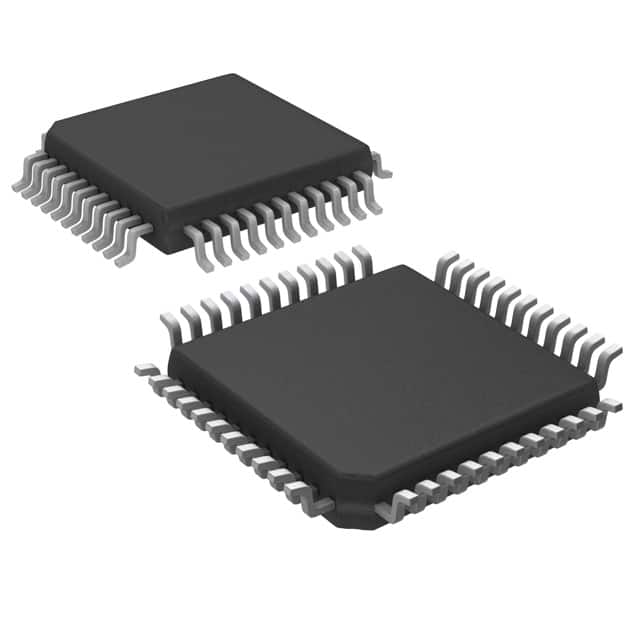
- Part No.:
- C505CALMCAFXQMA1
- Manufacturer:
- Infineon Technologies
- Category:
- Microcontrollers
- Package:
- 44-QFP
- Datasheet:
-
 C505CALMCAFXQMA1.pdf
- Description:
- IC MCU 8BIT ROMLESS 44MQFP
- Quantity:
- Payment:

- Shipping:

Inventory:4,939
Please send an inquiry. Send us your inquiry, and we will respond immediately.
Product details
Overview
C505CALMCAFXQMA1 from Infineon Technologies is an 8-bit single-chip microcontroller in the C500 family, fully compatible with the 8051 architecture and extended with 8 datapointers, 10-bit ADC (8 analog inputs), 1 KB on-chip XRAM, and full CAN 2.0B controller. It operates up to 20 MHz (300 ns instruction cycle), features three 16-bit timers, programmable watchdog, and power-saving modes including software power-down with wake-up via P3.2/INT0 or P4.1/RXDC - deployed in automotive body control modules requiring robust real-time CAN communication and sensor interfacing.
For engineers reviewing the C505CALMCAFXQMA1 datasheet, C505CALMCAFXQMA1 pinout, C505CALMCAFXQMA1 application, or C505CALMCAFXQMA1 equivalent, key selection criteria include CAN 2.0B compliance at 1 MBaud (≥8 MHz system clock), 10-bit A/D resolution across 8 channels, 32 KB on-chip ROM, P-MQFP-44 package compatibility with C501/C511 families, and industrial temperature range (-40 to 85°C).
Technical Context
The C505CALMCAFXQMA1 integrates a full-CAN controller compliant with ISO 11898-1:2003 (CAN 2.0B), supporting 1 MBaud bit rate at ≥8 MHz oscillator frequency and featuring internal prescaling for input clocks >10 MHz. Its CAN module uses 256 bytes of external data memory for message objects and supports both standard and extended identifiers.
It implements an enhanced 8051 core with eight independent datapointers, enabling efficient memory-to-memory transfers and flexible addressing of on-chip ROM (32 KB), XRAM (1 KB), and external memory space. The 10-bit successive-approximation ADC supports up to eight analog inputs with configurable reference (VAREF) and conversion start via software or timer trigger.
Key Specifications
| Parameter | Value and Actual Design Meaning |
|---|---|
| Core Architecture | Enhanced 8051 with 8 datapointers - enables concurrent memory access and optimized firmware for multi-sensor data handling. |
| Max Operating Frequency | 20 MHz - delivers 300 ns instruction cycle time for deterministic real-time response in CAN bus arbitration and interrupt servicing. |
| On-Chip Program Memory | 32 KB ROM - stores complete application firmware including CAN protocol stack and calibration tables without external memory dependency. |
| ADC Resolution & Inputs | 10-bit, 8-channel - provides 1024-level precision for analog sensor signals (e.g., temperature, pressure) in automotive subsystems. |
| CAN Compliance | CAN 2.0B (ISO 11898-1) - supports mixed 11-bit and 29-bit identifiers and error confinement for fault-tolerant vehicle networks. |
| XRAM Size | 1 KB - buffers CAN message objects, ADC results, and intermediate calculations without external RAM latency. |
| Operating Temperature | -40 °C to +85 °C - qualified for under-hood and cabin-mounted automotive ECUs per AEC-Q100 stress requirements. |
Pinout & Package
P-MQFP-44 (Plastic Metric Quad Flat Package, 44-pin, 10 mm × 10 mm, 0.8 mm pitch) with exposed thermal pad - supports thermal dissipation in compact automotive PCB layouts and ensures mechanical compatibility with C501/C511 socket footprints.
| Pin/Terminal | Circuit Role | Design Meaning |
|---|---|---|
| XTAL1 / XTAL2 | Crystal oscillator input/output | Supports fundamental-mode quartz crystals (1–20 MHz) or external clock source for precise timing of CAN baud rate generation. |
| RESET | Active-low reset input | Asynchronous reset with built-in power-on reset circuitry - ensures deterministic initialization after battery transients. |
| EA | External Access enable | When low, executes code from external memory; when high, fetches instructions exclusively from on-chip 32 KB ROM. |
| P0.0–P0.7 | 8-bit multiplexed address/data port | Provides lower byte of external address and data bus during external memory access; functions as general-purpose I/O otherwise. |
| P1.0–P1.7 | 8-bit digital/analog I/O port | Configurable as digital I/O or analog inputs (AD0–AD7) - enables direct connection to potentiometers, thermistors, or voltage sensors. |
| P3.2 (INT0) | External interrupt 0 input | Wake-up source from software power-down mode - used for emergency event detection (e.g., door open, crash signal). |
| P4.1 (RXDC) | CAN receive data input | Dedicated CAN RX line - connects directly to CAN transceiver's RX pin for hardware-filtered message reception. |
| VAREF | Analog reference voltage input | Accepts external reference (0–VDD) to set ADC full-scale range - critical for accurate ratiometric sensor measurements. |
Key Features
| Feature | Design Value |
|---|---|
| Full-CAN Controller (2.0B) | Hardware-based message filtering, transmission queuing, and error handling - offloads CPU from protocol management and guarantees <5 µs response to CAN bus events. |
| 10-bit Successive Approximation ADC | Eight selectable analog inputs with software- or timer-triggered conversion - enables synchronized sampling of multiple sensors for closed-loop control. |
| On-Chip Emulation Support (EHS) | Enhanced Hooks Technology™ - permits non-intrusive real-time debugging via dedicated debug pins without halting CPU execution. |
| Programmable Watchdog Timer | 15-bit counter with windowed refresh capability - prevents runaway code while allowing safe firmware update windows in safety-critical routines. |
| Power-Saving Modes | Software power-down with wake-up on INT0 or RXDC - reduces current draw to <10 µA while retaining CAN bus listen-only capability. |
Applications
| Body Control Module (BCM) | Door Module Controller |
|---|---|
Use Scenario: Centralized management of lighting, window lift, mirror adjustment, and interior switches in passenger vehicles. IC Role / Device Role / Timing Role: Primary CAN node coordinating distributed actuators and sensors via standardized UDS diagnostics and OEM-specific message sets. Use Value: Integrated 10-bit ADC interfaces directly with potentiometer-based position feedback; full-CAN handles 1 MBaud gateway traffic between LIN subnets and main CAN backbone. | Use Scenario: Local control of power windows, central locking, and anti-pinch detection using hall-effect and current-sense feedback. IC Role / Device Role / Timing Role: CAN endpoint with wake-on-RX capability - remains in ultra-low-power mode until door handle request or CAN command triggers full operation. Use Value: P4.1/RXDC pin enables immediate wake-up from <10 µA sleep state upon receipt of remote unlock frame, meeting OEM response-time targets (<150 ms). |
| Roof Module (Sunroof/Convertibles) | Seat Position Memory System |
Use Scenario: Motorized sunroof actuation with obstacle detection, rain sensing, and tilt-to-close logic in premium vehicles. IC Role / Device Role / Timing Role: Real-time motion controller synchronizing dual motor drivers and analog sensor fusion (current + position + ambient light). Use Value: Three 16-bit timers support precise PWM generation for motor speed control; 8 datapointers accelerate interpolation of position lookup tables stored in on-chip ROM. | Use Scenario: Storing and recalling driver seat positions using non-volatile memory and multi-axis position sensors. IC Role / Device Role / Timing Role: Sensor hub aggregating analog seat track, backrest, and lumbar signals before transmitting calibrated values over CAN. Use Value: 10-bit ADC resolves seat travel within ±0.5 mm accuracy; 1 KB XRAM buffers raw sensor samples for digital filtering prior to CAN transmission. |
Equivalent & Alternatives
The following parts are listed as comparable options for similar CAN-enabled microcontroller applications.
| Alternative Part | Technical Difference | Application Difference | Selection Advice |
|---|---|---|---|
| Infineon C505CA-4R | Same die, identical 32 KB ROM, 1 KB XRAM, 10-bit ADC, Full-CAN - differs only in ordering suffix (no LMCAFXQMA1 traceability code). | No functional difference; used in legacy designs where full traceability to Infineon's QMA1 lot qualification is not required. | Select C505CA-4R for cost-sensitive production runs where full MSL3 moisture sensitivity and extended lot traceability are not mandated. |
| NXP SJA1000T | Standalone CAN controller (no MCU core); requires external 8051 or ARM host - lacks integrated ADC, timers, and program memory. | Suitable only as peripheral add-on to existing host processors; cannot replace C505CALMCAFXQMA1 in standalone node designs. | Choose only when augmenting an existing microcontroller with additional CAN channels, not as a functional replacement. |
Compared with C505CA-4R, C505CALMCAFXQMA1 adds full lot-level traceability (QMA1), MSL3 packaging, and automotive qualification documentation; versus SJA1000T, it eliminates external bus interface design, reduces BOM count by 4+ components, and enables self-contained CAN node firmware deployment.
Availability
C505CALMCAFXQMA1 is available at Aetrix Electronics and suitable for automotive body electronics, door control units, and roof module applications requiring stable component supply, long-term lifecycle assurance, and full AEC-Q100-aligned manufacturing traceability.
Supply support for C505CALMCAFXQMA1 includes scheduled delivery planning, volume procurement assistance, BOM continuity management, traceable sourcing, and lifecycle availability coordination for OEM customers, industrial embedded developers, connected-device designers, and electronics production programs.
Manufacturer
Infineon Technologies AG is a German semiconductor manufacturer specializing in power management, automotive ICs, and security solutions, with global R&D and wafer fabrication facilities.
The C500 family - including C505CALMCAFXQMA1 - was designed specifically for cost-optimized, real-time automotive control nodes requiring integrated CAN, analog sensing, and deterministic 8051-compatible execution.
FAQ
What is the maximum CAN bit rate supported by C505CALMCAFXQMA1?
The device supports up to 1 MBaud CAN bit rate when operating at ≥8 MHz system clock frequency. This is achieved using the internal CAN clock prescaler for oscillator frequencies above 10 MHz. Bit timing registers allow fine-grained configuration of synchronization segments, propagation time, and phase buffers per ISO 11898-1 requirements.
Does C505CALMCAFXQMA1 require an external crystal, or can it use an RC oscillator?
C505CALMCAFXQMA1 requires an external crystal or ceramic resonator connected to XTAL1/XTAL2 for stable CAN timing; the internal RC oscillator is not specified for CAN operation due to insufficient accuracy (<1% tolerance needed). Crystal frequencies from 1 MHz to 20 MHz are supported, with 8 MHz or higher recommended for 1 MBaud CAN.
How is the 10-bit ADC referenced, and can VAREF be driven externally?
The ADC uses an external reference voltage applied to the VAREF pin, which must be between 0 V and VDD. VAREF sets the full-scale input range - e.g., 2.5 V on VAREF yields 2.44 mV/LSB resolution. Internal reference is not available; VAREF must be supplied externally, typically from a precision voltage reference or ratiometric sensor supply.
Is C505CALMCAFXQMA1 pin-compatible with earlier C505 derivatives like C505C-2R?
Yes - C505CALMCAFXQMA1 uses the same P-MQFP-44 package and maintains pin-for-pin compatibility with C505C-2R, C505A-4R, and C505CA-4R variants. Port assignments, reset behavior, and peripheral pin mappings (e.g., P4.1 for CAN RX) are identical, enabling drop-in replacement in existing PCB layouts.
C505CALMCAFXQMA1 Specifications
- Product attributes
- Attribute value
- Manufacturer:
- Infineon Technologies
- Package/Case:
- 44-QFP
- Series:
- C5xx/C8xx
- Packaging:
- Tray
- Product Status:
- Obsolete
- Programmable:
- Not Verified
- Core Processor:
- C500
- Core Size:
- 8-Bit
- Speed:
- 20MHz
- Connectivity:
- CANbus, EBI/EMI, UART/USART
- Peripherals:
- POR, PWM, WDT
- Number of I/O:
- 34
- Program Memory Size:
- -
- Program Memory Type:
- ROMless
- EEPROM Size:
- -
- RAM Size:
- 1.25K x 8
- Voltage - Supply (Vcc/Vdd):
- 4.25V ~ 5.5V
- Data Converters:
- A/D 8x10b
- Oscillator Type:
- External
- Operating Temperature:
- -40°C ~ 85°C (TA)
- Grade:
- -
- Qualification:
- -
- Mounting Type:
- Surface Mount
- Supplier Device Package:
C505CALMCAFXQMA1 FAQ
1.How can I place an order for C505CALMCAFXQMA1 through Aetrix?
Please submit a Request for Quotation (RFQ) for C505CALMCAFXQMA1 on Aetrix. Our sales agent will provide a competitive quotation and guide you through the order confirmation once you accept the terms.
2.Are the price and stock information for C505CALMCAFXQMA1 reliable?
The price and inventory of C505CALMCAFXQMA1 are updated periodically and may fluctuate due to market conditions. Stock and pricing data are typically refreshed every 24 hours. Quotation validity for C505CALMCAFXQMA1 is usually 5 days.
3.What payment methods are accepted for C505CALMCAFXQMA1?
We accept Wire Transfer, PayPal, Credit Card, Western Union, MoneyGram, and Escrow for C505CALMCAFXQMA1 transactions.
Note: Certain payment methods may incur a processing fee.
4.How is shipping managed for C505CALMCAFXQMA1?
C505CALMCAFXQMA1 orders can be shipped via leading logistics carriers, including DHL, UPS, FedEx, TNT, or Registered Mail.
Once your C505CALMCAFXQMA1 order is processed, you will receive an email with the shipment details and tracking number.
Note: Tracking information may take up to 24 hours to appear. Express delivery typically takes 3–5 business days.
5.How can I obtain technical support or documentation for C505CALMCAFXQMA1?
For technical support, including C505CALMCAFXQMA1 datasheets, pinout diagrams, or application guidance, please contact our engineering support team. They can provide detailed documentation and assistance for your C505CALMCAFXQMA1 requirements.
6.How does Aetrix verify that C505CALMCAFXQMA1 is sourced from the original manufacturer or authorized distributors?
All C505CALMCAFXQMA1 products on Aetrix are procured from qualified distributors and authorized channels. Our dedicated quality assurance team conducts strict verification, including traceability checks and, if necessary, third-party testing. This ensures that C505CALMCAFXQMA1 meets industry standards.
7.What is the process for return or replacement of C505CALMCAFXQMA1?
All C505CALMCAFXQMA1 units undergo pre-shipment inspection (PSI). If there is an issue with C505CALMCAFXQMA1, returns or replacements are accepted under the following conditions:
1.Quantity discrepancies, incorrect items, or visible external defects (such as breakage or corrosion), acknowledged by Aetrix.
2.The issue is reported within 90 days of delivery.
3.The C505CALMCAFXQMA1 part is unused and in its original packaging.
Return procedure for C505CALMCAFXQMA1:
1.Submit a request within 90 days.
2.Obtain a Return Material Authorization (RMA) from Aetrix.
C505CALMCAFXQMA1 Tags

-
ATTINY4-TSHR
Microchip Technology
-
ATTINY10-TSHR
Microchip Technology
-
ATTINY10-TS8R
Microchip Technology

-
ATTINY202-SSNR
Microchip Technology
-
ATTINY202-SSFR
Microchip Technology
-
ATTINY402-SSNR
Microchip Technology
-
PIC16F15213T-I/MF
Microchip Technology
-
PIC16F15213-E/MF
Microchip Technology

-
PIC10F200T-I/OT
Microchip Technology
-
ATTINY412-SSNR
Microchip Technology
-
PIC10F202T-I/OT
Microchip Technology
-
ATTINY404-SSNR
Microchip Technology
Tech Hub

Guide to electronic component obsolescence covering EOL risk, PCN/PDN notices, last-time buy planning, replacement options, form-fit-function validation, counterfeit risk and BOM lifecycle management.

18650 battery guide covering lithium-ion cell basics, 3.6V/3.7V voltage, 4.2V charging, mAh and Wh capacity, protected cells, chargers, BMS, series-parallel packs, holders, welding and sourcing checks.…

Hall effect sensor guide covering working principle, linear and digital sensors, Arduino circuits, current sensing, speed detection, automotive applications, A3144 examples, signal filtering and datash…

Product Change Notification guide for electronic components, covering PCN meaning, PCN vs PDN/EOL, common change types, risk levels, form-fit-function review, engineering validation, BOM control, LTB/L…

A practical guide to blend door actuators, covering HVAC function, symptoms, location, AC and heater issues, reset and calibration, replacement cost, electrical diagnosis, compatibility checks, and rep…

Engineering guide to Raspberry Pi alternatives, covering chip-level differences, Orange Pi, ROCK, Jetson, Banana Pi, NanoPi, Compute Module, Pico, GPIO, camera, HAT compatibility, and replacement risks…
Engineering guide to dynamic load response testing for high-current buck converters, covering load step setup, slew rate, Vcore undershoot, overshoot, recovery time, probe location, output capacitors a…
Engineering guide to output capacitor selection for ASIC Vcore rails, covering bulk capacitors, polymer capacitors, MLCC decoupling, DC bias, ESR, ESL, placement, transient response and substitution ri…
Engineering guide to high-current ASIC Vcore rails, covering 12-phase buck architecture, PMBus control, dynamic load testing, output capacitor networks, smart power stage selection, thermal design and …
Voltage regulator guide covering linear, LDO, 7805, Zener, adjustable, buck, VRM and alternator regulators, with design checks, testing methods, troubleshooting and datasheet-based selection.


