
 My Inquiry
 My Account


Infineon Technologies CY37256P160-125AC
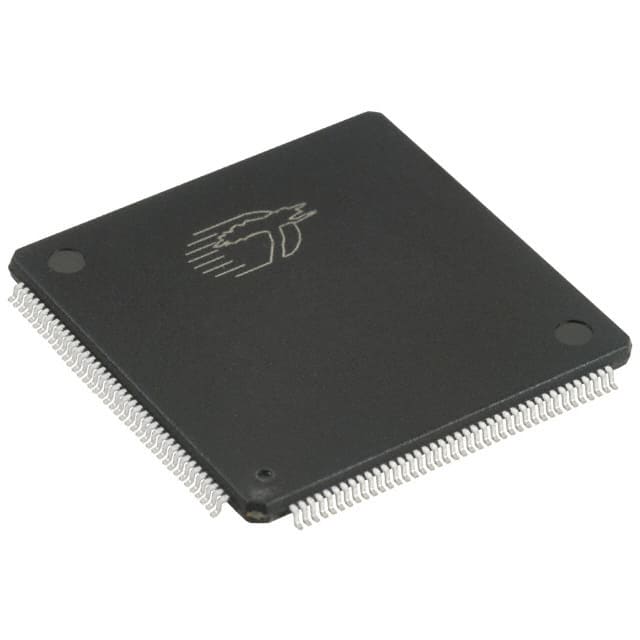
- Part No.:
- CY37256P160-125AC
- Manufacturer:
- Infineon Technologies
- Package:
- 160-LQFP
- Datasheet:
-
 CY37256P160-125AC.pdf
- Description:
- IC CPLD 256MC 10NS 160TQFP
- Quantity:
- Payment:

- Shipping:

Inventory:3,851
Please send an inquiry. Send us your inquiry, and we will respond immediately.
Product details
Overview
CY37256P160-125AC from Cypress Semiconductor is a 256-macrocell In-System Reprogrammable (ISR™) Complex Programmable Logic Device (CPLD) in the Ultra37000 family, operating at 5V with 160 I/O pins and 125 MHz maximum frequency (tPD = 7.5 ns). It features four synchronous clocks, programmable bus-hold on all I/Os, and JTAG-based reconfiguration without pinout or timing changes - used in PCI-compliant interface logic, legacy bus bridging, and FPGA configuration glue logic.
For engineers reviewing the CY37256P160-125AC datasheet, CY37256P160-125AC pinout, CY37256P160-125AC application, or CY37256P160-125AC equivalent, key selection criteria include macrocell count, I/O count (160), speed bin (125 MHz), 5V/3.3V I/O tolerance, JTAG ISR capability, and TQFP-160 package compatibility for industrial control and telecom backplane designs.
Technical Context
The CY37256P160-125AC implements a multi-block architecture with a global Programmable Interconnect Matrix (PIM) distributing up to 36 signals per logic block and eliminating route-dependent delays. Each of its logic blocks contains a 72×87 product term array, intelligent allocator supporting 0–16 product terms per macrocell, and dedicated asynchronous set/reset/product term clock resources.
It supports flexible clocking via four global synchronous clocks (CLK0–CLK3) plus one product-term clock (PTCLK), all with programmable polarity; all 160 I/Os feature configurable slew rate and bus-hold, and VCCO pins enable mixed 5V/3.3V I/O interfacing while maintaining 5V-tolerant operation.
Key Specifications
| Parameter | Value and Actual Design Meaning |
|---|---|
| Macrocells | 256 - provides combinational and registered logic capacity for medium-complexity glue logic and state machines |
| I/O Pins | 160 - supports high-pin-count parallel interfaces such as PCI, ISA, or memory-mapped peripheral buses |
| Max Frequency (fMAX) | 125 MHz - enables synchronous logic operation up to 8 ns clock period in critical paths |
| Propagation Delay (tPD) | 7.5 ns - fixed, route-independent timing simplifies static timing analysis and design closure |
| Supply Voltage | 5V VCC with 3.3V/5V-tolerant I/O - allows direct interfacing to both legacy 5V and modern 3.3V systems without level shifters |
| JTAG Interface | IEEE 1149.1-compliant - enables in-system reprogramming, boundary scan testing, and debug without device removal |
| Logic Block Count | 16 - each with 16 macrocells, 36 PIM inputs, and local 72×87 product term array for high routing efficiency |
Pinout & Package
This device is packaged in a 160-lead Thin Quad Flat Package (TQFP) with 0.5 mm pitch, body size 24×24 mm, and exposed thermal pad. Pin numbering follows standard TQFP counter-clockwise convention starting from pin 1 (top-left corner, marked with dot or notch).
| Pin/Terminal | Circuit Role | Design Meaning |
|---|---|---|
| VCC | Core power supply | 5V nominal supply for internal logic; decoupling required within 1 cm of each VCC pin |
| VCCO | I/O power supply | Configurable 3.3V or 5V reference determining output voltage levels and input threshold compatibility |
| GND | Ground reference | Multiple dedicated ground pins distributed across package to minimize ground bounce and noise coupling |
| TCK, TMS, TDI, TDO | JTAG test access port | Enable boundary scan and ISR programming; require pull-up/pull-down per IEEE 1149.1 for reliable initialization |
| CLK0–CLK3 | Dedicated clock inputs | Four globally routed synchronous clocks, each configurable for rising/falling edge triggering per logic block |
| I/O[0]–I/O[159] | Programmable bidirectional I/O | All support bus-hold, slew-rate control, and configurable input register/latch modes |
Key Features
| Feature | Design Value |
|---|---|
| In-System Reprogrammability (ISR™) | JTAG-based field updates without board rework - preserves pinout and timing across logic revisions |
| Intelligent Product Term Allocator | Dynamically assigns 0–16 product terms per macrocell and enables sharing across groups of four macrocells without speed penalty |
| Programmable Bus-Hold | Weak latch on every I/O eliminates need for external pull-ups in bus-idle states, reducing BOM and layout complexity |
| Flexible Clock Architecture | Four global synchronous clocks + one product-term clock, all with polarity control - supports mixed-edge and asynchronous timing domains |
| PCI Compatibility | Meets electrical and timing requirements of PCI Local Bus Specification Rev. 2.2 - validated for use in add-in cards and host bridges |
Applications
| PCI Interface Glue Logic | Legacy Bus Bridging |
|---|---|
Use Scenario: Implementing address decoding, bus arbitration, and protocol translation between PCI bus and custom ASIC or microcontroller peripherals. IC Role / Device Role / Timing Role: CPLD acts as synchronous interface controller managing PCI command/address latching, data strobing, and DEVSEL timing. Use Value: 125 MHz fMAX and fixed 7.5 ns tPD ensure compliance with PCI 33 MHz timing budgets; 160 I/Os accommodate full 32-bit multiplexed AD[31:0], C/BE[3:0]#, PAR, and control signals. | Use Scenario: Connecting modern microcontrollers to legacy parallel buses (e.g., ISA, PC/104, or proprietary 8/16-bit data buses) in industrial controllers. IC Role / Device Role / Timing Role: Performs address demultiplexing, wait-state insertion, and signal conditioning for mismatched timing domains. Use Value: Programmable slew rate reduces EMI during high-speed bus transitions; bus-hold prevents floating inputs during bus release phases. |
| FPGA Configuration Manager | Telecom Backplane Control |
Use Scenario: Storing and loading configuration bitstreams for SRAM-based FPGAs (e.g., Xilinx Spartan or Altera Cyclone) during power-up or field update. IC Role / Device Role / Timing Role: Acts as nonvolatile boot loader with JTAG-controlled reconfiguration and CRC verification logic. Use Value: ISR capability enables remote bitstream updates without hardware intervention; 256 macrocells support CRC-16, SPI/I2C interface, and status reporting logic. | Use Scenario: Managing hot-swap sequencing, LED status indication, and fault monitoring across multiple line cards in modular telecom chassis. IC Role / Device Role / Timing Role: Real-time supervisor handling reset propagation, power-good signaling, and inter-card communication handshaking. Use Value: Four dedicated clock inputs synchronize monitoring logic across multiple voltage rails; 5V-tolerant I/Os interface directly with legacy 5V backplane signaling. |
Equivalent & Alternatives
The following parts are listed as comparable options for similar CPLD-based interface logic applications.
| Alternative Part | Technical Difference | Application Difference | Selection Advice |
|---|---|---|---|
| XC95288XL-10TQ144 | 288 macrocells, 144-pin TQFP, 3.3V-only supply, 10 ns tPD | Lacks 5V-tolerant I/O and PCI-compliance certification; requires external level shifters for 5V bus interfacing | Select when lower power and higher density are prioritized over mixed-voltage operation and PCI compliance |
| ATF1508AS-10QU100 | 128 macrocells, 100-pin QFP, 5V supply, 10 ns tPD, no bus-hold | Half the macrocell count and I/O count; lacks programmable slew rate and dedicated clock inputs beyond two | Select for cost-sensitive, lower-density glue logic where bus-hold and advanced clocking are not required |
Compared with XC95288XL-10TQ144 and ATF1508AS-10QU100, the CY37256P160-125AC uniquely delivers 160 I/Os in a 5V-compatible package with certified PCI timing, integrated bus-hold, and four independent clock domains - making it optimal for mixed-voltage backplane and legacy interface consolidation.
Availability
CY37256P160-125AC is available at Aetrix Electronics and suitable for PCI add-in card development, industrial bus bridging, and FPGA configuration management requiring stable component supply and long-term obsolescence mitigation.
Supply support for CY37256P160-125AC includes scheduled delivery planning, volume procurement assistance, BOM continuity management, traceable sourcing, and lifecycle availability coordination for OEM customers, industrial embedded developers, connected-device designers, and electronics production programs.
Manufacturer
Cypress Semiconductor (now part of Infineon Technologies) is a U.S.-based semiconductor company specializing in programmable logic, memory, and mixed-signal solutions for industrial, automotive, and communications markets.
The Ultra37000 CPLD family was designed to deliver high-density, pin-compatible, and timing-predictable programmable logic for system-level interface consolidation - targeting applications where reliability, reprogrammability, and mixed-voltage interoperability are critical.
FAQ
Is CY37256P160-125AC compatible with 3.3V I/O signaling?
Yes - the device supports 3.3V I/O levels when VCCO pins are connected to 3.3V; outputs meet JEDEC 3.3V CMOS standards and remain 5V-tolerant, enabling safe interfacing with both 3.3V and 5V systems without external level shifters.
Does CY37256P160-125AC require external configuration memory?
No - it is electrically erasable and nonvolatile; configuration is stored internally and retained without power. The device boots autonomously on power-up and supports JTAG-based in-system reprogramming without external PROM or flash memory.
Can CY37256P160-125AC replace older 22V10 or 22V10-like PAL devices?
Yes - its architecture extends the 22V10 paradigm with scalable macrocell count, global routing, and ISR capability. Migration is supported via pin-compatible packages and backward-compatible ABEL/VHDL synthesis flows, though timing constraints and pin assignments must be re-verified.
What development tools support CY37256P160-125AC?
Cypress Warp v6.0+ and third-party tools including Mentor Graphics Precision RTL, Synopsys Synplify, and Xilinx ISE (via CPLD import flow) fully support synthesis, place-and-route, and JTAG programming for this device using industry-standard EDIF and JEDEC file formats.
CY37256P160-125AC Specifications
- Product attributes
- Attribute value
- Manufacturer:
- Infineon Technologies
- Series:
- Ultra37000™
- Package/Case:
- 160-LQFP
- Packaging:
- Bag
- Product Status:
- Obsolete
- Programmable:
- Not Verified
- Programmable Type:
- In-System Reprogrammable™ (ISR™) CMOS
- Delay Time tpd(1) Max:
- 10 ns
- Voltage Supply - Internal:
- 4.75V ~ 5.25V
- Number of Logic Elements/Blocks:
- -
- Number of Macrocells:
- 256
- Number of Gates:
- -
- Number of I/O:
- 133
- Operating Temperature:
- 0°C ~ 70°C (TA)
- Grade:
- -
- Qualification:
- -
- Mounting Type:
- Surface Mount
- Supplier Device Package:
- 160-TQFP (24x24)
CY37256P160-125AC FAQ
1.How can I place an order for CY37256P160-125AC through Aetrix?
Please submit a Request for Quotation (RFQ) for CY37256P160-125AC on Aetrix. Our sales agent will provide a competitive quotation and guide you through the order confirmation once you accept the terms.
2.Are the price and stock information for CY37256P160-125AC reliable?
The price and inventory of CY37256P160-125AC are updated periodically and may fluctuate due to market conditions. Stock and pricing data are typically refreshed every 24 hours. Quotation validity for CY37256P160-125AC is usually 5 days.
3.What payment methods are accepted for CY37256P160-125AC?
We accept Wire Transfer, PayPal, Credit Card, Western Union, MoneyGram, and Escrow for CY37256P160-125AC transactions.
Note: Certain payment methods may incur a processing fee.
4.How is shipping managed for CY37256P160-125AC?
CY37256P160-125AC orders can be shipped via leading logistics carriers, including DHL, UPS, FedEx, TNT, or Registered Mail.
Once your CY37256P160-125AC order is processed, you will receive an email with the shipment details and tracking number.
Note: Tracking information may take up to 24 hours to appear. Express delivery typically takes 3–5 business days.
5.How can I obtain technical support or documentation for CY37256P160-125AC?
For technical support, including CY37256P160-125AC datasheets, pinout diagrams, or application guidance, please contact our engineering support team. They can provide detailed documentation and assistance for your CY37256P160-125AC requirements.
6.How does Aetrix verify that CY37256P160-125AC is sourced from the original manufacturer or authorized distributors?
All CY37256P160-125AC products on Aetrix are procured from qualified distributors and authorized channels. Our dedicated quality assurance team conducts strict verification, including traceability checks and, if necessary, third-party testing. This ensures that CY37256P160-125AC meets industry standards.
7.What is the process for return or replacement of CY37256P160-125AC?
All CY37256P160-125AC units undergo pre-shipment inspection (PSI). If there is an issue with CY37256P160-125AC, returns or replacements are accepted under the following conditions:
1.Quantity discrepancies, incorrect items, or visible external defects (such as breakage or corrosion), acknowledged by Aetrix.
2.The issue is reported within 90 days of delivery.
3.The CY37256P160-125AC part is unused and in its original packaging.
Return procedure for CY37256P160-125AC:
1.Submit a request within 90 days.
2.Obtain a Return Material Authorization (RMA) from Aetrix.
CY37256P160-125AC Tags
-
5M40ZE64C5N
Intel
-
ATF1502ASV-15AU44
Microchip Technology
-
5M80ZE64C5N
Intel
-
5M80ZT100C5N
Intel
-
ATF1502AS-10AU44
Microchip Technology
-
ATF1502AS-10JU44
Microchip Technology
-
5M80ZE64I5N
Intel
-
5M80ZT100I5N
Intel
-
LC4032V-75TN48C
Lattice Semiconductor Corporation
-
ATF1504ASV-15AU44
Microchip Technology
-
ATF1504AS-10JU44
Microchip Technology
-
5M160ZE64C5N
Intel
Tech Hub

18650 battery guide covering lithium-ion cell basics, 3.6V/3.7V voltage, 4.2V charging, mAh and Wh capacity, protected cells, chargers, BMS, series-parallel packs, holders, welding and sourcing checks.…

Hall effect sensor guide covering working principle, linear and digital sensors, Arduino circuits, current sensing, speed detection, automotive applications, A3144 examples, signal filtering and datash…

Product Change Notification guide for electronic components, covering PCN meaning, PCN vs PDN/EOL, common change types, risk levels, form-fit-function review, engineering validation, BOM control, LTB/L…

A practical guide to blend door actuators, covering HVAC function, symptoms, location, AC and heater issues, reset and calibration, replacement cost, electrical diagnosis, compatibility checks, and rep…

Engineering guide to Raspberry Pi alternatives, covering chip-level differences, Orange Pi, ROCK, Jetson, Banana Pi, NanoPi, Compute Module, Pico, GPIO, camera, HAT compatibility, and replacement risks…

Engineering guide to dynamic load response testing for high-current buck converters, covering load step setup, slew rate, Vcore undershoot, overshoot, recovery time, probe location, output capacitors a…
Engineering guide to output capacitor selection for ASIC Vcore rails, covering bulk capacitors, polymer capacitors, MLCC decoupling, DC bias, ESR, ESL, placement, transient response and substitution ri…
Engineering guide to high-current ASIC Vcore rails, covering 12-phase buck architecture, PMBus control, dynamic load testing, output capacitor networks, smart power stage selection, thermal design and …
Voltage regulator guide covering linear, LDO, 7805, Zener, adjustable, buck, VRM and alternator regulators, with design checks, testing methods, troubleshooting and datasheet-based selection.

Amplifier guide covering voltage, current and power amplification, gain, feedback, amplifier classes, audio and RF applications, op-amp circuits, transimpedance amplifiers, datasheet selection and trou…


