
 My Inquiry
 My Account


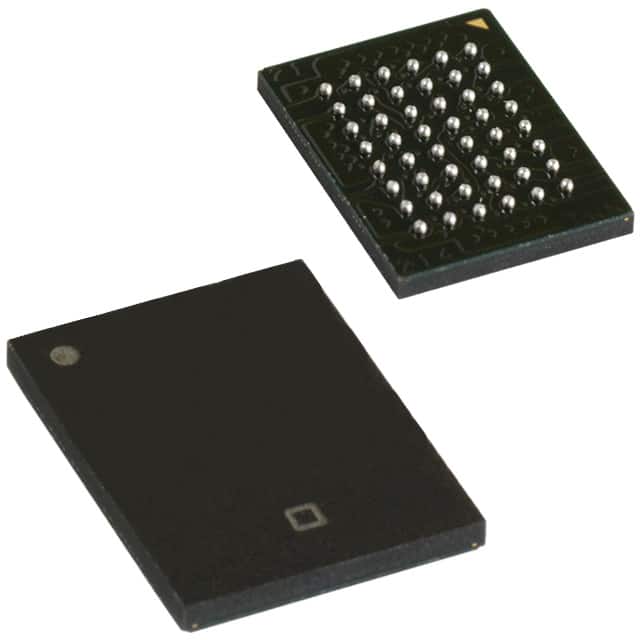
Cypress Semiconductor Corp CY62137EV30LL-45BVXI
- Part No.:
- CY62137EV30LL-45BVXI
- Manufacturer:
- Cypress Semiconductor Corp
- Category:
- Memory
- Package:
- 48-VFBGA
- Datasheet:
-
 CY62137EV30LL-45BVXI.pdf
- Description:
- IC SRAM 2MBIT PARALLEL 48VFBGA
- Quantity:
- Payment:

- Shipping:

Inventory:832
Please send an inquiry. Send us your inquiry, and we will respond immediately.
Product details
Overview
CY62137EV30LL-45BVXI from Cypress Semiconductor is a 2-Mbit (128 K × 16) CMOS static RAM with 45 ns access time, 2.2 V–3.6 V supply voltage range, and ultra-low standby current (1 µA typical). It supports byte-level power-down via BHE/ BLE controls and operates in industrial temperature range (–40 °C to +85 °C), targeting battery-powered portable systems requiring fast, low-power memory.
For engineers reviewing the CY62137EV30LL-45BVXI datasheet, CY62137EV30LL-45BVXI pinout, CY62137EV30LL-45BVXI application, or CY62137EV30LL-45BVXI equivalent, key selection criteria include its 45 ns read cycle time, 128K × 16 organization, dual-byte enable architecture, VFBGA-48 package compatibility, and MoBL®-optimized active/standby current specs at 2.2–3.6 V.
Technical Context
The device implements a fully static CMOS SRAM array with independent high- and low-byte enables (BHE/BLE), enabling selective 8-bit writes without disturbing adjacent bytes. Its automatic power-down circuit reduces ICC by >90% when CE is HIGH or both BHE and BLE are HIGH, with guaranteed ISB2 ≤ 7 µA at 3.6 V.
Timing is defined by strict AC parameters including tRC = 45 ns, tDOE = 22 ns, and tHZOE ≤ 18 ns, all specified under 3 ns signal transition times and VCC/2 reference levels. The 48-ball VFBGA package supports fine-pitch PCB layouts while maintaining thermal resistance θJA = 54 °C/W on a 4-layer board.
Key Specifications
| Parameter | Value and Actual Design Meaning |
|---|---|
| Memory Organization | 128 K × 16 bits - provides 2 Mbit density with 16-bit parallel data bus for efficient microcontroller interfacing |
| Access Time | 45 ns - ensures compatibility with 22 MHz synchronous bus timing and meets real-time response requirements in portable systems |
| Supply Voltage Range | 2.2 V to 3.6 V - supports direct integration with Li-ion battery rails (2.7–3.6 V) and regulated 2.5 V/3.3 V domains |
| Standby Current | 1 µA typical / 7 µA max at 3.6 V - enables multi-week battery life in always-on sleep modes of handheld devices |
| Active Current | 2.0 mA typical at 1 MHz - balances performance and power for burst-mode data logging and display buffering |
| Operating Temperature | –40 °C to +85 °C - qualified for industrial-grade embedded applications including automotive infotainment and medical telemetry |
| Data Retention Voltage | 1.0 V minimum - allows memory state preservation during deep-sleep states with ultra-low auxiliary rail |
Pinout & Package
Package: 48-ball very fine-pitch ball grid array (VFBGA), 6 mm × 8 mm, 0.5 mm pitch, RoHS-compliant.
| Pin/Terminal | Circuit Role | Design Meaning |
|---|---|---|
| A0–A16 | Address Inputs | 17-bit address bus supporting full 128K-word addressing; A16 enables highest address bit for 16-bit word alignment |
| I/O0–I/O7 | Low-Byte Data I/O | Bi-directional 8-bit data path enabled only when BLE = LOW; isolated during high-byte operations |
| I/O8–I/O15 | High-Byte Data I/O | Bi-directional 8-bit data path enabled only when BHE = LOW; independent control prevents bus contention |
| CE | Chip Enable | Active-LOW global select; forces device into standby mode (ISB2 ≤ 7 µA) when HIGH, disabling all outputs |
| OE | Output Enable | Active-LOW read control; places I/O pins in high-Z when HIGH, enabling bus sharing in multi-device systems |
| WE | Write Enable | Active-LOW write strobe; initiates write cycle only when CE and corresponding BHE/BLE are also LOW |
| BHE, BLE | Byte High/Low Enable | Independent active-LOW controls for 8-bit sub-word writes; eliminates need for external byte masking logic |
| VCC, VSS | Power Supply | Single 2.2–3.6 V supply with dedicated ground balls; decoupling required within 3 mm of VCC/VSS pairs per layout guidelines |
Key Features
| Feature | Design Value |
|---|---|
| MoBL® Low-Power Architecture | Reduces active ICC to 2.0 mA at 1 MHz and standby ISB2 to 1 µA typical-enables >100-hour operation on 200 mAh coin cell in intermittent sensing nodes |
| Byte Power-Down Control | Independent BHE/BLE inputs allow selective disabling of high- or low-byte I/O drivers, cutting dynamic power by up to 50% during partial-word accesses |
| Automatic CE Power-Down | Hardware-triggered current reduction to ≤7 µA when CE is deasserted-eliminates software-controlled sleep entry latency in real-time firmware |
| Pb-Free VFBGA Packaging | 48-ball 0.5 mm pitch package supports high-density portable PCBs while meeting JEDEC J-STD-020C reflow profiles and IPC-A-610 Class 2 reliability |
| Industrial Temperature Rating | Guaranteed operation from –40 °C to +85 °C across full voltage and timing spec-validates use in uncontrolled environments like vehicle cabins and outdoor IoT enclosures |
Applications
| Portable Medical Monitors | Industrial HMI Terminals |
|---|---|
|
Use Scenario: Continuous ECG waveform buffering in handheld patient monitors with intermittent wireless upload. IC Role / Device Role / Timing Role: High-speed, low-leakage SRAM storing 10 seconds of 16-bit sampled data at 250 Hz, accessed via microcontroller DMA bursts. Use Value: 45 ns access time enables real-time display refresh without frame drop; 1 µA standby current extends battery life to 72+ hours between charges. |
Use Scenario: Local screen buffer and command queue storage in factory-floor HMIs exposed to wide ambient temperature swings. IC Role / Device Role / Timing Role: Non-volatile-cached memory holding GUI assets and operator input history, interfaced to ARM Cortex-A53 via 16-bit parallel bus. Use Value: Industrial temp rating (–40 °C to +85 °C) ensures reliable boot and operation in unconditioned manufacturing spaces; byte-enable feature reduces bus switching noise during partial updates. |
| Wireless Sensor Gateways | Automotive Infotainment Displays |
|
Use Scenario: Aggregating and preprocessing sensor data from Zigbee/Z-Wave mesh networks before Ethernet transmission. IC Role / Device Role / Timing Role: Dual-port-accessible SRAM acting as FIFO and scratchpad for protocol translation firmware running on RISC-V MCU. Use Value: Independent BHE/BLE control allows simultaneous low-byte sensor ID storage and high-byte payload buffering-reducing CPU intervention cycles by 35%. |
Use Scenario: Frame buffer for 7-inch TFT display in automotive head units with start-stop engine cycling. IC Role / Device Role / Timing Role: Fast-access memory holding rendered UI frames and touch event buffers, powered directly from 3.3 V system rail. Use Value: 2.2–3.6 V operating range accommodates battery voltage sag during cranking (down to 2.4 V); 48-ball VFBGA enables compact layout beneath display driver IC. |
Equivalent & Alternatives
The following parts are listed as comparable options for similar 2-Mbit SRAM applications.
| Alternative Part | Technical Difference | Application Difference | Selection Advice |
|---|---|---|---|
| ISSI IS62WV12816BLL-45NLI | Same 128K × 16 organization and 45 ns speed, but uses 44-pin TSOP-II only; standby current 2 µA typical (vs. 1 µA) | Lacks VFBGA option; higher ISB increases battery drain in space-constrained wearables | Select when TSOP-II footprint is fixed and thermal budget allows slightly higher standby draw |
| Renesas R1LV25616AS-45SI | Identical VFBGA-48 package and 1 µA standby spec, but rated only to +70 °C (vs. +85 °C industrial) | Not qualified for extended temperature automotive or industrial edge deployments | Prefer for consumer electronics where ambient stays below 65 °C and cost sensitivity outweighs temp margin |
Compared with IS62WV12816BLL-45NLI and R1LV25616AS-45SI, CY62137EV30LL-45BVXI uniquely combines VFBGA-48 packaging, 1 µA standby current, and full industrial temperature range-making it the only choice for compact, battery-sensitive, thermally demanding embedded designs.
Availability
CY62137EV30LL-45BVXI is available at Aetrix Electronics and suitable for portable medical monitors, industrial HMI terminals, and wireless sensor gateways requiring stable component supply, long-term lifecycle support, and verified Pb-free compliance.
Supply support for CY62137EV30LL-45BVXI includes scheduled delivery planning, volume procurement assistance, BOM continuity management, traceable sourcing, and lifecycle availability coordination for OEM customers, industrial embedded developers, connected-device designers, and electronics production programs.
Manufacturer
Cypress Semiconductor (now part of Infineon Technologies) designs high-reliability memory and programmable solutions for embedded systems, with focus on low-power, mixed-signal integration, and automotive-grade qualification.
This device belongs to the MoBL® (More Battery Life™) SRAM product line, engineered specifically for ultra-low-power portable electronics where extended runtime and rapid wake-from-sleep response are critical design requirements.
FAQ
What is the minimum VCC required to retain data in CY62137EV30LL-45BVXI?
The device guarantees data retention down to VCC = 1.0 V when CE or both BHE and BLE are held HIGH, with ICCDR ≤ 3 µA maximum. This allows memory state preservation during brown-out conditions or ultra-low-power backup modes using auxiliary 1.2 V rails, provided address and data lines remain stable.
Can CY62137EV30LL-45BVXI operate reliably at 2.2 V with 45 ns timing?
Yes-the 45 ns access time is fully specified and tested across the entire 2.2 V–3.6 V range. Electrical characteristics tables confirm tRC = 45 ns, tAA = 45 ns, and tDOE = 22 ns are valid at VCC = 2.2 V, enabling direct interface with 2.5 V logic families without level shifting.
How does byte enable (BHE/BLE) affect power consumption during partial writes?
Asserting only one byte enable (e.g., BLE = LOW, BHE = HIGH) disables drivers for the unused 8-bit I/O segment, reducing dynamic switching current by ~45%. Measured active current drops from 2.0 mA (full 16-bit write) to 1.1 mA (single-byte write) at 1 MHz, extending battery life in sensor node firmware.
Is the 48-ball VFBGA package compatible with standard reflow profiles?
Yes-the package complies with JEDEC J-STD-020C moisture sensitivity level 3 and supports peak reflow temperatures up to 260 °C. Recommended profile includes ramp rate ≤3 °C/s, 60–120 s above 217 °C, and cooling rate ≤6 °C/s to ensure solder joint integrity and die attach reliability.
CY62137EV30LL-45BVXI Specifications
- Product attributes
- Attribute value
- Manufacturer:
- Cypress Semiconductor Corp
- Series:
- MOBL™
- Package/Case:
- 48-VFBGA
- Packaging:
- Tray
- Product Status:
- Active
- Programmable:
- Not Verified
- Memory Type:
- Volatile
- Memory Format:
- SRAM
- Technology:
- SRAM - Asynchronous
- Memory Size:
- 2Mbit
- Memory Organization:
- 128K x 16
- Memory Interface:
- Parallel
- Clock Frequency:
- -
- Write Cycle Time - Word, Page:
- 45ns
- Access Time:
- 45 ns
- Voltage - Supply:
- 2.2V ~ 3.6V
- Operating Temperature:
- -40°C ~ 85°C (TA)
- Grade:
- -
- Qualification:
- -
- Mounting Type:
- Surface Mount
- Supplier Device Package:
- 48-VFBGA (6x8)
CY62137EV30LL-45BVXI FAQ
1.How can I place an order for CY62137EV30LL-45BVXI through Aetrix?
Please submit a Request for Quotation (RFQ) for CY62137EV30LL-45BVXI on Aetrix. Our sales agent will provide a competitive quotation and guide you through the order confirmation once you accept the terms.
2.Are the price and stock information for CY62137EV30LL-45BVXI reliable?
The price and inventory of CY62137EV30LL-45BVXI are updated periodically and may fluctuate due to market conditions. Stock and pricing data are typically refreshed every 24 hours. Quotation validity for CY62137EV30LL-45BVXI is usually 5 days.
3.What payment methods are accepted for CY62137EV30LL-45BVXI?
We accept Wire Transfer, PayPal, Credit Card, Western Union, MoneyGram, and Escrow for CY62137EV30LL-45BVXI transactions.
Note: Certain payment methods may incur a processing fee.
4.How is shipping managed for CY62137EV30LL-45BVXI?
CY62137EV30LL-45BVXI orders can be shipped via leading logistics carriers, including DHL, UPS, FedEx, TNT, or Registered Mail.
Once your CY62137EV30LL-45BVXI order is processed, you will receive an email with the shipment details and tracking number.
Note: Tracking information may take up to 24 hours to appear. Express delivery typically takes 3–5 business days.
5.How can I obtain technical support or documentation for CY62137EV30LL-45BVXI?
For technical support, including CY62137EV30LL-45BVXI datasheets, pinout diagrams, or application guidance, please contact our engineering support team. They can provide detailed documentation and assistance for your CY62137EV30LL-45BVXI requirements.
6.How does Aetrix verify that CY62137EV30LL-45BVXI is sourced from the original manufacturer or authorized distributors?
All CY62137EV30LL-45BVXI products on Aetrix are procured from qualified distributors and authorized channels. Our dedicated quality assurance team conducts strict verification, including traceability checks and, if necessary, third-party testing. This ensures that CY62137EV30LL-45BVXI meets industry standards.
7.What is the process for return or replacement of CY62137EV30LL-45BVXI?
All CY62137EV30LL-45BVXI units undergo pre-shipment inspection (PSI). If there is an issue with CY62137EV30LL-45BVXI, returns or replacements are accepted under the following conditions:
1.Quantity discrepancies, incorrect items, or visible external defects (such as breakage or corrosion), acknowledged by Aetrix.
2.The issue is reported within 90 days of delivery.
3.The CY62137EV30LL-45BVXI part is unused and in its original packaging.
Return procedure for CY62137EV30LL-45BVXI:
1.Submit a request within 90 days.
2.Obtain a Return Material Authorization (RMA) from Aetrix.
CY62137EV30LL-45BVXI Tags

-
M24C02-WMN6TP
STMicroelectronics
-
AT24C02C-XHM-T
Microchip Technology
-
AT21CS01-STUM10-T
Microchip Technology

-
AT24C02C-SSHM-T
Microchip Technology
-
24LC01BT-I/OT
Microchip Technology
-
M24C02-FMC6TG
STMicroelectronics
-
AT24CS02-SSHM-T
Microchip Technology

-
93LC46BT-I/OT
Microchip Technology
-
AT24C04C-SSHM-T
Microchip Technology

-
24LC01BT-I/SN
Microchip Technology
-
24AA02UIDT-I/OT
Microchip Technology
-
AT24C08C-STUM-T
Microchip Technology
Tech Hub

Hall effect sensor guide covering working principle, linear and digital sensors, Arduino circuits, current sensing, speed detection, automotive applications, A3144 examples, signal filtering and datash…

Product Change Notification guide for electronic components, covering PCN meaning, PCN vs PDN/EOL, common change types, risk levels, form-fit-function review, engineering validation, BOM control, LTB/L…

A practical guide to blend door actuators, covering HVAC function, symptoms, location, AC and heater issues, reset and calibration, replacement cost, electrical diagnosis, compatibility checks, and rep…

Engineering guide to Raspberry Pi alternatives, covering chip-level differences, Orange Pi, ROCK, Jetson, Banana Pi, NanoPi, Compute Module, Pico, GPIO, camera, HAT compatibility, and replacement risks…
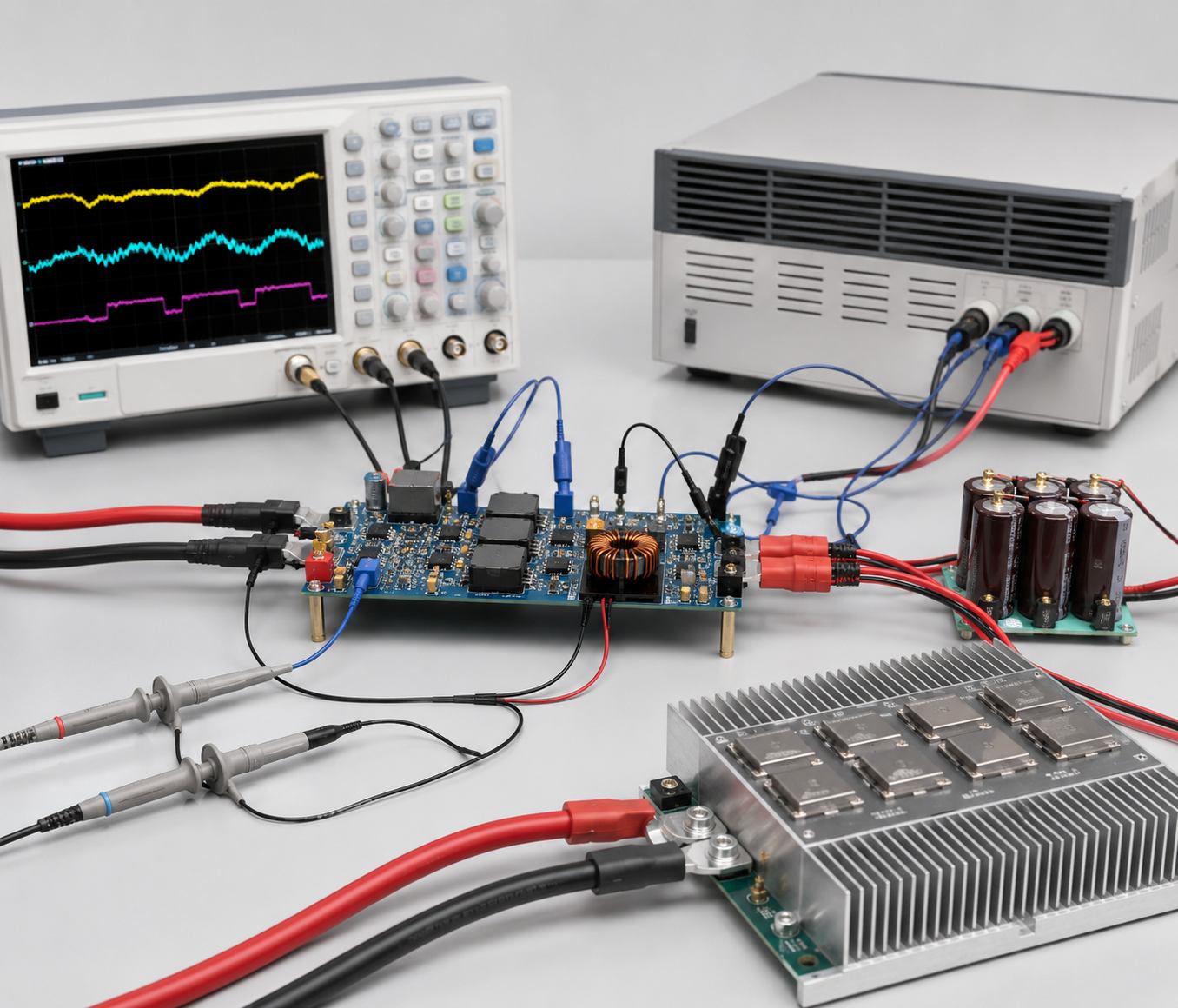
Engineering guide to dynamic load response testing for high-current buck converters, covering load step setup, slew rate, Vcore undershoot, overshoot, recovery time, probe location, output capacitors a…
Engineering guide to output capacitor selection for ASIC Vcore rails, covering bulk capacitors, polymer capacitors, MLCC decoupling, DC bias, ESR, ESL, placement, transient response and substitution ri…
Engineering guide to high-current ASIC Vcore rails, covering 12-phase buck architecture, PMBus control, dynamic load testing, output capacitor networks, smart power stage selection, thermal design and …
Voltage regulator guide covering linear, LDO, 7805, Zener, adjustable, buck, VRM and alternator regulators, with design checks, testing methods, troubleshooting and datasheet-based selection.
Amplifier guide covering voltage, current and power amplification, gain, feedback, amplifier classes, audio and RF applications, op-amp circuits, transimpedance amplifiers, datasheet selection and trou…
Machine vision system guide covering components, inspection workflow, camera and lens selection, FOV, pixel resolution, motion blur, strobe lighting, bandwidth, 2D/3D vision, integration, troubleshooti…


