
 My Inquiry
 My Account


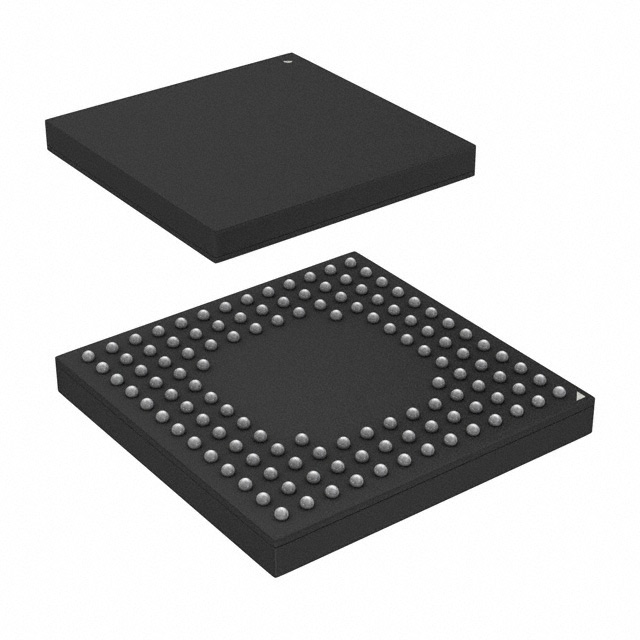
Infineon Technologies CY8C6247BZI-D44
- Part No.:
- CY8C6247BZI-D44
- Manufacturer:
- Infineon Technologies
- Category:
- Microcontrollers
- Package:
- 124-VFBGA
- Datasheet:
-
 CY8C6247BZI-D44.pdf
- Description:
- IC MCU 32BIT 1MB FLASH 124BGA
- Quantity:
- Payment:

- Shipping:

Inventory:1,271
Please send an inquiry. Send us your inquiry, and we will respond immediately.
Product details
Overview
CY8C6247BZI-D44 from Infineon is a dual-core Arm® Cortex®-M4F/M0+ PSoC™ 62 microcontroller with 1-MB flash, 288-KB SRAM, integrated SIMO DC-DC converter, CAPSENSE™, and hardware crypto acceleration-designed for secure, ultra-low-power IoT edge nodes requiring concurrent real-time control and wireless connectivity.
For engineers reviewing the CY8C6247BZI-D44 datasheet, CY8C6247BZI-D44 pinout, CY8C6247BZI-D44 application, or CY8C6247BZI-D44 equivalent, key selection criteria include dual-CPU power efficiency (22 µA/MHz @ 0.9 V M4), QSPI XIP with on-the-fly encryption, Deep Sleep SCB support, and 100 GPIOs with Smart I/O Boolean logic in low-power states.
Technical Context
The CY8C6247BZI-D44 implements a tightly coupled dual-CPU subsystem where the Cortex-M4F handles compute-intensive tasks (e.g., sensor fusion, crypto) while the Cortex-M0+ manages real-time peripherals and low-power state coordination via IPC and shared memory. Its clock system integrates FLL, PLL, and fractional dividers to deliver precise, low-jitter clocks across domains.
Power management leverages six discrete modes-including Deep Sleep (7 µA with 64-KB SRAM retention) and Hibernate-with on-chip SIMO buck converter (<1 µA quiescent current) and backup domain RTC. Analog subsystem includes 12-bit 1-Msps SAR ADC with 16-channel sequencer, two low-power comparators active in Deep Sleep, and CTBm opamps with configurable gain and bandwidth.
Key Specifications
| Parameter | Value and Actual Design Meaning |
|---|---|
| CPU Cores | Dual-core: 150-MHz Cortex-M4F + 100-MHz Cortex-M0+, each with MPU and single-cycle multiply |
| Memory | 1-MB flash (RWW), 288-KB SRAM (retention configurable), 1-Kb OTP eFuse |
| Power Efficiency | 22 µA/MHz @ 0.9 V core (M4), 7 µA Deep Sleep current with 64-KB SRAM retention |
| QSPI/SMIF | Up to 640 Mbps throughput; supports XIP with 4-KB cache and AES-128 on-the-fly encryption/decryption |
| Analog Peripherals | 12-bit 1-Msps SAR ADC (16-channel sequencer), two Deep Sleep-capable comparators, CTBm opamps, 12-bit DAC (<2 µs settling) |
| Security | ROM-based Secure Boot, eight Protection Contexts, hardware crypto accelerator (AES, ECC, SHA, TRNG) |
| GPIO & Logic | Up to 100 GPIOs; two Smart I/O ports (16 pins) with Boolean logic in Deep Sleep; twelve UDBs for Verilog or drag-and-drop peripheral implementation |
Pinout & Package
Package: 124-ball BGA (9 mm × 9 mm × 1 mm, 0.8-mm pitch). Pinout validated per Infineon datasheet Rev. *Q (2023-12-13), Table 4 "Pinouts" and Package Drawing BZI-D44.
| Pin/Terminal | Circuit Role | Design Meaning |
|---|---|---|
| VDDIO0–VDDIO5 | I/O Power Supply | Independent 1.7–3.6-V domains per port group; enables mixed-voltage interface and level-shifting without external components |
| VDDD/VDDA | Digital/Analog Core Supply | Separate regulated supplies for noise isolation; supports dynamic voltage scaling between 0.9 V and 1.1 V |
| XRES | External Reset Input | Active-low asynchronous reset with internal pull-up; meets 50-ns minimum pulse width requirement |
| SWDCK/SWDIO | Debug Interface | 2-pin Serial Wire Debug (SWD) for programming and real-time trace; compatible with standard ARM debug probes |
| QSPI[0:3]/SCLK/SS | Quad SPI Interface | Dedicated high-speed pins supporting octal mode; routed to SMIF block for XIP and encrypted off-chip flash access |
| USB_DP/USB_DM | USB Full-Speed PHY | Integrated transceiver compliant with USB 2.0 FS; requires only 1.5-kΩ pull-up on DP for device enumeration |
Key Features
| Feature | Design Value |
|---|---|
| Dual-CPU Voltage Scaling | User-selectable 0.9 V or 1.1 V core operation per CPU, enabling optimized trade-off between performance and sub-µA/MHz efficiency |
| Smart I/O in Deep Sleep | Two 8-pin Smart I/O ports execute Boolean logic (AND/OR/XOR) on GPIO states without waking CPUs-reducing wake-event latency and power |
| CAPSENSE™ with SmartSense | Hardware-accelerated self/mutual capacitive sensing with auto-tuning; achieves >100:1 SNR and liquid-tolerant touch detection without firmware calibration |
| Secure Boot & Protection Contexts | Immutable ROM bootloader validates signed images; eight hardware-enforced protection contexts isolate code/data/memory regions at runtime |
| Programmable UDBs | Twelve universal digital blocks (8 macrocells each) implement custom logic or pre-verified peripherals (LIN, S/PDIF, PRS) in Verilog or GUI mode |
Applications
| Wearable Health Monitor | Smart Home Sensor Hub |
|---|---|
Use Scenario: Continuous ECG/PPG signal acquisition with motion artifact rejection and BLE transmission. IC Role / Device Role / Timing Role: Dual-core real-time sensor processing (M4) and low-power BLE stack management (M0+); synchronized ADC sampling and TCPWM-driven LED drivers. Use Value: 7 µA Deep Sleep with 64-KB SRAM retention extends battery life to >1 year on coin cell; CAPSENSE™ enables touchless gesture UI with liquid tolerance. | Use Scenario: Multi-sensor environmental node (temp/humidity/air quality) aggregating data and forwarding via Zigbee or Matter over Thread. IC Role / Device Role / Timing Role: Central controller managing concurrent I2C sensor reads, QSPI-encrypted OTA updates, and USB-based provisioning; uses FLL/PLL for precise timing across protocols. Use Value: On-chip SIMO DC-DC eliminates external PMIC; hardware crypto accelerator enables fast TLS handshake and secure firmware signing verification. |
| Industrial Predictive Maintenance Edge Node | Secure Access Control Terminal |
Use Scenario: Vibration analysis using PDM microphone array and FFT-based anomaly detection before wireless upload. IC Role / Device Role / Timing Role: M4 executes floating-point FFT and ML inference; M0+ handles CAN FD communication and watchdog supervision; DMA transfers raw PDM data to SRAM. Use Value: 1-Msps SAR ADC with 16-channel sequencer captures multi-axis accelerometer data synchronously; UDBs implement custom CAN FD message filtering logic. | Use Scenario: Tamper-resistant door controller with fingerprint reader, secure element interface, and encrypted audit logging. IC Role / Device Role / Timing Role: Root-of-trust execution environment for biometric matching; hardware TRNG seeds keys; eFuse stores unique device identity and revocation flags. Use Value: Eight Protection Contexts isolate fingerprint algorithm, secure boot, and audit log buffers; ROM-based Secure Boot prevents unauthorized firmware execution. |
Equivalent & Alternatives
The following parts are listed as comparable options for similar dual-core secure MCU applications.
| Alternative Part | Technical Difference | Application Difference | Selection Advice |
|---|---|---|---|
| RP2040 | No hardware crypto accelerator, no Secure Boot ROM, no analog peripherals (ADC/DAC/opamp), no CAPSENSE™ | Suitable for cost-sensitive, non-secure consumer devices; lacks industrial-grade security and analog integration | Choose RP2040 only when cryptographic offloading, analog sensing, and certified secure boot are not required. |
| STM32WB55 | Single Cortex-M4 core (no companion M0+), integrated BLE radio (not external), smaller flash (1-MB max), no Smart I/O or UDBs | Better for BLE-centric designs needing RF coexistence; weaker for heterogeneous workload partitioning or programmable logic | Select STM32WB55 if integrated BLE radio and simpler dual-role partitioning suffice, but avoid when advanced analog, CAPSENSE™, or FPGA-like logic is needed. |
Compared with RP2040 and STM32WB55, CY8C6247BZI-D44 uniquely combines dual asymmetric cores, hardware crypto, CAPSENSE™, and programmable analog/digital logic-enabling secure, sensor-rich, ultra-low-power edge intelligence without external ICs.
Availability
CY8C6247BZI-D44 is available at Aetrix Electronics and suitable for wearable health monitors, smart home sensor hubs, industrial predictive maintenance nodes, and secure access control terminals requiring stable component supply, long-term lifecycle support, and traceable sourcing.
Supply support for CY8C6247BZI-D44 includes scheduled delivery planning, volume procurement assistance, BOM continuity management, traceable sourcing, and lifecycle availability coordination for OEM customers, industrial embedded developers, connected-device designers, and electronics production programs.
Manufacturer
Infineon Technologies is a German semiconductor leader specializing in power systems, automotive MCUs, and secure embedded solutions, with global manufacturing and R&D infrastructure.
The PSoC™ 62 product line targets secure, ultra-low-power IoT endpoints-integrating dual-core processing, programmable analog/digital fabric, and hardware-rooted security to eliminate discrete component count in edge AI and human-interface applications.
FAQ
What is the maximum operating frequency of the Cortex-M4F core in CY8C6247BZI-D44?
The Cortex-M4F core operates at up to 150 MHz, confirmed in the official Infineon datasheet Rev. *Q (2023-12-13), Section 3.1.1. This frequency is achievable under 1.1-V core supply with appropriate thermal management and clock configuration using the on-chip PLL or FLL.
Does CY8C6247BZI-D44 support Execute-In-Place (XIP) from external flash?
Yes, it supports XIP via the QSPI/SMIF interface with hardware-accelerated AES-128 on-the-fly decryption and a dedicated 4-KB cache. The feature is enabled by configuring the SMIF block and setting appropriate memory map attributes in the linker script, as documented in the PSoC™ 6 Technical Reference Manual.
How many GPIO pins support overvoltage tolerance (OVT)?
Six GPIO pins are explicitly designated as overvoltage-tolerant (OVT), capable of withstanding up to 5.5 V regardless of VDDIO supply level. These pins are identified in the "Pinout" section of the datasheet and are assigned to specific port groups (P0[0], P0[1], P12[0]–P12[3]) for robust interfacing with legacy 5-V peripherals.
Is CAPSENSE™ functionality available in Deep Sleep mode?
No-CAPSENSE™ requires active CPU and analog subsystem clocks and is disabled in Deep Sleep. However, the device supports wake-on-touch using dedicated low-power comparators and Smart I/O logic that can detect capacitance changes and trigger CPU wake-up without full subsystem activation.
CY8C6247BZI-D44 Specifications
- Product attributes
- Attribute value
- Manufacturer:
- Infineon Technologies
- Package/Case:
- 124-VFBGA
- Series:
- PSOC™ 6
- Packaging:
- Tray
- Product Status:
- Active
- Programmable:
- Not Verified
- Core Processor:
- ARM® Cortex®-M4/M0
- Core Size:
- 32-Bit Dual-Core
- Speed:
- 100MHz, 150MHz
- Connectivity:
- I2C, LINbus, QSPI, SPI, UART/USART, USB
- Peripherals:
- Brown-out Detect/Reset, Cap Sense, DMA, I2S, POR, PWM, WDT
- Number of I/O:
- 104
- Program Memory Size:
- 1MB (1M x 8)
- Program Memory Type:
- FLASH
- EEPROM Size:
- 32K x 8
- RAM Size:
- 288K x 8
- Voltage - Supply (Vcc/Vdd):
- 1.7V ~ 3.6V
- Data Converters:
- A/D 8x12b SAR; D/A 1x12b
- Oscillator Type:
- Internal
- Operating Temperature:
- -40°C ~ 85°C (TA)
- Grade:
- -
- Qualification:
- -
- Mounting Type:
- Surface Mount
- Supplier Device Package:
CY8C6247BZI-D44 FAQ
1.How can I place an order for CY8C6247BZI-D44 through Aetrix?
Please submit a Request for Quotation (RFQ) for CY8C6247BZI-D44 on Aetrix. Our sales agent will provide a competitive quotation and guide you through the order confirmation once you accept the terms.
2.Are the price and stock information for CY8C6247BZI-D44 reliable?
The price and inventory of CY8C6247BZI-D44 are updated periodically and may fluctuate due to market conditions. Stock and pricing data are typically refreshed every 24 hours. Quotation validity for CY8C6247BZI-D44 is usually 5 days.
3.What payment methods are accepted for CY8C6247BZI-D44?
We accept Wire Transfer, PayPal, Credit Card, Western Union, MoneyGram, and Escrow for CY8C6247BZI-D44 transactions.
Note: Certain payment methods may incur a processing fee.
4.How is shipping managed for CY8C6247BZI-D44?
CY8C6247BZI-D44 orders can be shipped via leading logistics carriers, including DHL, UPS, FedEx, TNT, or Registered Mail.
Once your CY8C6247BZI-D44 order is processed, you will receive an email with the shipment details and tracking number.
Note: Tracking information may take up to 24 hours to appear. Express delivery typically takes 3–5 business days.
5.How can I obtain technical support or documentation for CY8C6247BZI-D44?
For technical support, including CY8C6247BZI-D44 datasheets, pinout diagrams, or application guidance, please contact our engineering support team. They can provide detailed documentation and assistance for your CY8C6247BZI-D44 requirements.
6.How does Aetrix verify that CY8C6247BZI-D44 is sourced from the original manufacturer or authorized distributors?
All CY8C6247BZI-D44 products on Aetrix are procured from qualified distributors and authorized channels. Our dedicated quality assurance team conducts strict verification, including traceability checks and, if necessary, third-party testing. This ensures that CY8C6247BZI-D44 meets industry standards.
7.What is the process for return or replacement of CY8C6247BZI-D44?
All CY8C6247BZI-D44 units undergo pre-shipment inspection (PSI). If there is an issue with CY8C6247BZI-D44, returns or replacements are accepted under the following conditions:
1.Quantity discrepancies, incorrect items, or visible external defects (such as breakage or corrosion), acknowledged by Aetrix.
2.The issue is reported within 90 days of delivery.
3.The CY8C6247BZI-D44 part is unused and in its original packaging.
Return procedure for CY8C6247BZI-D44:
1.Submit a request within 90 days.
2.Obtain a Return Material Authorization (RMA) from Aetrix.
CY8C6247BZI-D44 Tags

-
ATTINY4-TSHR
Microchip Technology
-
ATTINY10-TSHR
Microchip Technology
-
ATTINY10-TS8R
Microchip Technology

-
ATTINY202-SSNR
Microchip Technology
-
ATTINY202-SSFR
Microchip Technology
-
ATTINY402-SSNR
Microchip Technology
-
PIC16F15213T-I/MF
Microchip Technology
-
PIC16F15213-E/MF
Microchip Technology

-
PIC10F200T-I/OT
Microchip Technology
-
ATTINY412-SSNR
Microchip Technology
-
PIC10F202T-I/OT
Microchip Technology
-
ATTINY404-SSNR
Microchip Technology
Tech Hub

18650 battery guide covering lithium-ion cell basics, 3.6V/3.7V voltage, 4.2V charging, mAh and Wh capacity, protected cells, chargers, BMS, series-parallel packs, holders, welding and sourcing checks.…

Hall effect sensor guide covering working principle, linear and digital sensors, Arduino circuits, current sensing, speed detection, automotive applications, A3144 examples, signal filtering and datash…

Product Change Notification guide for electronic components, covering PCN meaning, PCN vs PDN/EOL, common change types, risk levels, form-fit-function review, engineering validation, BOM control, LTB/L…

A practical guide to blend door actuators, covering HVAC function, symptoms, location, AC and heater issues, reset and calibration, replacement cost, electrical diagnosis, compatibility checks, and rep…

Engineering guide to Raspberry Pi alternatives, covering chip-level differences, Orange Pi, ROCK, Jetson, Banana Pi, NanoPi, Compute Module, Pico, GPIO, camera, HAT compatibility, and replacement risks…
Engineering guide to dynamic load response testing for high-current buck converters, covering load step setup, slew rate, Vcore undershoot, overshoot, recovery time, probe location, output capacitors a…
Engineering guide to output capacitor selection for ASIC Vcore rails, covering bulk capacitors, polymer capacitors, MLCC decoupling, DC bias, ESR, ESL, placement, transient response and substitution ri…
Engineering guide to high-current ASIC Vcore rails, covering 12-phase buck architecture, PMBus control, dynamic load testing, output capacitor networks, smart power stage selection, thermal design and …
Voltage regulator guide covering linear, LDO, 7805, Zener, adjustable, buck, VRM and alternator regulators, with design checks, testing methods, troubleshooting and datasheet-based selection.
Amplifier guide covering voltage, current and power amplification, gain, feedback, amplifier classes, audio and RF applications, op-amp circuits, transimpedance amplifiers, datasheet selection and trou…


