
 My Inquiry
 My Account


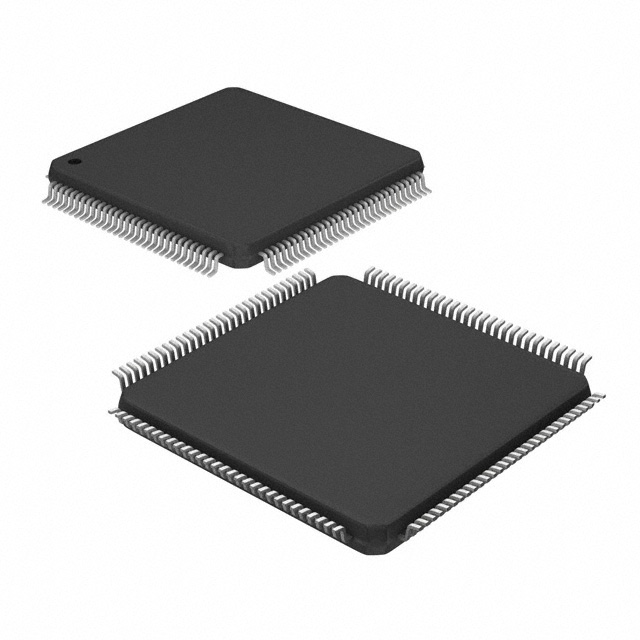
Infineon Technologies CY9AF154RBPMC-G-JNE2
- Part No.:
- CY9AF154RBPMC-G-JNE2
- Manufacturer:
- Infineon Technologies
- Category:
- Microcontrollers
- Package:
- 120-LQFP
- Datasheet:
-
 CY9AF154RBPMC-G-JNE2.pdf
- Description:
- IC MCU 32BIT 288KB FLASH 120LQFP
- Quantity:
- Payment:

- Shipping:

Inventory:1,385
Please send an inquiry. Send us your inquiry, and we will respond immediately.
Product details
Overview
CY9AF154RBPMC-G-JNE2 from Infineon Technologies (formerly Cypress) is a 32-bit Arm® Cortex®-M3 microcontroller with 512 KB dual-bank Flash (496 KB upper + 16 KB lower), 64 KB on-chip SRAM (32 KB SRAM0 + 32 KB SRAM1), and operation up to 40 MHz. It integrates UART/CSIO/I²C serial interfaces, 24-channel 12-bit ADC (2.0 µs conversion), 16-channel base timer, QPRC encoder interface, RTC, and six low-power modes - deployed in industrial motor control and smart appliance main control units.
For engineers reviewing the CY9AF154RBPMC-G-JNE2 datasheet, CY9AF154RBPMC-G-JNE2 pinout, CY9AF154RBPMC-G-JNE2 application, or CY9AF154RBPMC-G-JNE2 equivalent, key selection criteria include dual-bank Flash for safe firmware updates, 103 GPIOs in LQFP-120 package with port relocation, 5 V-tolerant I/O capability, and hardware watchdog independence from system clock domains.
Technical Context
The CY9AF154RBPMC-G-JNE2 implements an Arm Cortex-M3 r2p1 core with NVIC supporting 48 peripheral interrupts and 16 priority levels, plus a 24-bit SysTick timer for RTOS scheduling. Its memory subsystem features dual-operation Flash enabling concurrent read-erase-write across banks and two independent SRAM blocks (SRAM0 on I/D-code bus, SRAM1 on system bus) for deterministic real-time execution.
Peripheral architecture includes a 8-channel DMA controller with 32-bit addressing, multi-function serial interface supporting 16 configurable channels (UART/CSIO/I²C), and dedicated motor-control blocks: PWM/PPG timers, dead-time insertion, A/D activation triggers, and QPRC with 16-bit position/revolution counters - all synchronized via shared clock domains and interrupt routing to NVIC.
Key Specifications
| Parameter | Value and Actual Design Meaning |
|---|---|
| CPU Core | Arm Cortex-M3 r2p1, 40 MHz max - deterministic real-time execution with Thumb-2 instruction set and NVIC for low-latency interrupt handling. |
| Flash Memory | 512 KB dual-bank (496 KB upper + 16 KB lower), 0-wait-state read - enables background firmware update without halting application code. |
| SRAM | 64 KB total (32 KB SRAM0 + 32 KB SRAM1), separate bus connections - isolates instruction/data access from system peripherals to prevent bus contention. |
| ADC | 24-channel 12-bit SAR, 2.0 µs conversion @ 2.7–3.6 V - supports high-speed sensor sampling with FIFO-based scan/priority modes for motor current sensing. |
| Timers | 16-channel base timer (PWM/PPG/reload/PWC), 32-/16-bit dual timer, QPRC - provides precise motor phase timing, position feedback capture, and periodic wake-up from low-power states. |
| Low-Power Modes | Six modes including Deep Standby RTC/Stop with RAM retention options - extends battery life in always-on appliance controllers while preserving context. |
| Package | LQFP-120 (14 × 14 mm, 0.4 mm pitch) - supports 103 high-speed GPIOs with port relocation and select 5 V-tolerant pins for legacy interface compatibility. |
Pinout & Package
LQFP-120 package (14 mm × 14 mm, 0.4 mm pitch) with exposed thermal pad; 120-pin layout optimized for mixed-signal embedded control, featuring dedicated power/ground pairs, crystal oscillator inputs (XIN/XOUT), sub-clock inputs (SIN/SOUT), and mode configuration pins (MD0).
| Pin/Terminal | Circuit Role | Design Meaning |
|---|---|---|
| VCC / VSS | Power supply / Ground | Dedicated analog/digital power pairs per quadrant - reduces noise coupling between ADC and digital logic during motor switching transients. |
| XIN / XOUT | Main crystal oscillator input/output | Supports 4–48 MHz external crystals - enables precise timing for communication baud rates and PWM carrier frequencies. |
| SIN / SOUT | Sub-crystal oscillator input/output | 32.768 kHz crystal connection for RTC and Watch Counter - maintains timekeeping during deep sleep with <1 µA current draw. |
| MD0 | Boot mode selection | Configures boot source (Flash/ROM) at power-on - ensures secure startup sequence and prevents unintended execution from unverified memory. |
| INITX | External reset input | Active-low asynchronous reset pin - allows external fault detection circuits (e.g., overtemperature, overcurrent) to force controlled MCU restart. |
| PA0–PA31, PB0–PB31, etc. | Multi-function GPIO | 103 total pins with port relocation - permits flexible PCB layout by remapping UART/I²C/ADC functions to non-conflicting pins without hardware redesign. |
Key Features
| Feature | Design Value |
|---|---|
| Dual-bank Flash memory | Enables seamless firmware updates: erase/write one bank while executing from the other - eliminates downtime in field-deployed industrial controllers. |
| QPRC encoder interface | Direct quadrature decoding with 16-bit position/revolution counters and programmable edge detection on AIN/BIN/ZIN - removes need for external logic in BLDC motor commutation. |
| Hardware watchdog (CR-based) | Independent 100 kHz low-speed CR oscillator clock source - remains active in all low-power modes except Deep Standby Stop/RTC, ensuring fail-safe recovery during brown-out events. |
| Port relocation | Runtime-configurable peripheral pin mapping - simplifies board reuse across product variants (e.g., different sensor sets or communication protocols) without changing schematic. |
| CRC accelerator (CRC16/CRC32) | Dedicated hardware engine for CCITT CRC16 and IEEE-802.3 CRC32 - offloads integrity checks from CPU during firmware OTA updates or sensor data logging. |
Applications
| Industrial Motor Control | Smart Home Appliance MCU |
|---|---|
|
Use Scenario: Brushless DC motor drive in HVAC blowers and washing machine drum control. IC Role / Device Role / Timing Role: Main system controller managing PWM generation, current sensing via ADC, position feedback via QPRC, and thermal protection monitoring. Use Value: Integrated motor-control peripherals eliminate external gate drivers and position decoder ICs, reducing BOM count and PCB area by 30%. |
Use Scenario: Central control unit in refrigerators and dishwashers coordinating compressor, valves, displays, and user interface. IC Role / Device Role / Timing Role: Real-time coordinator with RTC for defrost scheduling, low-power timer wake-up for sensor polling, and UART/I²C for display and sensor communication. Use Value: Six low-power modes with RAM retention enable <5 µA standby current while maintaining state - extending battery backup life beyond 10 years. |
| Factory Automation I/O Module | Energy Metering Gateway |
|
Use Scenario: DIN-rail mounted remote I/O node collecting analog sensor data and controlling solenoids/relays in PLC systems. IC Role / Device Role / Timing Role: Data acquisition hub with 24-channel ADC, isolated digital I/O via GPIO, and RS-485 communication via UART with hardware flow control. Use Value: Dual-bank Flash allows remote firmware updates over Modbus without interrupting I/O scanning - meeting IEC 61131-3 runtime continuity requirements. |
Use Scenario: Sub-metering gateway aggregating kWh data from multiple smart meters via RS-485 and transmitting to cloud via Wi-Fi/Ethernet. IC Role / Device Role / Timing Role: Secure data concentrator with CRC accelerator for packet integrity, RTC for timestamping, and AES-ready memory protection for firmware signing. Use Value: On-chip security features (code protection, unique ID) satisfy DLMS/COSEM certification requirements for utility-grade metering infrastructure. |
Equivalent & Alternatives
The following parts are listed as comparable options for similar 32-bit Arm Cortex-M3 microcontroller applications.
| Alternative Part | Technical Difference | Application Difference | Selection Advice |
|---|---|---|---|
| STM32F103VCT6 | 72 MHz Cortex-M3, 256 KB Flash, 48 KB SRAM, no dual-bank Flash or QPRC - requires external encoder interface logic. | Lacks integrated QPRC and dual-bank Flash; suitable for cost-sensitive general-purpose control where encoder resolution ≤ 10-bit and firmware updates tolerate brief interruption. | Select when prioritizing higher CPU speed over motor-specific peripherals and firmware update robustness. |
| RP2040 | Dual-core Arm Cortex-M0+, 2 MB Flash, 264 KB SRAM, no hardware QPRC or dedicated motor timers - relies on software-based quadrature decoding. | Requires firmware implementation of QPRC and dead-time insertion; better suited for consumer IoT than safety-critical motor control. | Choose for prototyping or low-volume designs where open-source toolchain support outweighs real-time determinism needs. |
Compared with STM32F103VCT6 and RP2040, CY9AF154RBPMC-G-JNE2 delivers deterministic motor control through hardware QPRC, dual-bank Flash for zero-downtime updates, and CR-based watchdog resilience in deep sleep - critical for certified industrial drives and white-goods applications.
Availability
CY9AF154RBPMC-G-JNE2 is available at Aetrix Electronics and suitable for industrial motor control, smart appliance main control, factory automation I/O modules, and energy metering gateways requiring stable component supply across multi-year production cycles.
Supply support for CY9AF154RBPMC-G-JNE2 includes scheduled delivery planning, volume procurement assistance, BOM continuity management, traceable sourcing, and lifecycle availability coordination for OEM customers, industrial embedded developers, connected-device designers, and electronics production programs.
Manufacturer
Infineon Technologies is a global semiconductor leader headquartered in Munich, Germany, specializing in power management, automotive MCUs, and industrial control solutions with ISO 9001 and IATF 16949 certified manufacturing.
This device belongs to the FM3 family of 32-bit Arm Cortex-M3 microcontrollers, designed specifically for cost-optimized, low-power embedded control in motor-driven appliances and industrial equipment requiring high peripheral integration and firmware update reliability.
FAQ
What is the maximum operating frequency and voltage range for CY9AF154RBPMC-G-JNE2?
The CY9AF154RBPMC-G-JNE2 operates at up to 40 MHz across a supply voltage range of 1.65 V to 3.6 V. Its internal PLL supports clock multiplication from 4–48 MHz main oscillator inputs, and the built-in high-speed CR oscillator runs at 4 MHz for clock supervision and low-power mode operation.
Does this MCU support hardware-based quadrature encoding without external components?
Yes - the Quadrature Position/Revolution Counter (QPRC) block provides dedicated hardware decoding of A/B/Z encoder signals with 16-bit position and revolution counters, programmable edge detection, and automatic index pulse handling - eliminating need for external logic or software-based counting.
How does the dual-bank Flash architecture improve firmware update safety?
Dual-bank Flash allows simultaneous execution from one bank while erasing/writing the other. This enables atomic firmware updates: new code is validated in the inactive bank before switching vector tables, preventing bricking during power loss or communication interruption in field deployments.
Which low-power modes retain RAM content and support RTC wake-up?
Deep Standby RTC and Deep Standby Stop modes both retain SRAM contents and support RTC-triggered wake-up. In Deep Standby RTC, the RTC continues running from the 32.768 kHz sub-clock; in Deep Standby Stop, only the RTC circuit remains active - achieving sub-1 µA typical current draw while preserving full context.
CY9AF154RBPMC-G-JNE2 Specifications
- Product attributes
- Attribute value
- Manufacturer:
- Infineon Technologies
- Package/Case:
- 120-LQFP
- Series:
- FM3 MB9A150RB
- Packaging:
- Tray
- Product Status:
- Active
- Programmable:
- Not Verified
- Core Processor:
- ARM® Cortex®-M3
- Core Size:
- 32-Bit Single-Core
- Speed:
- 40MHz
- Connectivity:
- CSIO, EBI/EMI, I2C, SPI, UART/USART
- Peripherals:
- DMA, LVD, POR, PWM, WDT
- Number of I/O:
- 103
- Program Memory Size:
- 288KB (288K x 8)
- Program Memory Type:
- FLASH
- EEPROM Size:
- -
- RAM Size:
- 32K x 8
- Voltage - Supply (Vcc/Vdd):
- 1.65V ~ 3.6V
- Data Converters:
- A/D 24x12b
- Oscillator Type:
- Internal
- Operating Temperature:
- -40°C ~ 85°C (TA)
- Grade:
- -
- Qualification:
- -
- Mounting Type:
- Surface Mount
- Supplier Device Package:
CY9AF154RBPMC-G-JNE2 FAQ
1.How can I place an order for CY9AF154RBPMC-G-JNE2 through Aetrix?
Please submit a Request for Quotation (RFQ) for CY9AF154RBPMC-G-JNE2 on Aetrix. Our sales agent will provide a competitive quotation and guide you through the order confirmation once you accept the terms.
2.Are the price and stock information for CY9AF154RBPMC-G-JNE2 reliable?
The price and inventory of CY9AF154RBPMC-G-JNE2 are updated periodically and may fluctuate due to market conditions. Stock and pricing data are typically refreshed every 24 hours. Quotation validity for CY9AF154RBPMC-G-JNE2 is usually 5 days.
3.What payment methods are accepted for CY9AF154RBPMC-G-JNE2?
We accept Wire Transfer, PayPal, Credit Card, Western Union, MoneyGram, and Escrow for CY9AF154RBPMC-G-JNE2 transactions.
Note: Certain payment methods may incur a processing fee.
4.How is shipping managed for CY9AF154RBPMC-G-JNE2?
CY9AF154RBPMC-G-JNE2 orders can be shipped via leading logistics carriers, including DHL, UPS, FedEx, TNT, or Registered Mail.
Once your CY9AF154RBPMC-G-JNE2 order is processed, you will receive an email with the shipment details and tracking number.
Note: Tracking information may take up to 24 hours to appear. Express delivery typically takes 3–5 business days.
5.How can I obtain technical support or documentation for CY9AF154RBPMC-G-JNE2?
For technical support, including CY9AF154RBPMC-G-JNE2 datasheets, pinout diagrams, or application guidance, please contact our engineering support team. They can provide detailed documentation and assistance for your CY9AF154RBPMC-G-JNE2 requirements.
6.How does Aetrix verify that CY9AF154RBPMC-G-JNE2 is sourced from the original manufacturer or authorized distributors?
All CY9AF154RBPMC-G-JNE2 products on Aetrix are procured from qualified distributors and authorized channels. Our dedicated quality assurance team conducts strict verification, including traceability checks and, if necessary, third-party testing. This ensures that CY9AF154RBPMC-G-JNE2 meets industry standards.
7.What is the process for return or replacement of CY9AF154RBPMC-G-JNE2?
All CY9AF154RBPMC-G-JNE2 units undergo pre-shipment inspection (PSI). If there is an issue with CY9AF154RBPMC-G-JNE2, returns or replacements are accepted under the following conditions:
1.Quantity discrepancies, incorrect items, or visible external defects (such as breakage or corrosion), acknowledged by Aetrix.
2.The issue is reported within 90 days of delivery.
3.The CY9AF154RBPMC-G-JNE2 part is unused and in its original packaging.
Return procedure for CY9AF154RBPMC-G-JNE2:
1.Submit a request within 90 days.
2.Obtain a Return Material Authorization (RMA) from Aetrix.
CY9AF154RBPMC-G-JNE2 Tags

-
ATTINY4-TSHR
Microchip Technology
-
ATTINY10-TSHR
Microchip Technology
-
ATTINY10-TS8R
Microchip Technology

-
ATTINY202-SSNR
Microchip Technology
-
ATTINY202-SSFR
Microchip Technology
-
ATTINY402-SSNR
Microchip Technology
-
PIC16F15213T-I/MF
Microchip Technology
-
PIC16F15213-E/MF
Microchip Technology

-
PIC10F200T-I/OT
Microchip Technology
-
ATTINY412-SSNR
Microchip Technology
-
PIC10F202T-I/OT
Microchip Technology
-
ATTINY404-SSNR
Microchip Technology
Tech Hub

Guide to electronic component obsolescence covering EOL risk, PCN/PDN notices, last-time buy planning, replacement options, form-fit-function validation, counterfeit risk and BOM lifecycle management.

18650 battery guide covering lithium-ion cell basics, 3.6V/3.7V voltage, 4.2V charging, mAh and Wh capacity, protected cells, chargers, BMS, series-parallel packs, holders, welding and sourcing checks.…

Hall effect sensor guide covering working principle, linear and digital sensors, Arduino circuits, current sensing, speed detection, automotive applications, A3144 examples, signal filtering and datash…

Product Change Notification guide for electronic components, covering PCN meaning, PCN vs PDN/EOL, common change types, risk levels, form-fit-function review, engineering validation, BOM control, LTB/L…

A practical guide to blend door actuators, covering HVAC function, symptoms, location, AC and heater issues, reset and calibration, replacement cost, electrical diagnosis, compatibility checks, and rep…

Engineering guide to Raspberry Pi alternatives, covering chip-level differences, Orange Pi, ROCK, Jetson, Banana Pi, NanoPi, Compute Module, Pico, GPIO, camera, HAT compatibility, and replacement risks…
Engineering guide to dynamic load response testing for high-current buck converters, covering load step setup, slew rate, Vcore undershoot, overshoot, recovery time, probe location, output capacitors a…
Engineering guide to output capacitor selection for ASIC Vcore rails, covering bulk capacitors, polymer capacitors, MLCC decoupling, DC bias, ESR, ESL, placement, transient response and substitution ri…
Engineering guide to high-current ASIC Vcore rails, covering 12-phase buck architecture, PMBus control, dynamic load testing, output capacitor networks, smart power stage selection, thermal design and …
Voltage regulator guide covering linear, LDO, 7805, Zener, adjustable, buck, VRM and alternator regulators, with design checks, testing methods, troubleshooting and datasheet-based selection.


