
 My Inquiry
 My Account


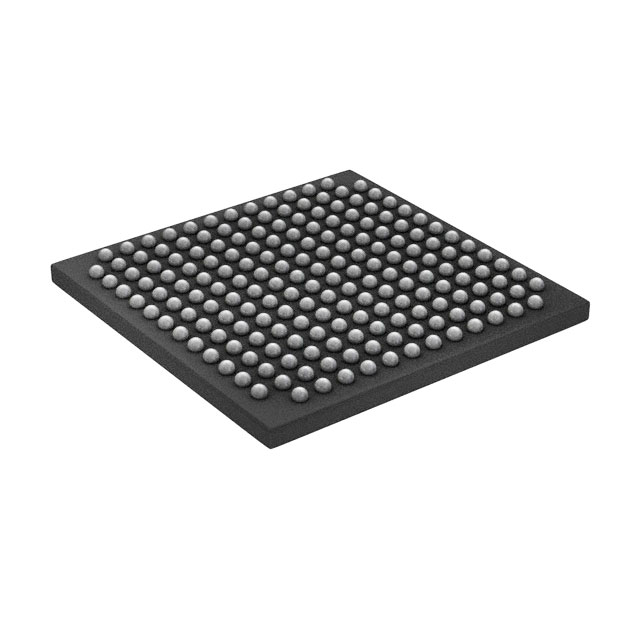
Infineon Technologies CY9BF216TBGL-GK7E1
- Part No.:
- CY9BF216TBGL-GK7E1
- Manufacturer:
- Infineon Technologies
- Category:
- Microcontrollers
- Package:
- 192-LFBGA
- Datasheet:
-
 CY9BF216TBGL-GK7E1.pdf
- Description:
- IC MCU 32BIT 512KB FLASH 192FBGA
- Quantity:
- Payment:

- Shipping:

Inventory:1,182
Please send an inquiry. Send us your inquiry, and we will respond immediately.
Product details
Overview
CY9BF216TBGL-GK7E1 from Infineon Technologies (formerly Cypress) is a 32-bit Arm® Cortex®-M3 microcontroller with 1 MB Flash, 128 KB SRAM, USB 2.0 Full-Speed device/host interface, IEEE 802.3-compliant Ethernet-MAC, and integrated motor control timers. It operates up to 144 MHz, includes MPU, NVIC with 48 peripheral interrupts, and supports industrial embedded control in motor drives and networked edge nodes.
For engineers reviewing the CY9BF216TBGL-GK7E1 datasheet, CY9BF216TBGL-GK7E1 pinout, CY9BF216TBGL-GK7E1 application, or CY9BF216TBGL-GK7E1 equivalent, key selection criteria include Flash/SRAM size, dual USB channel support, RMII/MII Ethernet interface, 32-channel 12-bit ADC with 1.0 µs conversion, and QPRC for encoder-based position feedback in real-time motion systems.
Technical Context
The CY9BF216TBGL-GK7E1 implements the Arm Cortex-M3 r2p1 core with Memory Protection Unit (MPU) and Nested Vectored Interrupt Controller (NVIC) supporting 16 priority levels and 48 peripheral interrupts. It integrates dual USB 2.0 controllers - one Full-Speed device and one Full/Low-Speed host - each with dedicated PLL clock generation and endpoint FIFOs (64–256 bytes).
Its Ethernet-MAC complies with IEEE 802.3, supports 10/100 Mbps in full/half-duplex modes, includes built-in 2 KB TX/RX FIFOs, PTP (IEEE 1588-2008) support, and MII/RMII PHY interfaces. The peripheral set includes three multi-function timers with dead-time insertion and DTIF interrupt, plus three QPRC units for quadrature encoder position tracking.
Key Specifications
| Parameter | Value and Actual Design Meaning |
|---|---|
| CPU Core | Arm Cortex-M3 r2p1, up to 144 MHz operation - enables deterministic real-time task scheduling in motor control loops. |
| Flash Memory | 1 MB on-chip Flash with accelerator and trace buffer - eliminates wait states up to 72 MHz; maintains performance at higher frequencies via prefetch logic. |
| SRAM | 128 KB total (64 KB SRAM0 + 64 KB SRAM1), split across I-code/D-code and system buses - enables concurrent instruction fetch and DMA data movement without bus contention. |
| USB Interface | Dual-channel: Full-Speed device (6 endpoints, double-buffered) + Full/Low-Speed host (256-byte packet, auto-connect detect) - supports embedded USB peripheral and host roles in single-chip gateways. |
| Ethernet-MAC | IEEE 802.3-compliant, 10/100 Mbps, MII/RMII PHY interface, 2 KB TX/RX FIFOs, IEEE 1588-2008 PTP support - enables time-synchronized industrial networking without external MAC controller. |
| ADC | 32-channel, 12-bit SAR ADC with 1.0 µs conversion @ 5 V, scanning/priority modes, 16-step FIFO - supports high-speed current/voltage sampling in three-phase motor FOC algorithms. |
| QPRC | 3 independent quadrature position/revolution counters with configurable A/B/Z input edges, 16-bit counters and compare registers - directly interfaces to incremental encoders for closed-loop servo positioning. |
Pinout & Package
Package: 176-pin LQFP (24 × 24 mm, 0.5 mm pitch), RoHS-compliant, with 154 fast GPIOs, 5 V-tolerant pins on selected I/Os, and dedicated power domains (VCC, USBVCC0/1, ETHVCC).
| Pin/Terminal | Circuit Role | Design Meaning |
|---|---|---|
| VCC / VSS | Core power supply / ground | Four independent supply domains enable mixed-voltage I/O interfacing and noise isolation between analog, USB, and Ethernet sections. |
| USB_DP0 / USB_DM0 | USB 2.0 Full-Speed differential pair (channel 0) | Direct connection to USB connector; requires 3.3 V bias and ESD protection; supports device-only or OTG-capable configurations. |
| ETH_MDC / ETH_MDIO | Management Data Clock / I/O for Ethernet PHY | Standard IEEE 802.3 MDIO interface for PHY register access and configuration; operates at ≤ 2.5 MHz. |
| ETX_CLK / ETX_EN / ETX_DATA[3:0] | Ethernet transmit clock, enable, and nibble data | RMII mode signals; synchronous to 50 MHz reference clock; enables compact 7-pin PHY interface instead of 19-pin MII. |
| QEA0 / QEB0 / QEZ0 | Quadrature encoder A/B/Z inputs (channel 0) | Dedicated hardware-debounced inputs for high-frequency encoder signals; support edge-triggered capture and automatic index pulse handling. |
| ADTRG0 / ADTRG1 | ADC trigger inputs | Hardware-synchronized sampling initiation from timer outputs or external events - critical for phase-aligned current sensing in motor control. |
Key Features
| Feature | Design Value |
|---|---|
| Motor Control Timer with DTIF | Integrated dead-time insertion fault (DTIF) interrupt triggers immediate PWM shutdown on overcurrent - prevents shoot-through in inverter bridge drivers. |
| Dual USB Controller | Simultaneous device and host operation enables embedded USB hub functionality or firmware update via USB while acting as a USB peripheral. |
| Embedded Trace Macrocell (ETM) | Real-time instruction trace via SWJ-DP port - supports non-intrusive debugging of timing-critical ISR execution and pipeline stalls. |
| CRC Accelerator | Hardware CCITT CRC16 and IEEE-802.3 CRC32 engines - offloads checksum computation from CPU during firmware OTA updates or Ethernet frame processing. |
| Port Relocation | Runtime remapping of peripheral functions (e.g., UART, I²C, CSIO) to alternate GPIO pins - simplifies PCB layout and enables pin reuse across product variants. |
Applications
| Industrial Motor Drive | Smart Building Gateway |
|---|---|
Use Scenario: Closed-loop control of BLDC/PMSM motors in HVAC compressors or factory automation actuators. IC Role / Device Role / Timing Role: Real-time execution of Field-Oriented Control (FOC) algorithm using QPRC for rotor position, 12-bit ADC for current sensing, and motor timers for PWM generation with dead-time management. Use Value: Integrated QPRC and ADC trigger synchronization reduce jitter in current sampling, enabling >97% motor efficiency and <1% torque ripple at 10 kHz PWM frequency. | Use Scenario: Protocol translation and local decision-making in building management systems connecting BACnet MS/TP field devices to Ethernet/IP backbone. IC Role / Device Role / Timing Role: Dual-role USB interface handles firmware updates and diagnostics via service laptop; Ethernet-MAC manages time-synchronized sensor data aggregation with PTP timestamping. Use Value: On-chip PTP support ensures sub-millisecond clock alignment across HVAC, lighting, and security subsystems without external time server dependency. |
| Programmable Logic Controller (PLC) I/O Module | Networked Industrial Sensor Node |
Use Scenario: Modular digital/analog I/O expansion for DIN-rail mounted PLCs requiring deterministic response to fieldbus commands. IC Role / Device Role / Timing Role: Ethernet-MAC processes EtherCAT slave protocol frames; multi-function serial interfaces handle RS-485 Modbus RTU communication with field sensors and actuators. Use Value: Hardware-accelerated CRC and dual USB channels allow simultaneous firmware validation (via USB) and real-time EtherCAT frame processing without CPU overload. | Use Scenario: Edge node collecting vibration, temperature, and pressure data from rotating machinery and transmitting via Ethernet to predictive maintenance cloud platform. IC Role / Device Role / Timing Role: 32-channel ADC samples multi-sensor analog inputs; DMA transfers data to SRAM; Ethernet-MAC transmits time-stamped packets using IEEE 1588 timestamps. Use Value: 1.0 µs ADC conversion and 2 KB RX FIFO prevent data loss during burst transmission, ensuring 100% capture fidelity for FFT-based anomaly detection. |
Equivalent & Alternatives
The following parts are listed as comparable options for similar microcontroller applications.
| Alternative Part | Technical Difference | Application Difference | Selection Advice |
|---|---|---|---|
| STM32F407VGT6 | 168 MHz Cortex-M4F, 1 MB Flash, no native Ethernet-MAC, external PHY required via FSMC or SPI; USB OTG HS/FS, no QPRC | Lacks integrated Ethernet-MAC and QPRC - requires external PHY and software-based encoder counting, increasing BOM cost and latency | Select when floating-point DSP capability and camera interface (DCMI) are prioritized over deterministic Ethernet and encoder timing. |
| RZ/A2M | 64-bit Arm Cortex-A9 @ 1.2 GHz, 2 MB SRAM, DRAM interface, Linux-capable, integrated Ethernet-GbE, but no QPRC or motor timers | Targeted at HMI and gateway applications - lacks real-time motor control peripherals and runs full OS, unsuitable for hard real-time FOC loops | Select when running embedded Linux, GUI rendering, and multi-protocol gateway functions outweigh need for cycle-accurate motor control. |
Compared with STM32F407VGT6 and RZ/A2M, CY9BF216TBGL-GK7E1 uniquely combines deterministic Ethernet-MAC with hardware QPRC and motor timers in a single Cortex-M3 die - eliminating external components and software overhead for industrial motion control and time-sensitive edge nodes.
Availability
CY9BF216TBGL-GK7E1 is available at Aetrix Electronics and suitable for industrial motor drives, smart building gateways, PLC I/O modules, and networked sensor nodes requiring stable component supply, long-term lifecycle support, and qualified automotive/industrial-grade reliability.
Supply support for CY9BF216TBGL-GK7E1 includes scheduled delivery planning, volume procurement assistance, BOM continuity management, traceable sourcing, and lifecycle availability coordination for OEM customers, industrial embedded developers, connected-device designers, and electronics production programs.
Manufacturer
Infineon Technologies is a global semiconductor leader headquartered in Munich, Germany, specializing in power management, automotive MCUs, and industrial control solutions with ISO/TS 16949 and IATF 16949 certified manufacturing.
The CY9B210T series - now part of Infineon's FM3 microcontroller family - was designed specifically for cost-sensitive, high-performance industrial embedded applications requiring integrated motor control, real-time communication, and deterministic Ethernet connectivity.
FAQ
What is the maximum operating frequency and supported voltage range for CY9BF216TBGL-GK7E1?
The CY9BF216TBGL-GK7E1 operates at up to 144 MHz with a core supply range of 2.7 V to 5.5 V. Its USB and Ethernet I/O domains have separate voltage rails: USBVCC0/1 require 3.0–3.6 V when used for USB signaling, and ETHVCC requires 3.0–5.5 V for Ethernet PHY interfacing. All ranges are specified per Infineon's DC Characteristics table (Rev. *F, p.81).
Does CY9BF216TBGL-GK7E1 support IEEE 1588 Precision Time Protocol (PTP)?
Yes, the integrated Ethernet-MAC fully supports IEEE 1588-2008 (PTP), including hardware timestamping of ingress/egress Ethernet frames. The MAC includes dedicated registers for PTP clock synchronization, enabling sub-microsecond time alignment across distributed industrial nodes without external timestamping hardware.
How many quadrature encoder interfaces does CY9BF216TBGL-GK7E1 provide, and what are their capabilities?
The device integrates three independent Quadrature Position/Revolution Counters (QPRC). Each supports configurable edge detection on AIN/BIN/ZIN inputs, 16-bit position and revolution counters, two 16-bit compare registers, and automatic index pulse handling - enabling direct connection to standard incremental encoders with no software polling or GPIO interrupt overhead.
Is CY9BF216TBGL-GK7E1 pin-compatible with other devices in the CY9B210T series?
Yes, CY9BF216TBGL-GK7E1 uses the 176-pin LQFP package shared across multiple CY9B210T variants (e.g., CY9BF216ABGL-GK7E1, CY9BF216KBGL-GK7E1). Pin functions are consistent per the "Pin Assignment" section (p.9) and "List of Pin Functions" (p.12) in the official datasheet, enabling footprint reuse across Flash/RAM variants within the same package option.
CY9BF216TBGL-GK7E1 Specifications
- Product attributes
- Attribute value
- Manufacturer:
- Infineon Technologies
- Package/Case:
- 192-LFBGA
- Series:
- FM3 MB9B210T
- Packaging:
- Tray
- Product Status:
- Active
- Programmable:
- Not Verified
- Core Processor:
- ARM® Cortex®-M3
- Core Size:
- 32-Bit Single-Core
- Speed:
- 144MHz
- Connectivity:
- CSIO, EBI/EMI, Ethernet, I2C, LINbus, UART/USART, USB
- Peripherals:
- DMA, LVD, POR, PWM, WDT
- Number of I/O:
- 154
- Program Memory Size:
- 512KB (512K x 8)
- Program Memory Type:
- FLASH
- EEPROM Size:
- -
- RAM Size:
- 64K x 8
- Voltage - Supply (Vcc/Vdd):
- 2.7V ~ 5.5V
- Data Converters:
- A/D 32x12b
- Oscillator Type:
- Internal
- Operating Temperature:
- -40°C ~ 85°C (TA)
- Grade:
- -
- Qualification:
- -
- Mounting Type:
- Surface Mount
- Supplier Device Package:
CY9BF216TBGL-GK7E1 FAQ
1.How can I place an order for CY9BF216TBGL-GK7E1 through Aetrix?
Please submit a Request for Quotation (RFQ) for CY9BF216TBGL-GK7E1 on Aetrix. Our sales agent will provide a competitive quotation and guide you through the order confirmation once you accept the terms.
2.Are the price and stock information for CY9BF216TBGL-GK7E1 reliable?
The price and inventory of CY9BF216TBGL-GK7E1 are updated periodically and may fluctuate due to market conditions. Stock and pricing data are typically refreshed every 24 hours. Quotation validity for CY9BF216TBGL-GK7E1 is usually 5 days.
3.What payment methods are accepted for CY9BF216TBGL-GK7E1?
We accept Wire Transfer, PayPal, Credit Card, Western Union, MoneyGram, and Escrow for CY9BF216TBGL-GK7E1 transactions.
Note: Certain payment methods may incur a processing fee.
4.How is shipping managed for CY9BF216TBGL-GK7E1?
CY9BF216TBGL-GK7E1 orders can be shipped via leading logistics carriers, including DHL, UPS, FedEx, TNT, or Registered Mail.
Once your CY9BF216TBGL-GK7E1 order is processed, you will receive an email with the shipment details and tracking number.
Note: Tracking information may take up to 24 hours to appear. Express delivery typically takes 3–5 business days.
5.How can I obtain technical support or documentation for CY9BF216TBGL-GK7E1?
For technical support, including CY9BF216TBGL-GK7E1 datasheets, pinout diagrams, or application guidance, please contact our engineering support team. They can provide detailed documentation and assistance for your CY9BF216TBGL-GK7E1 requirements.
6.How does Aetrix verify that CY9BF216TBGL-GK7E1 is sourced from the original manufacturer or authorized distributors?
All CY9BF216TBGL-GK7E1 products on Aetrix are procured from qualified distributors and authorized channels. Our dedicated quality assurance team conducts strict verification, including traceability checks and, if necessary, third-party testing. This ensures that CY9BF216TBGL-GK7E1 meets industry standards.
7.What is the process for return or replacement of CY9BF216TBGL-GK7E1?
All CY9BF216TBGL-GK7E1 units undergo pre-shipment inspection (PSI). If there is an issue with CY9BF216TBGL-GK7E1, returns or replacements are accepted under the following conditions:
1.Quantity discrepancies, incorrect items, or visible external defects (such as breakage or corrosion), acknowledged by Aetrix.
2.The issue is reported within 90 days of delivery.
3.The CY9BF216TBGL-GK7E1 part is unused and in its original packaging.
Return procedure for CY9BF216TBGL-GK7E1:
1.Submit a request within 90 days.
2.Obtain a Return Material Authorization (RMA) from Aetrix.
CY9BF216TBGL-GK7E1 Tags

-
ATTINY4-TSHR
Microchip Technology
-
ATTINY10-TSHR
Microchip Technology
-
ATTINY10-TS8R
Microchip Technology

-
ATTINY202-SSNR
Microchip Technology
-
ATTINY202-SSFR
Microchip Technology
-
ATTINY402-SSNR
Microchip Technology
-
PIC16F15213T-I/MF
Microchip Technology
-
PIC16F15213-E/MF
Microchip Technology

-
PIC10F200T-I/OT
Microchip Technology
-
ATTINY412-SSNR
Microchip Technology
-
PIC10F202T-I/OT
Microchip Technology
-
ATTINY404-SSNR
Microchip Technology
Tech Hub

Guide to electronic component obsolescence covering EOL risk, PCN/PDN notices, last-time buy planning, replacement options, form-fit-function validation, counterfeit risk and BOM lifecycle management.

18650 battery guide covering lithium-ion cell basics, 3.6V/3.7V voltage, 4.2V charging, mAh and Wh capacity, protected cells, chargers, BMS, series-parallel packs, holders, welding and sourcing checks.…

Hall effect sensor guide covering working principle, linear and digital sensors, Arduino circuits, current sensing, speed detection, automotive applications, A3144 examples, signal filtering and datash…

Product Change Notification guide for electronic components, covering PCN meaning, PCN vs PDN/EOL, common change types, risk levels, form-fit-function review, engineering validation, BOM control, LTB/L…

A practical guide to blend door actuators, covering HVAC function, symptoms, location, AC and heater issues, reset and calibration, replacement cost, electrical diagnosis, compatibility checks, and rep…

Engineering guide to Raspberry Pi alternatives, covering chip-level differences, Orange Pi, ROCK, Jetson, Banana Pi, NanoPi, Compute Module, Pico, GPIO, camera, HAT compatibility, and replacement risks…

Engineering guide to dynamic load response testing for high-current buck converters, covering load step setup, slew rate, Vcore undershoot, overshoot, recovery time, probe location, output capacitors a…
Engineering guide to output capacitor selection for ASIC Vcore rails, covering bulk capacitors, polymer capacitors, MLCC decoupling, DC bias, ESR, ESL, placement, transient response and substitution ri…
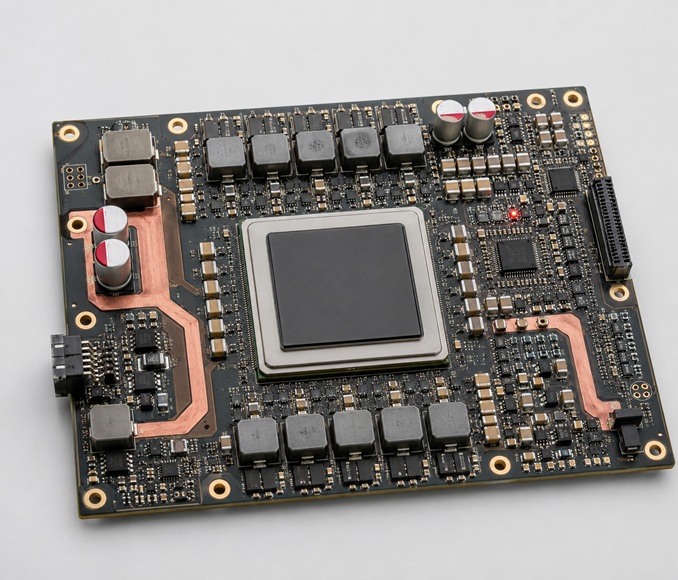
Engineering guide to high-current ASIC Vcore rails, covering 12-phase buck architecture, PMBus control, dynamic load testing, output capacitor networks, smart power stage selection, thermal design and …
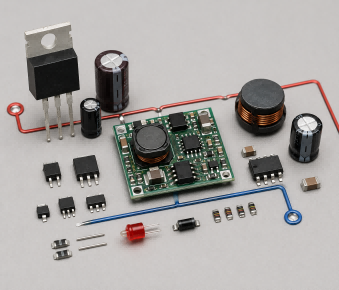
Voltage regulator guide covering linear, LDO, 7805, Zener, adjustable, buck, VRM and alternator regulators, with design checks, testing methods, troubleshooting and datasheet-based selection.


