
 My Inquiry
 My Account


Infineon Technologies CYAT847AZS61-22002

- Part No.:
- CYAT847AZS61-22002
- Manufacturer:
- Infineon Technologies
- Category:
- Touch Screen Controllers
- Package:
- 100-LQFP
- Datasheet:
-
 CYAT847AZS61-22002.pdf
- Description:
- PSOC BASED - TRUETOUCH
- Quantity:
- Payment:

- Shipping:

Inventory:4,882
Please send an inquiry. Send us your inquiry, and we will respond immediately.
Product details
Overview
CYAT847AZS61-22002 from Infineon is an AEC-Q100 qualified automotive-grade capacitive touchscreen controller (slave device in multichip architecture), featuring 61 sense I/Os, 100-pin TQFP package, -40°C to 105°C operating range, and DualSense water/wet-finger tracking - deployed in infotainment displays for premium vehicles requiring glove and moisture robustness.
For engineers reviewing the CYAT847AZS61-22002 datasheet, CYAT847AZS61-22002 pinout, CYAT847AZS61-22002 application, or CYAT847AZS61-22002 equivalent, key selection criteria include sense channel count (61), high-temp automotive qualification (AEC-Q100 Grade S), I²C slave interface (1 Mbps), multi-phase TX capability (up to 150 kHz), and integrated DSP for real-time noise filtering in display-integrated touch systems.
Technical Context
This device operates as a slave controller in Infineon's PSoC Automotive Multitouch Generation 7XL multichip architecture, synchronizing with a master (e.g., CYAT837X) to scale sense channel capacity up to 10320 intersections. It implements register-configurable sensor scanning with 192-channel ADC-per-channel architecture enabling single-pass long-side scanning.
Its AutoArmor and DisplayArmor technologies co-manage EMI emissions/immunity while DualSense independently processes mutual- and self-capacitance signals to enable simultaneous wet-finger tracking and large-object rejection - critical for automotive HMI under condensation or rain exposure.
Key Specifications
| Parameter | Value and Actual Design Meaning |
|---|---|
| Sense I/O Count | 61 dedicated sense pins - enables scalable electrode routing for mid-size automotive touchscreens (e.g., 10–15 inch center stack) |
| Operating Temp Range | -40°C to +105°C (Automotive-S grade) - supports placement near display backlight or in non-ventilated dashboard zones |
| Host Interface | I²C slave, up to 1 Mbps - allows low-pin-count, noise-resilient communication with MCU host without additional level-shifting |
| TX Frequency Max | 150 kHz - supports high-SNR multi-phase transmit for reliable detection through thick gloves (≤5 mm) or wet surfaces |
| Power Supply | 1.71–1.95 V core / 3.0–5.5 V I/O & analog - accommodates mixed-voltage automotive SoC environments |
| Refresh Rate | Up to 120 Hz - meets responsiveness requirements for gesture-driven navigation in ADAS-integrated UIs |
| ADC Channels | 192 independent ADCs - enables parallel acquisition across all sense lines, reducing scan time and improving SNR via hardware averaging |
Pinout & Package
Package: 100-pin TQFP (14 × 14 × 1.4 mm, 0.5-mm pitch), RoHS-compliant, lead-free, moisture-sensitive level 3 (MSL3).
| Pin/Terminal | Circuit Role | Design Meaning |
|---|---|---|
| VDDIO | Digital I/O supply | 3.0–5.5 V input powering GPIOs, I²C interface, and internal logic buffers |
| VDDA | Analog supply | 3.0–5.5 V input for ADC reference and analog front-end circuitry |
| VDDCORE | Core logic supply | 1.71–1.95 V input for Arm Cortex-M CPU and digital subsystem |
| SCL / SDA | I²C bus interface | Open-drain bidirectional lines supporting standard/fast/high-speed modes up to 1 Mbps |
| SENSE[0:60] | Capacitive sense inputs | 61 dedicated analog input pins for mutual/self-capacitance sensing - routed directly to internal 192-channel ADC array |
| RESET_N | Active-low reset | Asynchronous hardware reset line - initiates bootloader or full system reinitialization on falling edge |
Key Features
| Feature | Design Value |
|---|---|
| DualSense wet-finger tracking | Simultaneous mutual- and self-capacitance measurement enables reliable touch detection under >95% RH condensation or light rain film |
| AutoArmor EMI management | Integrated spread-spectrum TX modulation and adaptive noise cancellation reduce radiated emissions by ≥10 dB and improve immunity to display switching noise |
| Glove mode auto-switching | Real-time signal amplitude and phase analysis triggers seamless transition between thin-glove (≤1 mm), thick-glove (≤5 mm), and bare-finger modes |
| Field-upgradable firmware | Secure bootloader supports authenticated over-the-air (OTA) updates without external programming hardware |
| Manufacturing test kit (MTK) support | On-chip self-test routines validate sensor integrity, ADC linearity, and I²C communication during final assembly test |
Applications
| Infotainment Center Stack | Driver Information Display (DID) |
|---|---|
Use Scenario: Touchscreen overlay on 12-inch LCD cluster with ambient temperature cycling (-40°C to 105°C) and frequent glove use. IC Role / Device Role / Timing Role: Slave controller handling 61 sense channels, synchronized to master for full-screen scan; provides real-time coordinate reporting at 100 Hz. Use Value: Enables consistent finger/glove detection despite thermal drift and display EMI - eliminating false touches during HVAC operation. | Use Scenario: Compact 7-inch AMOLED instrument panel with curved glass cover lens and condensation risk in humid climates. IC Role / Device Role / Timing Role: DualSense-enabled slave node performing self-capacitance baseline correction and mutual-capacitance gesture decoding concurrently. Use Value: Maintains touch accuracy under 0.5-mm water film and rejects accidental palm contact during steering maneuvers. |
| Passenger Seat Control Panel | Rear Seat Entertainment (RSE) |
Use Scenario: Integrated touch panel behind rear-seat armrest, exposed to direct sunlight and mechanical vibration. IC Role / Device Role / Timing Role: Standalone slave unit managing 61 electrodes across dual-zone layout (climate + seat controls); uses automatic baseline tracking. Use Value: Compensates for temperature-induced capacitance drift without recalibration - sustaining <5-ms latency across 10-year vehicle lifecycle. | Use Scenario: 10-inch touchscreen mounted in overhead console, subject to intermittent shading and variable glove thickness (cotton vs. leather). IC Role / Device Role / Timing Role: Multichip slave providing configurable refresh rate (60–120 Hz) and thick-glove optimized TX waveform shaping. Use Value: Delivers deterministic 85-Hz response even with 4-mm insulated gloves - meeting OEM haptic feedback timing budgets. |
Equivalent & Alternatives
The following parts are listed as comparable options for similar automotive touchscreen controller applications.
| Alternative Part | Technical Difference | Application Difference | Selection Advice |
|---|---|---|---|
| CYAT847AZA61-22002 | Same silicon, -40°C to +85°C temp grade (Automotive-A) | Restricted to climate-controlled cabin zones (e.g., center console only) | Select when full under-hood or sun-exposed mounting is not required and cost optimization is prioritized |
| MAX20502ATJ+T | Single-chip solution, 48 sense channels, no multichip sync, lower max refresh (60 Hz) | Limited to smaller displays (<8 inch); lacks DualSense and AutoArmor | Consider only for non-safety-critical secondary displays where glove/water robustness is secondary |
Compared with CYAT847AZS61-22002, the A-grade variant trades thermal margin for cost in controlled environments, while MAX20502 offers integration simplicity but sacrifices SNR, glove performance, and automotive-grade EMI resilience required for primary HMI.
Availability
CYAT847AZS61-22002 is available at Aetrix Electronics and suitable for automotive infotainment systems, driver information displays, and passenger control panels requiring stable component supply across extended temperature ranges and long production lifecycles.
Supply support for CYAT847AZS61-22002 includes scheduled delivery planning, volume procurement assistance, BOM continuity management, traceable sourcing, and lifecycle availability coordination for OEM customers, industrial embedded developers, connected-device designers, and electronics production programs.
Manufacturer
Infineon Technologies AG is a German semiconductor manufacturer specializing in power management, automotive microcontrollers, and sensing solutions, with global R&D and manufacturing infrastructure.
This part belongs to the PSoC™ Automotive Multitouch Generation 7XL product line, designed specifically for scalable, AEC-Q100-compliant capacitive touch systems in safety-critical vehicle HMIs - emphasizing noise immunity, environmental robustness, and field-upgradability.
FAQ
What is the role of CYAT847AZS61-22002 in a multichip touchscreen system?
CYAT847AZS61-22002 functions exclusively as a slave controller, synchronized to a master device (e.g., CYAT837X) via dedicated inter-chip links. It handles 61 sense I/Os and offloads ADC processing and noise filtering, enabling scalable channel counts beyond single-chip limits while maintaining deterministic timing and coordinated TX waveform generation.
Does CYAT847AZS61-22002 support Android natively?
Yes - Infineon provides certified Android touch drivers compatible with Android 9 through 13, including HAL integration support, gesture engine mapping, and power-aware suspend/resume handling. Driver source code and integration guides are accessible via MyICP after registration and NDA completion.
Can this device operate without a master controller?
No - CYAT847AZS61-22002 lacks standalone boot ROM, host interface arbitration logic, and system-level configuration registers. It requires initialization and runtime command sequencing from a designated master (e.g., CYAT837X) and cannot function as a single-chip solution.
What is the maximum electrode pitch supported for reliable operation?
At 61 sense channels, the device supports up to 6-mm electrode pitch when used with standard ITO patterns on glass or PET substrates. This is validated per Infineon's reference design CYAT847X-REF-001 using 16:10 aspect ratio layouts and 35-inch diagonal scaling rules - ensuring SNR >25 dB under worst-case EMI conditions.
CYAT847AZS61-22002 Specifications
- Product attributes
- Attribute value
- Manufacturer:
- Infineon Technologies
- Package/Case:
- 100-LQFP
- Touchscreen:
- 2 Wire Capacitive
- Resolution (Bits):
- -
- Interface:
- I2C
- Voltage Reference:
- -
- Voltage - Supply:
- 1.71V ~ 1.95V, 3V ~ 5.5V
- Current - Supply:
- -
- Operating Temperature:
- -40°C ~ 105°C (TA)
- Mounting Type:
- Surface Mount
- Grade:
- Automotive
- Qualification:
- AEC-Q100
- Supplier Device Package:
- 100-TQFP (14x14)
CYAT847AZS61-22002 FAQ
1.How can I place an order for CYAT847AZS61-22002 through Aetrix?
Please submit a Request for Quotation (RFQ) for CYAT847AZS61-22002 on Aetrix. Our sales agent will provide a competitive quotation and guide you through the order confirmation once you accept the terms.
2.Are the price and stock information for CYAT847AZS61-22002 reliable?
The price and inventory of CYAT847AZS61-22002 are updated periodically and may fluctuate due to market conditions. Stock and pricing data are typically refreshed every 24 hours. Quotation validity for CYAT847AZS61-22002 is usually 5 days.
3.What payment methods are accepted for CYAT847AZS61-22002?
We accept Wire Transfer, PayPal, Credit Card, Western Union, MoneyGram, and Escrow for CYAT847AZS61-22002 transactions.
Note: Certain payment methods may incur a processing fee.
4.How is shipping managed for CYAT847AZS61-22002?
CYAT847AZS61-22002 orders can be shipped via leading logistics carriers, including DHL, UPS, FedEx, TNT, or Registered Mail.
Once your CYAT847AZS61-22002 order is processed, you will receive an email with the shipment details and tracking number.
Note: Tracking information may take up to 24 hours to appear. Express delivery typically takes 3–5 business days.
5.How can I obtain technical support or documentation for CYAT847AZS61-22002?
For technical support, including CYAT847AZS61-22002 datasheets, pinout diagrams, or application guidance, please contact our engineering support team. They can provide detailed documentation and assistance for your CYAT847AZS61-22002 requirements.
6.How does Aetrix verify that CYAT847AZS61-22002 is sourced from the original manufacturer or authorized distributors?
All CYAT847AZS61-22002 products on Aetrix are procured from qualified distributors and authorized channels. Our dedicated quality assurance team conducts strict verification, including traceability checks and, if necessary, third-party testing. This ensures that CYAT847AZS61-22002 meets industry standards.
7.What is the process for return or replacement of CYAT847AZS61-22002?
All CYAT847AZS61-22002 units undergo pre-shipment inspection (PSI). If there is an issue with CYAT847AZS61-22002, returns or replacements are accepted under the following conditions:
1.Quantity discrepancies, incorrect items, or visible external defects (such as breakage or corrosion), acknowledged by Aetrix.
2.The issue is reported within 90 days of delivery.
3.The CYAT847AZS61-22002 part is unused and in its original packaging.
Return procedure for CYAT847AZS61-22002:
1.Submit a request within 90 days.
2.Obtain a Return Material Authorization (RMA) from Aetrix.
CYAT847AZS61-22002 Tags

-
TSC2046IPWR
Texas Instruments
-
TSC2007IPWR
Texas Instruments
-
TSC2046EIPWR
Texas Instruments
-
AR1021-I/SS
Microchip Technology
-
AR1020-I/SS
Microchip Technology
-
AR1100-I/MQ
Microchip Technology
-
AR1021T-I/ML
Microchip Technology
-
AR1100T-I/SS
Microchip Technology
-
TSC2003IPWR
Texas Instruments
-
TSC2004IRTJR
Texas Instruments
-
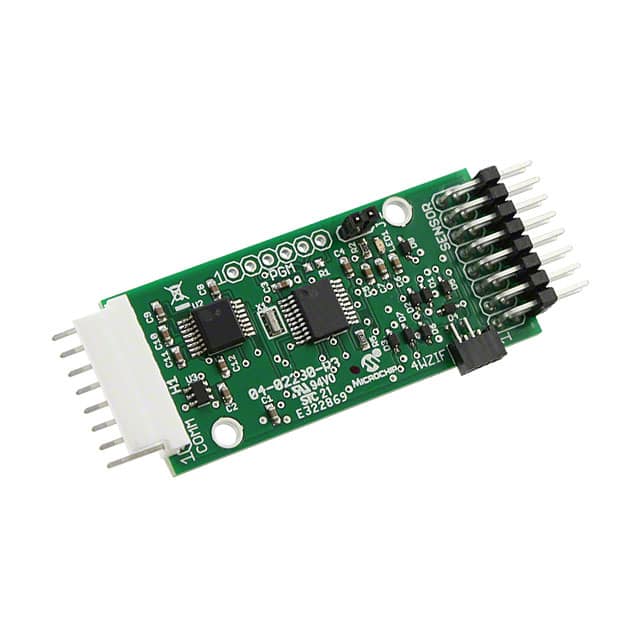
AR1100BRD
Microchip Technology
.jpg)
-
TSC2046IRGVR
Texas Instruments
Tech Hub

18650 battery guide covering lithium-ion cell basics, 3.6V/3.7V voltage, 4.2V charging, mAh and Wh capacity, protected cells, chargers, BMS, series-parallel packs, holders, welding and sourcing checks.…

Hall effect sensor guide covering working principle, linear and digital sensors, Arduino circuits, current sensing, speed detection, automotive applications, A3144 examples, signal filtering and datash…

Product Change Notification guide for electronic components, covering PCN meaning, PCN vs PDN/EOL, common change types, risk levels, form-fit-function review, engineering validation, BOM control, LTB/L…

A practical guide to blend door actuators, covering HVAC function, symptoms, location, AC and heater issues, reset and calibration, replacement cost, electrical diagnosis, compatibility checks, and rep…

Engineering guide to Raspberry Pi alternatives, covering chip-level differences, Orange Pi, ROCK, Jetson, Banana Pi, NanoPi, Compute Module, Pico, GPIO, camera, HAT compatibility, and replacement risks…
Engineering guide to dynamic load response testing for high-current buck converters, covering load step setup, slew rate, Vcore undershoot, overshoot, recovery time, probe location, output capacitors a…
Engineering guide to output capacitor selection for ASIC Vcore rails, covering bulk capacitors, polymer capacitors, MLCC decoupling, DC bias, ESR, ESL, placement, transient response and substitution ri…
Engineering guide to high-current ASIC Vcore rails, covering 12-phase buck architecture, PMBus control, dynamic load testing, output capacitor networks, smart power stage selection, thermal design and …
Voltage regulator guide covering linear, LDO, 7805, Zener, adjustable, buck, VRM and alternator regulators, with design checks, testing methods, troubleshooting and datasheet-based selection.
Amplifier guide covering voltage, current and power amplification, gain, feedback, amplifier classes, audio and RF applications, op-amp circuits, transimpedance amplifiers, datasheet selection and trou…


