
 My Inquiry
 My Account


Infineon Technologies PBL38620/2QNA
- Part No.:
- PBL38620/2QNA
- Manufacturer:
- Infineon Technologies
- Category:
- Telecom
- Package:
- 28-LCC (J-Lead)
- Datasheet:
-
 PBL38620/2QNA.pdf
- Description:
- IC TELECOM INTERFACE PLCC-28
- Quantity:
- Payment:

- Shipping:

Inventory:4,158
Please send an inquiry. Send us your inquiry, and we will respond immediately.
Product details
Overview
PBL38620/2QNA from Infineon Technologies is a FlexiSLIC™ Subscriber Line Interface Circuit (SLIC) designed for central office and CPE line-card applications. It provides full two-wire loop interface with programmable overhead voltage (POV), 44 V open-loop voltage at -48 V battery feed, selectable 1× or 0.5× transmit gain, integrated ring relay driver, and analog overtemperature protection enabling continued transmission during thermal guard activation.
For engineers reviewing the PBL38620/2QNA datasheet, PBL38620/2QNA pinout, PBL38620/2QNA application, or PBL38620/2QNA equivalent, key selection criteria include on-hook power dissipation (60 mW), longitudinal current capability in on-hook state, battery feed tracking accuracy, POV programmability, and SLIC/codec interface compatibility per SICOFI®4 reference design.
Technical Context
The PBL38620/2QNA implements a fully integrated SLIC architecture with dual-mode battery feed (high/low Vbat switching), hybrid circuitry supporting two-wire/four-wire conversion, and real-time loop monitoring including ground key and ring trip detection. Its analog temperature guard operates without interrupting signal path integrity.
Control logic uses three-pin state encoding (C3/C2/C1) to select six operating modes: open circuit, ringing, active, test, low-battery active, and low-battery ringing. The device requires no power-up sequencing and supports on-hook transmission via internal bias current control of RSN terminal.
Key Specifications
| Parameter | Value and Actual Design Meaning |
|---|---|
| Open-loop voltage | 44 V @ -48 V battery feed - enables long-loop operation while maintaining compliance with ITU-T K.20 surge immunity |
| On-hook power dissipation | 60 mW in active state - minimizes thermal load on line card during standby |
| Transmit gain | Selectable 1× or 0.5× - allows dynamic adjustment of signal headroom for echo cancellation tuning |
| Programmable overhead voltage (POV) | Adjustable via external resistor - sets DC bias margin between battery feed and line voltage for stable loop current regulation |
| Thermal protection | Analog overtemperature guard - maintains transmission continuity during thermal stress without digital latch-up |
| Loop monitoring | Integrated ground key & ring trip detectors - enables real-time line status reporting without external comparators |
| Package | P-/PG-LCC-28-3 - 28-pin plastic leaded chip carrier with gull-wing leads for high-reliability telecom PCB mounting |
Pinout & Package
Package: P-/PG-LCC-28-3 (Plastic Leaded Chip Carrier, 28-pin, 0.050" pitch, gull-wing leads).
| Pin/Terminal | Circuit Role | Design Meaning |
|---|---|---|
| VCC | Positive supply input | Connects to +5 V rail; powers internal logic and analog circuitry |
| GND | Ground reference | Common return for all analog and digital sections; requires low-inductance PCB plane |
| TXP/TXN | Differential transmit output | Drives four-wire codec interface; supports ±1.2 V swing into 100 Ω differential load |
| RXP/RXN | Differential receive input | Accepts ±1.2 V differential signal from codec; includes on-chip termination resistors |
| LINEP/LINEN | Two-wire line interface | Direct connection to telephone line pair; handles up to 44 V open-circuit voltage and 120 mA loop current |
| RSN | Current sense node | Provides analog bias current for loop current measurement; used with external resistor for POV programming |
| C3/C2/C1 | Mode control inputs | Three-bit binary code selects SLIC operating state (e.g., 001 = ringing, 000 = open circuit) |
| RELAY | Ring relay driver output | High-current open-drain output capable of driving 12 V/100 mA electromechanical relay directly |
Key Features
| Feature | Design Value |
|---|---|
| No power-up sequence required | Enables immediate line activation after power application - eliminates boot delay in emergency call scenarios |
| On-hook transmission support | Maintains voice path integrity during idle state - critical for caller ID and supervisory tone delivery |
| Automatic high/low battery switching | Seamlessly transitions between -48 V and -24 V feed rails - extends operational range across legacy and modern CO infrastructure |
| Full longitudinal current capability in on-hook | Delivers rated loop current even when line is open - ensures reliable ground key detection and fault reporting |
| Integrated ring relay driver | Eliminates need for external driver transistor - reduces BOM count and PCB area on line cards |
Applications
| Central Office Line Card | PABX Interface Module |
|---|---|
|
Use Scenario: Deployed in Class 5 central office line cards serving analog subscriber lines with loop lengths up to 18 kft. IC Role / Device Role / Timing Role: Primary SLIC providing battery feed, hybrid function, loop supervision, and ringing generation. Use Value: 44 V open-loop voltage and programmable POV ensure stable loop current across varying line impedances and temperatures. |
Use Scenario: Integrated into enterprise PABX systems requiring analog trunk interfaces for legacy phone sets and fax machines. IC Role / Device Role / Timing Role: Line interface controller managing off-hook detection, dial pulse decoding, and ring signal injection. Use Value: Integrated ground key detector and ring trip detector reduce external component count while improving fault response time. |
| ISDN Terminal Adapter | DAML Line Interface |
|
Use Scenario: Used in ISDN NT1+ devices converting U-interface signals to S/T-interface for terminal equipment. IC Role / Device Role / Timing Role: Analog front-end SLIC handling physical layer line conditioning and supervision for basic rate interface. Use Value: On-hook transmission capability supports D-channel signaling and Layer 1 maintenance messages without disrupting line state. |
Use Scenario: Embedded in digital added mainline (DAML) cards extending digital service to remote analog drops. IC Role / Device Role / Timing Role: Bidirectional line interface managing battery feed, hybrid balance, and longitudinal noise rejection. Use Value: High and low battery switching adapts to mixed-voltage feeder networks, ensuring interoperability with older infrastructure. |
Equivalent & Alternatives
The following parts are listed as comparable options for similar SLIC applications.
| Alternative Part | Technical Difference | Application Difference | Selection Advice |
|---|---|---|---|
| LE89316CP | Higher on-hook power (120 mW), fixed 1× transmit gain, no analog thermal guard - uses digital thermal shutdown | Requires external relay driver; lacks integrated ground key detection | Preferred where higher loop current stability is needed but thermal continuity during overload is not required |
| SLIC26010 | Lower open-loop voltage (36 V), 24-pin SSOP only, no low-battery mode - single-rail -48 V operation only | Supports fewer operating states; no ring trip detection | Selected for cost-sensitive short-loop deployments where full FlexiSLIC feature set is unnecessary |
Compared with LE89316CP and SLIC26010, the PBL38620/2QNA uniquely combines analog thermal guard with on-hook transmission, programmable POV, and dual-battery feed - making it optimal for mixed-infrastructure CO upgrades requiring backward compatibility and uninterrupted service under thermal stress.
Availability
PBL38620/2QNA is available at Aetrix Electronics and suitable for central office line cards, PABX interface modules, and ISDN terminal adapters requiring stable component supply, long-term lifecycle support, and compliance with ITU-T K.20/K.21 surge standards.
Supply support for PBL38620/2QNA includes scheduled delivery planning, volume procurement assistance, BOM continuity management, traceable sourcing, and lifecycle availability coordination for OEM customers, industrial embedded developers, connected-device designers, and electronics production programs.
Manufacturer
Infineon Technologies AG is a German semiconductor manufacturer specializing in power management, automotive, and communications ICs, with global R&D and manufacturing facilities.
The FlexiSLIC product line targets wireline telephony infrastructure, delivering highly integrated, programmable SLIC solutions optimized for CO line cards, PABX systems, and CPE terminal adapters requiring robust loop supervision and battery feed control.
FAQ
What is the maximum loop current supported by PBL38620/2QNA?
The PBL38620/2QNA supports up to 120 mA loop current in active state, verified per Table 2 (SLIC Operating States) and Figure 12 (Battery Feed Characteristics) in Rev. 2.0 datasheet. This rating applies across the full operating temperature range (-40°C to +85°C) and is maintained with close tolerance using internal current sensing and feedback.
Does PBL38620/2QNA require external components for POV programming?
Yes - POV is programmed via an external resistor connected to the RSN pin, with values specified in Table 6 (Resistors) of the datasheet. A 10 kΩ resistor sets POV to 2.5 V; other values scale linearly. No capacitor or additional active components are needed for basic POV configuration.
Can PBL38620/2QNA operate with both -48 V and -24 V battery supplies?
Yes - the device features automatic high/low battery switching, selecting between -48 V and -24 V rails based on internal voltage detection. This behavior is confirmed in Section 1.1 Features and Section 6 Battery Feed, enabling deployment across heterogeneous central office infrastructures without hardware modification.
Is the RELAY pin compatible with standard 12 V electromechanical relays?
Yes - the RELAY pin is an open-drain N-channel driver rated for 12 V supply and 100 mA continuous current, matching standard telecom ring relays. Internal current limiting prevents damage during relay coil inductive kickback, and no external flyback diode is required per Figure 8 and Section 8 Relay Driver.
PBL38620/2QNA Specifications
- Product attributes
- Attribute value
- Manufacturer:
- Infineon Technologies
- Series:
- FlexiSLIC™
- Package/Case:
- 28-LCC (J-Lead)
- Packaging:
- Tape & Reel (TR)
- Product Status:
- Discontinued at Digi-Key
- Function:
- Subscriber Line Interface Concept (SLIC)
- Interface:
- -
- Number of Circuits:
- 1
- Voltage - Supply:
- 5V
- Current - Supply:
- 2.8mA
- Power (Watts):
- 290 mW
- Operating Temperature:
- -40°C ~ 85°C
- Grade:
- -
- Qualification:
- -
- Mounting Type:
- Surface Mount
- Supplier Device Package:
- P/PG-LCC-28-3
PBL38620/2QNA FAQ
1.How can I place an order for PBL38620/2QNA through Aetrix?
Please submit a Request for Quotation (RFQ) for PBL38620/2QNA on Aetrix. Our sales agent will provide a competitive quotation and guide you through the order confirmation once you accept the terms.
2.Are the price and stock information for PBL38620/2QNA reliable?
The price and inventory of PBL38620/2QNA are updated periodically and may fluctuate due to market conditions. Stock and pricing data are typically refreshed every 24 hours. Quotation validity for PBL38620/2QNA is usually 5 days.
3.What payment methods are accepted for PBL38620/2QNA?
We accept Wire Transfer, PayPal, Credit Card, Western Union, MoneyGram, and Escrow for PBL38620/2QNA transactions.
Note: Certain payment methods may incur a processing fee.
4.How is shipping managed for PBL38620/2QNA?
PBL38620/2QNA orders can be shipped via leading logistics carriers, including DHL, UPS, FedEx, TNT, or Registered Mail.
Once your PBL38620/2QNA order is processed, you will receive an email with the shipment details and tracking number.
Note: Tracking information may take up to 24 hours to appear. Express delivery typically takes 3–5 business days.
5.How can I obtain technical support or documentation for PBL38620/2QNA?
For technical support, including PBL38620/2QNA datasheets, pinout diagrams, or application guidance, please contact our engineering support team. They can provide detailed documentation and assistance for your PBL38620/2QNA requirements.
6.How does Aetrix verify that PBL38620/2QNA is sourced from the original manufacturer or authorized distributors?
All PBL38620/2QNA products on Aetrix are procured from qualified distributors and authorized channels. Our dedicated quality assurance team conducts strict verification, including traceability checks and, if necessary, third-party testing. This ensures that PBL38620/2QNA meets industry standards.
7.What is the process for return or replacement of PBL38620/2QNA?
All PBL38620/2QNA units undergo pre-shipment inspection (PSI). If there is an issue with PBL38620/2QNA, returns or replacements are accepted under the following conditions:
1.Quantity discrepancies, incorrect items, or visible external defects (such as breakage or corrosion), acknowledged by Aetrix.
2.The issue is reported within 90 days of delivery.
3.The PBL38620/2QNA part is unused and in its original packaging.
Return procedure for PBL38620/2QNA:
1.Submit a request within 90 days.
2.Obtain a Return Material Authorization (RMA) from Aetrix.
PBL38620/2QNA Tags

-
LMC567CMX/NOPB
Texas Instruments
-
LM567CMX/NOPB
Texas Instruments
-
LM567CM/NOPB
Texas Instruments
-
VSC8531XMW-02
Microchip Technology
-
VSC8531XMW-05
Microchip Technology

-
GPY115C0VI
MaxLinear, Inc.
-
SI32185-A-FMR
Skyworks Solutions Inc.
-
VSC8541XMV-05
Microchip Technology
-
SI32178-B-FM1R
Skyworks Solutions Inc.
-
GPY215C0VI
MaxLinear, Inc.
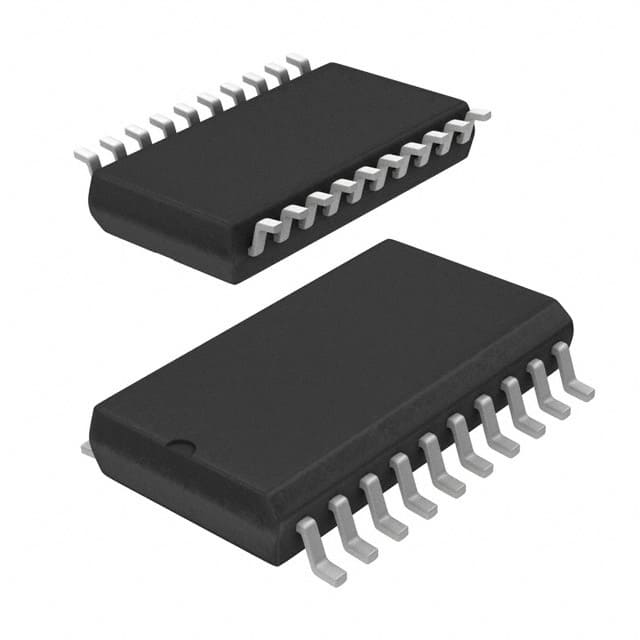
-
CPC7514ZTR
Littelfuse Inc.
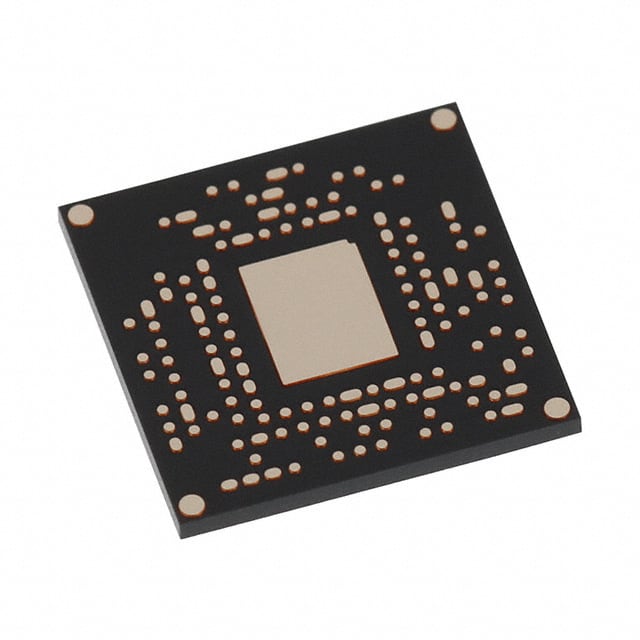
-
VSC8502XML-03
Microchip Technology
Tech Hub

Guide to electronic component obsolescence covering EOL risk, PCN/PDN notices, last-time buy planning, replacement options, form-fit-function validation, counterfeit risk and BOM lifecycle management.

18650 battery guide covering lithium-ion cell basics, 3.6V/3.7V voltage, 4.2V charging, mAh and Wh capacity, protected cells, chargers, BMS, series-parallel packs, holders, welding and sourcing checks.…

Hall effect sensor guide covering working principle, linear and digital sensors, Arduino circuits, current sensing, speed detection, automotive applications, A3144 examples, signal filtering and datash…

Product Change Notification guide for electronic components, covering PCN meaning, PCN vs PDN/EOL, common change types, risk levels, form-fit-function review, engineering validation, BOM control, LTB/L…

A practical guide to blend door actuators, covering HVAC function, symptoms, location, AC and heater issues, reset and calibration, replacement cost, electrical diagnosis, compatibility checks, and rep…

Engineering guide to Raspberry Pi alternatives, covering chip-level differences, Orange Pi, ROCK, Jetson, Banana Pi, NanoPi, Compute Module, Pico, GPIO, camera, HAT compatibility, and replacement risks…
Engineering guide to dynamic load response testing for high-current buck converters, covering load step setup, slew rate, Vcore undershoot, overshoot, recovery time, probe location, output capacitors a…
Engineering guide to output capacitor selection for ASIC Vcore rails, covering bulk capacitors, polymer capacitors, MLCC decoupling, DC bias, ESR, ESL, placement, transient response and substitution ri…
Engineering guide to high-current ASIC Vcore rails, covering 12-phase buck architecture, PMBus control, dynamic load testing, output capacitor networks, smart power stage selection, thermal design and …
Voltage regulator guide covering linear, LDO, 7805, Zener, adjustable, buck, VRM and alternator regulators, with design checks, testing methods, troubleshooting and datasheet-based selection.


