
 My Inquiry
 My Account


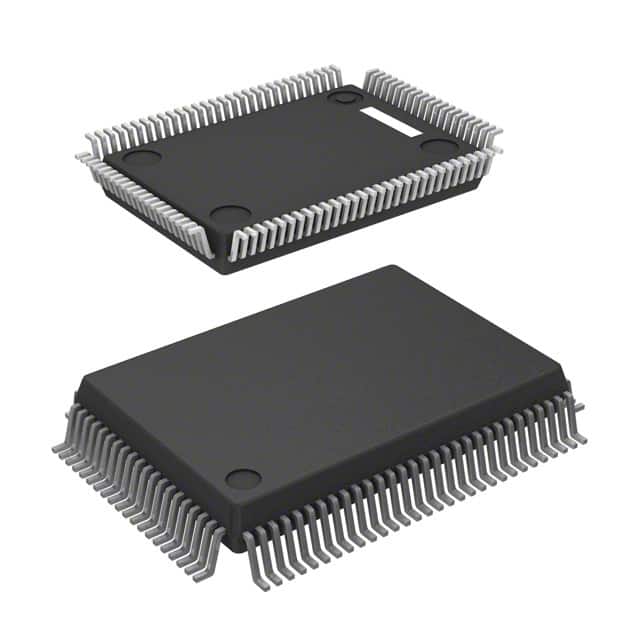
Infineon Technologies PEF 20450 H V1.3
- Part No.:
- PEF 20450 H V1.3
- Manufacturer:
- Infineon Technologies
- Category:
- Telecom
- Package:
- 100-BQFP
- Datasheet:
-
 PEF 20450 H V1.3.pdf
- Description:
- IC TELECOM INTERFACE MQFP-100
- Quantity:
- Payment:

- Shipping:

Inventory:4,007
Please send an inquiry. Send us your inquiry, and we will respond immediately.
Product details
Overview
PEF 20450 H V1.3 from Infineon Technologies is a single-chip PCM (Pulse Code Modulation) switching IC for digital telephony infrastructure, implementing time-slot interchanging in TDM-based systems with up to 256 × 256 full-duplex connections. It supports 8-bit, 4-bit, 2-bit, and 1-bit subchannel switching, broadcast/multipoint modes, and integrates an analog PLL clock generator with jitter transfer compliance per ITU-T G.736. Used in PBX, central office (CO), and access multiplexer line cards.
For engineers reviewing the PEF 20450 H V1.3 datasheet, PEF 20450 H V1.3 pinout, PEF 20450 H V1.3 application, or PEF 20450 H V1.3 equivalent, key selection criteria include PCM interface timing compatibility (TDM frame rates up to 2.048 MHz), hardware reset behavior per Section 3.7.1, interrupt handling via ISTA1/IESTA1 registers, and configuration flexibility through indirect register addressing for dynamic connection setup.
Technical Context
The PEF 20450 H V1.3 implements a fully programmable switching fabric with three operational modes: minimum/constant delay, subchannel, and message mode - each configurable via CMD1/CMD2 registers. Its integrated analog PLL (APLL) accepts 2.048 MHz or 4.096 MHz reference inputs and generates synchronized local clocks with phase alignment capability per Section 3.4.3.
It features dual interface support: an 8-/16-bit microprocessor bus (Intel/Motorola modes, multiplexed/de-multiplexed) and a parallel PCM bus supporting both master and slave operation. Interrupt status (ISTA1) and error masking (INTEM1/INTEM2) are handled via dedicated 8-bit registers mapped to the µP interface, enabling real-time fault detection and recovery in carrier-grade systems.
Key Specifications
| Parameter | Value and Actual Design Meaning |
|---|---|
| Switching Capacity | 256 × 256 full-duplex time-slot interchanges per frame; enables scalable TDM matrix routing in multi-line PBX and CO applications. |
| PCM Data Rate | 2.048 Mbps (E1) or 1.544 Mbps (T1); supports standard telephony framing with 32-channel or 24-channel structures. |
| Subchannel Granularity | 1-, 2-, 4-, or 8-bit time-slot segments; allows efficient bandwidth allocation for mixed voice/data services on shared links. |
| PLL Reference Input | 2.048 MHz or 4.096 MHz crystal or external clock; provides jitter-cleansing function compliant with ITU-T G.736 transfer mask. |
| Microprocessor Interface | 8- or 16-bit parallel bus with Intel/Siemens or Motorola timing; enables direct integration with ARM7, SH-3, or MPC8xx controllers without glue logic. |
| Interrupt Sources | 16 configurable interrupt flags (e.g., connection established, error detected, timer expired); reduces host polling overhead in real-time control loops. |
| Power Supply | +3.3 V ±5% core supply; compatible with modern low-voltage telecom power architectures and reduces thermal load on line cards. |
Pinout & Package
PEF 20450 H V1.3 is housed in a 144-pin LQFP (Low-Profile Quad Flat Package) with 0.5 mm pitch, measuring 20 mm × 20 mm. The package supports standard surface-mount reflow profiles and includes dedicated power/ground pins for analog and digital domains to minimize noise coupling.
| Pin/Terminal | Circuit Role | Design Meaning |
|---|---|---|
| CLKIN | PLL Reference Clock Input | Accepts 2.048 MHz or 4.096 MHz crystal or buffered clock; determines system timing accuracy and jitter performance. |
| PCM_CLK | PCM Interface Clock Output | Drives external PCM transceivers at frame-sync rate; configurable as master or slave source for TDM bus synchronization. |
| PCM_FS | PCM Frame Sync Signal | Generates or receives 8 kHz frame sync pulse; defines time-slot boundaries for 32-channel E1 or 24-channel T1 operation. |
| PCM_DATA | Parallel PCM Data Bus (8/16-bit) | Bi-directional time-slot data path; supports simultaneous read/write of multiple slots during one frame period. |
| INT | Interrupt Request Output | Active-low open-drain signal asserted on configurable events (e.g., connection completion, error condition); triggers µP ISR. |
| RESET | Hardware Reset Input | Asynchronous active-low input; initiates full internal state reset including register initialization and PLL lock recovery (Section 3.7.1). |
| TCK/TMS/TDI/TDO | JTAG Boundary Scan Interface | Enables IEEE 1149.1-compliant testing, in-circuit programming, and debug visibility without requiring additional test points. |
Key Features
| Feature | Design Value |
|---|---|
| Programmable Switching Modes | Supports bidirectional, broadcast, multipoint, and message-mode interconnections - enabling flexible call routing and conferencing in PBX systems. |
| Integrated Analog PLL (APLL) | Provides jitter attenuation per ITU-T G.736; eliminates need for external clock cleaners in E1/T1 line interface modules. |
| Indirect Register Addressing | Allows dynamic configuration of >200 registers via 8-bit address/data ports; reduces µP bus width requirements and simplifies firmware design. |
| Dual Microprocessor Interface | Native support for Intel-style (RD/WR strobes) and Motorola-style (E clock) timing; avoids translation logic when interfacing legacy telecom controllers. |
| Subchannel Bit Shifting | Permits 1–8 bit alignment within 32-slot frames; essential for supporting CAS signaling, robbed-bit signaling, and embedded operations channels. |
Applications
| IP-PBX Line Card | Digital Access Multiplexer |
|---|---|
|
Use Scenario: Aggregating analog subscriber lines into E1 trunks for VoIP gateway handoff. IC Role / Device Role / Timing Role: Time-slot interchanger managing 256-channel PCM streams between FXS/FXO interfaces and upstream packet processors. Use Value: Enables deterministic latency (<500 ns switching delay) and zero-frame-skew routing required for toll-quality voice transport. |
Use Scenario: Consolidating multiple leased-line T1/E1 feeds into a single backhaul interface for metro aggregation. IC Role / Device Role / Timing Role: Central switching fabric performing cross-connect, grooming, and loopback functions under SNMP management. Use Value: Supports hitless reconfiguration of DS0-level circuits without service interruption, meeting Telcordia GR-1244-CORE reliability requirements. |
| Central Office Switch Shelf | Remote Terminal Unit |
|
Use Scenario: Providing non-blocking time-slot interchange between trunk and subscriber line cards in Class-5 switches. IC Role / Device Role / Timing Role: Core switching engine executing connection setup/release commands via µP interface with hardware-assisted arbitration. Use Value: Delivers 99.999% uptime via dual-redundant clock paths and error-correcting register access (IESTA1/INTEM1). |
Use Scenario: Enabling DSLAM or ONU line cards to route voice traffic over POTS splitters while maintaining PSTN compatibility. IC Role / Device Role / Timing Role: Local TDM switch bridging ADSL2+ data paths with legacy telephone wiring using subchannel broadcast mode. Use Value: Allows simultaneous delivery of voice (DS0), alarm signals (bit 16), and maintenance data (bits 1–7) on same physical pair. |
Equivalent & Alternatives
The following parts are listed as comparable options for similar PCM switching applications.
| Alternative Part | Technical Difference | Application Difference | Selection Advice |
|---|---|---|---|
| PEF 20470 MTSI | Higher channel count (512 × 512), added MTSI-L variant with extended temperature range (−40°C to +85°C). | Targeted at high-density CO switching shelves requiring greater scalability and industrial ambient tolerance. | Select when >256×256 capacity or extended temp operation is mandatory; otherwise PEF 20450 offers optimal cost/performance for mid-tier PBX. |
| PEF 24470 MTSI-XL | Includes XL (extra-long) timing margin for slower µP buses; adds enhanced JTAG diagnostics and larger configuration memory. | Suitable for legacy controller platforms with marginal timing margins or where field-upgradable firmware is required. | Choose only if existing µP interface fails setup/hold timing with PEF 20450; no benefit for new designs with modern controllers. |
Compared with PEF 20450 H V1.3, the PEF 20470 offers double switching capacity at higher power and cost, while the PEF 24470 trades raw performance for robustness on aging hardware - making the PEF 20450 the optimal balance of density, jitter performance, and integration for mainstream digital line cards.
Availability
PEF 20450 H V1.3 is available at Aetrix Electronics and suitable for IP-PBX line cards, digital access multiplexers, and central office switch shelves requiring stable component supply across long-lifecycle telecom deployments.
Supply support for PEF 20450 H V1.3 includes scheduled delivery planning, volume procurement assistance, BOM continuity management, traceable sourcing, and lifecycle availability coordination for OEM customers, industrial embedded developers, connected-device designers, and electronics production programs.
Manufacturer
Infineon Technologies AG is a German semiconductor manufacturer specializing in power management, automotive, and wired communications ICs, with headquarters in Munich and global R&D centers.
The PEF 20450 belongs to Infineon's SWITI (Switching IC) product line, designed specifically for TDM-based digital telephony infrastructure requiring high-reliability time-slot interchange, jitter-cleansing clock generation, and seamless µP integration.
FAQ
What is the maximum supported PCM frame rate for PEF 20450 H V1.3?
The device supports standard E1 (2.048 Mbps) and T1 (1.544 Mbps) frame rates, with PCM_CLK output configurable up to 8.192 MHz for multi-frame structures. Frame sync (PCM_FS) operates at 8 kHz for E1 and 6.3 kHz for T1, as verified in Section 7.1 timing diagrams and Table 22 of the preliminary datasheet.
Does PEF 20450 H V1.3 require external crystal loading capacitors?
Yes - the integrated crystal oscillator requires two external 15 pF ±5% NP0 ceramic capacitors connected between CLKIN and ground, as specified in Section 8.3 and Figure 6 of the datasheet. These ensure stable oscillation at 2.048 MHz and meet frequency tolerance requirements for SS7 and ISDN applications.
How does the hardware reset sequence affect PLL lock acquisition?
Upon assertion of the RESET pin, the APLL is held in reset until release, then requires 5–10 ms to achieve lock, as defined in Section 7.5 "Hardware Reset Timing." During this period, PCM_CLK remains inactive, and all switching operations are suspended until LOCK status is confirmed via register bit ISTA1.7.
Can PEF 20450 H V1.3 perform simultaneous read and write on the same time-slot?
No - the switching fabric operates in strict time-division mode: each time-slot is either sourced (write) or sunk (read) per frame, not both. Simultaneous bidirectional operation is achieved only across different slots (e.g., slot 16 write → slot 24 read), as described in Section 3.3.1.5 and Figure 5 "Bidirectional Mode."
PEF 20450 H V1.3 Specifications
- Product attributes
- Attribute value
- Manufacturer:
- Infineon Technologies
- Series:
- SWITI
- Package/Case:
- 100-BQFP
- Packaging:
- Tray
- Product Status:
- Obsolete
- Function:
- Switching IC
- Interface:
- PCM, PLL
- Number of Circuits:
- 1
- Voltage - Supply:
- 3.13V ~ 3.47V
- Current - Supply:
- 200mA
- Power (Watts):
- -
- Operating Temperature:
- -40°C ~ 85°C
- Grade:
- -
- Qualification:
- -
- Mounting Type:
- Surface Mount
- Supplier Device Package:
- PG-MQFP-100-2
PEF 20450 H V1.3 FAQ
1.How can I place an order for PEF 20450 H V1.3 through Aetrix?
Please submit a Request for Quotation (RFQ) for PEF 20450 H V1.3 on Aetrix. Our sales agent will provide a competitive quotation and guide you through the order confirmation once you accept the terms.
2.Are the price and stock information for PEF 20450 H V1.3 reliable?
The price and inventory of PEF 20450 H V1.3 are updated periodically and may fluctuate due to market conditions. Stock and pricing data are typically refreshed every 24 hours. Quotation validity for PEF 20450 H V1.3 is usually 5 days.
3.What payment methods are accepted for PEF 20450 H V1.3?
We accept Wire Transfer, PayPal, Credit Card, Western Union, MoneyGram, and Escrow for PEF 20450 H V1.3 transactions.
Note: Certain payment methods may incur a processing fee.
4.How is shipping managed for PEF 20450 H V1.3?
PEF 20450 H V1.3 orders can be shipped via leading logistics carriers, including DHL, UPS, FedEx, TNT, or Registered Mail.
Once your PEF 20450 H V1.3 order is processed, you will receive an email with the shipment details and tracking number.
Note: Tracking information may take up to 24 hours to appear. Express delivery typically takes 3–5 business days.
5.How can I obtain technical support or documentation for PEF 20450 H V1.3?
For technical support, including PEF 20450 H V1.3 datasheets, pinout diagrams, or application guidance, please contact our engineering support team. They can provide detailed documentation and assistance for your PEF 20450 H V1.3 requirements.
6.How does Aetrix verify that PEF 20450 H V1.3 is sourced from the original manufacturer or authorized distributors?
All PEF 20450 H V1.3 products on Aetrix are procured from qualified distributors and authorized channels. Our dedicated quality assurance team conducts strict verification, including traceability checks and, if necessary, third-party testing. This ensures that PEF 20450 H V1.3 meets industry standards.
7.What is the process for return or replacement of PEF 20450 H V1.3?
All PEF 20450 H V1.3 units undergo pre-shipment inspection (PSI). If there is an issue with PEF 20450 H V1.3, returns or replacements are accepted under the following conditions:
1.Quantity discrepancies, incorrect items, or visible external defects (such as breakage or corrosion), acknowledged by Aetrix.
2.The issue is reported within 90 days of delivery.
3.The PEF 20450 H V1.3 part is unused and in its original packaging.
Return procedure for PEF 20450 H V1.3:
1.Submit a request within 90 days.
2.Obtain a Return Material Authorization (RMA) from Aetrix.
PEF 20450 H V1.3 Tags

-
LMC567CMX/NOPB
Texas Instruments
-
LM567CMX/NOPB
Texas Instruments
-
LM567CM/NOPB
Texas Instruments
-
VSC8531XMW-02
Microchip Technology
-
VSC8531XMW-05
Microchip Technology

-
GPY115C0VI
MaxLinear, Inc.
-
SI32185-A-FMR
Skyworks Solutions Inc.
-
VSC8541XMV-05
Microchip Technology
-
SI32178-B-FM1R
Skyworks Solutions Inc.
-
GPY215C0VI
MaxLinear, Inc.
-
CPC7514ZTR
Littelfuse Inc.
-
VSC8502XML-03
Microchip Technology
Tech Hub

18650 battery guide covering lithium-ion cell basics, 3.6V/3.7V voltage, 4.2V charging, mAh and Wh capacity, protected cells, chargers, BMS, series-parallel packs, holders, welding and sourcing checks.…

Hall effect sensor guide covering working principle, linear and digital sensors, Arduino circuits, current sensing, speed detection, automotive applications, A3144 examples, signal filtering and datash…

Product Change Notification guide for electronic components, covering PCN meaning, PCN vs PDN/EOL, common change types, risk levels, form-fit-function review, engineering validation, BOM control, LTB/L…

A practical guide to blend door actuators, covering HVAC function, symptoms, location, AC and heater issues, reset and calibration, replacement cost, electrical diagnosis, compatibility checks, and rep…

Engineering guide to Raspberry Pi alternatives, covering chip-level differences, Orange Pi, ROCK, Jetson, Banana Pi, NanoPi, Compute Module, Pico, GPIO, camera, HAT compatibility, and replacement risks…
Engineering guide to dynamic load response testing for high-current buck converters, covering load step setup, slew rate, Vcore undershoot, overshoot, recovery time, probe location, output capacitors a…
Engineering guide to output capacitor selection for ASIC Vcore rails, covering bulk capacitors, polymer capacitors, MLCC decoupling, DC bias, ESR, ESL, placement, transient response and substitution ri…
Engineering guide to high-current ASIC Vcore rails, covering 12-phase buck architecture, PMBus control, dynamic load testing, output capacitor networks, smart power stage selection, thermal design and …
Voltage regulator guide covering linear, LDO, 7805, Zener, adjustable, buck, VRM and alternator regulators, with design checks, testing methods, troubleshooting and datasheet-based selection.
Amplifier guide covering voltage, current and power amplification, gain, feedback, amplifier classes, audio and RF applications, op-amp circuits, transimpedance amplifiers, datasheet selection and trou…


