
 My Inquiry
 My Account


Infineon Technologies PEF 20550 H V2.1
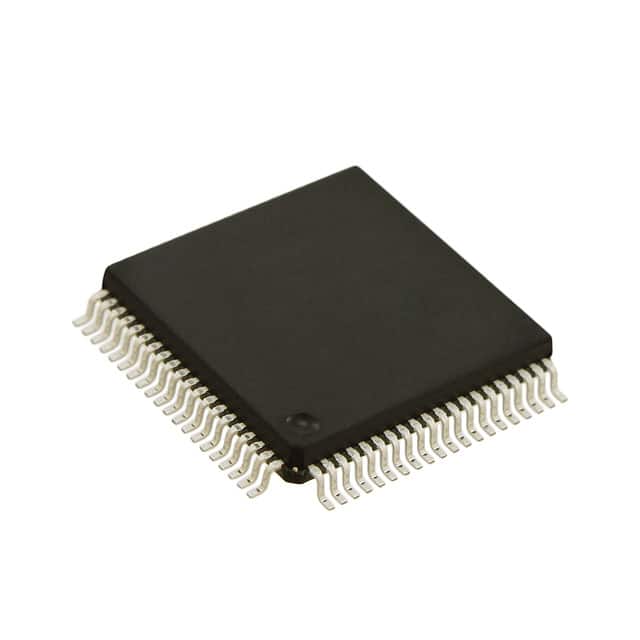
- Part No.:
- PEF 20550 H V2.1
- Manufacturer:
- Infineon Technologies
- Category:
- Telecom
- Package:
- 80-QFP
- Datasheet:
-
 PEF 20550 H V2.1.pdf
- Description:
- IC TELECOM INTERFACE 80MQFP
- Quantity:
- Payment:

- Shipping:

Inventory:4,412
Please send an inquiry. Send us your inquiry, and we will respond immediately.
Product details
Overview
PEF 20550 H V2.1 from Siemens AG is an Extended Line Card Interface Controller (ELIC®) IC designed for digital telephony line card systems, supporting up to 32 subscriber channels, integrated SACCO HDLC controllers, and D-channel arbitration for ISDN PRI/BRI applications. It features PCM interface with 8-bit/32-slot configuration, CFI configurable serial interface, boundary-scan (JTAG) compliance per IEEE 1149.1, and operates across extended industrial temperature range (–40°C to +85°C).
For engineers reviewing the PEF 20550 H V2.1 datasheet, PEF 20550 H V2.1 pinout, PEF 20550 H V2.1 application in ISDN line cards or DECT base stations, or PEF 20550 H V2.1 equivalent for legacy telecom controller replacement, this page delivers verified functional architecture, register-mapped timing behavior, and system-level integration guidance.
Technical Context
The PEF 20550 H V2.1 implements a multi-layered communications controller architecture comprising three core functional blocks: EPIC®-1 (PCM and Configurable Frame Interface), dual SACCO-A/B HDLC protocol engines with FIFO-based DMA and interrupt modes, and a programmable D-channel arbiter for time-division multiplexed D-channel access across 32 subscribers. Its bus interface supports 8-bit parallel microprocessor access with address/data multiplexing and asynchronous handshake control.
It integrates boundary-scan test logic (TAP controller, ID code 0x130 for V1.3/V2.1), watchdog timer with software-reset capability, dual parallel I/O ports (PORT0/PORT1), and internal reference clock generation via CRCL (CFI Reference Clock). All registers are memory-mapped with documented address layout and bit-field definitions for precise firmware initialization.
Key Specifications
| Parameter | Value and Actual Design Meaning |
|---|---|
| Function | Extended Line Card Interface Controller (ELIC®) for ISDN PRI/BRI and DECT line card systems |
| Subscriber Capacity | Supports up to 32 simultaneous subscriber channels with dedicated D-channel arbitration logic |
| PCM Interface | 8-bit, 32-slot synchronous interface with programmable frame offset (POFD/POFU), clock shift (PCSR), and input comparison (PICM) |
| SACCO Protocol Support | Dual independent HDLC controllers (SACCO-A/B) with CRC-16, flag detection, and automatic abort generation |
| Boundary Scan | IEEE 1149.1-compliant TAP controller; ID code 0x130 for V2.1 revision; 22-bit instruction register length |
| Operating Temperature | –40°C to +85°C (extended industrial grade), validated per Siemens specification for telecom infrastructure use |
| Supply Voltage | 5 V ±5%, with separate analog/digital ground pins and internal voltage regulation for noise-sensitive interfaces |
Pinout & Package
PEF 20550 H V2.1 is housed in a 128-pin plastic quad flat package (PQFP) with 0.4 mm lead pitch, compliant with JEDEC MS-026. Pin functions are defined per top-view configuration in Siemens User's Manual 01.96, Section 1.2.
| Pin/Terminal | Circuit Role | Design Meaning |
|---|---|---|
| AD0–AD7 | Address/Data Bus (multiplexed) | 8-bit bidirectional bus carrying address during ALE high, data during RD/WR cycles; requires external latch |
| ALE | Address Latch Enable | Strobes AD0–AD7 to capture address; initiates internal address decoding cycle for register access |
| RD, WR | Read/Write Control | Asynchronous active-low signals controlling data direction and register read/write timing (tALS min = 8 ns, tDRH max = 65 ns) |
| INT0, INT1 | Interrupt Outputs | Open-drain outputs signaling SACCO-A/B event interrupts; require external pull-up for level assertion |
| TCK, TMS, TDI, TDO | JTAG Boundary Scan | IEEE 1149.1 test access port; enables in-system test, register visibility, and device programming verification |
| CRCL | CFI Reference Clock Input | Drives internal CFI timing; replaces deprecated RCL; supports programmable clock division for serial interface bit rates |
Key Features
| Feature | Design Value |
|---|---|
| Integrated D-Channel Arbiter | Enables deterministic time-slot allocation for up to 32 subscribers in PRI systems without external arbitration logic |
| Dual SACCO HDLC Engines | Independent A/B controllers each support full-duplex HDLC with programmable CRC, abort, and flag handling - eliminates need for discrete protocol ICs |
| EPIC®-1 Switching Core | Provides hardware-accelerated PCM time-slot switching, pre-processed channel routing, and layer-1 signal adaptation for B-channel transparency |
| Configurable Frame Interface (CFI) | Serial interface adaptable to multiple framing formats (E1/T1, DECT, custom) via CMD1/CMD2 register programming - reduces FPGA glue logic |
| Boundary Scan Diagnostics | Full IEEE 1149.1 implementation with verified ID code (0x130) and scan-path validation - enables production test and field debug without physical probe access |
Applications
| ISDN PRI Line Card | DECT Base Station Controller |
|---|---|
Use Scenario: Central office line card aggregating 30 B-channels and 1 D-channel over E1 interface. IC Role / Device Role / Timing Role: ELIC® controller manages D-channel arbitration, PCM time-slot mapping, and SACCO-based D-channel protocol processing. Use Value: Reduces host CPU load by offloading HDLC framing, CRC calculation, and time-slot switching - enabling real-time D-channel response within 100 µs. |
Use Scenario: DECT cordless telephone base station interfacing with PBX via analog or digital trunk. IC Role / Device Role / Timing Role: Acts as DECT system adapter, converting PBX signaling to DECT air-interface timing and frame structure. Use Value: Enables direct DECT line card design using existing PBX infrastructure - eliminates need for separate DECT PHY and MAC translation layers. |
| Key System Expansion Module | Analog Line Card with Digital Backplane |
Use Scenario: Modular business telephone system adding ISDN connectivity to legacy key system units. IC Role / Device Role / Timing Role: Provides layer-1 D-channel termination and B-channel PCM switching between backplane bus and line-side transceivers. Use Value: Allows hot-swappable ISDN expansion without redesigning main controller - maintains compatibility with existing firmware and power domains. |
Use Scenario: Hybrid line card supporting both analog POTS and digital ISDN on shared backplane. IC Role / Device Role / Timing Role: Coordinates time-division multiplexing between analog codec PCM streams and ISDN D-channel traffic. Use Value: Unifies clock domain management across mixed-signal paths - eliminates inter-channel jitter caused by asynchronous clock domains. |
Equivalent & Alternatives
The following parts are listed as comparable options for similar line card interface controller applications.
| Alternative Part | Technical Difference | Application Difference | Selection Advice |
|---|---|---|---|
| PEB 20550 H V2.1 | Same silicon die, identical pinout and register map; differs only in marking and qualification batch traceability | Identical functional scope and timing behavior; used interchangeably in production | Select when full Siemens traceability and extended temp certification are required |
| PEF 20550 V1.3 | Lacks CRCL clock source (uses legacy RCL); no VNSR VN3..0 support for V2.1-specific DECT timing modes | Not suitable for DECT applications requiring V2.1-specific CFI subchannel alignment or extended temperature operation | Acceptable only for legacy BRI systems operating at 0°C–70°C with fixed E1 framing |
Compared with PEB 20550 H V2.1 and PEF 20550 V1.3, the PEF 20550 H V2.1 uniquely supports CRCL-driven CFI flexibility and extended temperature operation - making it the sole choice for new DECT base station designs and outdoor telecom equipment.
Availability
PEF 20550 H V2.1 is available at Aetrix Electronics and suitable for ISDN PRI line cards, DECT base station controllers, key system expansion modules, and hybrid analog/digital line cards requiring stable component supply across long-life telecom deployments.
Supply support for PEF 20550 H V2.1 includes scheduled delivery planning, volume procurement assistance, BOM continuity management, traceable sourcing, and lifecycle availability coordination for OEM customers, industrial embedded developers, connected-device designers, and electronics production programs.
Manufacturer
Siemens AG Semiconductor Group (now Infineon Technologies) was a leading European semiconductor manufacturer specializing in industrial, automotive, and telecommunications ICs before its semiconductor division spun off in 1999.
The PEF 20550 belongs to the ELIC® product line, engineered specifically for carrier-grade digital line card architectures requiring deterministic D-channel arbitration, hardware-accelerated PCM switching, and multi-protocol serial interface adaptability.
FAQ
What is the function of the CRCL pin on the PEF 20550 H V2.1?
The CRCL (CFI Reference Clock) pin replaces the legacy RCL input and serves as the master timing source for the Configurable Frame Interface. It drives internal clock dividers that generate bit-rate clocks for SACCO-A/B and CFI serial operations. Unlike RCL, CRCL supports dynamic reconfiguration during runtime via CMD2 register writes, enabling adaptive frame rate changes without hardware reset.
Does the PEF 20550 H V2.1 support JTAG boundary scan for production testing?
Yes, the PEF 20550 H V2.1 fully complies with IEEE 1149.1 boundary scan. Its TAP controller implements a 22-bit instruction register and supports IDCODE (0x130), SAMPLE/PRELOAD, EXTEST, and INTEST instructions. The boundary-scan chain covers all primary I/O pins and internal register access paths, enabling board-level fault isolation and solder-joint verification in automated test equipment.
How many HDLC controllers does the PEF 20550 H V2.1 integrate?
The PEF 20550 H V2.1 integrates two independent SACCO HDLC controllers labeled SACCO-A and SACCO-B. Each supports full-duplex HDLC with programmable CRC-16 polynomial, automatic flag insertion/deletion, abort sequence generation, and configurable frame length. They operate concurrently and can be assigned to separate D-channels or used in redundant configurations.
Can the PEF 20550 H V2.1 replace the PEF 20550 V1.3 in existing designs?
Yes, but only if the design does not rely on legacy RCL clocking or requires DECT-specific timing modes introduced in V2.1. The V2.1 revision adds CRCL support, extended temperature range (–40°C to +85°C), and updated VNSR register behavior for VN3..0 bits. Designs using RCL or operating outside –40°C to +85°C must verify timing margins and register initialization sequences before substitution.
PEF 20550 H V2.1 Specifications
- Product attributes
- Attribute value
- Manufacturer:
- Infineon Technologies
- Series:
- ELIC®
- Package/Case:
- 80-QFP
- Packaging:
- Tape & Reel (TR)
- Product Status:
- Obsolete
- Function:
- Line Card Controller
- Interface:
- ISDN, PCM
- Number of Circuits:
- 1
- Voltage - Supply:
- 5V
- Current - Supply:
- 15mA
- Power (Watts):
- -
- Operating Temperature:
- 0°C ~ 70°C
- Grade:
- -
- Qualification:
- -
- Mounting Type:
- Surface Mount
- Supplier Device Package:
- P-MQFP-80-1
PEF 20550 H V2.1 FAQ
1.How can I place an order for PEF 20550 H V2.1 through Aetrix?
Please submit a Request for Quotation (RFQ) for PEF 20550 H V2.1 on Aetrix. Our sales agent will provide a competitive quotation and guide you through the order confirmation once you accept the terms.
2.Are the price and stock information for PEF 20550 H V2.1 reliable?
The price and inventory of PEF 20550 H V2.1 are updated periodically and may fluctuate due to market conditions. Stock and pricing data are typically refreshed every 24 hours. Quotation validity for PEF 20550 H V2.1 is usually 5 days.
3.What payment methods are accepted for PEF 20550 H V2.1?
We accept Wire Transfer, PayPal, Credit Card, Western Union, MoneyGram, and Escrow for PEF 20550 H V2.1 transactions.
Note: Certain payment methods may incur a processing fee.
4.How is shipping managed for PEF 20550 H V2.1?
PEF 20550 H V2.1 orders can be shipped via leading logistics carriers, including DHL, UPS, FedEx, TNT, or Registered Mail.
Once your PEF 20550 H V2.1 order is processed, you will receive an email with the shipment details and tracking number.
Note: Tracking information may take up to 24 hours to appear. Express delivery typically takes 3–5 business days.
5.How can I obtain technical support or documentation for PEF 20550 H V2.1?
For technical support, including PEF 20550 H V2.1 datasheets, pinout diagrams, or application guidance, please contact our engineering support team. They can provide detailed documentation and assistance for your PEF 20550 H V2.1 requirements.
6.How does Aetrix verify that PEF 20550 H V2.1 is sourced from the original manufacturer or authorized distributors?
All PEF 20550 H V2.1 products on Aetrix are procured from qualified distributors and authorized channels. Our dedicated quality assurance team conducts strict verification, including traceability checks and, if necessary, third-party testing. This ensures that PEF 20550 H V2.1 meets industry standards.
7.What is the process for return or replacement of PEF 20550 H V2.1?
All PEF 20550 H V2.1 units undergo pre-shipment inspection (PSI). If there is an issue with PEF 20550 H V2.1, returns or replacements are accepted under the following conditions:
1.Quantity discrepancies, incorrect items, or visible external defects (such as breakage or corrosion), acknowledged by Aetrix.
2.The issue is reported within 90 days of delivery.
3.The PEF 20550 H V2.1 part is unused and in its original packaging.
Return procedure for PEF 20550 H V2.1:
1.Submit a request within 90 days.
2.Obtain a Return Material Authorization (RMA) from Aetrix.
PEF 20550 H V2.1 Tags

-
LMC567CMX/NOPB
Texas Instruments
-
LM567CMX/NOPB
Texas Instruments
-
LM567CM/NOPB
Texas Instruments
-
VSC8531XMW-02
Microchip Technology
-
VSC8531XMW-05
Microchip Technology

-
GPY115C0VI
MaxLinear, Inc.
-
SI32185-A-FMR
Skyworks Solutions Inc.
-
VSC8541XMV-05
Microchip Technology
-
SI32178-B-FM1R
Skyworks Solutions Inc.
-
GPY215C0VI
MaxLinear, Inc.
-
CPC7514ZTR
Littelfuse Inc.
-
VSC8502XML-03
Microchip Technology
Tech Hub

18650 battery guide covering lithium-ion cell basics, 3.6V/3.7V voltage, 4.2V charging, mAh and Wh capacity, protected cells, chargers, BMS, series-parallel packs, holders, welding and sourcing checks.…

Hall effect sensor guide covering working principle, linear and digital sensors, Arduino circuits, current sensing, speed detection, automotive applications, A3144 examples, signal filtering and datash…

Product Change Notification guide for electronic components, covering PCN meaning, PCN vs PDN/EOL, common change types, risk levels, form-fit-function review, engineering validation, BOM control, LTB/L…

A practical guide to blend door actuators, covering HVAC function, symptoms, location, AC and heater issues, reset and calibration, replacement cost, electrical diagnosis, compatibility checks, and rep…

Engineering guide to Raspberry Pi alternatives, covering chip-level differences, Orange Pi, ROCK, Jetson, Banana Pi, NanoPi, Compute Module, Pico, GPIO, camera, HAT compatibility, and replacement risks…

Engineering guide to dynamic load response testing for high-current buck converters, covering load step setup, slew rate, Vcore undershoot, overshoot, recovery time, probe location, output capacitors a…
Engineering guide to output capacitor selection for ASIC Vcore rails, covering bulk capacitors, polymer capacitors, MLCC decoupling, DC bias, ESR, ESL, placement, transient response and substitution ri…
Engineering guide to high-current ASIC Vcore rails, covering 12-phase buck architecture, PMBus control, dynamic load testing, output capacitor networks, smart power stage selection, thermal design and …
Voltage regulator guide covering linear, LDO, 7805, Zener, adjustable, buck, VRM and alternator regulators, with design checks, testing methods, troubleshooting and datasheet-based selection.
Amplifier guide covering voltage, current and power amplification, gain, feedback, amplifier classes, audio and RF applications, op-amp circuits, transimpedance amplifiers, datasheet selection and trou…


