
 My Inquiry
 My Account


Infineon Technologies PEF 3452 H V1.3
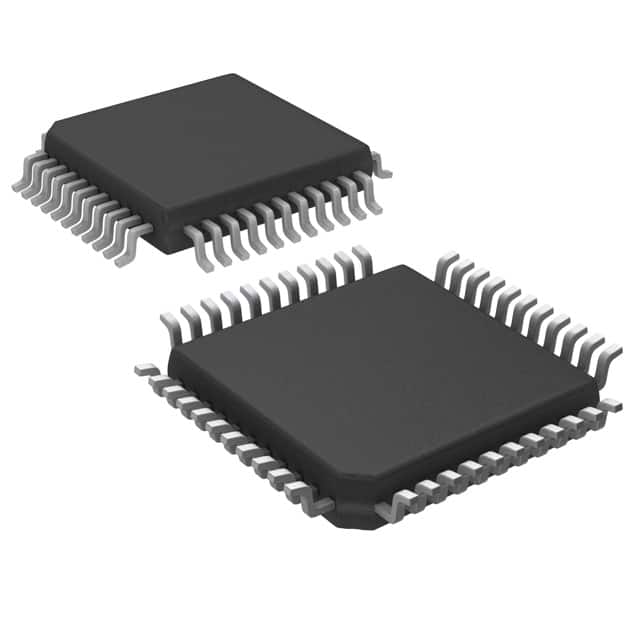
- Part No.:
- PEF 3452 H V1.3
- Manufacturer:
- Infineon Technologies
- Category:
- Telecom
- Package:
- 44-QFP
- Datasheet:
-
 PEF 3452 H V1.3.pdf
- Description:
- IC TELECOM INTERFACE MQFP-44
- Quantity:
- Payment:

- Shipping:

Inventory:2,863
Please send an inquiry. Send us your inquiry, and we will respond immediately.
Product details
Overview
PEF 3452 H V1.3 from Infineon Technologies is a TE3-LIU™ Line Interface Unit supporting DS3 (44.736 Mbps), STS-1 (51.84 Mbps), and E3 (34.368 Mbps) physical layer interfaces in wireline communications systems. It integrates full receive path (AMI/B3ZS/HDB3 decoding, LOS detection, jitter tolerance up to 1.5 UI), transmit path (pulse shaping, AIS insertion, intrinsic jitter < 0.2 UI), and framer interface with hardware control logic - deployed in T3 multiplexers and channelized/unchannelized link-layer equipment.
For engineers reviewing the PEF 3452 H V1.3 datasheet, PEF 3452 H V1.3 pinout, PEF 3452 H V1.3 application, or PEF 3452 H V1.3 equivalent, key selection considerations include multi-standard line coding support (B3ZS/HDB3/AMI), integrated jitter attenuation PLL, hardware-controlled loopback modes (local/remote), and compliance with DS3/E3/STS-1 pulse templates and return loss requirements.
Technical Context
The PEF 3452 H V1.3 implements a dual-path architecture: a receiver subsystem with adaptive clock recovery, programmable LOS thresholds per standard (DS3: –41 dBm, E3: –44 dBm), and line monitoring capability; and a transmitter subsystem featuring selectable line coding, programmable pulse shaping, and AIS generation for maintenance signaling.
Its hardware control unit enables autonomous operation without microprocessor intervention for critical functions including reset sequencing, power-down entry, transmit line activation/inactivation, and alarm reporting via dedicated status pins (e.g., LOS, AIS, RAI). The device uses a 3.3 V core supply and supports both crystal (19.44 MHz for DS3/E3, 25.92 MHz for STS-1) and external reference clock inputs.
Key Specifications
| Parameter | Value and Actual Design Meaning |
|---|---|
| Data Rates | DS3: 44.736 Mbps; STS-1: 51.84 Mbps; E3: 34.368 Mbps - supports three legacy TDM standards in single device. |
| Line Coding | AMI, B3ZS (DS3), HDB3 (E3) - selectable per interface; ensures compliance with regional telephony framing requirements. |
| Jitter Tolerance | 1.5 UI peak-to-peak (DS3/E3); 0.75 UI (STS-1) - meets GR-499-CORE and ITU-T G.772 specifications for network edge equipment. |
| Intrinsic Jitter | < 0.2 UI RMS at 10 Hz–100 kHz - enables clean signal regeneration without cascaded timing degradation. |
| LOS Threshold | DS3: –41 dBm; E3: –44 dBm; STS-1: –38 dBm - configurable per standard to match cable plant loss budgets. |
| Return Loss | E3 Tx: ≥12 dB (120 kHz–3.4 MHz); DS3 Tx: ≥15 dB (10–100 kHz) - satisfies ANSI T1.102 and ETSI EN 300 019 emission limits. |
| Supply Voltage | VCC = 3.3 V ± 5% - compatible with modern low-voltage telecom backplane designs and reduces thermal load. |
Pinout & Package
PEF 3452 H V1.3 is housed in a 128-pin LQFP package (20 mm × 20 mm, 0.4 mm pitch) with exposed thermal pad. Pin functions are grouped into interface (RIN+, RIN−, TOUT+, TOUT−), control (RESET, PWDN, LOOP), status (LOS, AIS, RAI), clock (XTAL1/2, REFCLK), and power (VCC, GND) categories.
| Pin/Terminal | Circuit Role | Design Meaning |
|---|---|---|
| RIN+, RIN− | Differential Receive Input | Accepts AMI/B3ZS/HDB3 encoded line signals; internal termination enables direct connection to transformer-coupled coaxial lines. |
| TOUT+, TOUT− | Differential Transmit Output | Drives line transformers with programmable pulse amplitude (±2.5 V max) and rise/fall time control (≤15 ns). |
| LOS | Loss-of-Signal Indicator | Active-low open-drain output asserting when input signal falls below standard-specific threshold for ≥100 µs. |
| RESET | Asynchronous Reset Input | Active-low signal initializing all internal registers and disabling outputs until deasserted (min. pulse width: 100 ns). |
| PWDN | Power-Down Control | Active-high input placing device in low-current standby mode (ICC < 10 µA) while preserving register state. |
| LOOP | Local Loopback Enable | Active-high signal routing transmit data directly to receive path for diagnostics without line coupling. |
Key Features
| Feature | Design Value |
|---|---|
| Multi-standard line interface | Single IC supports DS3, STS-1, and E3 physical layers - eliminates need for separate transceivers in multi-region equipment. |
| Hardware autonomous control | On-chip logic handles LOS detection, AIS insertion, and loopback activation without CPU overhead - reduces firmware complexity and latency. |
| Programmable pulse shaping | Adjustable transmit filter coefficients meet DS3/E3/STS-1 pulse template masks (Fig. 26–28) across temperature and voltage variation. |
| Integrated jitter attenuation | On-die PLL with 10–100 kHz bandwidth cleans incoming jitter before retiming - enables reliable downstream framer synchronization. |
| Line monitoring mode | Enables passive observation of live DS3/E3 links without disrupting traffic - supports network troubleshooting and performance validation. |
Applications
| DS3 Multiplexer | T3 Channelized Link Layer |
|---|---|
|
Use Scenario: Aggregating 28 T1 circuits into a single DS3 trunk for long-haul transport between central offices. IC Role / Device Role / Timing Role: Physical layer line interface providing DS3 receive/transmit, clock recovery, and AIS generation for OAM&P. Use Value: Enables deterministic bit-error-free transmission over 450-ft coaxial spans with built-in LOS alarm and remote loopback for field service. |
Use Scenario: Supporting fractional T3 services where individual DS1 channels are allocated to different customers. IC Role / Device Role / Timing Role: DS3 line interface with hardware-framer handoff, delivering framed data to channel bank controllers. Use Value: Reduces framer interface latency by eliminating software polling; hardware LOS and AIS signals accelerate fault isolation. |
| E3 Network Access Node | STS-1 Add/Drop Multiplexer |
|
Use Scenario: Providing E3 connectivity for European enterprise WAN aggregation at metro POPs. IC Role / Device Role / Timing Role: E3 line interface implementing HDB3 decoding, jitter cleanup, and local loopback for commissioning. Use Value: Meets ETSI EN 300 233 return loss and pulse shape requirements without external equalization components. |
Use Scenario: Inserting/dropping STS-1 tributaries in SONET ring architectures with OC-3 backbone. IC Role / Device Role / Timing Role: STS-1 physical layer interface with B3ZS encoding, jitter attenuation, and AIS insertion for protection switching. Use Value: Ensures sub-100 ns timing alignment between add/drop paths and preserves SONET traceability via hardware-generated AIS. |
Equivalent & Alternatives
The following parts are listed as comparable options for similar line interface unit applications.
| Alternative Part | Technical Difference | Application Difference | Selection Advice |
|---|---|---|---|
| PEF 3451 H V1.3 | Single-standard DS3-only variant; lacks STS-1/E3 support and has reduced feature set (no line monitoring mode). | Applicable only in pure North American DS3 infrastructure; not suitable for multi-standard or ETSI-compliant deployments. | Select when cost sensitivity outweighs flexibility needs and system scope is strictly DS3. |
| ICS8430M | Standalone jitter attenuator IC (no line interface or coding logic); requires external framer and line drivers. | Used in hybrid timing architectures where line interface and jitter cleanup are separated across PCBs or ASICs. | Choose only if existing design already includes discrete line drivers and framer, and jitter cleanup is the sole unmet requirement. |
Compared with PEF 3452 H V1.3, the PEF 3451 H V1.3 sacrifices multi-standard support for lower BOM cost, while the ICS8430M shifts complexity to system-level integration - making the PEF 3452 optimal for compact, standards-flexible line cards requiring minimal external components.
Availability
PEF 3452 H V1.3 is available at Aetrix Electronics and suitable for DS3 multiplexing, E3 access node deployment, and STS-1 add/drop applications requiring stable component supply across extended product lifecycles.
Supply support for PEF 3452 H V1.3 includes scheduled delivery planning, volume procurement assistance, BOM continuity management, traceable sourcing, and lifecycle availability coordination for OEM customers, industrial embedded developers, connected-device designers, and electronics production programs.
Manufacturer
Infineon Technologies AG is a German semiconductor manufacturer specializing in power management, automotive, and communications ICs, with global R&D and manufacturing infrastructure.
The PEF 3452 H V1.3 belongs to Infineon's TE3-LIU™ line interface product family, designed specifically for carrier-grade TDM infrastructure equipment requiring multi-standard interoperability and hardware-autonomous operation.
FAQ
Does PEF 3452 H V1.3 support automatic line code detection?
No. Line coding (AMI/B3ZS/HDB3) must be configured manually via hardware control pins or register settings prior to operation. The device does not auto-negotiate or sense line code type - configuration is fixed per application and requires matching on both ends of the link.
What is the maximum supported cable length for DS3 operation?
The PEF 3452 H V1.3 supports DS3 operation over 450 ft (137 m) of 75 Ω coaxial cable, as validated by pulse template compliance (Figure 27) and return loss performance (Table 12). Longer spans require repeaters or active equalization outside the IC's scope.
Can the device operate with an external reference clock instead of a crystal?
Yes. The PEF 3452 H V1.3 accepts either a parallel-resonant crystal (19.44 MHz for DS3/E3, 25.92 MHz for STS-1) or a CMOS-level external reference clock (REFCLK pin), with frequency tolerance relaxed to ±100 ppm when using external sources per Section 6.4.2.
Is the thermal pad on the LQFP package electrically connected?
Yes. The exposed thermal pad is internally connected to ground (GND) and must be soldered to a PCB ground plane for thermal dissipation and EMI suppression. Section 6.6 specifies thermal resistance θJA = 32 °C/W under recommended layout conditions.
PEF 3452 H V1.3 Specifications
- Product attributes
- Attribute value
- Manufacturer:
- Infineon Technologies
- Series:
- -
- Package/Case:
- 44-QFP
- Packaging:
- Tray
- Product Status:
- Discontinued at Digi-Key
- Function:
- Line Interface Unit (LIU)
- Interface:
- DS3, E3, STS-1
- Number of Circuits:
- 1
- Voltage - Supply:
- 3.13V ~ 3.46V
- Current - Supply:
- 110mA
- Power (Watts):
- -
- Operating Temperature:
- -40°C ~ 85°C
- Grade:
- -
- Qualification:
- -
- Mounting Type:
- Surface Mount
- Supplier Device Package:
- PG-MQFP-44-2
PEF 3452 H V1.3 FAQ
1.How can I place an order for PEF 3452 H V1.3 through Aetrix?
Please submit a Request for Quotation (RFQ) for PEF 3452 H V1.3 on Aetrix. Our sales agent will provide a competitive quotation and guide you through the order confirmation once you accept the terms.
2.Are the price and stock information for PEF 3452 H V1.3 reliable?
The price and inventory of PEF 3452 H V1.3 are updated periodically and may fluctuate due to market conditions. Stock and pricing data are typically refreshed every 24 hours. Quotation validity for PEF 3452 H V1.3 is usually 5 days.
3.What payment methods are accepted for PEF 3452 H V1.3?
We accept Wire Transfer, PayPal, Credit Card, Western Union, MoneyGram, and Escrow for PEF 3452 H V1.3 transactions.
Note: Certain payment methods may incur a processing fee.
4.How is shipping managed for PEF 3452 H V1.3?
PEF 3452 H V1.3 orders can be shipped via leading logistics carriers, including DHL, UPS, FedEx, TNT, or Registered Mail.
Once your PEF 3452 H V1.3 order is processed, you will receive an email with the shipment details and tracking number.
Note: Tracking information may take up to 24 hours to appear. Express delivery typically takes 3–5 business days.
5.How can I obtain technical support or documentation for PEF 3452 H V1.3?
For technical support, including PEF 3452 H V1.3 datasheets, pinout diagrams, or application guidance, please contact our engineering support team. They can provide detailed documentation and assistance for your PEF 3452 H V1.3 requirements.
6.How does Aetrix verify that PEF 3452 H V1.3 is sourced from the original manufacturer or authorized distributors?
All PEF 3452 H V1.3 products on Aetrix are procured from qualified distributors and authorized channels. Our dedicated quality assurance team conducts strict verification, including traceability checks and, if necessary, third-party testing. This ensures that PEF 3452 H V1.3 meets industry standards.
7.What is the process for return or replacement of PEF 3452 H V1.3?
All PEF 3452 H V1.3 units undergo pre-shipment inspection (PSI). If there is an issue with PEF 3452 H V1.3, returns or replacements are accepted under the following conditions:
1.Quantity discrepancies, incorrect items, or visible external defects (such as breakage or corrosion), acknowledged by Aetrix.
2.The issue is reported within 90 days of delivery.
3.The PEF 3452 H V1.3 part is unused and in its original packaging.
Return procedure for PEF 3452 H V1.3:
1.Submit a request within 90 days.
2.Obtain a Return Material Authorization (RMA) from Aetrix.
PEF 3452 H V1.3 Tags

-
LMC567CMX/NOPB
Texas Instruments
-
LM567CMX/NOPB
Texas Instruments
-
LM567CM/NOPB
Texas Instruments
-
VSC8531XMW-02
Microchip Technology
-
VSC8531XMW-05
Microchip Technology

-
GPY115C0VI
MaxLinear, Inc.
-
SI32185-A-FMR
Skyworks Solutions Inc.
-
VSC8541XMV-05
Microchip Technology
-
SI32178-B-FM1R
Skyworks Solutions Inc.
-
GPY215C0VI
MaxLinear, Inc.
-
CPC7514ZTR
Littelfuse Inc.
-
VSC8502XML-03
Microchip Technology
Tech Hub

18650 battery guide covering lithium-ion cell basics, 3.6V/3.7V voltage, 4.2V charging, mAh and Wh capacity, protected cells, chargers, BMS, series-parallel packs, holders, welding and sourcing checks.…

Hall effect sensor guide covering working principle, linear and digital sensors, Arduino circuits, current sensing, speed detection, automotive applications, A3144 examples, signal filtering and datash…

Product Change Notification guide for electronic components, covering PCN meaning, PCN vs PDN/EOL, common change types, risk levels, form-fit-function review, engineering validation, BOM control, LTB/L…

A practical guide to blend door actuators, covering HVAC function, symptoms, location, AC and heater issues, reset and calibration, replacement cost, electrical diagnosis, compatibility checks, and rep…

Engineering guide to Raspberry Pi alternatives, covering chip-level differences, Orange Pi, ROCK, Jetson, Banana Pi, NanoPi, Compute Module, Pico, GPIO, camera, HAT compatibility, and replacement risks…
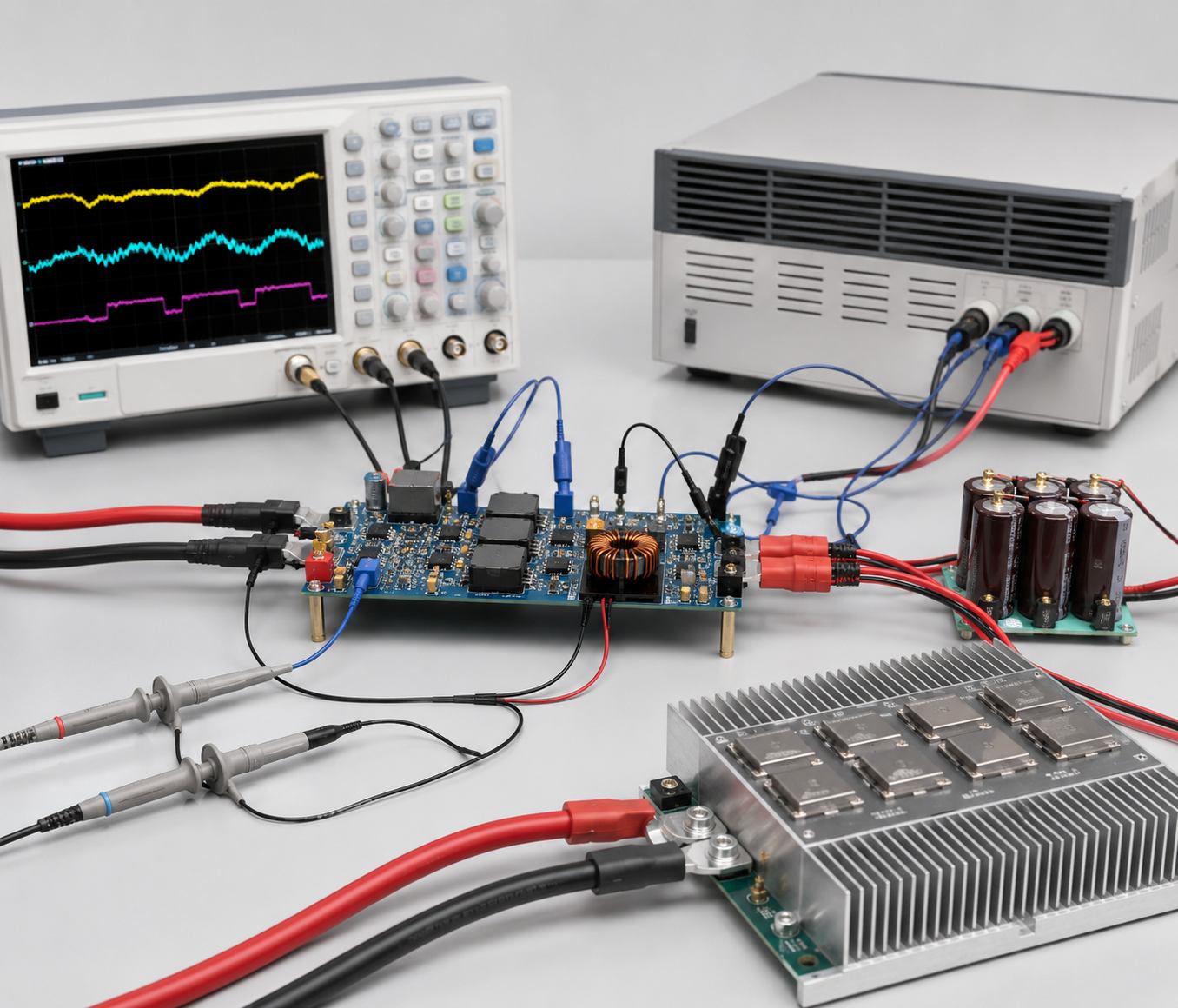
Engineering guide to dynamic load response testing for high-current buck converters, covering load step setup, slew rate, Vcore undershoot, overshoot, recovery time, probe location, output capacitors a…
Engineering guide to output capacitor selection for ASIC Vcore rails, covering bulk capacitors, polymer capacitors, MLCC decoupling, DC bias, ESR, ESL, placement, transient response and substitution ri…
Engineering guide to high-current ASIC Vcore rails, covering 12-phase buck architecture, PMBus control, dynamic load testing, output capacitor networks, smart power stage selection, thermal design and …
Voltage regulator guide covering linear, LDO, 7805, Zener, adjustable, buck, VRM and alternator regulators, with design checks, testing methods, troubleshooting and datasheet-based selection.
Amplifier guide covering voltage, current and power amplification, gain, feedback, amplifier classes, audio and RF applications, op-amp circuits, transimpedance amplifiers, datasheet selection and trou…


