
 My Inquiry
 My Account


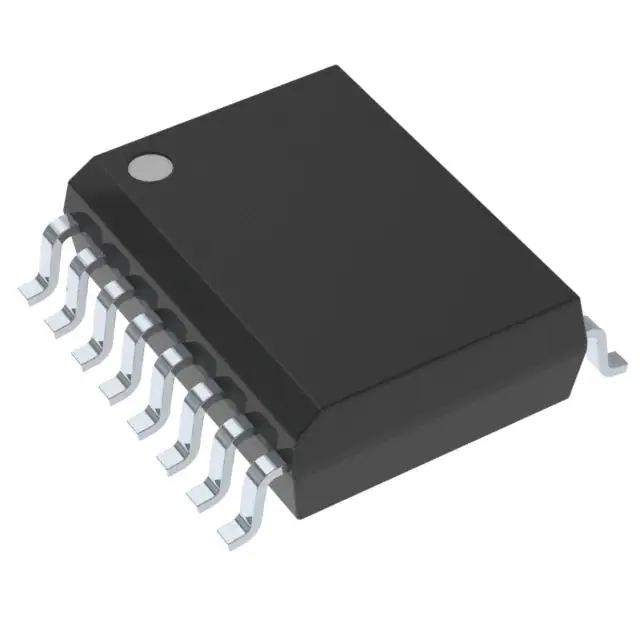
Cypress Semiconductor Corp S25FL128LDPMFI000
- Part No.:
- S25FL128LDPMFI000
- Manufacturer:
- Cypress Semiconductor Corp
- Category:
- Memory
- Package:
- 16-SOIC (0.295", 7.50mm Width)
- Datasheet:
-
 S25FL128LDPMFI000.pdf
- Description:
- IC FLASH 128MBIT SPI/QUAD 16SOIC
- Quantity:
- Payment:

- Shipping:

Inventory:14,400
Please send an inquiry. Send us your inquiry, and we will respond immediately.
Product details
Overview
S25FL128LDPMFI000 from Infineon is a 128-Mbit serial NOR flash memory with Quad SPI interface, 3.0–3.6 V supply voltage, 100 MHz clock frequency, and 133 MHz equivalent data rate in QPI mode. It operates across industrial temperature range (−40°C to +85°C) and supports uniform 4-KB sectors for flexible firmware updates in microcontroller-based edge devices.
For engineers reviewing the S25FL128LDPMFI000 datasheet, S25FL128LDPMFI000 pinout, S25FL128LDPMFI000 application, or S25FL128LDPMFI000 equivalent, key selection criteria include sector protection granularity, XIP capability, reset recovery time, and JEDEC JESD216-compliant SFDP register support.
Technical Context
This device implements a standard Serial Peripheral Interface (SPI) with extended Quad I/O (QPI) mode for higher throughput. It features a 24-bit address space, configurable write protection via status registers, and hardware reset pin (RST#) for deterministic initialization.
The memory array is organized as 256 Kbytes × 64 bits, supporting byte/word/page programming and sector/chip erase. It includes a 256-byte page buffer and supports deep power-down mode with 10 µA typical standby current.
Key Specifications
| Parameter | Value and Actual Design Meaning |
|---|---|
| Memory Density | 128 Mbit (16 MB), sufficient for full MCU boot image + OTA update partition |
| Interface | Quad SPI (QPI) and standard SPI, enabling 4x bandwidth vs. single I/O mode |
| Operating Voltage | 3.0–3.6 V, compatible with 3.3 V logic systems without level shifting |
| Max Clock Frequency | 100 MHz in QPI mode, delivering up to 400 MB/s effective read throughput |
| Temperature Range | −40°C to +85°C, qualified for industrial control and automotive body electronics |
| Erase Granularity | Uniform 4-KB sectors, allowing fine-grained firmware patching without full chip erase |
| Reset Recovery Time | ≤ 30 µs after RST# deassertion, enabling fast system restart sequences |
Pinout & Package
Supplied in an 8-pin SOIC (208-mil) package with standard SPI pinout and dedicated reset input.
| Pin/Terminal | Circuit Role | Design Meaning |
|---|---|---|
| SO / IO0 | Serial Output / Data I/O 0 | Primary data line for single/dual/quad I/O modes; bidirectional during reads/writes |
| SI / IO1 | Serial Input / Data I/O 1 | Second data line active in dual/quad I/O; enables 2-bit or 4-bit parallel transfers |
| WP# / IO2 | Write Protect / Data I/O 2 | Hardware sector protection enable; functions as IO2 in quad mode |
| HOLD# / IO3 | Hold Input / Data I/O 3 | Pauses ongoing transfer without chip deselect; acts as IO3 in quad mode |
| CLK | Serial Clock Input | Master-generated clock synchronizing all data transfers; max 100 MHz |
| CS# | Chip Select Input | Active-low enable for command/data transactions; required for bus arbitration |
| RST# | Reset Input | Asynchronous hardware reset; forces device into known state independent of SPI commands |
| VSS | Ground | Reference return path for all digital and I/O signals |
Key Features
| Feature | Design Value |
|---|---|
| JEDEC JESD216 SFDP Support | Enables automatic configuration by host bootloader without hard-coded timing parameters |
| 4-KB Uniform Sector Architecture | Allows atomic firmware updates to individual functional modules without erasing unrelated code |
| Quad I/O (QPI) Mode | Reduces instruction overhead and increases effective bandwidth over standard SPI |
| Deep Power-Down Mode | 10 µA typical current draw extends battery life in always-on sensor nodes |
| Hardware Reset (RST#) | Guarantees deterministic initialization state after brown-out or watchdog timeout |
Applications
| Industrial PLC Firmware Storage | Automotive Body Control Module |
|---|---|
Use Scenario: Storing programmable logic controller firmware and configuration tables in factory automation cabinets. IC Role / Device Role / Timing Role: Non-volatile program storage with fast random access for XIP execution and field-upgradable binaries. Use Value: 4-KB sector erase enables incremental firmware patches without halting production lines. | Use Scenario: Holding boot code, calibration data, and diagnostic logs in vehicle door modules and lighting controllers. IC Role / Device Role / Timing Role: Boot ROM replacement with AEC-Q100 stress qualification and reset-synchronized startup. Use Value: RST# pin ensures deterministic boot sequence after battery reconnection or ECU reset. |
| Medical Infusion Pump UI | Smart Grid Communication Gateway |
Use Scenario: Storing human-machine interface assets, safety-critical firmware, and audit logs in Class II medical devices. IC Role / Device Role / Timing Role: Secure, tamper-resistant storage with hardware write protection for regulatory compliance. Use Value: WP#/HOLD# pins allow runtime lock of critical calibration sectors during operation. | Use Scenario: Hosting protocol stacks (DLMS/COSEM, IEC 61850), firmware, and metering history in utility substation gateways. IC Role / Device Role / Timing Role: High-reliability code storage with ECC-capable read operations and long data retention (>20 years). Use Value: 100 MHz QPI interface reduces boot latency for time-sensitive grid event response. |
Equivalent & Alternatives
The following parts are listed as comparable options for similar serial NOR flash applications.
| Alternative Part | Technical Difference | Application Difference | Selection Advice |
|---|---|---|---|
| S25FL128SAGMFI000 | Same density and package but with 1.8 V core voltage option and enhanced security features (OTP lockbits) | Required where low-voltage SoC integration or secure boot chain is mandated | Select when migrating to 1.8 V I/O domains or requiring one-time-programmable security keys |
| MX25L12833FZNI-10G | 128 Mbit, 3 V supply, but lacks RST# pin and SFDP v1.6 support; max clock 80 MHz | Suitable for cost-sensitive consumer designs where reset synchronization and auto-configuration are non-critical | Choose only if existing PCB layout omits RST# routing and SFDP parsing is handled in firmware |
Compared with S25FL128SAGMFI000, this part offers simpler power architecture and lower security overhead; versus MX25L12833FZNI-10G, it delivers faster startup, deterministic reset behavior, and plug-and-play configuration via SFDP.
Availability
S25FL128LDPMFI000 is available at Aetrix Electronics and suitable for industrial control systems, automotive body electronics, and medical device firmware storage requiring stable component supply and long-term lifecycle assurance.
Supply support for S25FL128LDPMFI000 includes scheduled delivery planning, volume procurement assistance, BOM continuity management, traceable sourcing, and lifecycle availability coordination for OEM customers, industrial embedded developers, connected-device designers, and electronics production programs.
Manufacturer
Infineon Technologies AG is a German semiconductor manufacturer specializing in power management, sensing, and memory solutions for industrial, automotive, and IoT applications.
This device belongs to the S25FL family of high-performance serial NOR flash memories designed for reliable code storage and execution in resource-constrained embedded systems with demanding environmental and timing requirements.
FAQ
Does S25FL128LDPMFI000 support execute-in-place (XIP) operation?
Yes, it supports XIP mode with low-latency random read access (tCR ≤ 8 ns) and continuous read commands. The device allows direct CPU instruction fetch from flash without copying to RAM, reducing boot time and SRAM usage in Cortex-M and RISC-V microcontrollers.
What is the endurance rating and data retention specification?
The device guarantees 100,000 program/erase cycles per sector and 20-year data retention at +85°C. These values are validated per JEDEC JESD22-A117 and apply to all 4-KB sectors under specified operating conditions.
Is hardware write protection enabled by default after power-up?
No, hardware write protection is disabled by default. WP# must be driven low and appropriate status register bits (SRWD, BP bits) programmed to activate sector protection. Default state allows unrestricted writes until explicitly configured.
Can S25FL128LDPMFI000 be used with legacy SPI controllers that do not support QPI?
Yes, it is fully backward-compatible with standard SPI mode (single I/O) and dual I/O mode. All commands and register access function identically; QPI mode is optional and activated only after issuing the appropriate enable command.
S25FL128LDPMFI000 Specifications
- Product attributes
- Attribute value
- Manufacturer:
- Cypress Semiconductor Corp
- Series:
- FL-L
- Package/Case:
- 16-SOIC (0.295", 7.50mm Width)
- Packaging:
- Tray
- Product Status:
- Active
- Programmable:
- Not Verified
- Memory Type:
- Non-Volatile
- Memory Format:
- FLASH
- Technology:
- FLASH - NOR
- Memory Size:
- 128Mbit
- Memory Organization:
- 16M x 8
- Memory Interface:
- SPI - Quad I/O, QPI
- Clock Frequency:
- 66 MHz
- Write Cycle Time - Word, Page:
- -
- Access Time:
- -
- Voltage - Supply:
- 2.7V ~ 3.6V
- Operating Temperature:
- -40°C ~ 85°C (TA)
- Grade:
- -
- Qualification:
- -
- Mounting Type:
- Surface Mount
- Supplier Device Package:
- 16-SOIC
S25FL128LDPMFI000 FAQ
1.How can I place an order for S25FL128LDPMFI000 through Aetrix?
Please submit a Request for Quotation (RFQ) for S25FL128LDPMFI000 on Aetrix. Our sales agent will provide a competitive quotation and guide you through the order confirmation once you accept the terms.
2.Are the price and stock information for S25FL128LDPMFI000 reliable?
The price and inventory of S25FL128LDPMFI000 are updated periodically and may fluctuate due to market conditions. Stock and pricing data are typically refreshed every 24 hours. Quotation validity for S25FL128LDPMFI000 is usually 5 days.
3.What payment methods are accepted for S25FL128LDPMFI000?
We accept Wire Transfer, PayPal, Credit Card, Western Union, MoneyGram, and Escrow for S25FL128LDPMFI000 transactions.
Note: Certain payment methods may incur a processing fee.
4.How is shipping managed for S25FL128LDPMFI000?
S25FL128LDPMFI000 orders can be shipped via leading logistics carriers, including DHL, UPS, FedEx, TNT, or Registered Mail.
Once your S25FL128LDPMFI000 order is processed, you will receive an email with the shipment details and tracking number.
Note: Tracking information may take up to 24 hours to appear. Express delivery typically takes 3–5 business days.
5.How can I obtain technical support or documentation for S25FL128LDPMFI000?
For technical support, including S25FL128LDPMFI000 datasheets, pinout diagrams, or application guidance, please contact our engineering support team. They can provide detailed documentation and assistance for your S25FL128LDPMFI000 requirements.
6.How does Aetrix verify that S25FL128LDPMFI000 is sourced from the original manufacturer or authorized distributors?
All S25FL128LDPMFI000 products on Aetrix are procured from qualified distributors and authorized channels. Our dedicated quality assurance team conducts strict verification, including traceability checks and, if necessary, third-party testing. This ensures that S25FL128LDPMFI000 meets industry standards.
7.What is the process for return or replacement of S25FL128LDPMFI000?
All S25FL128LDPMFI000 units undergo pre-shipment inspection (PSI). If there is an issue with S25FL128LDPMFI000, returns or replacements are accepted under the following conditions:
1.Quantity discrepancies, incorrect items, or visible external defects (such as breakage or corrosion), acknowledged by Aetrix.
2.The issue is reported within 90 days of delivery.
3.The S25FL128LDPMFI000 part is unused and in its original packaging.
Return procedure for S25FL128LDPMFI000:
1.Submit a request within 90 days.
2.Obtain a Return Material Authorization (RMA) from Aetrix.
S25FL128LDPMFI000 Tags

-
M24C02-WMN6TP
STMicroelectronics
-
AT24C02C-XHM-T
Microchip Technology
-
AT21CS01-STUM10-T
Microchip Technology

-
AT24C02C-SSHM-T
Microchip Technology
-
24LC01BT-I/OT
Microchip Technology
-
M24C02-FMC6TG
STMicroelectronics
-
AT24CS02-SSHM-T
Microchip Technology

-
93LC46BT-I/OT
Microchip Technology
-
AT24C04C-SSHM-T
Microchip Technology

-
24LC01BT-I/SN
Microchip Technology
-
24AA02UIDT-I/OT
Microchip Technology
-
AT24C08C-STUM-T
Microchip Technology
Tech Hub

Hall effect sensor guide covering working principle, linear and digital sensors, Arduino circuits, current sensing, speed detection, automotive applications, A3144 examples, signal filtering and datash…

Product Change Notification guide for electronic components, covering PCN meaning, PCN vs PDN/EOL, common change types, risk levels, form-fit-function review, engineering validation, BOM control, LTB/L…

A practical guide to blend door actuators, covering HVAC function, symptoms, location, AC and heater issues, reset and calibration, replacement cost, electrical diagnosis, compatibility checks, and rep…

Engineering guide to Raspberry Pi alternatives, covering chip-level differences, Orange Pi, ROCK, Jetson, Banana Pi, NanoPi, Compute Module, Pico, GPIO, camera, HAT compatibility, and replacement risks…
Engineering guide to dynamic load response testing for high-current buck converters, covering load step setup, slew rate, Vcore undershoot, overshoot, recovery time, probe location, output capacitors a…
Engineering guide to output capacitor selection for ASIC Vcore rails, covering bulk capacitors, polymer capacitors, MLCC decoupling, DC bias, ESR, ESL, placement, transient response and substitution ri…
Engineering guide to high-current ASIC Vcore rails, covering 12-phase buck architecture, PMBus control, dynamic load testing, output capacitor networks, smart power stage selection, thermal design and …
Voltage regulator guide covering linear, LDO, 7805, Zener, adjustable, buck, VRM and alternator regulators, with design checks, testing methods, troubleshooting and datasheet-based selection.
Amplifier guide covering voltage, current and power amplification, gain, feedback, amplifier classes, audio and RF applications, op-amp circuits, transimpedance amplifiers, datasheet selection and trou…
Machine vision system guide covering components, inspection workflow, camera and lens selection, FOV, pixel resolution, motion blur, strobe lighting, bandwidth, 2D/3D vision, integration, troubleshooti…


