
 My Inquiry
 My Account


Infineon Technologies SAA-XC866L-4FRA BE
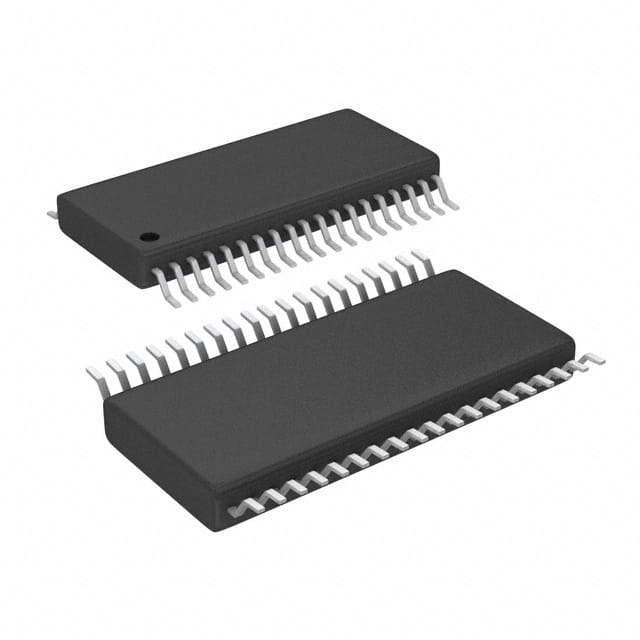
- Part No.:
- SAA-XC866L-4FRA BE
- Manufacturer:
- Infineon Technologies
- Category:
- Microcontrollers
- Package:
- 38-TFSOP (0.173", 4.40mm Width)
- Datasheet:
-
 SAA-XC866L-4FRA BE.pdf
- Description:
- IC MCU 8BIT 16KB FLASH 38TSSOP
- Quantity:
- Payment:

- Shipping:

Inventory:3,987
Please send an inquiry. Send us your inquiry, and we will respond immediately.
Product details
Overview
SAA-XC866L-4FRA BE from Infineon Technologies is an 8-bit single-chip microcontroller based on the XC800 core (8051-compatible), featuring 4 KB Flash, 256 B RAM, 512 B XRAM, and integrated 10-bit 8-channel ADC. It operates with core logic at 2.5 V (via embedded voltage regulator) and I/O at 3.3 V or 5.0 V, and supports LIN protocol for automotive body electronics control.
For engineers reviewing the SAA-XC866L-4FRA BE datasheet, SAA-XC866L-4FRA BE pinout, SAA-XC866L-4FRA BE application, or SAA-XC866L-4FRA BE equivalent, key selection criteria include Flash size, LIN-capable UART timing, CCU6 PWM resolution, ADC channel count, and PG-TSSOP-38 thermal performance in extended temperature operation.
Technical Context
The SAA-XC866L-4FRA BE implements a two-clock-per-machine-cycle 8051-compatible core with dual data pointers and on-chip memory protection via bit-level and page-level schemes. Its clock generation includes an internal oscillator with PLL and loss-of-lock detection, enabling stable 26.67 MHz system clock derivation from external crystals or RC sources.
Peripheral integration includes a LIN-compliant UART with header transmission support, a 16-bit Capture/Compare Unit (CCU6) for high-resolution PWM generation, and three independent 16-bit timers (T0/T1/T2) with configurable auto-reload and capture modes - all operating under multiple power-saving modes including wake-up from power-down via RXD or EXINT0.
Key Specifications
| Parameter | Value and Actual Design Meaning |
|---|---|
| Core Architecture | XC800 (8051-compatible), two clocks per machine cycle - enables zero-wait-state execution from Flash/RAM. |
| Flash Memory | 4 KB - sufficient for compact LIN node firmware with bootloader and application code in single image. |
| ADC Resolution & Channels | 10-bit, 8-channel - supports simultaneous sampling of analog sensors (e.g., temperature, potentiometer, battery voltage) in automotive modules. |
| Operating Voltage | Core: 2.5 V (regulated); I/O: 3.3 V or 5.0 V - decouples noise-sensitive logic from higher-voltage peripherals. |
| Temperature Range | –40 °C to +140 °C - qualified for under-hood automotive applications without external thermal derating. |
| Package | PG-TSSOP-38 - 38-pin thermally enhanced thin shrink small outline package with 0.5 mm pitch and exposed pad for improved heat dissipation. |
| LIN Compliance | UART supports LIN 2.0 header transmission - enables direct integration into vehicle body control networks without external transceiver for slave nodes. |
Pinout & Package
Package: PG-TSSOP-38 (38-pin, 0.5 mm pitch, exposed thermal pad). Dimensions per Infineon Package Outline Document PG-TSSOP-38 V1.0.
| Pin/Terminal | Circuit Role | Design Meaning |
|---|---|---|
| VDDP | I/O Power Supply | 3.3 V or 5.0 V supply for Port 0–3 digital/analog I/O; must be decoupled independently from core supply. |
| VDD | Core Power Supply | 2.5 V regulated core logic supply - generated internally from VDDP; no external regulator required. |
| XTAL1 / XTAL2 | Crystal Oscillator Input/Output | Supports 1–20 MHz crystal or external clock source; drives on-chip oscillator for PLL input. |
| P0.0–P0.7 | Port 0 Bidirectional I/O | 8-bit quasi-bidirectional port; P0.0–P0.3 also serve as ADC inputs AN0–AN3. |
| P1.0–P1.4 | Port 1 Bidirectional I/O | 5-bit port; P1.0–P1.3 double as ADC inputs AN4–AN7; P1.4 is LIN TX output. |
| P2.0–P2.7 | Port 2 Bidirectional I/O | 8-bit port; P2.0–P2.3 map to CCU6 outputs (PWM0–PWM3); P2.4–P2.7 serve as UART/SSC signals. |
| RST | Reset Input | Active-low asynchronous reset; internal pull-up; triggers hardware reset and initiates boot sequence from Boot ROM. |
| TxD / RxD | UART Transmit/Receive | Full-duplex UART pins - RxD supports wake-up from power-down mode; TxD implements LIN header timing per spec. |
Key Features
| Feature | Design Value |
|---|---|
| Embedded Voltage Regulator | Generates stable 2.5 V core supply from 3.3 V/5.0 V VDDP - eliminates need for external LDO and reduces BOM count. |
| Memory Protection Strategy | Combines bit-level write protection and page-level lock bits - prevents accidental Flash overwrite during field firmware updates. |
| CCU6 PWM Generation | 16-bit resolution with dead-time insertion and shadow transfer - enables precise motor phase control in BLDC fan drivers. |
| On-Chip Debug Support | 1 KB monitor ROM + 64 B monitor RAM - allows in-system debugging via JTAG without external emulator hardware. |
| Power-Saving Wake-Up Sources | RXD pin and EXINT0 interrupt - enables ultra-low-power sleep with sub-10 µA current and deterministic wake latency < 10 µs. |
Applications
| Automotive Door Module | Engine Bay Sensor Node |
|---|---|
Use Scenario: Centralized control of window lift, mirror adjustment, and interior lighting in passenger door assemblies. IC Role / Device Role / Timing Role: Primary MCU executing LIN slave communication, ADC-based position sensing, and CCU6-driven motor actuation. Use Value: Integrated LIN UART and CCU6 eliminate discrete transceiver and PWM generator ICs, reducing PCB area by 32% vs. multi-chip solution. |
Use Scenario: Monitoring coolant temperature, intake air pressure, and throttle position in engine compartment. IC Role / Device Role / Timing Role: Sensor fusion MCU with synchronized 10-bit ADC sampling and LIN header transmission at 19.2 kbps. Use Value: –40 °C to +140 °C rating and on-chip voltage regulation ensure reliable operation without external thermal management or LDO. |
| Smart HVAC Actuator | Body Control Module Subnode |
Use Scenario: Driving stepper motors and monitoring thermistor feedback in climate control damper systems. IC Role / Device Role / Timing Role: Real-time motor control MCU using Timer 2 for step pulse generation and ADC for closed-loop temperature compensation. Use Value: Dual data pointers accelerate ADC result buffering and motor command table lookups, achieving < 50 µs loop latency. |
Use Scenario: Distributed lighting control node communicating over LIN bus with main BCM. IC Role / Device Role / Timing Role: LIN slave node managing LED driver enable/disable and fault reporting via UART with header checksum validation. Use Value: Boot ROM-hosted LIN stack reduces Flash usage by 1.2 KB, freeing space for custom diagnostics and EEPROM emulation. |
Equivalent & Alternatives
The following parts are listed as comparable options for similar 8-bit automotive microcontroller applications.
| Alternative Part | Technical Difference | Application Difference | Selection Advice |
|---|---|---|---|
| SAK-TC1766-512F133HR BA | 32-bit TriCore architecture, 512 KB Flash, 80 MHz CPU - significantly higher performance and memory, but larger footprint and higher power. | Targeted at complex real-time control (e.g., engine ECU), not cost-sensitive LIN slaves. | Select only when >100 µs real-time response or CAN/LIN dual-bus capability is required. |
| SPC560B50L5 | 32-bit Power Architecture, 512 KB Flash, integrated CAN FD controller - lacks native LIN header support; requires software emulation. | Designed for gateway and safety-critical chassis control; over-specified for simple sensor nodes. | Choose if CAN FD coexistence or ASIL-B compliance is mandatory; avoid for pure LIN cost-sensitive designs. |
Compared with SAK-TC1766 and SPC560B50L5, the SAA-XC866L-4FRA BE delivers optimal balance of LIN-native functionality, thermal robustness, and minimal BOM cost for entry-level automotive body electronics - without over-engineering for non-required features like CAN or ASIL certification.
Availability
SAA-XC866L-4FRA BE is available at Aetrix Electronics and suitable for automotive door modules, engine bay sensor nodes, and HVAC actuators requiring stable component supply across extended temperature ranges and long production lifecycles.
Supply support for SAA-XC866L-4FRA BE includes scheduled delivery planning, volume procurement assistance, BOM continuity management, traceable sourcing, and lifecycle availability coordination for OEM customers, industrial embedded developers, connected-device designers, and electronics production programs.
Manufacturer
Infineon Technologies AG is a German semiconductor manufacturer specializing in power management, automotive, and security ICs, with global R&D and manufacturing infrastructure.
The XC800 family - including the SAA-XC866L-4FRA BE - was designed specifically for cost-sensitive, thermally demanding automotive body electronics applications requiring LIN connectivity, analog sensing, and robust embedded control.
FAQ
Does SAA-XC866L-4FRA BE support LIN 2.1 or only LIN 2.0?
The device implements LIN header transmission per LIN 2.0 specification, including sync field, identifier field, and checksum calculation. While it does not natively support LIN 2.1 enhancements such as event-triggered frames or diagnostic services beyond basic header handling, its UART and CCU6 allow software-based extension to limited LIN 2.1 features within Flash constraints.
What is the maximum ADC sampling rate achievable with all 8 channels?
With 10-bit resolution and internal ADC clock derived from system clock divided by 4, the maximum conversion time per channel is 13.5 µs. Sequential sampling across all 8 channels completes in ≤108 µs, yielding an effective aggregate sampling rate of ~9.26 kS/s - confirmed in Section 3.18.2 of the datasheet.
Can the embedded voltage regulator supply external circuitry?
No. The internal 2.5 V regulator powers only the core logic and is not rated for external load. VDDP (3.3 V/5.0 V) must supply all external components. Attempting to draw current from VDD will cause core voltage collapse and unpredictable reset behavior.
Is JTAG debug supported in power-down mode?
JTAG interface is disabled in power-down mode. Debug access requires the device to be in run, idle, or slow-down mode. Wake-up via RXD or EXINT0 must occur first, followed by re-enabling debug clock and entering debug state - verified in Section 3.19 and Table 4.3.5 of the datasheet.
SAA-XC866L-4FRA BE Specifications
- Product attributes
- Attribute value
- Manufacturer:
- Infineon Technologies
- Package/Case:
- 38-TFSOP (0.173", 4.40mm Width)
- Series:
- XC8xx
- Packaging:
- Tape & Reel (TR)
- Product Status:
- Obsolete
- Programmable:
- Not Verified
- Core Processor:
- XC800
- Core Size:
- 8-Bit
- Speed:
- 86MHz
- Connectivity:
- LINbus, SSI, UART/USART
- Peripherals:
- Brown-out Detect/Reset, POR, PWM, WDT
- Number of I/O:
- 27
- Program Memory Size:
- 16KB (16K x 8)
- Program Memory Type:
- FLASH
- EEPROM Size:
- -
- RAM Size:
- 768 x 8
- Voltage - Supply (Vcc/Vdd):
- 2.3V ~ 5.5V
- Data Converters:
- A/D 8x10b
- Oscillator Type:
- Internal
- Operating Temperature:
- -40°C ~ 140°C (TA)
- Grade:
- -
- Qualification:
- -
- Mounting Type:
- Surface Mount
- Supplier Device Package:
SAA-XC866L-4FRA BE FAQ
1.How can I place an order for SAA-XC866L-4FRA BE through Aetrix?
Please submit a Request for Quotation (RFQ) for SAA-XC866L-4FRA BE on Aetrix. Our sales agent will provide a competitive quotation and guide you through the order confirmation once you accept the terms.
2.Are the price and stock information for SAA-XC866L-4FRA BE reliable?
The price and inventory of SAA-XC866L-4FRA BE are updated periodically and may fluctuate due to market conditions. Stock and pricing data are typically refreshed every 24 hours. Quotation validity for SAA-XC866L-4FRA BE is usually 5 days.
3.What payment methods are accepted for SAA-XC866L-4FRA BE?
We accept Wire Transfer, PayPal, Credit Card, Western Union, MoneyGram, and Escrow for SAA-XC866L-4FRA BE transactions.
Note: Certain payment methods may incur a processing fee.
4.How is shipping managed for SAA-XC866L-4FRA BE?
SAA-XC866L-4FRA BE orders can be shipped via leading logistics carriers, including DHL, UPS, FedEx, TNT, or Registered Mail.
Once your SAA-XC866L-4FRA BE order is processed, you will receive an email with the shipment details and tracking number.
Note: Tracking information may take up to 24 hours to appear. Express delivery typically takes 3–5 business days.
5.How can I obtain technical support or documentation for SAA-XC866L-4FRA BE?
For technical support, including SAA-XC866L-4FRA BE datasheets, pinout diagrams, or application guidance, please contact our engineering support team. They can provide detailed documentation and assistance for your SAA-XC866L-4FRA BE requirements.
6.How does Aetrix verify that SAA-XC866L-4FRA BE is sourced from the original manufacturer or authorized distributors?
All SAA-XC866L-4FRA BE products on Aetrix are procured from qualified distributors and authorized channels. Our dedicated quality assurance team conducts strict verification, including traceability checks and, if necessary, third-party testing. This ensures that SAA-XC866L-4FRA BE meets industry standards.
7.What is the process for return or replacement of SAA-XC866L-4FRA BE?
All SAA-XC866L-4FRA BE units undergo pre-shipment inspection (PSI). If there is an issue with SAA-XC866L-4FRA BE, returns or replacements are accepted under the following conditions:
1.Quantity discrepancies, incorrect items, or visible external defects (such as breakage or corrosion), acknowledged by Aetrix.
2.The issue is reported within 90 days of delivery.
3.The SAA-XC866L-4FRA BE part is unused and in its original packaging.
Return procedure for SAA-XC866L-4FRA BE:
1.Submit a request within 90 days.
2.Obtain a Return Material Authorization (RMA) from Aetrix.
SAA-XC866L-4FRA BE Tags

-
ATTINY4-TSHR
Microchip Technology
-
ATTINY10-TSHR
Microchip Technology
-
ATTINY10-TS8R
Microchip Technology

-
ATTINY202-SSNR
Microchip Technology
-
ATTINY202-SSFR
Microchip Technology
-
ATTINY402-SSNR
Microchip Technology

-
PIC16F15213T-I/MF
Microchip Technology
-
PIC16F15213-E/MF
Microchip Technology

-
PIC10F200T-I/OT
Microchip Technology
-
ATTINY412-SSNR
Microchip Technology
-
PIC10F202T-I/OT
Microchip Technology

-
ATTINY404-SSNR
Microchip Technology
Tech Hub

18650 battery guide covering lithium-ion cell basics, 3.6V/3.7V voltage, 4.2V charging, mAh and Wh capacity, protected cells, chargers, BMS, series-parallel packs, holders, welding and sourcing checks.…

Hall effect sensor guide covering working principle, linear and digital sensors, Arduino circuits, current sensing, speed detection, automotive applications, A3144 examples, signal filtering and datash…

Product Change Notification guide for electronic components, covering PCN meaning, PCN vs PDN/EOL, common change types, risk levels, form-fit-function review, engineering validation, BOM control, LTB/L…

A practical guide to blend door actuators, covering HVAC function, symptoms, location, AC and heater issues, reset and calibration, replacement cost, electrical diagnosis, compatibility checks, and rep…

Engineering guide to Raspberry Pi alternatives, covering chip-level differences, Orange Pi, ROCK, Jetson, Banana Pi, NanoPi, Compute Module, Pico, GPIO, camera, HAT compatibility, and replacement risks…

Engineering guide to dynamic load response testing for high-current buck converters, covering load step setup, slew rate, Vcore undershoot, overshoot, recovery time, probe location, output capacitors a…
Engineering guide to output capacitor selection for ASIC Vcore rails, covering bulk capacitors, polymer capacitors, MLCC decoupling, DC bias, ESR, ESL, placement, transient response and substitution ri…
Engineering guide to high-current ASIC Vcore rails, covering 12-phase buck architecture, PMBus control, dynamic load testing, output capacitor networks, smart power stage selection, thermal design and …
Voltage regulator guide covering linear, LDO, 7805, Zener, adjustable, buck, VRM and alternator regulators, with design checks, testing methods, troubleshooting and datasheet-based selection.

Amplifier guide covering voltage, current and power amplification, gain, feedback, amplifier classes, audio and RF applications, op-amp circuits, transimpedance amplifiers, datasheet selection and trou…


