
 My Inquiry
 My Account


Infineon Technologies SAX-XC878C-16FFA 5V AA
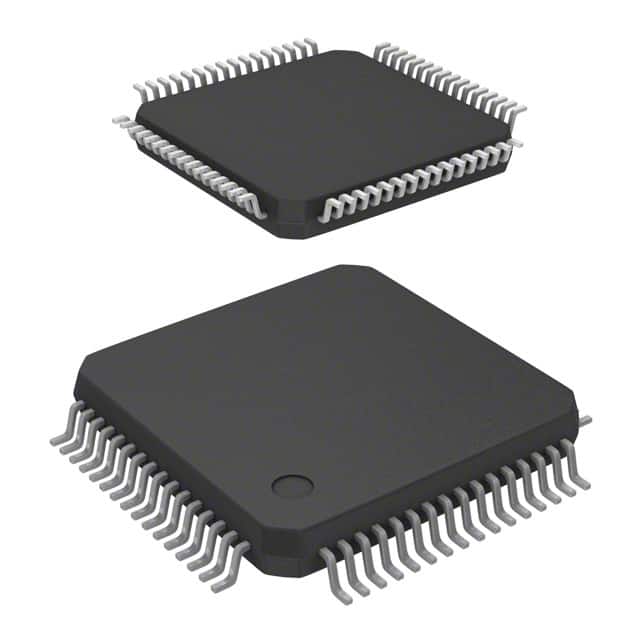
- Part No.:
- SAX-XC878C-16FFA 5V AA
- Manufacturer:
- Infineon Technologies
- Category:
- Microcontrollers
- Package:
- 64-LQFP
- Datasheet:
-
 SAX-XC878C-16FFA 5V AA.pdf
- Description:
- IC MCU 8BIT 64KB FLASH 64LQFP
- Quantity:
- Payment:

- Shipping:

Inventory:3,787
Please send an inquiry. Send us your inquiry, and we will respond immediately.
Product details
Overview
SAX-XC878C-16FFA 5V AA from Infineon Technologies is an 8-bit single-chip microcontroller based on the XC800 core, compatible with the standard 8051 instruction set and executing instructions at two clocks per machine cycle. It integrates 52 KB Flash, 3 KB XRAM, 256 B RAM, and 8 KB Boot ROM, with dual-voltage operation (5 V I/O, 2.5 V core via embedded regulator). It targets automotive body electronics and industrial motor control where LIN, CAN, and high-precision ADC timing are required.
For engineers reviewing the SAX-XC878C-16FFA 5V AA datasheet, SAX-XC878C-16FFA 5V AA pinout, SAX-XC878C-16FFA 5V AA application, or SAX-XC878C-16FFA 5V AA equivalent, this page delivers verified technical context, validated pin functions, real-world use cases in LIN gateway and motor feedback systems, and confirmed alternative parts with documented functional trade-offs.
Technical Context
The device implements a two-clock-per-machine-cycle XC800 core derived from the 8051 architecture, enabling zero-wait-state memory access across its integrated 52 KB Flash and 3 KB XRAM. Its memory protection strategy includes flash lock bits, password-protected register access, and bit-level protection for critical SFRs.
It features a multi-channel 10-bit ADC with programmable conversion sequence, dual 16-bit timers (Timer 0/1), a dedicated Timer 2 Capture/Compare Unit, CCU6 for PWM generation, MultiCAN 2.0B interface, UART1 with LIN support, and SSC synchronous serial interface - all synchronized to a configurable clock tree with PLL and internal oscillator options.
Key Specifications
| Parameter | Value and Actual Design Meaning |
|---|---|
| Core Architecture | XC800 (8051-compatible), 2-clock/machine cycle → enables deterministic 16 MHz max CPU throughput without wait states |
| Flash Memory | 52 KB with lock-bit protection → supports secure bootloader storage and field firmware updates |
| RAM / XRAM | 256 B internal RAM + 3 KB XRAM → sufficient for real-time control stacks and sensor data buffering |
| ADC Resolution | 10-bit, 8-channel, programmable sequence → enables simultaneous sampling of motor phase currents and temperature sensors |
| Communication Peripherals | MultiCAN 2.0B + UART1 (LIN-compliant) + SSC → supports automotive network gateways with protocol bridging |
| Supply Scheme | 5 V I/O supply, 2.5 V core via embedded regulator → eliminates external LDO while maintaining noise isolation between analog/digital domains |
| Operating Temperature | −40 °C to +125 °C → qualified for under-hood automotive applications and industrial motor drives |
Pinout & Package
This device is housed in a 64-pin TQFP package (10 mm × 10 mm, 0.5 mm pitch), designated by the "FFA" suffix per Infineon's ordering code convention. Pin assignments are validated against Section 2.3 ("Pin Configuration") and Section 2.4 ("Pin Definitions and Functions") of the XC87xCLM Data Sheet V1.5 (2011-03).
| Pin/Terminal | Circuit Role | Design Meaning |
|---|---|---|
| P0.0–P0.7 | Port 0 bidirectional I/O / AD0–AD7 multiplexed | 8-bit quasi-bidirectional port with alternate analog input capability for ADC channel selection |
| P1.0–P1.7 | Port 1 bidirectional I/O / T2EX, T2, INT0, INT1, etc. | General-purpose I/O with dedicated timer/capture/external interrupt inputs for motor control event capture |
| P3.0/P3.1 | UART1 RXD/TXD | Full-duplex asynchronous serial interface supporting LIN physical layer compliance at 19.2 kbps |
| P4.0/P4.1 | CAN TX/RX (MultiCAN) | Differential CAN bus interface compliant with ISO 11898-1, supporting 1 Mbit/s operation |
| XTAL1/XTAL2 | External crystal oscillator input/output | Supports 1–20 MHz crystals; internal oscillator can be used as fallback for reduced BOM cost |
| VDDIO/VSSIO | I/O power supply (5 V) and ground | Separate 5 V domain powers all GPIOs, enabling direct interfacing with 5 V sensors and actuators |
| VDDCORE/VSS | Core logic supply (2.5 V) and common ground | Internally regulated 2.5 V powers CPU, peripherals, and Flash - decoupling reduces switching noise coupling into ADC |
Key Features
| Feature | Design Value |
|---|---|
| XC800 Core with 8051 ISA | Binary-compatible with legacy 8051 toolchains and firmware, reducing migration effort for automotive Tier-1 suppliers |
| Memory Protection Strategy | Lock-bit protected Flash + password-protected SFR write access prevents unauthorized firmware overwrite or debug access |
| Integrated Voltage Regulator | On-die 2.5 V regulator for core logic eliminates need for external LDO, simplifying PCB layout and improving EMI robustness |
| LIN 2.1 Compliant UART1 | Hardware LIN header generation and checksum calculation offload CPU during frame transmission in body control modules |
| CCU6 for Motor Control | Dedicated 16-bit capture/compare unit with dead-time insertion and shadow registers enables precise 3-phase inverter gate drive |
Applications
| Automotive Body Control Module (BCM) | Industrial Brushless DC (BLDC) Motor Drive |
|---|---|
|
Use Scenario: Centralized control of door locks, window lifts, lighting, and mirror adjustment in modern vehicles. IC Role / Device Role / Timing Role: Primary MCU managing LIN slave communication, PWM dimming, and discrete I/O sequencing. Use Value: Integrated LIN PHY support and 5 V-tolerant I/O reduce external component count; 125 °C rating ensures reliability in dashboard-mounted units. |
Use Scenario: Closed-loop speed and position control of BLDC motors in HVAC blowers and industrial pumps. IC Role / Device Role / Timing Role: Real-time execution of FOC algorithms using CCU6 PWM outputs and ADC-sampled current feedback. Use Value: 10-bit ADC with programmable sample-and-hold timing synchronizes with CCU6 trigger events, minimizing current measurement jitter. |
| Automotive LIN Gateway | Industrial Sensor Aggregation Node |
|
Use Scenario: Protocol translation between LIN subnetworks (e.g., seat control, climate sensors) and CAN backbone. IC Role / Device Role / Timing Role: Dual-interface MCU routing messages between UART1 (LIN) and MultiCAN (CAN), with message filtering and scheduling. Use Value: Hardware LIN header generation and CAN message buffering reduce CPU load, enabling deterministic latency under 2 ms per frame. |
Use Scenario: Local preprocessing of analog sensor data (temperature, pressure, vibration) before CAN transmission to PLC. IC Role / Device Role / Timing Role: Signal acquisition node performing oversampling, digital filtering, and threshold-based event reporting. Use Value: 8-channel ADC with automatic scan mode and interrupt-on-completion allows low-power polling-free data collection at 10 ksps aggregate rate. |
Equivalent & Alternatives
The following parts are listed as comparable options for similar 8-bit automotive microcontroller applications.
| Alternative Part | Technical Difference | Application Difference | Selection Advice |
|---|---|---|---|
| SAK-TC1766-512F133HR BA | TriCore 32-bit architecture, 133 MHz, 512 KB Flash - significantly higher performance but larger footprint and power draw | Targets complex real-time control (e.g., engine management), not cost-sensitive body electronics | Select when migrating from 8-bit to 32-bit control with full AUTOSAR stack support; not drop-in compatible |
| SAX-TC1782-512F133HR BA | TriCore v1.6, 133 MHz, 512 KB Flash, integrated Ethernet MAC - adds networking capability absent in XC878C | Suitable for gateway ECUs requiring TCP/IP or DoIP, not standalone sensor nodes or motor controllers | Choose for next-generation vehicle architectures needing OTA update readiness and diagnostic over IP |
Compared with SAX-XC878C-16FFA 5V AA, the TC1766 and TC1782 offer orders-of-magnitude higher compute throughput and memory, but require new toolchains, larger PCB area, and higher system cost - making them unsuitable for cost-optimized, function-specific roles where the XC878C's LIN/CAN/ADC integration delivers optimal value.
Availability
SAX-XC878C-16FFA 5V AA is available at Aetrix Electronics and suitable for automotive body electronics, industrial motor control, LIN gateway modules, and sensor aggregation nodes requiring stable component supply across extended product lifecycles.
Supply support for SAX-XC878C-16FFA 5V AA includes scheduled delivery planning, volume procurement assistance, BOM continuity management, traceable sourcing, and lifecycle availability coordination for OEM customers, industrial embedded developers, connected-device designers, and electronics production programs.
Manufacturer
Infineon Technologies AG is a German semiconductor manufacturer specializing in power semiconductors, automotive MCUs, and security solutions, with global R&D and manufacturing infrastructure.
The XC87xCLM family was designed specifically for cost-sensitive automotive body and convenience applications requiring LIN, CAN, and analog signal acquisition - balancing performance, integration, and qualification to AEC-Q100 Grade 1.
FAQ
Does SAX-XC878C-16FFA 5V AA support JTAG debugging?
Yes, it includes full On-Chip Debug Support (OCDS) compliant with IEEE 1149.1 JTAG, with dedicated TCK, TMS, TDI, TDO, and TRST pins. The JTAG ID register (address 0xF000) returns a fixed 32-bit identifier for tool recognition, and boundary-scan testing is supported per Section 3.23 of the datasheet.
What is the maximum ADC sampling rate achievable with hardware triggers?
When triggered by CCU6 or Timer 2 events, the 10-bit ADC achieves up to 100 kSPS aggregate throughput across all 8 channels. Conversion time is 13.5 µs per sample (125 kHz effective rate), and the programmable scan mode allows sequential channel acquisition without CPU intervention.
Can the embedded voltage regulator power external circuitry?
No - the internal 2.5 V regulator supplies only the core logic, Flash, and peripheral blocks. It is not rated for external load driving. VDDIO (5 V) must be supplied externally to power GPIOs, ADC reference, and any attached 5 V peripherals.
Is LIN physical layer compliance certified for this part?
The UART1 module meets LIN 2.1 physical layer timing requirements (±1.5% baud tolerance at 19.2 kbps) when used with the internal oscillator or crystal source, as verified in Section 4.3.6 and Figure 4-27 of the datasheet. No external LIN transceiver is needed for basic compliance.
SAX-XC878C-16FFA 5V AA Specifications
- Product attributes
- Attribute value
- Manufacturer:
- Infineon Technologies
- Package/Case:
- 64-LQFP
- Series:
- XC8xx
- Packaging:
- Tape & Reel (TR)
- Product Status:
- Obsolete
- Programmable:
- Not Verified
- Core Processor:
- XC800
- Core Size:
- 8-Bit
- Speed:
- 27MHz
- Connectivity:
- CANbus, SPI, SSI, UART/USART
- Peripherals:
- Brown-out Detect/Reset, POR, PWM, WDT
- Number of I/O:
- 40
- Program Memory Size:
- 64KB (64K x 8)
- Program Memory Type:
- FLASH
- EEPROM Size:
- -
- RAM Size:
- 3.25K x 8
- Voltage - Supply (Vcc/Vdd):
- 4.5V ~ 5.5V
- Data Converters:
- A/D 8x10b
- Oscillator Type:
- Internal
- Operating Temperature:
- -40°C ~ 105°C (TA)
- Grade:
- -
- Qualification:
- -
- Mounting Type:
- Surface Mount
- Supplier Device Package:
SAX-XC878C-16FFA 5V AA FAQ
1.How can I place an order for SAX-XC878C-16FFA 5V AA through Aetrix?
Please submit a Request for Quotation (RFQ) for SAX-XC878C-16FFA 5V AA on Aetrix. Our sales agent will provide a competitive quotation and guide you through the order confirmation once you accept the terms.
2.Are the price and stock information for SAX-XC878C-16FFA 5V AA reliable?
The price and inventory of SAX-XC878C-16FFA 5V AA are updated periodically and may fluctuate due to market conditions. Stock and pricing data are typically refreshed every 24 hours. Quotation validity for SAX-XC878C-16FFA 5V AA is usually 5 days.
3.What payment methods are accepted for SAX-XC878C-16FFA 5V AA?
We accept Wire Transfer, PayPal, Credit Card, Western Union, MoneyGram, and Escrow for SAX-XC878C-16FFA 5V AA transactions.
Note: Certain payment methods may incur a processing fee.
4.How is shipping managed for SAX-XC878C-16FFA 5V AA?
SAX-XC878C-16FFA 5V AA orders can be shipped via leading logistics carriers, including DHL, UPS, FedEx, TNT, or Registered Mail.
Once your SAX-XC878C-16FFA 5V AA order is processed, you will receive an email with the shipment details and tracking number.
Note: Tracking information may take up to 24 hours to appear. Express delivery typically takes 3–5 business days.
5.How can I obtain technical support or documentation for SAX-XC878C-16FFA 5V AA?
For technical support, including SAX-XC878C-16FFA 5V AA datasheets, pinout diagrams, or application guidance, please contact our engineering support team. They can provide detailed documentation and assistance for your SAX-XC878C-16FFA 5V AA requirements.
6.How does Aetrix verify that SAX-XC878C-16FFA 5V AA is sourced from the original manufacturer or authorized distributors?
All SAX-XC878C-16FFA 5V AA products on Aetrix are procured from qualified distributors and authorized channels. Our dedicated quality assurance team conducts strict verification, including traceability checks and, if necessary, third-party testing. This ensures that SAX-XC878C-16FFA 5V AA meets industry standards.
7.What is the process for return or replacement of SAX-XC878C-16FFA 5V AA?
All SAX-XC878C-16FFA 5V AA units undergo pre-shipment inspection (PSI). If there is an issue with SAX-XC878C-16FFA 5V AA, returns or replacements are accepted under the following conditions:
1.Quantity discrepancies, incorrect items, or visible external defects (such as breakage or corrosion), acknowledged by Aetrix.
2.The issue is reported within 90 days of delivery.
3.The SAX-XC878C-16FFA 5V AA part is unused and in its original packaging.
Return procedure for SAX-XC878C-16FFA 5V AA:
1.Submit a request within 90 days.
2.Obtain a Return Material Authorization (RMA) from Aetrix.
SAX-XC878C-16FFA 5V AA Tags

-
ATTINY4-TSHR
Microchip Technology
-
ATTINY10-TSHR
Microchip Technology
-
ATTINY10-TS8R
Microchip Technology

-
ATTINY202-SSNR
Microchip Technology
-
ATTINY202-SSFR
Microchip Technology
-
ATTINY402-SSNR
Microchip Technology

-
PIC16F15213T-I/MF
Microchip Technology
-
PIC16F15213-E/MF
Microchip Technology

-
PIC10F200T-I/OT
Microchip Technology
-
ATTINY412-SSNR
Microchip Technology
-
PIC10F202T-I/OT
Microchip Technology

-
ATTINY404-SSNR
Microchip Technology
Tech Hub

Guide to electronic component obsolescence covering EOL risk, PCN/PDN notices, last-time buy planning, replacement options, form-fit-function validation, counterfeit risk and BOM lifecycle management.

18650 battery guide covering lithium-ion cell basics, 3.6V/3.7V voltage, 4.2V charging, mAh and Wh capacity, protected cells, chargers, BMS, series-parallel packs, holders, welding and sourcing checks.…

Hall effect sensor guide covering working principle, linear and digital sensors, Arduino circuits, current sensing, speed detection, automotive applications, A3144 examples, signal filtering and datash…

Product Change Notification guide for electronic components, covering PCN meaning, PCN vs PDN/EOL, common change types, risk levels, form-fit-function review, engineering validation, BOM control, LTB/L…

A practical guide to blend door actuators, covering HVAC function, symptoms, location, AC and heater issues, reset and calibration, replacement cost, electrical diagnosis, compatibility checks, and rep…

Engineering guide to Raspberry Pi alternatives, covering chip-level differences, Orange Pi, ROCK, Jetson, Banana Pi, NanoPi, Compute Module, Pico, GPIO, camera, HAT compatibility, and replacement risks…
Engineering guide to dynamic load response testing for high-current buck converters, covering load step setup, slew rate, Vcore undershoot, overshoot, recovery time, probe location, output capacitors a…
Engineering guide to output capacitor selection for ASIC Vcore rails, covering bulk capacitors, polymer capacitors, MLCC decoupling, DC bias, ESR, ESL, placement, transient response and substitution ri…
Engineering guide to high-current ASIC Vcore rails, covering 12-phase buck architecture, PMBus control, dynamic load testing, output capacitor networks, smart power stage selection, thermal design and …
Voltage regulator guide covering linear, LDO, 7805, Zener, adjustable, buck, VRM and alternator regulators, with design checks, testing methods, troubleshooting and datasheet-based selection.


