
 My Inquiry
 My Account


Infineon Technologies SFH250

- Part No.:
- SFH250
- Manufacturer:
- Infineon Technologies
- Category:
- Photodiodes
- Package:
- -
- Datasheet:
-
 SFH250.pdf
- Description:
- SENSOR PHOTODIODE DET FIB OPTIC
- Quantity:
- Payment:

- Shipping:

Inventory:1,137
Please send an inquiry. Send us your inquiry, and we will respond immediately.
Product details
Overview
SFH250 from Infineon Technologies is a plastic fiber optic photodiode detector with 2.2 mm aperture for standard 1000 µm plastic fiber, 850 nm peak sensitivity, 0.01 µs rise/fall time, 11 pF capacitance at 0 V, and dark current ≤1 nA at 20 V reverse bias - used in light barriers and optical isolation in household electronics and power electronics.
For engineers reviewing the SFH250 datasheet, SFH250 pinout, SFH250 application, or SFH250 equivalent, key selection criteria include spectral response (400–1100 nm), fast switching (≤10 ns), low dark current, molded microlens coupling efficiency, and plastic connector housing with mounting screw for interference-free transmission.
Technical Context
The SFH250 operates as a visible-to-near-IR photodiode optimized for plastic optical fiber (POF) coupling without fiber stripping. Its molded microlens enhances coupling efficiency into 1000 µm POF, while the light-tight housing eliminates crosstalk between transmitter/receiver pairs.
It delivers linear photocurrent response across 400–1100 nm, with peak sensitivity at 850 nm and temperature coefficients ranging from –0.04 %/K (560–660 nm) to +0.2 %/K (950 nm). Reverse bias up to 30 V enables fast transient response under 50 Ω load.
Key Specifications
| Parameter | Value and Actual Design Meaning |
|---|---|
| Peak Wavelength | 850 nm - matches common POF LED emitters for maximum coupling efficiency |
| Spectral Range (10% Smax) | 400–1100 nm - supports visible and near-IR sources including 660 nm and 950 nm LEDs |
| Rise/Fall Time | 0.01 µs each - enables >35 MHz signal bandwidth with 50 Ω load and 30 V bias |
| Capacitance | 11 pF at 0 V - low junction capacitance supports high-speed detection in compact POF links |
| Dark Current | ≤1 nA at 20 V - ensures low noise floor for weak-signal optical sensing |
| Photo Current | ≥3 µA at 660 nm / ≥4 µA at 950 nm (10 µW POF input, 5 V bias) - sufficient for direct TTL-level interfacing |
Pinout & Package
Package: Plastic TO-style housing with integrated 2.2 mm aperture, molded microlens, and mounting screw; designed for wave soldering and auto-insertion. Dimensions per Infineon File 4201 (SFH250).
| Pin/Terminal | Circuit Role | Design Meaning |
|---|---|---|
| Anode | Forward-biased P-side connection | Connected to ground or low-impedance sink in photovoltaic mode; biased positive in photoconductive mode |
| Cathode | Reverse-biased N-side connection | Connected to positive supply (up to 30 V) for photoconductive operation with fast response |
Key Features
| Feature | Design Value |
|---|---|
| No fiber stripping required | 2.2 mm aperture accepts bare 1000 µm plastic fiber directly - reduces assembly time and cost |
| Molded microlens | Optimized coupling efficiency into POF - improves signal-to-noise ratio without external optics |
| Light-tight housing | Eliminates ambient light interference and inter-channel crosstalk - enables reliable operation in noisy environments |
| Wave solderable & auto-insertable | Plastic housing rated for 260 °C (5 s) - compatible with standard PCB assembly processes |
Applications
| Household Electronics | Power Electronics |
|---|---|
Use Scenario: Optical isolation in washing machine door lock sensors and dishwasher water level detectors. IC Role / Device Role / Timing Role: Photodiode detector converting POF-coupled LED pulses into logic-level signals for microcontroller input. Use Value: Immunity to EMI from motors and triacs ensures reliable state detection without shielding. | Use Scenario: Feedback loop isolation in AC-DC SMPS and IGBT gate drive circuits. IC Role / Device Role / Timing Role: High-speed photodiode providing galvanically isolated current/voltage sensing signal to PWM controller. Use Value: 0.01 µs response enables accurate cycle-by-cycle overcurrent protection at >100 kHz switching frequencies. |
| Optical Networks | Light Barriers |
Use Scenario: Short-reach POF data link in industrial control panels and building automation systems. IC Role / Device Role / Timing Role: Receiver element in 1–10 Mbps bidirectional POF transceivers using 660 nm LEDs. Use Value: 400–1100 nm spectral range accommodates multiple emitter wavelengths without redesign. | Use Scenario: Object detection in vending machines and automated doors. IC Role / Device Role / Timing Role: Detector in through-beam light barrier paired with SFH485 or similar POF LED. Use Value: Light-tight housing and flexible transmitter/receiver positioning prevent false triggers from ambient or reflected light. |
Equivalent & Alternatives
The following parts are listed as comparable options for similar photodiode detector applications.
| Alternative Part | Technical Difference | Application Difference | Selection Advice |
|---|---|---|---|
| Vishay TEFT4300 | Higher dark current (≤50 nA), no molded microlens, TO-18 metal package | Lacks integrated POF coupling features; requires external lens and fiber termination | Prefer SFH250 when using bare plastic fiber and needing EMI-immune housing |
| Everlight PD333-3C/H0/L2 | Smaller 1.5 mm aperture, no mounting screw, epoxy package only | Not rated for wave soldering; limited mechanical stability in high-vibration environments | Choose SFH250 for production lines requiring auto-insertion and thermal robustness |
Compared with TEFT4300 and PD333-3C/H0/L2, SFH250 provides superior POF integration via its 2.2 mm aperture and molded microlens, lower dark current for higher SNR, and a mechanically stable, light-tight housing with mounting screw - making it optimal for cost-sensitive, high-volume POF sensing where assembly simplicity and EMI immunity are critical.
Availability
SFH250 is available at Aetrix Electronics and suitable for household electronics, power electronics, and optical network applications requiring stable component supply, consistent POF coupling performance, and long-term manufacturability.
Supply support for SFH250 includes scheduled delivery planning, volume procurement assistance, BOM continuity management, traceable sourcing, and lifecycle availability coordination for OEM customers, industrial embedded developers, connected-device designers, and electronics production programs.
Manufacturer
Infineon Technologies AG is a German semiconductor manufacturer specializing in power management, sensor, and automotive ICs, with global R&D and manufacturing infrastructure.
SFH250 belongs to Infineon's optoelectronic component family designed specifically for plastic optical fiber communication and sensing - emphasizing mechanical integration, EMI resilience, and simplified assembly in cost-sensitive industrial and consumer systems.
FAQ
What is the recommended reverse bias voltage for optimal SFH250 performance?
The SFH250 achieves fastest switching (0.01 µs rise/fall) at 30 V reverse bias with a 50 Ω load. For low-power applications, 5 V bias yields ≥3 µA photocurrent with 10 µW POF input at 660 nm - sufficient for direct CMOS/TTL interfacing without amplification.
Can SFH250 be used with glass optical fiber?
No - SFH250 is engineered exclusively for 1000 µm plastic optical fiber (POF). Its 2.2 mm aperture, molded microlens, and spectral response (peak 850 nm) are optimized for POF's numerical aperture and attenuation profile; glass fiber (e.g., 200 µm core) will not couple efficiently.
Does SFH250 require external biasing circuitry?
Yes - SFH250 operates in photoconductive mode and requires an external reverse bias (up to 30 V) and load resistor. A simple 5–30 V supply with 1–10 kΩ pull-up suffices for most digital interface applications; no active amplifier is needed for ≥3 µA output signals.
Is SFH250 RoHS compliant?
Yes - SFH250 was manufactured by Infineon under RoHS Directive 2002/95/EC compliance (as confirmed in original 2004 datasheet revision), with lead-free terminations and halogen-free molding compound meeting JEDEC J-STD-020 moisture sensitivity level 3 requirements.
SFH250 Specifications
- Product attributes
- Attribute value
- Manufacturer:
- Infineon Technologies
- Series:
- *
- Package/Case:
- -
- Packaging:
- Tube
- Product Status:
- Discontinued at Digi-Key
- Wavelength:
- -
- Color - Enhanced:
- -
- Spectral Range:
- -
- Diode Type:
- -
- Responsivity @ nm:
- -
- Response Time:
- -
- Voltage - DC Reverse (Vr) (Max):
- -
- Current - Dark (Typ):
- -
- Active Area:
- -
- Viewing Angle:
- -
- Operating Temperature:
- -
- Grade:
- -
- Qualification:
- -
- Mounting Type:
- -
SFH250 FAQ
1.How can I place an order for SFH250 through Aetrix?
Please submit a Request for Quotation (RFQ) for SFH250 on Aetrix. Our sales agent will provide a competitive quotation and guide you through the order confirmation once you accept the terms.
2.Are the price and stock information for SFH250 reliable?
The price and inventory of SFH250 are updated periodically and may fluctuate due to market conditions. Stock and pricing data are typically refreshed every 24 hours. Quotation validity for SFH250 is usually 5 days.
3.What payment methods are accepted for SFH250?
We accept Wire Transfer, PayPal, Credit Card, Western Union, MoneyGram, and Escrow for SFH250 transactions.
Note: Certain payment methods may incur a processing fee.
4.How is shipping managed for SFH250?
SFH250 orders can be shipped via leading logistics carriers, including DHL, UPS, FedEx, TNT, or Registered Mail.
Once your SFH250 order is processed, you will receive an email with the shipment details and tracking number.
Note: Tracking information may take up to 24 hours to appear. Express delivery typically takes 3–5 business days.
5.How can I obtain technical support or documentation for SFH250?
For technical support, including SFH250 datasheets, pinout diagrams, or application guidance, please contact our engineering support team. They can provide detailed documentation and assistance for your SFH250 requirements.
6.How does Aetrix verify that SFH250 is sourced from the original manufacturer or authorized distributors?
All SFH250 products on Aetrix are procured from qualified distributors and authorized channels. Our dedicated quality assurance team conducts strict verification, including traceability checks and, if necessary, third-party testing. This ensures that SFH250 meets industry standards.
7.What is the process for return or replacement of SFH250?
All SFH250 units undergo pre-shipment inspection (PSI). If there is an issue with SFH250, returns or replacements are accepted under the following conditions:
1.Quantity discrepancies, incorrect items, or visible external defects (such as breakage or corrosion), acknowledged by Aetrix.
2.The issue is reported within 90 days of delivery.
3.The SFH250 part is unused and in its original packaging.
Return procedure for SFH250:
1.Submit a request within 90 days.
2.Obtain a Return Material Authorization (RMA) from Aetrix.
SFH250 Tags
-
OP999
TT Electronics/Optek Technology
-
TEMD6200FX01
Vishay Semiconductor Opto Division
-
SFH 203 FA
ams-OSRAM USA INC.
-
SFH 229FA
ams-OSRAM USA INC.
-
SFH 229
ams-OSRAM USA INC.
-
SFH 2704
ams-OSRAM USA INC.
-
VEMD2000X01
Vishay Semiconductor Opto Division
-
VEMD2020X01
Vishay Semiconductor Opto Division
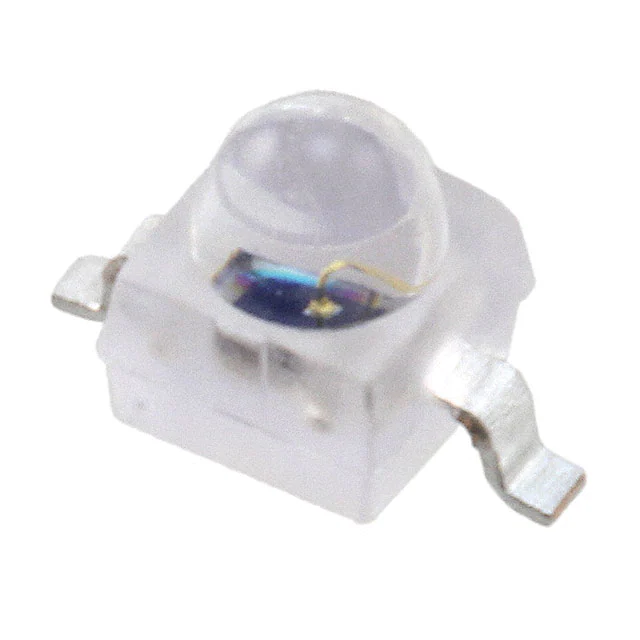
-
VEMD2520X01
Vishay Semiconductor Opto Division
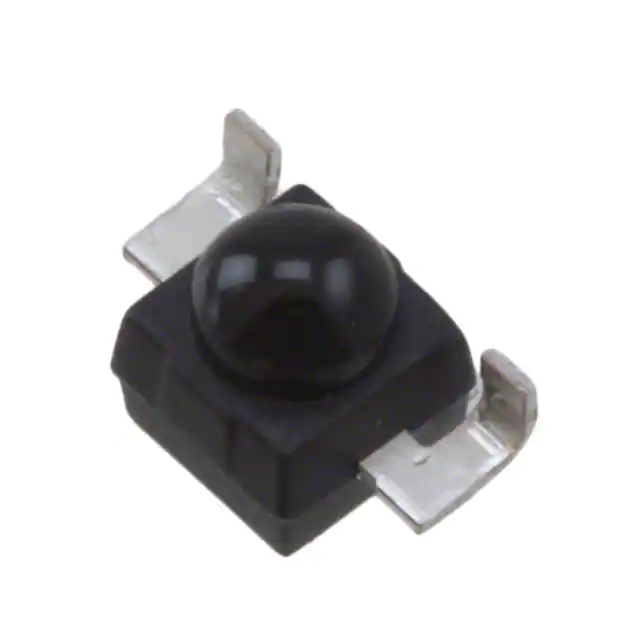
-
VEMD2023SLX01
Vishay Semiconductor Opto Division
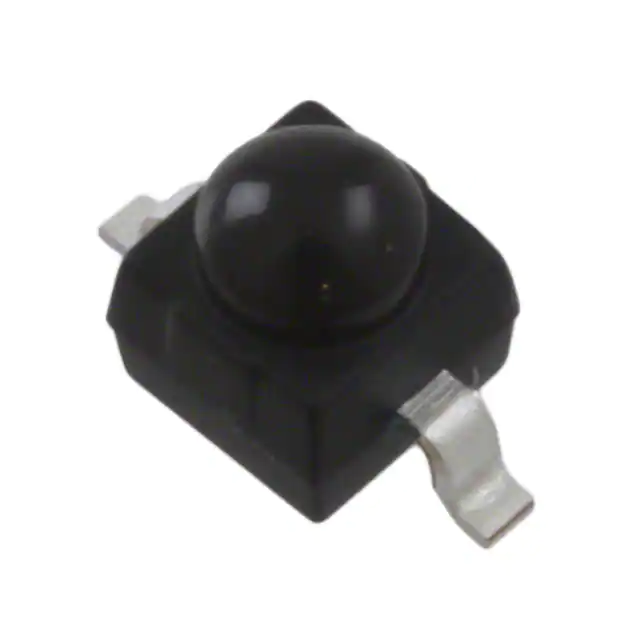
-
VEMD2023X01
Vishay Semiconductor Opto Division
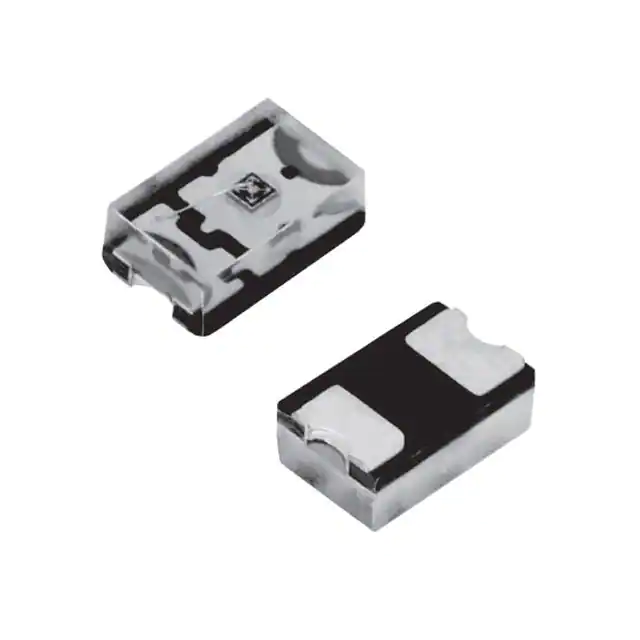
-
TEMD7000X01
Vishay Semiconductor Opto Division
Tech Hub

18650 battery guide covering lithium-ion cell basics, 3.6V/3.7V voltage, 4.2V charging, mAh and Wh capacity, protected cells, chargers, BMS, series-parallel packs, holders, welding and sourcing checks.…

Hall effect sensor guide covering working principle, linear and digital sensors, Arduino circuits, current sensing, speed detection, automotive applications, A3144 examples, signal filtering and datash…

Product Change Notification guide for electronic components, covering PCN meaning, PCN vs PDN/EOL, common change types, risk levels, form-fit-function review, engineering validation, BOM control, LTB/L…

A practical guide to blend door actuators, covering HVAC function, symptoms, location, AC and heater issues, reset and calibration, replacement cost, electrical diagnosis, compatibility checks, and rep…

Engineering guide to Raspberry Pi alternatives, covering chip-level differences, Orange Pi, ROCK, Jetson, Banana Pi, NanoPi, Compute Module, Pico, GPIO, camera, HAT compatibility, and replacement risks…
Engineering guide to dynamic load response testing for high-current buck converters, covering load step setup, slew rate, Vcore undershoot, overshoot, recovery time, probe location, output capacitors a…
Engineering guide to output capacitor selection for ASIC Vcore rails, covering bulk capacitors, polymer capacitors, MLCC decoupling, DC bias, ESR, ESL, placement, transient response and substitution ri…
Engineering guide to high-current ASIC Vcore rails, covering 12-phase buck architecture, PMBus control, dynamic load testing, output capacitor networks, smart power stage selection, thermal design and …
Voltage regulator guide covering linear, LDO, 7805, Zener, adjustable, buck, VRM and alternator regulators, with design checks, testing methods, troubleshooting and datasheet-based selection.
Amplifier guide covering voltage, current and power amplification, gain, feedback, amplifier classes, audio and RF applications, op-amp circuits, transimpedance amplifiers, datasheet selection and trou…


