
 My Inquiry
 My Account


Simtek STK17TA8-RF25
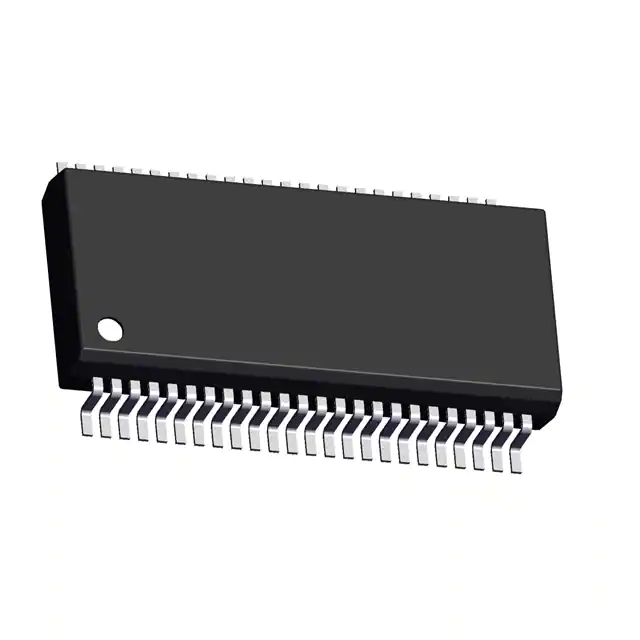
- Part No.:
- STK17TA8-RF25
- Manufacturer:
- Simtek
- Category:
- Memory
- Package:
- 48-BSSOP (0.295", 7.50mm Width)
- Datasheet:
-
 STK17TA8-RF25.pdf
- Description:
- IC NVSRAM 1MBIT PARALLEL 48SSOP
- Quantity:
- Payment:

- Shipping:

Inventory:3,621
Please send an inquiry. Send us your inquiry, and we will respond immediately.
Product details
Overview
STK17TA8-RF25 from Cypress Semiconductor is a 128k × 8 (1 Mb) nonvolatile SRAM with integrated real-time clock, watchdog timer, alarm, and power monitor. It operates from a single 3 V ±10% supply, delivers 25 ns read access time, supports automatic STORE on power loss and RECALL on power-up, and uses a 48-pin SSOP package for industrial temperature operation (–40°C to +85°C).
For engineers reviewing the STK17TA8-RF25 datasheet, STK17TA8-RF25 pinout, STK17TA8-RF25 application, or STK17TA8-RF25 equivalent, key selection considerations include nvSRAM endurance (unlimited read/write), RTC backup options (capacitor or battery), hardware STORE/RECALL control via HSB, interrupt-driven alarm/wdog signaling, and compatibility with legacy SRAM interfaces.
Technical Context
The STK17TA8-RF25 integrates a Quantum Trap-based nvSRAM array with a fully featured RTC subsystem. Its memory core provides SRAM-speed access (25 ns) and unlimited read/write cycles, while nonvolatile STORE/RECALL operations are triggered by power-loss detection, HSB assertion, or software command - all preserving data for ≥20 years at 55°C.
The RTC block includes a programmable 32.768 kHz oscillator with ±20 ppm accuracy, leap-year calendar support, minute/hour/day alarm modes, a 16-bit watchdog timer with reset output, and a power monitor flag. Interrupts (INT pin) are configurable as active-high push-pull or active-low open-drain for alarm, watchdog timeout, or VCC drop events.
Key Specifications
| Parameter | Value and Actual Design Meaning |
|---|---|
| Memory Density | 128k × 8 (1 Mb) nvSRAM with full SRAM interface compatibility |
| Access Time | 25 ns - enables direct replacement of standard 25 ns SRAM in timing-critical systems |
| RTC Backup | VRTCcap or VRTCbat - supports capacitor-only (low-maintenance) or battery-backed (long-term) RTC retention |
| STORE Endurance | 200,000 cycles - defines maximum hardware/software-triggered nonvolatile write operations over lifetime |
| Data Retention | 20 years at 55°C - guaranteed nonvolatile data hold without power or refresh |
| Supply Voltage | 3.0 V ±10% - single-rail operation compatible with 3.3 V system domains using level-shifting or tolerance margin |
| Operating Temp | –40°C to +85°C - qualified for industrial-grade embedded control and instrumentation applications |
Pinout & Package
STK17TA8-RF25 is housed in a 48-pin, 300-mil SSOP (RF) RoHS-compliant package with 0.635 mm pitch and exposed thermal pad per Cypress specification.
| Pin/Terminal | Circuit Role | Design Meaning |
|---|---|---|
| A16–A0 | Address Input | 17-bit address bus for selecting one of 131,072 bytes in nvSRAM or 16-byte RTC register map |
| DQ7–DQ0 | Bidirectional Data Bus | 8-bit I/O path shared between nvSRAM and RTC registers; tristatable under G control |
| E, W, G | Control Inputs | Chip Enable (active-low), Write Enable (active-low), Output Enable (active-low) - standard SRAM timing interface |
| HSB | I/O Hardware Store Busy | Open-drain status output (low during STORE); also accepts external low pulse to initiate hardware STORE |
| INT | Interrupt Output | Programmable active-high push-pull or active-low open-drain signal for alarm/watchdog/power events |
| VRTCcap/VRTCbat | RTC Backup Supply | Dual-input RTC power: capacitor (VRTCcap) or battery (VRTCbat) - only one used at a time |
| VCAP | Autostore Capacitor | Connects to external storage capacitor (17–57 µF, 5 V rated) to power STORE operation during VCC loss |
| X1/X2 | Crystal Oscillator | Drive 32.768 kHz tuning-fork crystal; X1 is buffered output, X2 is input - requires 56 pF load caps |
Key Features
| Feature | Design Value |
|---|---|
| AutoStore™ on Power Loss | Automatic nvSRAM-to-Quantum Trap STORE triggered by VCC droop - no firmware intervention required |
| Software-Controlled STORE/RECALL | Full STORE/RECALL execution via register writes - enables deterministic data persistence in controlled shutdown sequences |
| Integrated RTC with Calendar | Full BCD-encoded date/time (year/month/day/hour/min/sec), leap-year correction, and century rollover handling |
| Configurable Alarm & Watchdog | Alarm supports one-time or periodic (min/hr/day) triggers; watchdog offers 16-bit timeout with INT or reset output |
| Power Monitor Flag | Dedicated status bit indicates VCC drop below threshold - usable for early warning or graceful state save |
Applications
| Industrial PLC Data Logging | Medical Device Event Timestamping |
|---|---|
Use Scenario: A programmable logic controller logs sensor readings and fault events to volatile RAM during runtime, requiring persistent storage across unexpected power interruptions. IC Role / Device Role / Timing Role: nvSRAM serves as primary working memory; RTC provides precise timestamping for logged entries; AutoStore ensures zero-data-loss on brownout. Use Value: Eliminates need for external EEPROM/NVRAM and discrete RTC, reducing BOM count and PCB area while guaranteeing sub-second timestamp accuracy and instant recall on restart. | Use Scenario: An infusion pump records therapy start/stop times, dosage adjustments, and error conditions, with regulatory requirement for tamper-proof, long-term audit trail. IC Role / Device Role / Timing Role: STK17TA8-RF25 acts as secure, time-stamped event buffer; RTC calendar ensures ISO 8601-compliant timestamps; 20-year retention satisfies medical device archival mandates. Use Value: Meets FDA 21 CFR Part 11 requirements for electronic records by combining trusted time source and nonvolatile storage in one certified component. |
| Point-of-Sale Terminal Configuration Storage | Telecom Base Station Clock Holdover |
Use Scenario: A retail POS terminal stores tax tables, pricing rules, and user preferences in RAM; must retain configuration after nightly power-down or grid failure. IC Role / Device Role / Timing Role: nvSRAM holds active configuration; RTC maintains accurate local time for transaction logging; software STORE invoked during clean shutdown. Use Value: Enables fast boot (<50 ms) with full configuration restored, avoids reinitialization delays, and supports time-based license enforcement without network dependency. | Use Scenario: A cellular base station requires stable timekeeping during GPS signal loss; must maintain synchronization within ±1 ppm for ≤24 hours using local oscillator. IC Role / Device Role / Timing Role: RTC oscillator (32.768 kHz) provides holdover reference; VRTCcap-backed operation sustains timekeeping during extended GPS outage. Use Value: Delivers 10 sec oscillator startup time and ±20 ppm stability - sufficient for SyncE/1588 boundary clock holdover compliance without external TCXO. |
Equivalent & Alternatives
The following parts are listed as comparable options for similar nvSRAM+RTC applications.
| Alternative Part | Technical Difference | Application Difference | Selection Advice |
|---|---|---|---|
| STK17TA8-RF45 | 45 ns access time, identical pinout and feature set - slower but lower power in standby | Suitable where timing margin allows relaxed cycle time; preferred for low-power battery-backed systems | Select when system clock rate permits 45 ns timing and average ICC1 < 50 mA is critical |
| DS1248-120+ from Analog Devices | 120 ns access, older NVSRAM architecture, no integrated alarm/watchdog, uses external crystal load caps | Lacks programmable RTC features; limited to basic timekeeping and STORE/RECALL only | Choose only for legacy redesign where DS1248 footprint compatibility is mandatory and advanced RTC functions are unused |
Compared with STK17TA8-RF45 and DS1248-120+, the STK17TA8-RF25 delivers the fastest access (25 ns), full RTC feature set (alarm, wdog, power monitor), and lowest latency STORE initiation - making it optimal for real-time control systems requiring deterministic data persistence and precise timestamping.
Availability
STK17TA8-RF25 is available at Aetrix Electronics and suitable for industrial PLC data logging, medical device event timestamping, point-of-sale terminal configuration storage, and telecom base station clock holdover requiring stable component supply and long-term lifecycle support.
Supply support for STK17TA8-RF25 includes scheduled delivery planning, volume procurement assistance, BOM continuity management, traceable sourcing, and lifecycle availability coordination for OEM customers, industrial embedded developers, connected-device designers, and electronics production programs.
Manufacturer
Cypress Semiconductor (now part of Infineon Technologies) designs high-reliability mixed-signal ICs for industrial, automotive, and communications infrastructure applications.
The STK17TA8 product line targets systems needing concurrent high-speed memory and precision timekeeping - specifically engineered to replace discrete SRAM + RTC + backup solutions in space-constrained, mission-critical embedded platforms.
FAQ
What backup power options does STK17TA8-RF25 support for the RTC?
STK17TA8-RF25 supports two mutually exclusive RTC backup sources: a 1.2–2.7 V capacitor on VRTCcap (typical 2.4 V), or a 1.8–3.3 V battery on VRTCbat (typical 3.0 V). Only one may be connected; the other must remain unconnected. Capacitor backup enables maintenance-free operation, while battery backup extends RTC uptime beyond capacitor discharge limits.
How does the AutoStore™ function detect power loss?
AutoStore™ uses an internal voltage monitor that continuously compares VCC against a factory-trimmed threshold (~2.5 V). When VCC drops below this threshold, the chip initiates STORE within 10 µs, using charge stored on the external VCAP capacitor to complete the transfer to Quantum Trap cells. No external circuitry or host intervention is required.
Can STK17TA8-RF25 operate as a drop-in replacement for standard 25 ns SRAMs?
Yes - STK17TA8-RF25 uses industry-standard SRAM control signals (E, W, G), identical address/data bus timing (tAVAV = 25 ns), and pin-compatible 48-pin SSOP packaging. All SRAM read/write cycles function identically; nvSRAM and RTC features are accessed only via optional address ranges and do not affect baseline SRAM operation.
What is the maximum frequency of the integrated RTC oscillator?
The integrated RTC oscillator is fixed at 32.768 kHz - a standard low-power watch crystal frequency. It is not programmable to other frequencies. Startup time is ≤5 sec at 25°C and ≤10 sec at minimum operating temperature, with ±20 ppm accuracy over the industrial temperature range.
STK17TA8-RF25 Specifications
- Product attributes
- Attribute value
- Manufacturer:
- Simtek
- Series:
- -
- Package/Case:
- 48-BSSOP (0.295", 7.50mm Width)
- Packaging:
- Bulk
- Product Status:
- Active
- Programmable:
- Not Verified
- Memory Type:
- Non-Volatile
- Memory Format:
- NVSRAM
- Technology:
- NVSRAM (Non-Volatile SRAM)
- Memory Size:
- 1Mbit
- Memory Organization:
- 128K x 8
- Memory Interface:
- Parallel
- Clock Frequency:
- -
- Write Cycle Time - Word, Page:
- 25ns
- Access Time:
- 25 ns
- Voltage - Supply:
- 2.7V ~ 3.6V
- Operating Temperature:
- 0°C ~ 70°C (TA)
- Grade:
- -
- Qualification:
- -
- Mounting Type:
- Surface Mount
- Supplier Device Package:
- 48-SSOP
STK17TA8-RF25 FAQ
1.How can I place an order for STK17TA8-RF25 through Aetrix?
Please submit a Request for Quotation (RFQ) for STK17TA8-RF25 on Aetrix. Our sales agent will provide a competitive quotation and guide you through the order confirmation once you accept the terms.
2.Are the price and stock information for STK17TA8-RF25 reliable?
The price and inventory of STK17TA8-RF25 are updated periodically and may fluctuate due to market conditions. Stock and pricing data are typically refreshed every 24 hours. Quotation validity for STK17TA8-RF25 is usually 5 days.
3.What payment methods are accepted for STK17TA8-RF25?
We accept Wire Transfer, PayPal, Credit Card, Western Union, MoneyGram, and Escrow for STK17TA8-RF25 transactions.
Note: Certain payment methods may incur a processing fee.
4.How is shipping managed for STK17TA8-RF25?
STK17TA8-RF25 orders can be shipped via leading logistics carriers, including DHL, UPS, FedEx, TNT, or Registered Mail.
Once your STK17TA8-RF25 order is processed, you will receive an email with the shipment details and tracking number.
Note: Tracking information may take up to 24 hours to appear. Express delivery typically takes 3–5 business days.
5.How can I obtain technical support or documentation for STK17TA8-RF25?
For technical support, including STK17TA8-RF25 datasheets, pinout diagrams, or application guidance, please contact our engineering support team. They can provide detailed documentation and assistance for your STK17TA8-RF25 requirements.
6.How does Aetrix verify that STK17TA8-RF25 is sourced from the original manufacturer or authorized distributors?
All STK17TA8-RF25 products on Aetrix are procured from qualified distributors and authorized channels. Our dedicated quality assurance team conducts strict verification, including traceability checks and, if necessary, third-party testing. This ensures that STK17TA8-RF25 meets industry standards.
7.What is the process for return or replacement of STK17TA8-RF25?
All STK17TA8-RF25 units undergo pre-shipment inspection (PSI). If there is an issue with STK17TA8-RF25, returns or replacements are accepted under the following conditions:
1.Quantity discrepancies, incorrect items, or visible external defects (such as breakage or corrosion), acknowledged by Aetrix.
2.The issue is reported within 90 days of delivery.
3.The STK17TA8-RF25 part is unused and in its original packaging.
Return procedure for STK17TA8-RF25:
1.Submit a request within 90 days.
2.Obtain a Return Material Authorization (RMA) from Aetrix.
STK17TA8-RF25 Tags
-
M24C02-WMN6TP
STMicroelectronics
-
AT24C02C-XHM-T
Microchip Technology
-
AT21CS01-STUM10-T
Microchip Technology

-
AT24C02C-SSHM-T
Microchip Technology
-
24LC01BT-I/OT
Microchip Technology
-
M24C02-FMC6TG
STMicroelectronics
-
AT24CS02-SSHM-T
Microchip Technology

-
93LC46BT-I/OT
Microchip Technology
-
AT24C04C-SSHM-T
Microchip Technology

-
24LC01BT-I/SN
Microchip Technology
-
24AA02UIDT-I/OT
Microchip Technology
-
AT24C08C-STUM-T
Microchip Technology
Tech Hub

Product Change Notification guide for electronic components, covering PCN meaning, PCN vs PDN/EOL, common change types, risk levels, form-fit-function review, engineering validation, BOM control, LTB/L…

A practical guide to blend door actuators, covering HVAC function, symptoms, location, AC and heater issues, reset and calibration, replacement cost, electrical diagnosis, compatibility checks, and rep…

Engineering guide to Raspberry Pi alternatives, covering chip-level differences, Orange Pi, ROCK, Jetson, Banana Pi, NanoPi, Compute Module, Pico, GPIO, camera, HAT compatibility, and replacement risks…
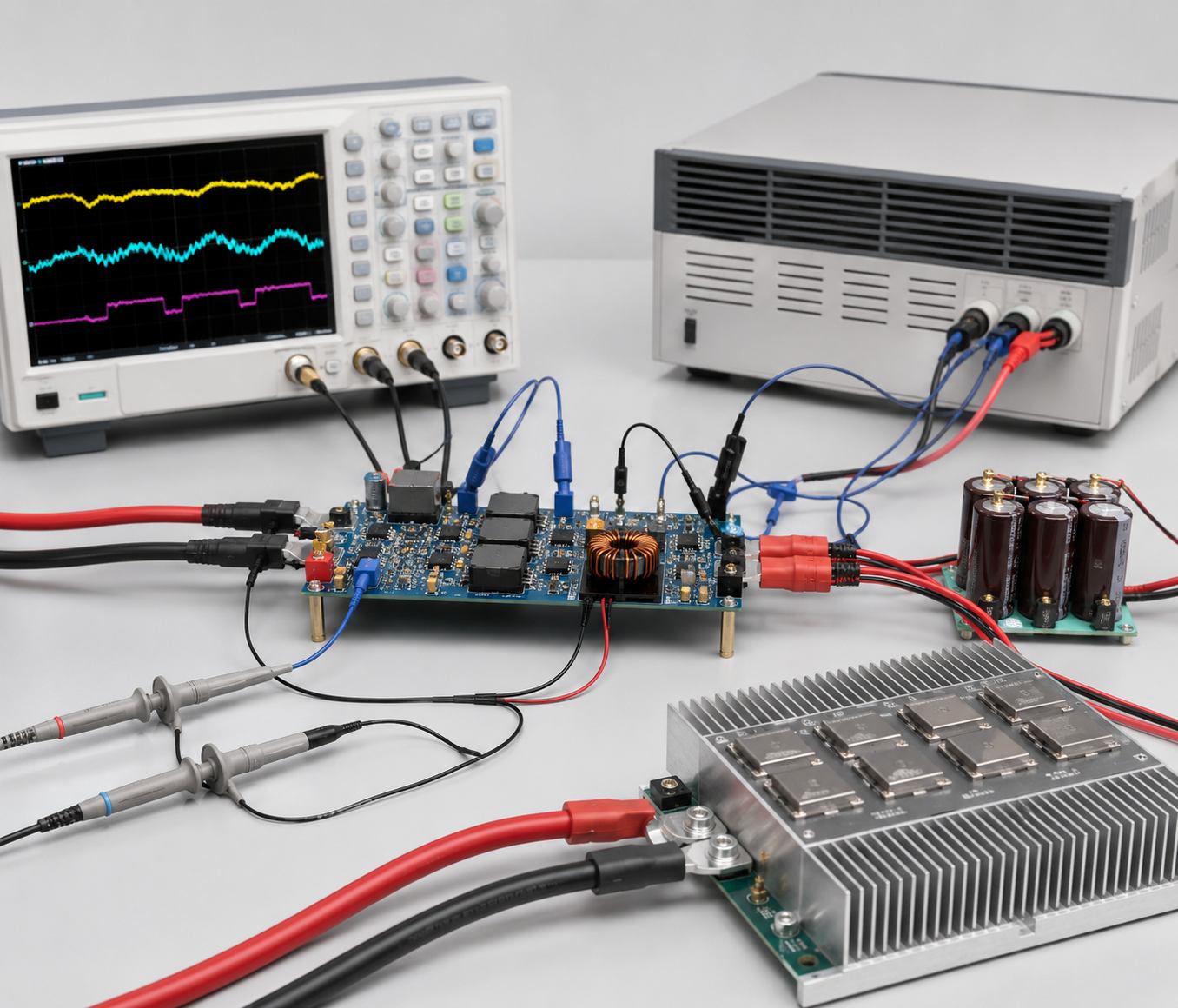
Engineering guide to dynamic load response testing for high-current buck converters, covering load step setup, slew rate, Vcore undershoot, overshoot, recovery time, probe location, output capacitors a…
Engineering guide to output capacitor selection for ASIC Vcore rails, covering bulk capacitors, polymer capacitors, MLCC decoupling, DC bias, ESR, ESL, placement, transient response and substitution ri…
Engineering guide to high-current ASIC Vcore rails, covering 12-phase buck architecture, PMBus control, dynamic load testing, output capacitor networks, smart power stage selection, thermal design and …
Voltage regulator guide covering linear, LDO, 7805, Zener, adjustable, buck, VRM and alternator regulators, with design checks, testing methods, troubleshooting and datasheet-based selection.
Amplifier guide covering voltage, current and power amplification, gain, feedback, amplifier classes, audio and RF applications, op-amp circuits, transimpedance amplifiers, datasheet selection and trou…

Machine vision system guide covering components, inspection workflow, camera and lens selection, FOV, pixel resolution, motion blur, strobe lighting, bandwidth, 2D/3D vision, integration, troubleshooti…
Electronic devices and circuits guide covering passive components, semiconductors, analog and digital circuits, circuit theory, practical calculations, troubleshooting, datasheet selection, and learnin…


