
 My Inquiry
 My Account


Infineon Technologies TC1793F512F270EBABKXUMA1
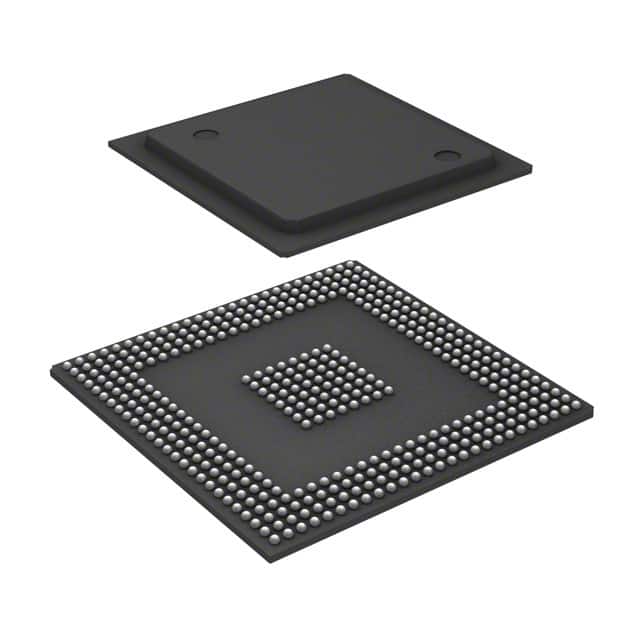
- Part No.:
- TC1793F512F270EBABKXUMA1
- Manufacturer:
- Infineon Technologies
- Category:
- Microcontrollers
- Package:
- 416-BGA
- Datasheet:
-
 TC1793F512F270EBABKXUMA1.pdf
- Description:
- IC MCU 32BIT 4MB FLASH 416BGA
- Quantity:
- Payment:

- Shipping:

Inventory:3,908
Please send an inquiry. Send us your inquiry, and we will respond immediately.
Product details
Overview
TC1793F512F270EBABKXUMA1 from Infineon Technologies is a 32-bit TriCore V1.6 super-scalar microcontroller with 270 MHz CPU clock, 4 MB program flash (ECC-protected), 192 KB data flash for EEPROM emulation, and integrated Peripheral Control Processor (PCP2) operating at 200 MHz. It targets automotive powertrain and chassis control systems requiring ASIL-D compliance support via Safe DMA and lockstep-capable peripherals.
For engineers reviewing the TC1793F512F270EBABKXUMA1 datasheet, TC1793F512F270EBABKXUMA1 pinout, TC1793F512F270EBABKXUMA1 application, or TC1793F512F270EBABKXUMA1 equivalent, key selection criteria include real-time interrupt latency (<100 ns), dual-core safety architecture, ERAY/ASC/SSC interface integration, and flash ECC + DFLASH wear-leveling capability for mission-critical firmware storage.
Technical Context
The TC1793 implements a dual-execution-unit TriCore V1.6 CPU with 6-stage pipeline and fully pipelined FPU, enabling deterministic 270 MHz operation across –40°C to 125°C. Its PCP2 coprocessor runs at 200 MHz with dedicated 16 KB PRAM and 32 KB CMEM, offloading time-critical I/O tasks from the main core.
On-chip memory hierarchy includes 4 MB PFLASH with single-bit error correction and double-bit error detection, 192 KB DFLASH supporting 100k write cycles for EEPROM emulation, and 128 KB SRAM with configurable cache/scratchpad modes. The bus architecture features a 64-bit crossbar interconnect between CPU, flash, and RAM, plus separate 32-bit SPB for peripheral access.
Key Specifications
| Parameter | Value and Actual Design Meaning |
|---|---|
| CPU Core | TriCore V1.6 32-bit super-scalar with 6-stage pipeline and pipelined FPU |
| CPU Frequency | 270 MHz maximum at full industrial temperature range (–40°C to +125°C) |
| Program Flash | 4 MB PFLASH with ECC for bit-error correction and detection in safety-critical code storage |
| Data Flash | 192 KB DFLASH supporting EEPROM emulation with 100,000 write/erase cycles |
| Peripheral Control Processor | PCP2 running at 200 MHz with 16 KB PRAM + 32 KB CMEM for deterministic I/O handling |
| Safety Features | Dual-channel Safe DMA (SDMA), lockstep-capable ASC/SSC modules, and memory protection units (MPUs) |
| Interface Peripherals | 2 × ASC, 4 × SSC + 4 × SSCG, 2 × MSC, 2 × MLI, ERAY controller, and EBU external bus interface |
Pinout & Package
TC1793F512F270EBABKXUMA1 is housed in a 296-pin LQFP package (24 mm × 24 mm, 0.5 mm pitch) with thermal pad, qualified per AEC-Q100 Grade 1 and compliant with JEDEC MS-026. Pin assignment supports dual-voltage I/O (1.3 V core / 3.3 V I/O), dedicated ERAY differential pairs, and redundant clock inputs for fail-safe operation.
| Pin/Terminal | Circuit Role | Design Meaning |
|---|---|---|
| VDDP_1.3 | Core Power Supply | 1.3 V ±3% supply for CPU, PCP2, and internal logic; requires low-noise decoupling |
| VDDIO_3.3 | I/O Power Supply | 3.3 V ±5% supply for all digital I/O banks; supports mixed-voltage interfacing |
| ERAY_TXP/N | ERAY Differential Output | High-speed deterministic serial bus output for automotive network communication (up to 10 Mbps) |
| ASC0_TxD/RxD | Asynchronous Serial Interface | Full-duplex UART channel with baud rate generator and framing error detection |
| SSC1_MOSI/MISO/SCLK | Synchronous Serial Interface | Configurable SPI-compatible port supporting daisy-chain and multi-drop topologies |
| RESET_N | Active-Low Reset Input | Asynchronous reset signal with internal pull-up; initiates cold start and safe state entry |
Key Features
| Feature | Design Value |
|---|---|
| TriCore V1.6 CPU + PCP2 dual execution | Enables concurrent real-time control (CPU) and deterministic I/O scheduling (PCP2) without OS overhead |
| 4 MB ECC-protected PFLASH | Ensures firmware integrity in safety-critical applications by detecting and correcting single-bit errors on read |
| 192 KB DFLASH with wear leveling | Provides non-volatile parameter storage with guaranteed 100k endurance cycles for calibration data logging |
| Safe DMA (SDMA) controller | Supports ASIL-D compliant data transfers with error checking, channel redundancy, and lockstep monitoring |
| ERAY interface integration | Delivers deterministic, time-triggered communication for X-by-Wire and brake-by-wire systems |
Applications
| Engine Control Unit (ECU) | Electric Power Steering (EPS) |
|---|---|
Use Scenario: Real-time combustion timing, fuel injection mapping, and knock detection in gasoline/diesel engines. IC Role / Device Role / Timing Role: Primary control MCU executing safety-critical ASIL-D software with lockstep verification and flash ECC. Use Value: Sub-100 ns interrupt latency enables precise spark/fuel actuation timing; DFLASH stores adaptive learning parameters across vehicle lifetime. | Use Scenario: Torque assist calculation, motor position feedback processing, and fault-tolerant torque path management. IC Role / Device Role / Timing Role: Dual-core deterministic controller with PCP2 managing CAN/ERAY comms while CPU executes PID loops. Use Value: Integrated Safe DMA and SSCG modules enable hardware-accelerated sensor fusion and fail-safe torque limiting within <50 µs response window. |
| Brake-by-Wire System | Transmission Control Module (TCM) |
Use Scenario: Redundant hydraulic pressure control, wheel speed correlation, and emergency braking coordination. IC Role / Device Role / Timing Role: Safety-certified MCU with dual-channel SDMA and lockstep ASC interfaces for cross-checking brake commands. Use Value: ERAY interface provides deterministic 10 Mbps communication with brake actuators; BROM contains certified boot loader for secure firmware update. | Use Scenario: Gear shift scheduling, clutch engagement control, and transmission fluid temperature compensation. IC Role / Device Role / Timing Role: High-performance controller with 270 MHz CPU and 128 KB SRAM for real-time torque converter slip modeling. Use Value: 4 MB PFLASH stores multiple gear map variants; MSC interfaces directly drive external power ICs for solenoid control without external glue logic. |
Equivalent & Alternatives
The following parts are listed as comparable options for similar automotive microcontroller applications.
| Alternative Part | Technical Difference | Application Difference | Selection Advice |
|---|---|---|---|
| TC275T-64F200NAC | TriCore V1.6.1 core, 200 MHz max, 4 MB PFLASH, no ERAY, added Ethernet MAC | Lacks ERAY but adds 100BASE-T1 for zonal architecture; lower clock limits impact high-speed control loop density | Select when Ethernet connectivity outweighs deterministic serial bus requirements |
| SPC574SADPT2 | Power Architecture e200z4, 200 MHz, 2 MB flash, ASIL-D certified, no PCP2 coprocessor | Relies on software-based scheduling instead of hardware PCP2; lacks DFLASH EEPROM emulation | Prefer for legacy Power Architecture toolchain continuity where PCP2 offload is not required |
Compared with TC1793F512F270EBABKXUMA1, TC275T offers modern networking at reduced real-time determinism, while SPC574SADPT2 delivers comparable ASIL-D certification without hardware I/O acceleration-making the TC1793 optimal for ERAY-dependent, high-loop-rate automotive control.
Availability
TC1793F512F270EBABKXUMA1 is available at Aetrix Electronics and suitable for engine control units, electric power steering systems, brake-by-wire modules, and transmission control modules requiring stable component supply under AEC-Q100 Grade 1 qualification.
Supply support for TC1793F512F270EBABKXUMA1 includes scheduled delivery planning, volume procurement assistance, BOM continuity management, traceable sourcing, and lifecycle availability coordination for OEM customers, industrial embedded developers, connected-device designers, and electronics production programs.
Manufacturer
Infineon Technologies AG is a German semiconductor manufacturer specializing in power semiconductors, automotive MCUs, and security solutions, headquartered in Munich.
The TC1793 belongs to Infineon's TriCore automotive MCU family, designed specifically for ASIL-D functional safety compliance in powertrain and chassis control applications requiring deterministic real-time performance and hardware-based safety mechanisms.
FAQ
What is the maximum junction temperature rating for TC1793F512F270EBABKXUMA1?
The device is rated for operation up to +125°C junction temperature under continuous load, validated per AEC-Q100 Grade 1 specifications. Thermal derating begins above 105°C ambient when using standard PCB copper pour; full 270 MHz performance is guaranteed only below 125°C junction temperature with appropriate heatsinking.
Does TC1793F512F270EBABKXUMA1 support JTAG debugging in production environments?
Yes-it includes IEEE 1149.1-compliant JTAG interface with boundary scan and debug access port (DAP), supporting real-time trace, breakpoint insertion, and memory inspection. Production programming uses DAP over SWD or JTAG; debug access remains enabled unless fused during final test.
How is flash ECC implemented in the 4 MB PFLASH memory?
ECC uses Hamming code with SEC-DED (Single Error Correction, Double Error Detection) applied per 64-bit word. Each 64-bit data word stores 8 bits of parity; correction occurs transparently on read, and uncorrectable errors trigger Bus Error Exception with address reporting to safety monitor.
Can the PCP2 coprocessor execute safety-critical routines independently of the main CPU?
Yes-PCP2 has its own 200 MHz clock domain, dedicated 16 KB PRAM and 32 KB CMEM, and independent interrupt controller. It can run verified safety routines (e.g., sensor diagnostics, watchdog supervision) without CPU intervention, with results communicated via shared memory or mailbox registers.
TC1793F512F270EBABKXUMA1 Specifications
- Product attributes
- Attribute value
- Manufacturer:
- Infineon Technologies
- Package/Case:
- 416-BGA
- Series:
- TC17xx
- Packaging:
- Tape & Reel (TR)
- Product Status:
- Discontinued at Digi-Key
- Programmable:
- Not Verified
- Core Processor:
- TriCore™
- Core Size:
- 32-Bit Single-Core
- Speed:
- 270MHz
- Connectivity:
- ASC, CANbus, EBI/EMI, FlexRay, MLI, MSC, SSC
- Peripherals:
- DMA, POR, WDT
- Number of I/O:
- 221
- Program Memory Size:
- 4MB (4M x 8)
- Program Memory Type:
- FLASH
- EEPROM Size:
- 192K x 8
- RAM Size:
- 288K x 8
- Voltage - Supply (Vcc/Vdd):
- 1.17V ~ 3.63V
- Data Converters:
- A/D 8x10b, 44x12b
- Oscillator Type:
- External
- Operating Temperature:
- -40°C ~ 125°C (TA)
- Grade:
- -
- Qualification:
- -
- Mounting Type:
- Surface Mount
- Supplier Device Package:
TC1793F512F270EBABKXUMA1 FAQ
1.How can I place an order for TC1793F512F270EBABKXUMA1 through Aetrix?
Please submit a Request for Quotation (RFQ) for TC1793F512F270EBABKXUMA1 on Aetrix. Our sales agent will provide a competitive quotation and guide you through the order confirmation once you accept the terms.
2.Are the price and stock information for TC1793F512F270EBABKXUMA1 reliable?
The price and inventory of TC1793F512F270EBABKXUMA1 are updated periodically and may fluctuate due to market conditions. Stock and pricing data are typically refreshed every 24 hours. Quotation validity for TC1793F512F270EBABKXUMA1 is usually 5 days.
3.What payment methods are accepted for TC1793F512F270EBABKXUMA1?
We accept Wire Transfer, PayPal, Credit Card, Western Union, MoneyGram, and Escrow for TC1793F512F270EBABKXUMA1 transactions.
Note: Certain payment methods may incur a processing fee.
4.How is shipping managed for TC1793F512F270EBABKXUMA1?
TC1793F512F270EBABKXUMA1 orders can be shipped via leading logistics carriers, including DHL, UPS, FedEx, TNT, or Registered Mail.
Once your TC1793F512F270EBABKXUMA1 order is processed, you will receive an email with the shipment details and tracking number.
Note: Tracking information may take up to 24 hours to appear. Express delivery typically takes 3–5 business days.
5.How can I obtain technical support or documentation for TC1793F512F270EBABKXUMA1?
For technical support, including TC1793F512F270EBABKXUMA1 datasheets, pinout diagrams, or application guidance, please contact our engineering support team. They can provide detailed documentation and assistance for your TC1793F512F270EBABKXUMA1 requirements.
6.How does Aetrix verify that TC1793F512F270EBABKXUMA1 is sourced from the original manufacturer or authorized distributors?
All TC1793F512F270EBABKXUMA1 products on Aetrix are procured from qualified distributors and authorized channels. Our dedicated quality assurance team conducts strict verification, including traceability checks and, if necessary, third-party testing. This ensures that TC1793F512F270EBABKXUMA1 meets industry standards.
7.What is the process for return or replacement of TC1793F512F270EBABKXUMA1?
All TC1793F512F270EBABKXUMA1 units undergo pre-shipment inspection (PSI). If there is an issue with TC1793F512F270EBABKXUMA1, returns or replacements are accepted under the following conditions:
1.Quantity discrepancies, incorrect items, or visible external defects (such as breakage or corrosion), acknowledged by Aetrix.
2.The issue is reported within 90 days of delivery.
3.The TC1793F512F270EBABKXUMA1 part is unused and in its original packaging.
Return procedure for TC1793F512F270EBABKXUMA1:
1.Submit a request within 90 days.
2.Obtain a Return Material Authorization (RMA) from Aetrix.
TC1793F512F270EBABKXUMA1 Tags

-
ATTINY4-TSHR
Microchip Technology
-
ATTINY10-TSHR
Microchip Technology
-
ATTINY10-TS8R
Microchip Technology

-
ATTINY202-SSNR
Microchip Technology
-
ATTINY202-SSFR
Microchip Technology
-
ATTINY402-SSNR
Microchip Technology
-
PIC16F15213T-I/MF
Microchip Technology
-
PIC16F15213-E/MF
Microchip Technology

-
PIC10F200T-I/OT
Microchip Technology
-
ATTINY412-SSNR
Microchip Technology
-
PIC10F202T-I/OT
Microchip Technology
-
ATTINY404-SSNR
Microchip Technology
Tech Hub

18650 battery guide covering lithium-ion cell basics, 3.6V/3.7V voltage, 4.2V charging, mAh and Wh capacity, protected cells, chargers, BMS, series-parallel packs, holders, welding and sourcing checks.…

Hall effect sensor guide covering working principle, linear and digital sensors, Arduino circuits, current sensing, speed detection, automotive applications, A3144 examples, signal filtering and datash…

Product Change Notification guide for electronic components, covering PCN meaning, PCN vs PDN/EOL, common change types, risk levels, form-fit-function review, engineering validation, BOM control, LTB/L…

A practical guide to blend door actuators, covering HVAC function, symptoms, location, AC and heater issues, reset and calibration, replacement cost, electrical diagnosis, compatibility checks, and rep…

Engineering guide to Raspberry Pi alternatives, covering chip-level differences, Orange Pi, ROCK, Jetson, Banana Pi, NanoPi, Compute Module, Pico, GPIO, camera, HAT compatibility, and replacement risks…
Engineering guide to dynamic load response testing for high-current buck converters, covering load step setup, slew rate, Vcore undershoot, overshoot, recovery time, probe location, output capacitors a…
Engineering guide to output capacitor selection for ASIC Vcore rails, covering bulk capacitors, polymer capacitors, MLCC decoupling, DC bias, ESR, ESL, placement, transient response and substitution ri…
Engineering guide to high-current ASIC Vcore rails, covering 12-phase buck architecture, PMBus control, dynamic load testing, output capacitor networks, smart power stage selection, thermal design and …
Voltage regulator guide covering linear, LDO, 7805, Zener, adjustable, buck, VRM and alternator regulators, with design checks, testing methods, troubleshooting and datasheet-based selection.
Amplifier guide covering voltage, current and power amplification, gain, feedback, amplifier classes, audio and RF applications, op-amp circuits, transimpedance amplifiers, datasheet selection and trou…


