
 My Inquiry
 My Account


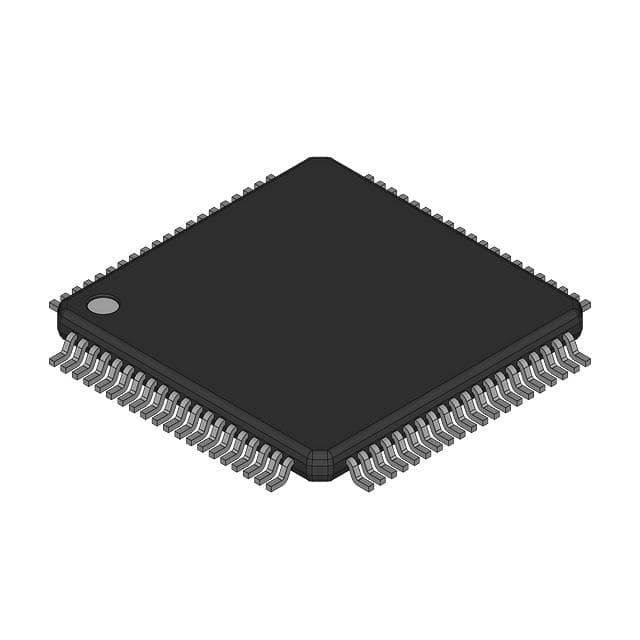
Infineon Technologies TC222S16F133NACKXUMA1
- Part No.:
- TC222S16F133NACKXUMA1
- Manufacturer:
- Infineon Technologies
- Category:
- Microcontrollers
- Package:
- 80-TQFP Exposed Pad
- Datasheet:
-
 TC222S16F133NACKXUMA1.pdf
- Description:
- IC MCU 32BIT 1MB FLASH 80TQFP
- Quantity:
- Payment:

- Shipping:

Inventory:1,800
Please send an inquiry. Send us your inquiry, and we will respond immediately.
Product details
Overview
TC222S16F133NACKXUMA1 from Infineon Technologies is a 32-bit AURIX™ TriCore™ microcontroller featuring a lockstepped TC1.6E CPU core operating at 133 MHz, 1 MB program flash with ECC, 96 KB data flash for EEPROM emulation, and integrated MultiCAN+ (3 nodes, 128 message objects). It targets automotive safety-critical applications including engine control units and brake systems.
For engineers reviewing the TC222S16F133NACKXUMA1 datasheet, TC222S16F133NACKXUMA1 pinout, TC222S16F133NACKXUMA1 application, or TC222S16F133NACKXUMA1 equivalent, key selection criteria include ASIL-D compliance support, dual-core lockstep architecture, on-chip EVR and PLL clock generation, and QSPI/ASCLIN/SENT peripheral integration for sensor and actuator interfacing in real-time powertrain control.
Technical Context
The TC222S16F133NACKXUMA1 implements a safety-optimized TriCore™ architecture with binary compatibility to TC1.6P, incorporating hardware I/O monitoring (IOM), Memory Test Unit (MTU) with ECC and MBIST, and Safety Management Unit (SMU) for alarm handling. Its dual-core lockstep configuration enables continuous comparison of instruction execution between main and shadow cores.
It integrates a 64-bit Cross Bar Interconnect (SRI) for concurrent bus master access, a 32-bit System Peripheral Bus (SPB), and an SFI bridge linking subsystems. The clock generation unit includes a system PLL supporting precise frequency synthesis from external crystal or oscillator inputs, while the embedded voltage regulator (EVR) supplies regulated 1.3 V and 3.3 V domains.
Key Specifications
| Parameter | Value and Actual Design Meaning |
|---|---|
| CPU Core | TriCore™ TC1.6E scalar core with lockstepped shadow checker core for ASIL-D functional safety compliance |
| Max Clock Frequency | 133 MHz across full industrial temperature range (–40 °C to +125 °C), enabling deterministic real-time control loops |
| Memory | 1 MB ECC-protected PFLASH + 96 KB DFLASH (EEPROM-emulation capable) + 88 KB DSPR + 8 KB PSPR + 8 KB ICACHE |
| Peripherals | MultiCAN+ (3 CAN FD nodes, 128 message objects), 4× QSPI, 2× ASCLIN (LIN v2.1/J2602), 4× SENT, GTM, CCU6, GPT12 |
| Safety Features | SMU, MTU (ECC/MBIST), IOM, OCDS Level 1 debug, JTAG/DAP interface, and hardware-supported lockstep validation |
| Power Supply | Integrated EVR generating 1.3 V core and 3.3 V I/O supplies; supports single-supply and external-supply operation modes |
Pinout & Package
This device uses the PG-TQFP-80-7 package - a 80-pin thermally enhanced thin quad flat pack with 0.5 mm pitch, optimized for automotive PCB layouts requiring thermal reliability and EMI robustness.
| Pin/Terminal | Circuit Role | Design Meaning |
|---|---|---|
| VDDP | 3.3 V I/O Power Supply | Supplies all digital I/O banks; requires local decoupling for noise immunity in high-speed communication interfaces |
| VDD | 1.3 V Core Power Supply | Delivers regulated core voltage; monitored by EVR for brown-out detection and safe shutdown sequencing |
| OSC_IN / OSC_OUT | Crystal Oscillator Input/Output | Supports 1–20 MHz fundamental-mode crystals; feeds clock generation unit for PLL reference and backup timing |
| TRST, TCK, TMS, TDI, TDO | JTAG Boundary Scan Interface | IEEE 1149.1-compliant debug/test interface; enables OCDS Level 1 visibility into CPU, DMA, and bus transactions |
| ETH_RXD0–3, ETH_TXD0–3 | Ethernet PHY Interface Signals | Not present on TC222S16F133NACKXUMA1 - this variant lacks Ethernet MAC; pins repurposed as general-purpose I/O or ASCLIN/QSPI functions |
Key Features
| Feature | Design Value |
|---|---|
| Lockstep Dual-Core Architecture | Real-time instruction-level comparison between TC1.6E and shadow core ensures fault detection within one clock cycle for ISO 26262 ASIL-D compliance |
| ECC-Protected Memory Subsystem | All on-chip NVM (PFLASH/DFLASH) and SRAM (DSPR/PSPR) include single-bit error correction and double-bit error detection |
| MultiCAN+ Module | Three independent CAN FD controllers sharing 128 configurable message objects with FIFO buffering and gateway routing capability |
| GTM Timer Unit | Programmable digital signal processing block supporting complex PWM generation, capture filtering, and time-triggered I/O scheduling without CPU load |
| On-Chip Debug Support | OCDS Level 1 coverage for CPU registers, DMA channels, and SRI/SPB interconnects enables non-intrusive trace and breakpoint debugging in production firmware |
Applications
| Engine Control Unit (ECU) | Brake Control Module (BCM) |
|---|---|
|
Use Scenario: Real-time combustion timing, fuel injection pulse width, and knock detection in gasoline/diesel powertrains. IC Role / Device Role / Timing Role: Primary safety controller executing ASIL-D software partitions with lockstep verification and memory ECC. Use Value: Deterministic 133 MHz execution enables sub-microsecond response to crankshaft position sensor edges and closed-loop torque control. |
Use Scenario: ABS, ESC, and electronic parking brake actuation with fail-operational redundancy requirements. IC Role / Device Role / Timing Role: Central safety MCU managing CAN FD communication with wheel speed sensors, hydraulic modulators, and steering angle input. Use Value: MultiCAN+ with 128 message objects supports concurrent high-priority braking commands and diagnostic reporting without buffer overflow. |
| Electric Power Steering (EPS) | Transmission Control Unit (TCU) |
|
Use Scenario: Torque assist calculation, motor phase current regulation, and road feel feedback in column-assist and rack-assist EPS systems. IC Role / Device Role / Timing Role: Real-time controller interfacing with SENT-based torque sensors and ASCLIN-connected motor drivers. Use Value: Four SENT receivers enable direct connection to high-resolution torque and position sensors without external signal conditioning. |
Use Scenario: Gear shift scheduling, clutch pressure modulation, and adaptive learning in 8-speed automatic transmissions. IC Role / Device Role / Timing Role: Safety-certified controller coordinating CAN FD communication with engine ECU, valve body solenoids, and temperature sensors. Use Value: QSPI interface supports fast boot from external flash, while GTM timers generate precise PWM for proportional solenoid control. |
Equivalent & Alternatives
The following parts are listed as comparable options for similar automotive safety microcontroller applications.
| Alternative Part | Technical Difference | Application Difference | Selection Advice |
|---|---|---|---|
| TC223S16F133NACKXUMA1 | PG-TQFP-100 package; adds 2 additional ASCLIN channels and 1 extra QSPI channel vs. TC222 | Required when board layout needs >2 LIN interfaces or >4 SPI peripherals in same safety domain | Select if higher peripheral count justifies larger footprint and increased pin count complexity |
| TC224S16F133NACKXUMA1 | PG-TQFP-144 package; includes Ethernet MAC (10/100BASE-T), additional GTM TOM channels, and extended DFLASH (128 KB) | Necessary for OTA update-capable gateways or domain controllers requiring time-sensitive networking | Choose only when Ethernet connectivity and expanded timer resources are mandatory for system architecture |
Compared with TC223S16F133NACKXUMA1 and TC224S16F133NACKXUMA1, the TC222S16F133NACKXUMA1 delivers optimal cost/performance balance for dedicated powertrain ECUs where 80-pin I/O density, ASIL-D lockstep, and MultiCAN+ sufficiency meet functional safety scope without over-provisioning.
Availability
TC222S16F133NACKXUMA1 is available at Aetrix Electronics and suitable for engine control units, brake control modules, electric power steering systems, and transmission control units requiring stable component supply under automotive AEC-Q100 Grade 1 qualification.
Supply support for TC222S16F133NACKXUMA1 includes scheduled delivery planning, volume procurement assistance, BOM continuity management, traceable sourcing, and lifecycle availability coordination for OEM customers, industrial embedded developers, connected-device designers, and electronics production programs.
Manufacturer
Infineon Technologies AG is a German semiconductor manufacturer specializing in power management, automotive MCUs, and security solutions, with global R&D and manufacturing infrastructure.
This part belongs to the AURIX™ TC2xx family-designed specifically for ISO 26262 ASIL-D automotive applications requiring functional safety, real-time determinism, and integrated peripheral sets for powertrain and chassis control.
FAQ
What is the maximum ambient temperature rating for TC222S16F133NACKXUMA1?
The device is qualified per AEC-Q100 Grade 1, supporting continuous operation from –40 °C to +125 °C ambient temperature. Junction temperature limits are enforced via on-die thermal sensor and EVR thermal shutdown logic, with derating required above 105 °C ambient depending on PCB copper area and airflow.
Does TC222S16F133NACKXUMA1 support CAN FD frames at 5 Mbit/s?
Yes-the MultiCAN+ module supports CAN FD with bit rates up to 5 Mbit/s in data phase, compliant with ISO 11898-1:2015. Frame arbitration occurs at classic CAN speeds (up to 1 Mbit/s), while payload transfer uses flexible data rate mode with programmable bit timing registers per node.
How is flash programming performed during production programming?
Production programming uses the on-chip bootloader accessed via JTAG or DAP interface, supporting secure flash loading through Infineon's MemTool or third-party tools compliant with AURIX™ Flash Programming Specification. PFLASH and DFLASH are programmed in 256-byte pages with ECC generation enabled automatically.
Is external RAM required for typical ASIL-D application deployment?
No-on-chip memory is sufficient: 88 KB DSPR and 8 KB PSPR provide ample scratchpad space for real-time tasks, while 1 MB PFLASH and 96 KB DFLASH accommodate application code, safety monitor routines, and EEPROM-emulated calibration data without external expansion.
TC222S16F133NACKXUMA1 Specifications
- Product attributes
- Attribute value
- Manufacturer:
- Infineon Technologies
- Package/Case:
- 80-TQFP Exposed Pad
- Series:
- AURIX™
- Packaging:
- Tape & Reel (TR)
- Product Status:
- Active
- Programmable:
- Not Verified
- Core Processor:
- TriCore™
- Core Size:
- 32-Bit Single-Core
- Speed:
- 133MHz
- Connectivity:
- CANbus, FlexRay, LINbus, QSPI
- Peripherals:
- DMA, WDT
- Number of I/O:
- 59
- Program Memory Size:
- 1MB (1M x 8)
- Program Memory Type:
- FLASH
- EEPROM Size:
- 128K x 8
- RAM Size:
- 96K x 8
- Voltage - Supply (Vcc/Vdd):
- 3.3V
- Data Converters:
- A/D 24x12b
- Oscillator Type:
- External
- Operating Temperature:
- -40°C ~ 125°C (TA)
- Grade:
- -
- Qualification:
- -
- Mounting Type:
- Surface Mount
- Supplier Device Package:
TC222S16F133NACKXUMA1 FAQ
1.How can I place an order for TC222S16F133NACKXUMA1 through Aetrix?
Please submit a Request for Quotation (RFQ) for TC222S16F133NACKXUMA1 on Aetrix. Our sales agent will provide a competitive quotation and guide you through the order confirmation once you accept the terms.
2.Are the price and stock information for TC222S16F133NACKXUMA1 reliable?
The price and inventory of TC222S16F133NACKXUMA1 are updated periodically and may fluctuate due to market conditions. Stock and pricing data are typically refreshed every 24 hours. Quotation validity for TC222S16F133NACKXUMA1 is usually 5 days.
3.What payment methods are accepted for TC222S16F133NACKXUMA1?
We accept Wire Transfer, PayPal, Credit Card, Western Union, MoneyGram, and Escrow for TC222S16F133NACKXUMA1 transactions.
Note: Certain payment methods may incur a processing fee.
4.How is shipping managed for TC222S16F133NACKXUMA1?
TC222S16F133NACKXUMA1 orders can be shipped via leading logistics carriers, including DHL, UPS, FedEx, TNT, or Registered Mail.
Once your TC222S16F133NACKXUMA1 order is processed, you will receive an email with the shipment details and tracking number.
Note: Tracking information may take up to 24 hours to appear. Express delivery typically takes 3–5 business days.
5.How can I obtain technical support or documentation for TC222S16F133NACKXUMA1?
For technical support, including TC222S16F133NACKXUMA1 datasheets, pinout diagrams, or application guidance, please contact our engineering support team. They can provide detailed documentation and assistance for your TC222S16F133NACKXUMA1 requirements.
6.How does Aetrix verify that TC222S16F133NACKXUMA1 is sourced from the original manufacturer or authorized distributors?
All TC222S16F133NACKXUMA1 products on Aetrix are procured from qualified distributors and authorized channels. Our dedicated quality assurance team conducts strict verification, including traceability checks and, if necessary, third-party testing. This ensures that TC222S16F133NACKXUMA1 meets industry standards.
7.What is the process for return or replacement of TC222S16F133NACKXUMA1?
All TC222S16F133NACKXUMA1 units undergo pre-shipment inspection (PSI). If there is an issue with TC222S16F133NACKXUMA1, returns or replacements are accepted under the following conditions:
1.Quantity discrepancies, incorrect items, or visible external defects (such as breakage or corrosion), acknowledged by Aetrix.
2.The issue is reported within 90 days of delivery.
3.The TC222S16F133NACKXUMA1 part is unused and in its original packaging.
Return procedure for TC222S16F133NACKXUMA1:
1.Submit a request within 90 days.
2.Obtain a Return Material Authorization (RMA) from Aetrix.
TC222S16F133NACKXUMA1 Tags

-
ATTINY4-TSHR
Microchip Technology
-
ATTINY10-TSHR
Microchip Technology
-
ATTINY10-TS8R
Microchip Technology

-
ATTINY202-SSNR
Microchip Technology
-
ATTINY202-SSFR
Microchip Technology
-
ATTINY402-SSNR
Microchip Technology

-
PIC16F15213T-I/MF
Microchip Technology
-
PIC16F15213-E/MF
Microchip Technology

-
PIC10F200T-I/OT
Microchip Technology
-
ATTINY412-SSNR
Microchip Technology
-
PIC10F202T-I/OT
Microchip Technology

-
ATTINY404-SSNR
Microchip Technology
Tech Hub

18650 battery guide covering lithium-ion cell basics, 3.6V/3.7V voltage, 4.2V charging, mAh and Wh capacity, protected cells, chargers, BMS, series-parallel packs, holders, welding and sourcing checks.…

Hall effect sensor guide covering working principle, linear and digital sensors, Arduino circuits, current sensing, speed detection, automotive applications, A3144 examples, signal filtering and datash…

Product Change Notification guide for electronic components, covering PCN meaning, PCN vs PDN/EOL, common change types, risk levels, form-fit-function review, engineering validation, BOM control, LTB/L…

A practical guide to blend door actuators, covering HVAC function, symptoms, location, AC and heater issues, reset and calibration, replacement cost, electrical diagnosis, compatibility checks, and rep…

Engineering guide to Raspberry Pi alternatives, covering chip-level differences, Orange Pi, ROCK, Jetson, Banana Pi, NanoPi, Compute Module, Pico, GPIO, camera, HAT compatibility, and replacement risks…

Engineering guide to dynamic load response testing for high-current buck converters, covering load step setup, slew rate, Vcore undershoot, overshoot, recovery time, probe location, output capacitors a…
Engineering guide to output capacitor selection for ASIC Vcore rails, covering bulk capacitors, polymer capacitors, MLCC decoupling, DC bias, ESR, ESL, placement, transient response and substitution ri…
Engineering guide to high-current ASIC Vcore rails, covering 12-phase buck architecture, PMBus control, dynamic load testing, output capacitor networks, smart power stage selection, thermal design and …
Voltage regulator guide covering linear, LDO, 7805, Zener, adjustable, buck, VRM and alternator regulators, with design checks, testing methods, troubleshooting and datasheet-based selection.
Amplifier guide covering voltage, current and power amplification, gain, feedback, amplifier classes, audio and RF applications, op-amp circuits, transimpedance amplifiers, datasheet selection and trou…


