
 My Inquiry
 My Account


Infineon Technologies TLE4941HALA1
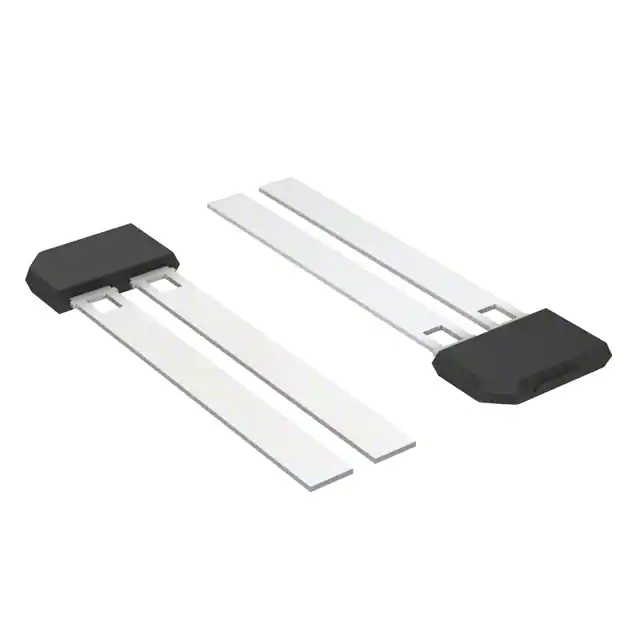
- Part No.:
- TLE4941HALA1
- Manufacturer:
- Infineon Technologies
- Category:
- Switches (Solid State)
- Package:
- 2-SIP, SSO-2-1
- Datasheet:
-
 TLE4941HALA1.pdf
- Description:
- MAG SWITCH SPEC PURP SSO-2-1
- Quantity:
- Payment:

- Shipping:

Inventory:1,674
Please send an inquiry. Send us your inquiry, and we will respond immediately.
Product details
Overview
TLE4941HALA1 from Infineon Technologies is a differential two-wire Hall effect sensor IC designed for wheel speed sensing in automotive ABS and vehicle dynamics control systems. It features a 2.5 mm probe spacing, ±120 mT differential induction range, ±20 mT static offset compensation, and operates from 4.5 V to 20 V over –40°C to +150°C. Its two-wire current interface delivers 7 mA low-state and 14 mA high-state output currents with <±3% jitter at 2.5 kHz.
For engineers reviewing the TLE4941HALA1 datasheet, TLE4941HALA1 pinout, TLE4941HALA1 application in wheel speed sensing, or TLE4941HALA1 equivalent for ABS sensor replacement, this page provides verified functional specifications, package mapping to PG-SSO-2-1, calibrated offset cancellation behavior, ESD robustness (±12 kV HBM), and real-world magnetic edge detection requirements (3–6 edges for initial calibration).
Technical Context
The TLE4941HALA1 implements a self-calibrating differential Hall architecture with two physically spaced probes (2.5 mm center-to-center) feeding a noise-limiting low-pass filter and comparator. Its digital signal processor extracts min/max input values during startup to compute arithmetic mean offset, which is canceled via an integrated DAC before enabling zero-crossing switching.
In calibrated mode, the DSP operates in low-jitter tracking mode; switching occurs at the differential signal's zero-crossing point, with residual jitter bounded by comparator offset and propagation delay of the filter path. Signal rejection below ∆BLimit = 0.35–1.7 mT prevents parasitic toggling under weak or noisy magnetic fields.
Key Specifications
| Parameter | Value and Actual Design Meaning |
|---|---|
| Supply Voltage | 4.5 V to 20 V - supports direct battery connection without external regulation; includes ripple tolerance up to 6 Vpp at 13 V nominal. |
| Differential Induction Range | ±120 mT - enables reliable detection across large air gaps and varying magnet strengths in wheel tone ring applications. |
| Static Offset Compensation | ±20 mT - cancels manufacturing and magnet-induced offsets using dynamic self-calibration within first 3–6 magnetic edges. |
| Output Current States | ILOW = 7 mA / IHIGH = 14 mA - two-wire current loop interface compatible with standard ABS ECU current-sense inputs. |
| Jitter (1–2.5 kHz) | ±2% (1σ) at Tj < 150°C - ensures precise timing for wheel speed calculation in safety-critical ABS algorithms. |
| ESD Robustness | ±12 kV HBM - meets automotive-grade EMC requirements without external protection components. |
| Operating Temperature | –40°C to +150°C - qualified for under-hood placement near wheel hubs and brake calipers. |
Pinout & Package
Package: PG-SSO-2-1 - surface-mount, 2-pin, pure-tin-plated leadframe (Wieland K62), RoHS-compliant, optimized for automotive under-hood thermal and mechanical stress.
| Pin/Terminal | Circuit Role | Design Meaning |
|---|---|---|
| 1 (Anode) | Supply Input / Output High-Side Terminal | Connects to battery rail (4.5–20 V); sinks 14 mA when active; supplies internal 3 V regulator and oscillator. |
| 2 (Cathode) | Ground Return / Output Low-Side Terminal | Completes two-wire current loop; returns ILOW = 7 mA or IHIGH = 14 mA to ECU sense resistor; no separate ground pin required. |
Key Features
| Feature | Design Value |
|---|---|
| Dynamic Self-Calibration | Initial offset cancellation within ≤6 magnetic transitions; eliminates need for factory magnetization or manual trimming. |
| Differential Hall Probes | 2.5 mm spacing reduces common-mode noise and enables detection of ferromagnetic targets without bias magnet polarity constraints. |
| No External Components | Monolithic BiCMOS integration includes voltage regulator, oscillator, ADC/DAC, DSP, and switched current output - reduces BOM count and PCB area. |
| Large Air-Gap Operation | Validated for >1.5 mm air gaps with standard tone rings due to ±120 mT sensitivity and ±20 mT offset cancellation. |
| Piezo Effect Resistance | Optimized mechanical layout and compensation circuitry suppress false triggering from vibration-induced charge accumulation in packaging. |
Applications
| ABS Wheel Speed Sensing | Electronic Stability Control (ESC) |
|---|---|
Use Scenario: Mounted adjacent to rotating steel tone ring on vehicle wheel hub to detect rotational speed and direction. IC Role / Device Role / Timing Role: Differential Hall sensor providing zero-crossing timing pulses to ABS ECU for slip ratio calculation. Use Value: ±2% jitter and ±20 mT offset cancellation ensure accurate speed estimation at standstill and high RPM under thermal and EMI stress. | Use Scenario: Integrated into ESC module to monitor individual wheel speeds during cornering, braking, or acceleration events. IC Role / Device Role / Timing Role: Two-wire current-output sensor delivering synchronized pulse trains to microcontroller timer capture inputs. Use Value: 4.5–20 V supply range and –40°C to +150°C operation enable direct mounting near suspension components without local regulation. |
| Traction Control System (TCS) | Automatic Transmission Input Speed Sensing |
Use Scenario: Detecting driven wheel spin during low-grip conditions to trigger engine torque reduction or brake intervention. IC Role / Device Role / Timing Role: Magnetic field differential detector feeding real-time speed delta to TCS control algorithm. Use Value: 3–6 edge calibration sequence allows fast re-initialization after power-on or wake-up, supporting rapid system readiness. | Use Scenario: Monitoring turbine shaft rotation inside automatic transmission housing for gear shift logic and torque converter lockup control. IC Role / Device Role / Timing Role: Robust two-wire sensor interfacing directly with transmission control unit (TCU) current-sense amplifier. Use Value: ±12 kV HBM ESD rating and 6 Vpp ripple tolerance eliminate need for external transient suppression in electrically noisy transmission environments. |
Equivalent & Alternatives
The following parts are listed as comparable options for similar differential wheel speed sensor applications.
| Alternative Part | Technical Difference | Application Difference | Selection Advice |
|---|---|---|---|
| TLE4941C | Includes 1.8 nF overmolded capacitor for enhanced EMI immunity; identical pinout and electrical specs except tr/tf reduced to 8–22 mA/µs at 75 Ω. | Preferred for high-EMI environments (e.g., EV powertrain proximity); same mechanical fit but improved conducted noise rejection. | Select TLE4941C where ISO 11452-4 compliance or higher EMI margin is required; otherwise TLE4941HALA1 offers cost-optimized performance. |
| ATS685LSG-T | Programmable gain and adaptive threshold; 3-wire interface (VCC/GND/OUT); higher sensitivity (±50 mT typical) but requires external decoupling. | Supports variable air-gap and multi-pole target configurations; not drop-in due to pin count and supply requirements. | Choose ATS685LSG-T only when programmability or extended low-speed detection (<1 Hz) is mandatory; TLE4941HALA1 remains optimal for standard ABS tone rings. |
Compared with TLE4941C and ATS685LSG-T, the TLE4941HALA1 delivers best-in-class jitter (±2%) and simplest integration (no capacitor, no programming), making it ideal for cost-sensitive, high-volume ABS modules requiring proven reliability and minimal design overhead.
Availability
TLE4941HALA1 is available at Aetrix Electronics and suitable for automotive ABS, ESC, and traction control systems requiring stable component supply, long-term lifecycle support, and AEC-Q100-qualified magnetic sensors.
Supply support for TLE4941HALA1 includes scheduled delivery planning, volume procurement assistance, BOM continuity management, traceable sourcing, and lifecycle availability coordination for OEM customers, industrial embedded developers, connected-device designers, and electronics production programs.
Manufacturer
Infineon Technologies AG is a German semiconductor manufacturer specializing in power management, automotive electronics, and sensor solutions, with core expertise in high-reliability analog and mixed-signal ICs.
The TLE4941 series belongs to Infineon's automotive Hall sensor product line, engineered specifically for wheel speed and position sensing in safety-critical chassis control systems under extreme thermal and electromagnetic conditions.
FAQ
What is the minimum number of magnetic edges required for initial calibration?
The TLE4941HALA1 requires 3 to 6 magnetic edges for successful initial calibration. During this uncalibrated startup phase, the output remains disabled (I = ILOW). The internal DSP captures min/max input values across these transitions to compute and cancel offset before enabling zero-crossing switching.
Does TLE4941HALA1 require an external bias magnet?
No. The TLE4941HALA1 operates with either south or north pole pre-induction on its rear side and supports ferromagnetic targets (e.g., steel tone rings) using an internal back-biasing configuration. No external magnet is needed when used with ferrous targets, though one may be used for permanent magnet targets.
How does the two-wire interface simplify ECU design?
The two-wire interface eliminates separate ground and supply lines: Pin 1 connects to battery voltage (4.5–20 V), and Pin 2 returns modulated current (7 mA / 14 mA) to the ECU's sense resistor. This reduces wiring harness weight, connector pins, and PCB routing complexity while maintaining noise-immune current-loop signaling.
What is the purpose of the ∆BLimit parameter?
∆BLimit (0.35–1.7 mT) defines the minimum detectable differential magnetic field amplitude. Signals below this threshold are suppressed to prevent false triggering from mechanical vibration, EMI, or weak magnetic coupling-ensuring robust operation in harsh automotive environments.
TLE4941HALA1 Specifications
- Product attributes
- Attribute value
- Manufacturer:
- Infineon Technologies
- Series:
- -
- Package/Case:
- 2-SIP, SSO-2-1
- Packaging:
- Tape & Box (TB)
- Product Status:
- Last Time Buy
- Function:
- Special Purpose
- Technology:
- Hall Effect
- Polarization:
- -
- Sensing Range:
- -
- Test Condition:
- -
- Voltage - Supply:
- 4.5V ~ 20V
- Current - Supply (Max):
- 16.8mA
- Current - Output (Max):
- -
- Output Type:
- Current Source
- Features:
- -
- Operating Temperature:
- -
- Grade:
- Automotive
- Qualification:
- AEC-Q100
- Mounting Type:
- Through Hole
- Supplier Device Package:
- PG-SSO-2-1
TLE4941HALA1 FAQ
1.How can I place an order for TLE4941HALA1 through Aetrix?
Please submit a Request for Quotation (RFQ) for TLE4941HALA1 on Aetrix. Our sales agent will provide a competitive quotation and guide you through the order confirmation once you accept the terms.
2.Are the price and stock information for TLE4941HALA1 reliable?
The price and inventory of TLE4941HALA1 are updated periodically and may fluctuate due to market conditions. Stock and pricing data are typically refreshed every 24 hours. Quotation validity for TLE4941HALA1 is usually 5 days.
3.What payment methods are accepted for TLE4941HALA1?
We accept Wire Transfer, PayPal, Credit Card, Western Union, MoneyGram, and Escrow for TLE4941HALA1 transactions.
Note: Certain payment methods may incur a processing fee.
4.How is shipping managed for TLE4941HALA1?
TLE4941HALA1 orders can be shipped via leading logistics carriers, including DHL, UPS, FedEx, TNT, or Registered Mail.
Once your TLE4941HALA1 order is processed, you will receive an email with the shipment details and tracking number.
Note: Tracking information may take up to 24 hours to appear. Express delivery typically takes 3–5 business days.
5.How can I obtain technical support or documentation for TLE4941HALA1?
For technical support, including TLE4941HALA1 datasheets, pinout diagrams, or application guidance, please contact our engineering support team. They can provide detailed documentation and assistance for your TLE4941HALA1 requirements.
6.How does Aetrix verify that TLE4941HALA1 is sourced from the original manufacturer or authorized distributors?
All TLE4941HALA1 products on Aetrix are procured from qualified distributors and authorized channels. Our dedicated quality assurance team conducts strict verification, including traceability checks and, if necessary, third-party testing. This ensures that TLE4941HALA1 meets industry standards.
7.What is the process for return or replacement of TLE4941HALA1?
All TLE4941HALA1 units undergo pre-shipment inspection (PSI). If there is an issue with TLE4941HALA1, returns or replacements are accepted under the following conditions:
1.Quantity discrepancies, incorrect items, or visible external defects (such as breakage or corrosion), acknowledged by Aetrix.
2.The issue is reported within 90 days of delivery.
3.The TLE4941HALA1 part is unused and in its original packaging.
Return procedure for TLE4941HALA1:
1.Submit a request within 90 days.
2.Obtain a Return Material Authorization (RMA) from Aetrix.
TLE4941HALA1 Tags
-
TCS40DLR,LF
Toshiba Semiconductor and Storage
-
DRV5032FBDBZR
Texas Instruments
-
DRV5032FADBZR
Texas Instruments
-
AH1912-FA-7
Diodes Incorporated
-
AH1913-W-7
Diodes Incorporated
-
AH1911-W-7
Diodes Incorporated
-
TLI49631MXTSA1
Infineon Technologies
-
SM453R
Honeywell Sensing and Productivity Solutions
-
MLX90248ESE-EBA-000-RE
Melexis Technologies NV
-
MLX92213ELD-AAA-000-RE
Melexis Technologies NV
-
TLE4913HTSA1
Infineon Technologies
-
US5781ESE-AAA-000-RE
Melexis Technologies NV
Tech Hub

18650 battery guide covering lithium-ion cell basics, 3.6V/3.7V voltage, 4.2V charging, mAh and Wh capacity, protected cells, chargers, BMS, series-parallel packs, holders, welding and sourcing checks.…

Hall effect sensor guide covering working principle, linear and digital sensors, Arduino circuits, current sensing, speed detection, automotive applications, A3144 examples, signal filtering and datash…

Product Change Notification guide for electronic components, covering PCN meaning, PCN vs PDN/EOL, common change types, risk levels, form-fit-function review, engineering validation, BOM control, LTB/L…

A practical guide to blend door actuators, covering HVAC function, symptoms, location, AC and heater issues, reset and calibration, replacement cost, electrical diagnosis, compatibility checks, and rep…

Engineering guide to Raspberry Pi alternatives, covering chip-level differences, Orange Pi, ROCK, Jetson, Banana Pi, NanoPi, Compute Module, Pico, GPIO, camera, HAT compatibility, and replacement risks…
Engineering guide to dynamic load response testing for high-current buck converters, covering load step setup, slew rate, Vcore undershoot, overshoot, recovery time, probe location, output capacitors a…
Engineering guide to output capacitor selection for ASIC Vcore rails, covering bulk capacitors, polymer capacitors, MLCC decoupling, DC bias, ESR, ESL, placement, transient response and substitution ri…
Engineering guide to high-current ASIC Vcore rails, covering 12-phase buck architecture, PMBus control, dynamic load testing, output capacitor networks, smart power stage selection, thermal design and …
Voltage regulator guide covering linear, LDO, 7805, Zener, adjustable, buck, VRM and alternator regulators, with design checks, testing methods, troubleshooting and datasheet-based selection.
Amplifier guide covering voltage, current and power amplification, gain, feedback, amplifier classes, audio and RF applications, op-amp circuits, transimpedance amplifiers, datasheet selection and trou…


