
 My Inquiry
 My Account


Infineon Technologies TLE7258DXUMA1
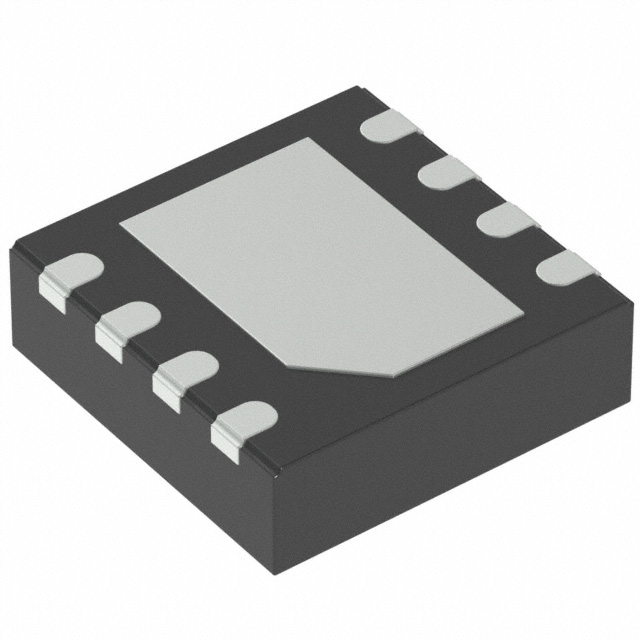
- Part No.:
- TLE7258DXUMA1
- Manufacturer:
- Infineon Technologies
- Category:
- Drivers, Receivers, Transceivers
- Package:
- 8-TDFN Exposed Pad
- Datasheet:
-
 TLE7258DXUMA1.pdf
- Description:
- IC TRANSCEIVER 1/1 PGTSON81
- Quantity:
- Payment:

- Shipping:

Inventory:3,900
Please send an inquiry. Send us your inquiry, and we will respond immediately.
Product details
Overview
TLE7258DXUMA1 from Infineon Technologies is an automotive-grade LIN transceiver in PG-TSON-8 package, compliant with ISO 17987-4 and LIN Specification 2.2A. It operates as the physical layer interface between microcontroller UART and single-wire LIN bus, supporting up to 20 kbps data rate, 3.3 V/5 V logic compatibility, and integrated wake-up detection via BUS pin. Used in body control modules for door locks, seat positioners, and HVAC actuators.
For engineers reviewing the TLE7258DXUMA1 datasheet, TLE7258DXUMA1 pinout, TLE7258DXUMA1 application, or TLE7258DXUMA1 equivalent, key selection criteria include sleep-mode current (<10 µA), ±10 kV IEC61000-4-2 ESD robustness, BUS short-to-VBAT/GND protection, AEC-Q100 qualification, and PG-TSON-8 thermal performance for under-hood deployment.
Technical Context
The TLE7258DXUMA1 implements a bidirectional single-wire LIN physical layer with integrated driver, receiver, wake-up comparator, and mode controller. Its receiver includes RF-filtered input and internal pull-up on RxD (30 kΩ typical), while the transmitter uses slew-rate-controlled dominant-state drive with TxD low-active logic.
It supports three deterministic operating modes-Normal (EN = high), Standby (EN = low, TxD = high), and Sleep (EN = low, TxD disabled)-with automatic over-temperature shutdown and VS undervoltage detection. Mode transitions are controlled solely by EN pin voltage level and BUS activity, not by microcontroller software polling.
Key Specifications
| Parameter | Value and Actual Design Meaning |
|---|---|
| Data Rate | Up to 20 kbps - supports full LIN 2.x timing budgets including sync field, PID, and checksum fields without bit-stuffing errors. |
| Sleep Current | <10 µA typical - enables always-on LIN nodes in battery-sensitive applications like smart entry systems without draining 12 V battery. |
| ESD Robustness | ±10 kV HBM per IEC61000-4-2 - eliminates need for external TVS diodes on BUS line in most automotive cabin environments. |
| Supply Range | 5.5 V to 27 V - accommodates cold-crank (5.5 V) and load-dump (27 V) conditions without external regulators or supervision. |
| Logic Compatibility | 3.3 V and 5 V CMOS - interfaces directly with legacy 5 V MCUs (e.g., SAK-TC1766) and modern 3.3 V automotive MCUs (e.g., TC3xx series). |
| Thermal Shutdown | 165 °C activation - protects against solder reflow damage and sustained overtemperature in enclosed junction boxes. |
| AEC-Q100 Grade | Grade 1 (−40 °C to +125 °C ambient) - qualified for engine bay and passenger compartment mounting without derating. |
Pinout & Package
Package: PG-TSON-8 (3.0 mm × 3.0 mm, 0.65 mm pitch, exposed thermal pad). RoHS-compliant, leadless, AOI-compatible, with GND-connected thermal pad for PCB heat sinking.
| Pin/Terminal | Circuit Role | Design Meaning |
|---|---|---|
| 1 RxD | Receiver output | CMOS-level signal reflecting BUS state; requires external pull-up to MCU supply; asserts low on bus wake-up event. |
| 2 EN | Enable control input | Active-high digital input with internal pull-down; controls Normal/Standby/Sleep mode transitions; no external resistor needed. |
| 3 N.C. | No connection | Internally unconnected silicon pad; must remain floating on PCB; no routing or stitching required. |
| 4 TxD | Transmitter input | CMOS-level input with internal pull-up current source; drives dominant state when pulled low; disabled in Sleep mode. |
| 5 GND | Power ground | Primary return path for VS, driver, and receiver circuits; must be connected to low-impedance PCB ground plane. |
| 6 BUS | Single-wire LIN bus interface | Bidirectional analog node with integrated slave termination; handles dominant/recessive states; supports wake-up detection. |
| 7 Vs | Battery supply input | Accepts 5.5–27 V; requires 100 nF ceramic decoupling capacitor placed ≤2 mm from pin; powers internal regulator and driver stage. |
| 8 N.C. | No connection | Internally unconnected; electrically isolated; may be left unconnected or tied to GND for mechanical stability only. |
Key Features
| Feature | Design Value |
|---|---|
| Integrated BUS wake-up detection | Enables autonomous node wake-up without MCU intervention; reduces system power by eliminating periodic polling of LIN bus. |
| Low-leakage BUS pin (<1 µA) | Permits partial network powering (e.g., only master active) without corrupting slave node bias or causing false wake-ups. |
| VS undervoltage lockout (UVLO) | Prevents erratic operation during cranking (VS < 5.5 V); holds outputs in safe high-impedance state until stable supply resumes. |
| Short-to-battery and short-to-ground protection | Allows BUS pin to survive direct shorts to 12 V or GND without latch-up or permanent damage; no fuse or external protection required. |
| Optimized EMC emission profile | Meets CISPR 25 Class 5 radiated emission limits across 150 kHz–108 MHz without ferrite beads or shielding cans. |
Applications
| Body Control Module (BCM) | Smart Entry System |
|---|---|
|
Use Scenario: Centralized control of door locks, window lifts, mirror adjusters, and interior lighting via LIN sub-network. IC Role / Device Role / Timing Role: Physical layer transceiver interfacing BCM MCU UART to LIN bus; handles dominant/recessive signaling and wake-up event propagation. Use Value: Enables <10 µA sleep current per node, extending vehicle standby time beyond 30 days without battery drain. |
Use Scenario: Keyless entry fob communication with door handle sensors and central gateway using LIN as secondary bus. IC Role / Device Role / Timing Role: LIN slave transceiver in handle module; detects bus wake-up from gateway and powers MCU only when needed. Use Value: Eliminates need for dedicated wake-up lines or external comparators, reducing BOM count and PCB area by 12%. |
| Seat Position Memory System | HVAC Actuator Network |
|
Use Scenario: LIN-connected motorized seat controllers storing and recalling multiple positions using potentiometer feedback. IC Role / Device Role / Timing Role: Bus driver translating MCU UART commands into LIN frames; provides BUS short-circuit resilience during motor stall events. Use Value: Survives repeated BUS short-to-VBAT during actuator jamming, avoiding field returns due to transceiver failure. |
Use Scenario: Distributed air flap actuators (blend, mode, recirc) communicating temperature and position status to HVAC controller. IC Role / Device Role / Timing Role: Low-power LIN slave transceiver with ±10 kV ESD protection; interfaces 3.3 V MCU to noisy under-dash environment. Use Value: Maintains reliable communication at 10 kbps even during alternator ripple (100 mVpp @ 10 kHz) without frame loss. |
Equivalent & Alternatives
The following parts are listed as comparable options for similar LIN transceiver applications.
| Alternative Part | Technical Difference | Application Difference | Selection Advice |
|---|---|---|---|
| TLIN1029DRBR | Higher sleep current (15 µA), no integrated BUS termination, requires external 1 kΩ pull-up for master use. | Lacks built-in slave termination; needs external components for basic slave operation; lower ESD rating (±8 kV). | Select when cost sensitivity outweighs design simplicity and thermal performance is less constrained. |
| ATA663211-GAQW | Supports LIN 2.2A but lacks wake-up capability on BUS pin; requires separate wake-up input (WAKE#); higher quiescent current (25 µA). | Not suitable for autonomous wake-up nodes; mandates additional MCU GPIO and firmware handling for wake detection. | Choose only if existing design already uses ATA663211 footprint and wake-up is handled externally. |
Compared with TLIN1029DRBR and ATA663211-GAQW, TLE7258DXUMA1 delivers superior integration (integrated slave termination, BUS wake-up), lower sleep current, and higher ESD immunity-reducing total system component count and improving reliability in thermally demanding locations.
Availability
TLE7258DXUMA1 is available at Aetrix Electronics and suitable for body control modules, smart entry systems, seat position memory units, and HVAC actuator networks requiring stable component supply across automotive production lifecycles.
Supply support for TLE7258DXUMA1 includes scheduled delivery planning, volume procurement assistance, BOM continuity management, traceable sourcing, and lifecycle availability coordination for OEM customers, industrial embedded developers, connected-device designers, and electronics production programs.
Manufacturer
Infineon Technologies is a German semiconductor manufacturer specializing in power management, automotive ICs, and sensor solutions, with global manufacturing and automotive qualification infrastructure.
The TLE7258DXUMA1 belongs to Infineon's automotive LIN transceiver product line, engineered specifically for robust, low-power, single-wire in-vehicle networking in harsh environments-from engine compartments to door modules.
FAQ
What is the maximum LIN data rate supported by TLE7258DXUMA1?
The TLE7258DXUMA1 supports LIN data rates up to 20 kbps, fully compliant with LIN Specification 2.2A and ISO 17987-4. This rate accommodates standard LIN frame structures-including sync field, identifier, data bytes, and checksum-with guaranteed timing margins across the full temperature range (−40 °C to +125 °C).
Does TLE7258DXUMA1 require external termination resistors?
No external termination is required for slave node operation-the TLE7258DXUMA1 integrates a precise LIN slave termination on the BUS pin. For master node use, a 1 kΩ resistor and diode must be added between BUS and VS per Figure 15 in the datasheet to meet LIN master impedance requirements.
How does the wake-up function operate without MCU involvement?
The TLE7258DXUMA1 monitors BUS voltage continuously in Sleep and Standby modes. A valid LIN recessive-to-dominant edge triggers internal wake-up logic, pulling RxD low within 10 µs to signal the MCU-enabling immediate response without polling or external circuitry.
Is the PG-TSON-8 package compatible with standard reflow profiles?
Yes-the PG-TSON-8 package is qualified for standard lead-free reflow (J-STD-020D, peak 260 °C). The exposed thermal pad must be soldered to a solid GND copper area ≥12 mm² with ≥4 thermal vias (0.3 mm diameter) to ensure reliable thermal transfer and avoid delamination during assembly.
TLE7258DXUMA1 Specifications
- Product attributes
- Attribute value
- Manufacturer:
- Infineon Technologies
- Series:
- -
- Package/Case:
- 8-TDFN Exposed Pad
- Packaging:
- Tape & Reel (TR)
- Product Status:
- Obsolete
- Type:
- Transceiver
- Protocol:
- LINbus
- Number of Drivers/Receivers:
- 1/1
- Duplex:
- -
- Receiver Hysteresis:
- 120 mV
- Data Rate:
- 20kbps
- Voltage - Supply:
- 5.5V ~ 18V
- Operating Temperature:
- -40°C ~ 150°C
- Grade:
- -
- Qualification:
- -
- Mounting Type:
- Surface Mount, Wettable Flank
- Supplier Device Package:
- PG-TSON-8-1
TLE7258DXUMA1 FAQ
1.How can I place an order for TLE7258DXUMA1 through Aetrix?
Please submit a Request for Quotation (RFQ) for TLE7258DXUMA1 on Aetrix. Our sales agent will provide a competitive quotation and guide you through the order confirmation once you accept the terms.
2.Are the price and stock information for TLE7258DXUMA1 reliable?
The price and inventory of TLE7258DXUMA1 are updated periodically and may fluctuate due to market conditions. Stock and pricing data are typically refreshed every 24 hours. Quotation validity for TLE7258DXUMA1 is usually 5 days.
3.What payment methods are accepted for TLE7258DXUMA1?
We accept Wire Transfer, PayPal, Credit Card, Western Union, MoneyGram, and Escrow for TLE7258DXUMA1 transactions.
Note: Certain payment methods may incur a processing fee.
4.How is shipping managed for TLE7258DXUMA1?
TLE7258DXUMA1 orders can be shipped via leading logistics carriers, including DHL, UPS, FedEx, TNT, or Registered Mail.
Once your TLE7258DXUMA1 order is processed, you will receive an email with the shipment details and tracking number.
Note: Tracking information may take up to 24 hours to appear. Express delivery typically takes 3–5 business days.
5.How can I obtain technical support or documentation for TLE7258DXUMA1?
For technical support, including TLE7258DXUMA1 datasheets, pinout diagrams, or application guidance, please contact our engineering support team. They can provide detailed documentation and assistance for your TLE7258DXUMA1 requirements.
6.How does Aetrix verify that TLE7258DXUMA1 is sourced from the original manufacturer or authorized distributors?
All TLE7258DXUMA1 products on Aetrix are procured from qualified distributors and authorized channels. Our dedicated quality assurance team conducts strict verification, including traceability checks and, if necessary, third-party testing. This ensures that TLE7258DXUMA1 meets industry standards.
7.What is the process for return or replacement of TLE7258DXUMA1?
All TLE7258DXUMA1 units undergo pre-shipment inspection (PSI). If there is an issue with TLE7258DXUMA1, returns or replacements are accepted under the following conditions:
1.Quantity discrepancies, incorrect items, or visible external defects (such as breakage or corrosion), acknowledged by Aetrix.
2.The issue is reported within 90 days of delivery.
3.The TLE7258DXUMA1 part is unused and in its original packaging.
Return procedure for TLE7258DXUMA1:
1.Submit a request within 90 days.
2.Obtain a Return Material Authorization (RMA) from Aetrix.
TLE7258DXUMA1 Tags

-
ATA6561-GAQW-N
Microchip Technology
-
ATA6561-GBQW-N
Microchip Technology
-
AM26LS32ACDR
Texas Instruments

-
SP485CN-L/TR
MaxLinear, Inc.
-
SP485EN-L/TR
MaxLinear, Inc.
-
SP485EEN-L/TR
MaxLinear, Inc.
-
SP485ECN-L/TR
MaxLinear, Inc.
-
THVD1400DR
Texas Instruments
-
AM26C31IDR
Texas Instruments

-
TLIN1021ADRQ1
Texas Instruments
-
MAX232IDR
Texas Instruments
-
AM26C32IDR
Texas Instruments
Tech Hub

18650 battery guide covering lithium-ion cell basics, 3.6V/3.7V voltage, 4.2V charging, mAh and Wh capacity, protected cells, chargers, BMS, series-parallel packs, holders, welding and sourcing checks.…

Hall effect sensor guide covering working principle, linear and digital sensors, Arduino circuits, current sensing, speed detection, automotive applications, A3144 examples, signal filtering and datash…

Product Change Notification guide for electronic components, covering PCN meaning, PCN vs PDN/EOL, common change types, risk levels, form-fit-function review, engineering validation, BOM control, LTB/L…

A practical guide to blend door actuators, covering HVAC function, symptoms, location, AC and heater issues, reset and calibration, replacement cost, electrical diagnosis, compatibility checks, and rep…

Engineering guide to Raspberry Pi alternatives, covering chip-level differences, Orange Pi, ROCK, Jetson, Banana Pi, NanoPi, Compute Module, Pico, GPIO, camera, HAT compatibility, and replacement risks…
Engineering guide to dynamic load response testing for high-current buck converters, covering load step setup, slew rate, Vcore undershoot, overshoot, recovery time, probe location, output capacitors a…
Engineering guide to output capacitor selection for ASIC Vcore rails, covering bulk capacitors, polymer capacitors, MLCC decoupling, DC bias, ESR, ESL, placement, transient response and substitution ri…
Engineering guide to high-current ASIC Vcore rails, covering 12-phase buck architecture, PMBus control, dynamic load testing, output capacitor networks, smart power stage selection, thermal design and …
Voltage regulator guide covering linear, LDO, 7805, Zener, adjustable, buck, VRM and alternator regulators, with design checks, testing methods, troubleshooting and datasheet-based selection.
Amplifier guide covering voltage, current and power amplification, gain, feedback, amplifier classes, audio and RF applications, op-amp circuits, transimpedance amplifiers, datasheet selection and trou…


