
 My Inquiry
 My Account


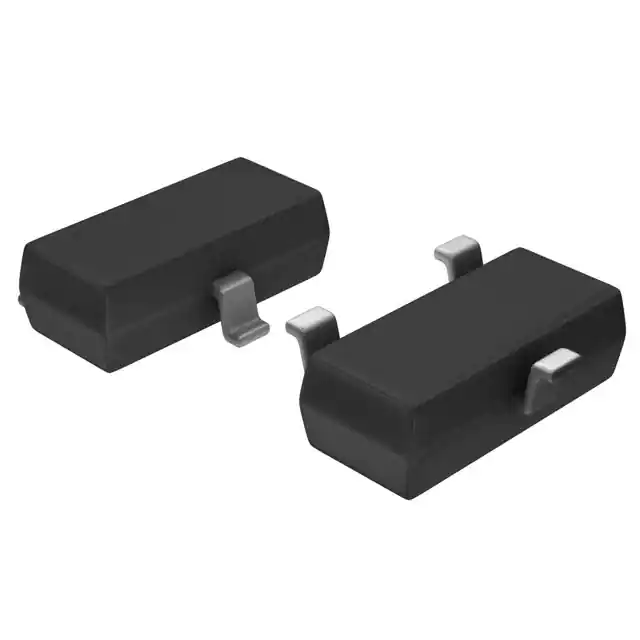
Infineon Technologies TLV49613MXTMA1
- Part No.:
- TLV49613MXTMA1
- Manufacturer:
- Infineon Technologies
- Category:
- Switches (Solid State)
- Package:
- TO-236-3, SC-59, SOT-23-3
- Datasheet:
-
 TLV49613MXTMA1.pdf
- Description:
- MAGNETIC SWITCH LATCH SOT23-3
- Quantity:
- Payment:

- Shipping:

Inventory:1,416
Please send an inquiry. Send us your inquiry, and we will respond immediately.
Product details
Overview
TLV49613MXTMA1 from Infineon Technologies is a bipolar Hall effect latch IC designed for precision position sensing in automotive and industrial systems. It operates from 3.0 V to 32 V supply, features ±7.5 mT magnetic switching thresholds (BOP/BRP), 0.35 µs typical output jitter, open-drain output, and functions reliably from −40°C to +85°C - enabling robust index counting with pole wheels in power window lifters and seat actuators.
For engineers reviewing the TLV49613MXTMA1 datasheet, TLV49613MXTMA1 pinout, TLV49613MXTMA1 application, or TLV49613MXTMA1 equivalent, key selection criteria include magnetic threshold stability over temperature, reverse polarity protection (−18 V), load-dump tolerance up to 42 V without external resistor, and integrated overcurrent/overtemperature protection in PG-SOT23-3-15 package.
Technical Context
The TLV49613MXTMA1 uses a spinning Hall probe with chopper-stabilized amplifier and demodulator to suppress offset drift and achieve high magnetic threshold stability. Its comparator includes hysteresis (typ. 15 mT) and is driven by a low-pass filtered signal path optimized for clean edge detection under EMI stress.
Internal voltage regulation enables operation across wide supply ranges (3.0–32 V), while active error compensation and oscillator-controlled sequencing ensure consistent startup behavior and timing integrity. The device outputs a digital latch signal via open-drain topology compatible with 3.3 V or 5 V pull-up rails.
Key Specifications
| Parameter | Value and Actual Design Meaning |
|---|---|
| Supply Voltage Range | 3.0 V to 32 V - supports direct connection to unregulated 12 V/24 V automotive rails including transient load-dump events up to 42 V without external protection. |
| Magnetic Operating Point (BOP) | ±7.5 mT (typ.) - precise latching threshold enables accurate zero-crossing detection with standard ferrous pole wheels. |
| Output Jitter | 0.35 µs (typ.) - ensures sub-microsecond timing consistency critical for high-speed index counting in motor control feedback loops. |
| Operating Temperature | −40°C to +85°C - qualified for under-hood and cabin-mounted automotive modules per AEC-Q100 Class 2 requirements. |
| ESD Protection | ±4 kV HBM - provides robust handling during PCB assembly and system integration without additional clamping circuitry. |
| Reverse Polarity Protection | −18 V - allows safe operation during battery misconnection in vehicle service environments. |
| Supply Current | 1.6 mA (typ. at 25°C) - enables low-power always-on sensing in energy-sensitive body electronics applications. |
Pinout & Package
TLV49613MXTMA1 is housed in the PG-SOT23-3-15 surface-mount package - a 3-pin, lead-free, RoHS-compliant variant of SOT-23 with standardized footprint and thermal pad exposure for enhanced reliability in reflow-soldered automotive assemblies.
| Pin/Terminal | Circuit Role | Design Meaning |
|---|---|---|
| 1 - VDD | Positive supply input | Accepts 3.0–32 V DC; internal regulator derives bias for analog front-end and logic; tolerates −18 V reverse and 42 V transients. |
| 2 - Q | Open-drain output | Sinks current when active (latched); requires external pull-up; compatible with 3.3 V or 5 V logic families; supports wired-OR configurations. |
| 3 - GND | Ground reference | Common return for supply and output; connects to substrate thermal pad for improved thermal dissipation in high-ambient environments. |
Key Features
| Feature | Design Value |
|---|---|
| Chopper-stabilized Hall sensing | Reduces offset drift to <0.1 mT/°C, enabling stable BOP/BRP over full temperature range without calibration. |
| Integrated overtemperature shutdown | Automatically disables output above junction temperature threshold (~150°C), preventing thermal runaway in sealed enclosures. |
| Load-dump tolerant design | Withstands ISO 7637-2 Pulse 5a (42 V, 100 ms) without external TVS or Zener, simplifying BOM for 24 V commercial vehicle ECUs. |
| Low-jitter digital output | 0.35 µs typical propagation delay variation ensures deterministic timing for microcontroller edge-triggered interrupts in real-time motor control. |
| Reverse polarity hardened input | Survives −18 V applied to VDD for >100 ms, eliminating need for series diode in battery-connected modules. |
Applications
| Power Window Lift Control | Seat Position Indexing |
|---|---|
Use Scenario: Detecting gear tooth passage on a rotating shaft to count window travel distance and trigger anti-pinch reversal. IC Role / Device Role / Timing Role: Bipolar Hall latch providing synchronized digital edge transitions aligned to pole wheel teeth for precise position sampling. Use Value: ±7.5 mT switching thresholds and 0.35 µs jitter enable sub-millimeter positional resolution at 500 RPM shaft speed with no software interpolation. | Use Scenario: Monitoring rotary actuator position in power-adjustable driver seats using a multi-tooth pole wheel mounted on motor output shaft. IC Role / Device Role / Timing Role: Magnetic latch generating deterministic ON/OFF pulses per tooth, feeding quadrature decoder or MCU timer capture input. Use Value: Stable BOP/BRP over −40°C to +85°C eliminates recalibration across climate zones, supporting global vehicle platform reuse. |
| Roof Module Sunroof Feedback | Sliding Door Obstacle Detection |
Use Scenario: Tracking sunroof glass position during opening/closing cycles to enforce end-stop limits and prevent mechanical jamming. IC Role / Device Role / Timing Role: Latch output directly drives GPIO interrupt on body controller MCU, triggering immediate stop command upon threshold crossing. Use Value: 3.0–32 V operation allows direct connection to vehicle battery rail, avoiding dedicated LDO and reducing system cost and board space. | Use Scenario: Detecting obstruction-induced motor stall in sliding door systems by monitoring commutation timing deviations via Hall latch feedback. IC Role / Device Role / Timing Role: High-stability magnetic latch delivering repeatable pulse timing to compare against expected motor phase period. Use Value: Integrated overcurrent/overtemperature protection prevents latch damage during repeated stall events, extending field lifetime beyond 100,000 cycles. |
Equivalent & Alternatives
The following parts are listed as comparable options for similar bipolar Hall latch applications.
| Alternative Part | Technical Difference | Application Difference | Selection Advice |
|---|---|---|---|
| Melexis US1881EUA-ABA-000-REEL | BOP/BRP = ±3.5 mT; 5 V only supply; no load-dump tolerance; 1.2 µs jitter | Limited to low-voltage consumer appliances; unsuitable for 12 V/24 V automotive rails | Select only for cost-sensitive non-automotive designs where supply is regulated and magnetic field strength is weak. |
| Allegro A1220LUA-T | BOP/BRP = ±15 mT; 4.5–24 V supply; no reverse polarity rating; 0.5 µs jitter | Higher threshold reduces sensitivity to stray fields but requires stronger magnets; lacks −18 V reverse protection | Prefer for industrial encoders with large air gaps; avoid in battery-reverse-prone automotive service environments. |
Compared with US1881EUA-ABA-000-REEL and A1220LUA-T, TLV49613MXTMA1 uniquely combines automotive-grade supply robustness (3–32 V, −18 V reverse, 42 V load-dump), ultra-low jitter (0.35 µs), and tight ±7.5 mT thresholds - making it optimal for precision motion feedback in safety-critical vehicle subsystems.
Availability
TLV49613MXTMA1 is available at Aetrix Electronics and suitable for automotive body electronics, industrial motor feedback systems, and consumer appliance position sensing requiring stable component supply across extended temperature and voltage ranges.
Supply support for TLV49613MXTMA1 includes scheduled delivery planning, volume procurement assistance, BOM continuity management, traceable sourcing, and lifecycle availability coordination for OEM customers, industrial embedded developers, connected-device designers, and electronics production programs.
Manufacturer
Infineon Technologies is a German semiconductor manufacturer specializing in power management, sensor, and automotive ICs, with leadership in AEC-Q100-qualified devices for chassis, powertrain, and body electronics.
TLV49613MXTMA1 belongs to Infineon's TLV496x bipolar Hall latch family, engineered specifically for high-precision, high-reliability rotational and linear position sensing in automotive comfort systems and industrial motion control.
FAQ
What is the maximum allowable supply voltage transient the TLV49613MXTMA1 can withstand?
The TLV49613MXTMA1 sustains 42 V transients for up to 100 ms without external components, complying with ISO 7637-2 Pulse 5a for 24 V systems. This eliminates the need for external TVS diodes in load-dump protection circuits, reducing bill-of-materials cost and PCB area in automotive ECU designs.
Does TLV49613MXTMA1 require an external pull-up resistor on its output pin?
Yes - the Q pin is an open-drain output and requires an external pull-up resistor to a logic-compatible voltage (e.g., 3.3 V or 5 V). Typical values range from 1 kΩ to 10 kΩ depending on rise time and bus capacitance; no internal pull-up is integrated.
How does the TLV49613MXTMA1 handle temperature-induced magnetic threshold drift?
It uses active error compensation and chopper stabilization to limit BOP/BRP drift to ±0.1 mT/°C over −40°C to +85°C. Measured hysteresis remains stable at 15 mT (typ.), ensuring consistent switching margins across operating temperatures without firmware correction.
Can TLV49613MXTMA1 be used in AEC-Q100 qualified automotive modules?
Yes - TLV49613MXTMA1 is qualified to AEC-Q100 Grade 2 (−40°C to +105°C ambient), with tested performance across −40°C to +85°C junction temperature. Its reverse polarity, load-dump, and ESD robustness meet automotive reliability standards for body electronics applications.
TLV49613MXTMA1 Specifications
- Product attributes
- Attribute value
- Manufacturer:
- Infineon Technologies
- Series:
- -
- Package/Case:
- TO-236-3, SC-59, SOT-23-3
- Packaging:
- Tape & Reel (TR)
- Product Status:
- Active
- Function:
- Latch
- Technology:
- Hall Effect
- Polarization:
- South Pole
- Sensing Range:
- 7.5mT Trip, -7.5mT Release
- Test Condition:
- 25°C
- Voltage - Supply:
- 3V ~ 26V
- Current - Supply (Max):
- 2.5mA
- Current - Output (Max):
- 25mA
- Output Type:
- Open Drain
- Features:
- Temperature Compensated
- Operating Temperature:
- -40°C ~ 125°C (TA)
- Grade:
- Automotive
- Qualification:
- AEC-Q100
- Mounting Type:
- Surface Mount
- Supplier Device Package:
- PG-SOT23-3-15
TLV49613MXTMA1 FAQ
1.How can I place an order for TLV49613MXTMA1 through Aetrix?
Please submit a Request for Quotation (RFQ) for TLV49613MXTMA1 on Aetrix. Our sales agent will provide a competitive quotation and guide you through the order confirmation once you accept the terms.
2.Are the price and stock information for TLV49613MXTMA1 reliable?
The price and inventory of TLV49613MXTMA1 are updated periodically and may fluctuate due to market conditions. Stock and pricing data are typically refreshed every 24 hours. Quotation validity for TLV49613MXTMA1 is usually 5 days.
3.What payment methods are accepted for TLV49613MXTMA1?
We accept Wire Transfer, PayPal, Credit Card, Western Union, MoneyGram, and Escrow for TLV49613MXTMA1 transactions.
Note: Certain payment methods may incur a processing fee.
4.How is shipping managed for TLV49613MXTMA1?
TLV49613MXTMA1 orders can be shipped via leading logistics carriers, including DHL, UPS, FedEx, TNT, or Registered Mail.
Once your TLV49613MXTMA1 order is processed, you will receive an email with the shipment details and tracking number.
Note: Tracking information may take up to 24 hours to appear. Express delivery typically takes 3–5 business days.
5.How can I obtain technical support or documentation for TLV49613MXTMA1?
For technical support, including TLV49613MXTMA1 datasheets, pinout diagrams, or application guidance, please contact our engineering support team. They can provide detailed documentation and assistance for your TLV49613MXTMA1 requirements.
6.How does Aetrix verify that TLV49613MXTMA1 is sourced from the original manufacturer or authorized distributors?
All TLV49613MXTMA1 products on Aetrix are procured from qualified distributors and authorized channels. Our dedicated quality assurance team conducts strict verification, including traceability checks and, if necessary, third-party testing. This ensures that TLV49613MXTMA1 meets industry standards.
7.What is the process for return or replacement of TLV49613MXTMA1?
All TLV49613MXTMA1 units undergo pre-shipment inspection (PSI). If there is an issue with TLV49613MXTMA1, returns or replacements are accepted under the following conditions:
1.Quantity discrepancies, incorrect items, or visible external defects (such as breakage or corrosion), acknowledged by Aetrix.
2.The issue is reported within 90 days of delivery.
3.The TLV49613MXTMA1 part is unused and in its original packaging.
Return procedure for TLV49613MXTMA1:
1.Submit a request within 90 days.
2.Obtain a Return Material Authorization (RMA) from Aetrix.
TLV49613MXTMA1 Tags
-
TCS40DLR,LF
Toshiba Semiconductor and Storage
-
DRV5032FBDBZR
Texas Instruments
-
DRV5032FADBZR
Texas Instruments
-
AH1912-FA-7
Diodes Incorporated
-
AH1913-W-7
Diodes Incorporated
-
AH1911-W-7
Diodes Incorporated
-
TLI49631MXTSA1
Infineon Technologies
-
SM453R
Honeywell Sensing and Productivity Solutions
-
MLX90248ESE-EBA-000-RE
Melexis Technologies NV
-
MLX92213ELD-AAA-000-RE
Melexis Technologies NV
-
TLE4913HTSA1
Infineon Technologies
-
US5781ESE-AAA-000-RE
Melexis Technologies NV
Tech Hub

18650 battery guide covering lithium-ion cell basics, 3.6V/3.7V voltage, 4.2V charging, mAh and Wh capacity, protected cells, chargers, BMS, series-parallel packs, holders, welding and sourcing checks.…

Hall effect sensor guide covering working principle, linear and digital sensors, Arduino circuits, current sensing, speed detection, automotive applications, A3144 examples, signal filtering and datash…

Product Change Notification guide for electronic components, covering PCN meaning, PCN vs PDN/EOL, common change types, risk levels, form-fit-function review, engineering validation, BOM control, LTB/L…

A practical guide to blend door actuators, covering HVAC function, symptoms, location, AC and heater issues, reset and calibration, replacement cost, electrical diagnosis, compatibility checks, and rep…

Engineering guide to Raspberry Pi alternatives, covering chip-level differences, Orange Pi, ROCK, Jetson, Banana Pi, NanoPi, Compute Module, Pico, GPIO, camera, HAT compatibility, and replacement risks…
Engineering guide to dynamic load response testing for high-current buck converters, covering load step setup, slew rate, Vcore undershoot, overshoot, recovery time, probe location, output capacitors a…

Engineering guide to output capacitor selection for ASIC Vcore rails, covering bulk capacitors, polymer capacitors, MLCC decoupling, DC bias, ESR, ESL, placement, transient response and substitution ri…
Engineering guide to high-current ASIC Vcore rails, covering 12-phase buck architecture, PMBus control, dynamic load testing, output capacitor networks, smart power stage selection, thermal design and …
Voltage regulator guide covering linear, LDO, 7805, Zener, adjustable, buck, VRM and alternator regulators, with design checks, testing methods, troubleshooting and datasheet-based selection.
Amplifier guide covering voltage, current and power amplification, gain, feedback, amplifier classes, audio and RF applications, op-amp circuits, transimpedance amplifiers, datasheet selection and trou…


