Silicon Labs ACC-ZDB5304-H
- Part No.:
- ACC-ZDB5304-H
- Manufacturer:
- Silicon Labs
- Category:
- RF, RFID, Wireless Evaluation Boards
- Package:
- Datasheet:
-
ACC-ZDB5304-H.pdf
- Description:
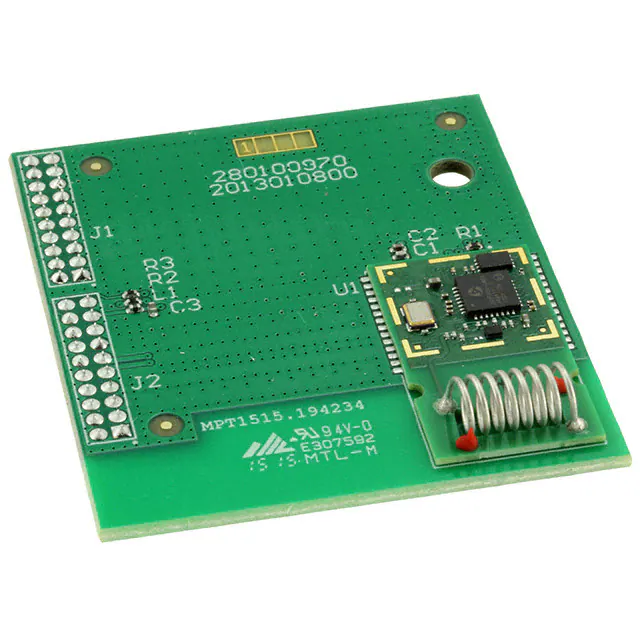
- DEVELOPMENT BOARD W/ ZM5304
- Quantity:
- Payment:

- Shipping:

Inventory:4,416
Please send an inquiry. Send us your inquiry, and we will respond immediately.
Product details
Overview
ACC-ZDB5304-H from Sigma Designs is a fully self-contained Z-Wave® serial interface module with integrated helical antenna, supporting 868/908/921 MHz regional operation, 9.6/40/100 kbit/s data rates, hardware AES-128 encryption, and 2 µA sleep current. It serves as a drop-in Z-Wave modem for consumer electronics gateways, smart TVs, and set-top boxes requiring FCC-modular-certified RF subsystems.
For engineers reviewing the ACC-ZDB5304-H datasheet, ACC-ZDB5304-H pinout, ACC-ZDB5304-H application, or ACC-ZDB5304-H equivalent, key selection considerations include its pre-certified RF design, UART/USB dual-interface Serial API compatibility, hardware-assisted frequency agility across up to 3 channels, and firmware-upgradable architecture eliminating hardware replacement.
Technical Context
The ACC-ZDB5304-H implements a complete Z-Wave physical and MAC layer in a PCB module form factor, integrating SD3503-based baseband, SAW-filtered RF front-end, and on-board helical antenna. It operates across three regional ISM bands (868/908/921 MHz) with configurable output power from –26 dBm to +4 dBm and RX sensitivity of –103 dBm at 9.6 kbit/s.
Hardware acceleration includes dedicated AES-128 engine for secure frame encryption/decryption, battery monitoring circuitry, integrated LDO regulators, and autonomous frequency agility logic that detects and avoids noisy channels without host CPU intervention or protocol stack modification.
Key Specifications
| Parameter | Value and Actual Design Meaning |
|---|---|
| Operating Frequency | 868 / 908 / 921 MHz - supports regional Z-Wave certification without hardware change |
| Data Rate | 9.6 / 40 / 100 kbit/s - enables interoperable communication with all Z-Wave generations |
| RX Sensitivity | –103 dBm @ 9.6 kbit/s - ensures robust link budget in noise-prone home environments |
| TX Output Power | –26 to +4 dBm - adjustable per regional regulatory limits and range requirements |
| Sleep Current | 2 µA - enables multi-year battery life in always-on but low-duty-cycle gateway nodes |
| Security Engine | Hardware AES-128 - offloads encryption from host MCU and prevents key exposure in software |
| Power Supply | 2.3–3.6 V - compatible with common single-cell Li-ion or 3.3 V system rails |
| Module Dimensions | 27 mm × 15.2 mm × 5.5 mm - compact PCB module footprint for space-constrained AV enclosures |
Pinout & Package
ACC-ZDB5304-H is supplied in a certified PCB module package measuring 27 mm × 15.2 mm × 5.5 mm, with castellated edge pads for surface-mount assembly. The module integrates a helical antenna, SAW filter, matching network, and all passive RF components - no external RF layout required.
| Pin/Terminal | Circuit Role | Design Meaning |
|---|---|---|
| VDD | Power supply input | 2.3–3.6 V main supply for baseband and RF sections |
| GND | Ground reference | Dedicated RF and digital ground planes internally isolated |
| UART_TX / UART_RX | Z-Wave Serial API interface | Asynchronous TTL-level UART supporting 9.6–100 kbit/s baud rates |
| USB_DP / USB_DM | Full-speed USB 2.0 device interface | Plug-and-play enumeration as CDC ACM device; used for firmware updates and debug |
| RESET_N | Active-low reset input | Asynchronous hardware reset; pulls internal state machines to known initialization vector |
| BAT_MON | Battery voltage monitor output | Analog voltage proportional to VDD; enables host-side low-battery detection |
| ANT | Integrated antenna feed point | Internally matched helical antenna; no external antenna connector or RF trace needed |
Key Features
| Feature | Design Value |
|---|---|
| FCC modular approval | Eliminates need for end-product RF certification testing and reduces time-to-market by 8–12 weeks |
| Hardware frequency agility | Autonomously scans and switches among up to 3 channels without host software involvement or packet loss |
| On-module helical antenna | Guarantees consistent radiation pattern and gain; removes antenna tuning variability from production line |
| Firmware upgrade via UART/USB | Enables field updates of Z-Wave protocol stack and security patches without hardware revision |
| Z-Wave Serial API compliance | Ensures binary compatibility with existing Z-Wave host applications; zero interface code changes required |
| 2 µA deep-sleep mode | Reduces average system power in intermittently active gateway nodes - critical for fanless thermal design |
Applications
| Smart Home Gateways | Smart TVs |
|---|---|
Use Scenario: Central hub aggregating Z-Wave sensors, locks, and lighting in residential automation systems. IC Role / Device Role / Timing Role: Z-Wave modem and protocol bridge between IP network and sub-GHz mesh devices. Use Value: Pre-certified RF design reduces gateway development cycle by eliminating RF validation and EMC rework. | Use Scenario: Embedded Z-Wave controller enabling voice-activated remote control of lights and thermostats via TV UI. IC Role / Device Role / Timing Role: Low-power, always-listening Z-Wave endpoint with hardware AES for secure command reception. Use Value: 2 µA sleep current extends standby runtime; UART API allows seamless integration into existing Linux-based TV middleware. |
| Set-Top Boxes | Commercial AV Control Systems |
Use Scenario: Secondary Z-Wave controller in cable/satellite STBs for whole-home device orchestration. IC Role / Device Role / Timing Role: Co-processor handling Z-Wave PHY/MAC layers while main SoC manages video decoding and UI. Use Value: Hardware AES offload preserves main CPU cycles; USB interface enables factory firmware provisioning during STB burn-in. | Use Scenario: Rack-mounted AV control processor managing motorized shades, projectors, and HVAC in conference rooms. IC Role / Device Role / Timing Role: Certified Z-Wave radio subsystem providing reliable, interference-resistant control channel. Use Value: Frequency agility maintains link integrity in dense RF environments with Wi-Fi 6E and Bluetooth LE coexistence. |
Equivalent & Alternatives
The following parts are listed as comparable options for similar Z-Wave serial interface applications.
| Alternative Part | Technical Difference | Application Difference | Selection Advice |
|---|---|---|---|
| ZM5302-H | Same SD3503 baseband; lacks integrated antenna - requires external antenna and RF matching network | Used where board-level antenna placement or custom RF tuning is required | Select ZM5302-H only when antenna location or impedance control must be managed externally |
| ZM5202 | Identical RF performance and Serial API; different PCB footprint (13×14 mm vs. 27×15.2 mm) and no onboard antenna | Targeted at space-constrained designs where antenna is integrated into enclosure or PCB | Choose ZM5202 when module size is primary constraint and RF layout expertise is available |
Compared with ZM5302-H and ZM5202, ACC-ZDB5304-H delivers fastest time-to-market due to its FCC-modular-certified, antenna-integrated design - reducing RF validation effort from months to zero, while maintaining full Z-Wave Serial API and firmware upgrade compatibility.
Availability
ACC-ZDB5304-H is available at Aetrix Electronics and suitable for smart home gateways, set-top boxes, and commercial AV control systems requiring stable component supply, long-term lifecycle support, and pre-certified Z-Wave RF functionality.
Supply support for ACC-ZDB5304-H includes scheduled delivery planning, volume procurement assistance, BOM continuity management, traceable sourcing, and lifecycle availability coordination for OEM customers, industrial embedded developers, connected-device designers, and electronics production programs.
Manufacturer
Sigma Designs was a fabless semiconductor company specializing in system-on-chip solutions for home entertainment and control, including Z-Wave, media processing, and smart TV platforms before its Z-Wave assets were acquired by Silicon Labs in 2018.
The ACC-ZDB5304-H belongs to Sigma Designs' ZM53xx family of certified Z-Wave modules, engineered specifically to accelerate integration of secure, interoperable wireless control into consumer AV and home automation products.
FAQ
What certifications does the ACC-ZDB5304-H hold?
The ACC-ZDB5304-H carries full FCC modular approval and is pre-scanned for CE compliance. Its integrated antenna and RF front-end eliminate the need for end-product RF certification testing. Regulatory documentation, including test reports and grant IDs, is available directly from Sigma Designs' legacy archive and authorized distributors. ACC-ZDB5304-H meets FCC Part 15.247 and ETSI EN 300 440 standards for its supported frequency bands.
Does the ACC-ZDB5304-H support over-the-air firmware updates?
No - the ACC-ZDB5304-H supports firmware updates exclusively via its UART or USB interfaces, not OTA. Updates require physical connection to a host system running Sigma's Z-Wave PC Controller or compatible tool. This ensures secure, authenticated firmware loading without exposing update vectors over the air. All ACC-ZDB5304-H firmware revisions maintain backward compatibility with the Z-Wave Serial API specification.
Can the ACC-ZDB5304-H operate in all Z-Wave regions without hardware change?
Yes - the ACC-ZDB5304-H is manufactured as region-specific variants (e.g., ACC-ZDB5304-H for 908 MHz US, ACC-ZDB5304-EU for 868 MHz), each with calibrated RF front-end and regulatory firmware. A single PCB layout supports all variants via firmware configuration; however, the physical module must match the target region's frequency and certification requirements. ACC-ZDB5304-H is the North American variant.
What is the role of hardware frequency agility in the ACC-ZDB5304-H?
Hardware frequency agility allows the ACC-ZDB5304-H to autonomously detect RF interference on its current channel and switch to one of two alternate channels - all without host CPU involvement, software stack modification, or packet retransmission. This feature maintains link reliability in congested 900 MHz environments, such as homes with multiple Wi-Fi routers or cordless phones, and is implemented entirely in the SD3503 baseband silicon.
Is the ACC-ZDB5304-H pin-compatible with earlier ZM5xxx modules?
No - the ACC-ZDB5304-H uses a unique 27 mm × 15.2 mm PCB layout with castellated pads optimized for its integrated antenna and thermal profile. While it shares the same Z-Wave Serial API and functional interface signals (UART, USB, RESET, BAT_MON), its pin count, pad spacing, and mechanical footprint differ from ZM5202 (13×14 mm) and ZM5302-H (13×30 mm). Board redesign is required for migration, though software integration remains identical.
ACC-ZDB5304-H Specifications
- Product attributes
- Attribute value
- Manufacturer:
- Silicon Labs
- Series:
- Z-Wave®
- Packaging:
- Box
- Product Status:
- Obsolete
- Type:
- Transceiver, Z-Wave
- Frequency:
- 921MHz
- Contents:
- Board(s)
- Utilized IC / Part:
- Z-Wave
ACC-ZDB5304-H FAQ
1.How can I place an order for ACC-ZDB5304-H through Aetrix?
Please submit a Request for Quotation (RFQ) for ACC-ZDB5304-H on Aetrix. Our sales agent will provide a competitive quotation and guide you through the order confirmation once you accept the terms.
2.Are the price and stock information for ACC-ZDB5304-H reliable?
The price and inventory of ACC-ZDB5304-H are updated periodically and may fluctuate due to market conditions. Stock and pricing data are typically refreshed every 24 hours. Quotation validity for ACC-ZDB5304-H is usually 5 days.
3.What payment methods are accepted for ACC-ZDB5304-H?
We accept Wire Transfer, PayPal, Credit Card, Western Union, MoneyGram, and Escrow for ACC-ZDB5304-H transactions.
Note: Certain payment methods may incur a processing fee.
4.How is shipping managed for ACC-ZDB5304-H?
ACC-ZDB5304-H orders can be shipped via leading logistics carriers, including DHL, UPS, FedEx, TNT, or Registered Mail.
Once your ACC-ZDB5304-H order is processed, you will receive an email with the shipment details and tracking number.
Note: Tracking information may take up to 24 hours to appear. Express delivery typically takes 3–5 business days.
5.How can I obtain technical support or documentation for ACC-ZDB5304-H?
For technical support, including ACC-ZDB5304-H datasheets, pinout diagrams, or application guidance, please contact our engineering support team. They can provide detailed documentation and assistance for your ACC-ZDB5304-H requirements.
6.How does Aetrix verify that ACC-ZDB5304-H is sourced from the original manufacturer or authorized distributors?
All ACC-ZDB5304-H products on Aetrix are procured from qualified distributors and authorized channels. Our dedicated quality assurance team conducts strict verification, including traceability checks and, if necessary, third-party testing. This ensures that ACC-ZDB5304-H meets industry standards.
7.What is the process for return or replacement of ACC-ZDB5304-H?
All ACC-ZDB5304-H units undergo pre-shipment inspection (PSI). If there is an issue with ACC-ZDB5304-H, returns or replacements are accepted under the following conditions:
1.Quantity discrepancies, incorrect items, or visible external defects (such as breakage or corrosion), acknowledged by Aetrix.
2.The issue is reported within 90 days of delivery.
3.The ACC-ZDB5304-H part is unused and in its original packaging.
Return procedure for ACC-ZDB5304-H:
1.Submit a request within 90 days.
2.Obtain a Return Material Authorization (RMA) from Aetrix.
ACC-ZDB5304-H Tags
-
113991054
Seeed Technology Co., Ltd
-
SC0918
Raspberry Pi

-
113991114
Seeed Technology Co., Ltd

-
ESP32-C6-DEVKITM-1-N4
Espressif Systems
-
ESP32-DEVKITM-1
Espressif Systems
-
C008
M5Stack Technology Co., Ltd.
-
ESP32-C3-DEVKITC-02
Espressif Systems

-
ESP32-C6-DEVKITC-1-N8
Espressif Systems
-
DFR0478
DFRobot
-
102010448
Seeed Technology Co., Ltd
-
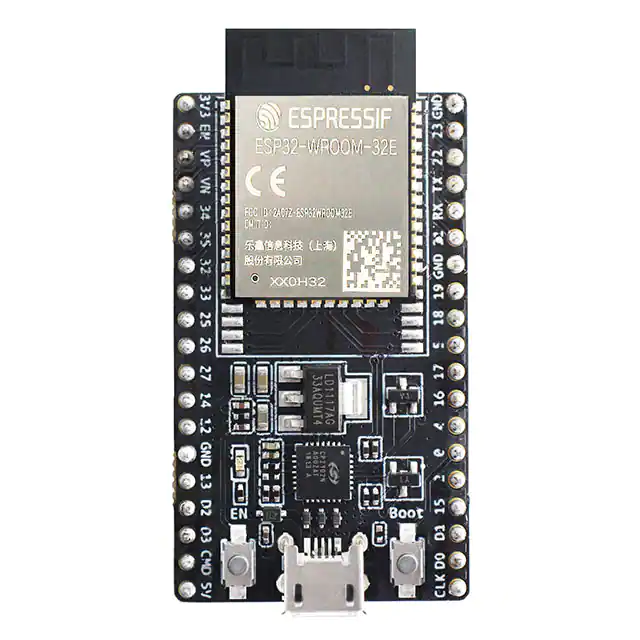
ESP32-DEVKITC-32E
Espressif Systems
-
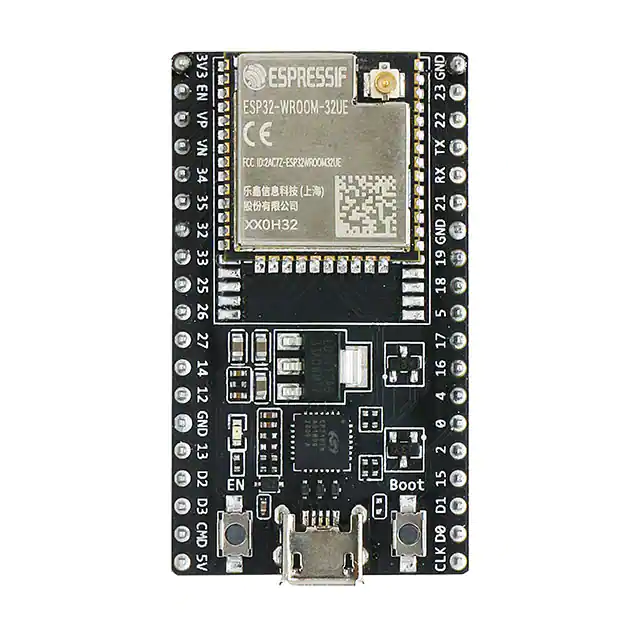
ESP32-DEVKITC-32UE
Espressif Systems
Tech Hub
Comparator circuit design covering voltage thresholds, input limits, open-collector outputs, LM393 wiring, op-amp differences, hysteresis, timing, window detection and practical fault diagnosis.
Schmitt triggers use separate rising and falling thresholds to stabilize slow or noisy signals. This guide covers hysteresis, 74HC14 and 74HCT14 selection, comparator calculations, RC oscillators and p…
Counterfeit components can hide behind convincing markings and passing basic function tests. This engineering reference covers source traceability, external inspection, X-ray, XRF, electrical testing, …
A practical engineering and sourcing framework covering lifecycle verification, lifetime-buy calculations, replacement qualification, supplier checks and counterfeit-risk controls.
TTL and CMOS logic families differ in thresholds, loading, output drive, power and timing. This engineering guide compares 74HC and 74HCT, calculates noise margins and checks 3.3 V/5 V compatibility.
A practical engineering guide to 3.3V and 5V logic compatibility, input thresholds, resistor dividers, translator ICs, MOSFET level shifting, I2C pull-ups, timing limits and power-sequencing risks.
The 74HC595 uses push-pull logic outputs, while the TPIC6B595 uses 50 V open-drain DMOS sinks for higher-power loads. This guide compares timing, current limits, 3.3 V interfacing, load wiring, thermal…
The 74HC595 converts serial data into eight stable parallel outputs. This guide covers pin functions, shift and storage timing, OE and MR behavior, drive-current limits, cascading, voltage compatibilit…
A technical comparison of level-sensitive latches and edge-triggered flip-flops, covering timing windows, setup and hold limits, master–slave operation, time borrowing, race-through, HDL inference and…
A D latch stores one bit while Enable controls when data can pass. This reference covers gate-level operation, truth tables, transparency, setup and hold timing, LE versus OE, common ICs and practical …