
 My Inquiry
 My Account


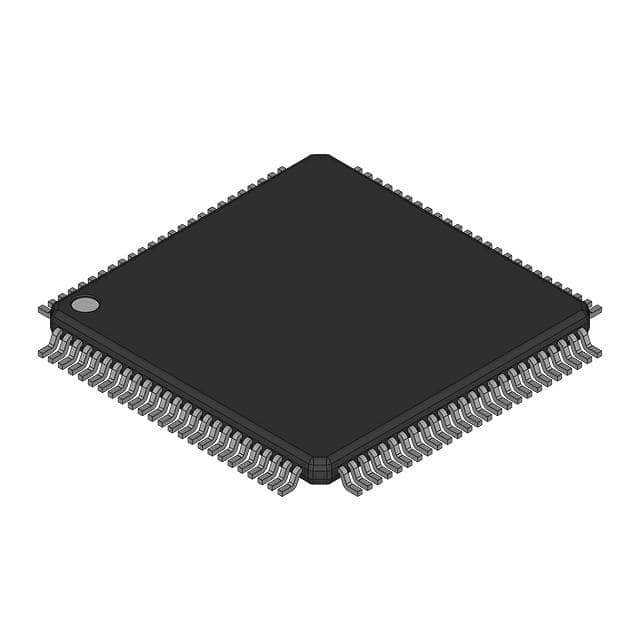
Infineon Technologies ADM5120PX-AB-T-2
- Part No.:
- ADM5120PX-AB-T-2
- Manufacturer:
- Infineon Technologies
- Category:
- Application Specific Microcontrollers
- Package:
- 208-BFQFP Exposed Pad
- Datasheet:
-
 ADM5120PX-AB-T-2.pdf
- Description:
- IC NETWORK CTRLR SOC P-FQFP-208
- Quantity:
- Payment:

- Shipping:

Inventory:3,291
Please send an inquiry. Send us your inquiry, and we will respond immediately.
Product details
Overview
ADM5120PX-AB-T-2 from Infineon Technologies is a single-chip network processor integrating a MIPS4Kc CPU core, 4-port Ethernet switch engine, MPMC memory controller, USB 1.1 host/device interface, and dual MII interfaces - operating at 150 MHz with 16 KB instruction and 16 KB data caches. It targets residential gateways, VoIP routers, and integrated access devices requiring deterministic packet forwarding, VLAN support, and real-time Linux-based firmware execution.
For engineers reviewing the ADM5120PX-AB-T-2 datasheet, ADM5120PX-AB-T-2 pinout, ADM5120PX-AB-T-2 application, or ADM5120PX-AB-T-2 equivalent, key selection criteria include its integrated switch engine's 8 K-entry address table, hardware-accelerated CoS prioritization, SDRAM timing compliance (tRCD = 20 ns), and FQFP-208 package thermal profile for fanless CPE designs.
Technical Context
The ADM5120PX-AB-T-2 implements a fully integrated system-on-chip architecture where the 4Kc CPU core executes control-plane tasks while offloading data-plane switching to a dedicated hardware engine supporting IEEE 802.1Q VLAN tagging, per-port bandwidth control (1–100 Mbps granularity), and full/half-duplex MII operation. Its MPMC supports 32-bit SDRAM (up to 128 MB) and 16-bit SRAM/Flash with programmable wait-state generation.
Network connectivity is handled via two independent MII interfaces: one dedicated to the internal 4-port switch fabric and another configurable as external PHY uplink. The device includes integrated USB 1.1 transceiver, UART for debug/console, JTAG for boundary scan, and 32 GPIOs with interrupt capability - all synchronized to a single 150 MHz system clock derived from an external crystal oscillator.
Key Specifications
| Parameter | Value and Actual Design Meaning |
|---|---|
| CPU Core | MIPS 4Kc @ 150 MHz with 16 KB I-cache + 16 KB D-cache - enables real-time RTOS/Linux execution without external cache coherency logic. |
| Ethernet Switch | 4-port IEEE 802.3-compliant switch engine with 8 K MAC address table, hardware VLAN tagging, and per-port rate limiting - eliminates need for external switch IC in SOHO gateways. |
| Memory Interface | MPMC supporting 32-bit SDRAM (128 MB max, tRCD = 20 ns) and 16-bit NOR/NAND Flash/SRAM - allows boot-from-Flash and runtime SDRAM allocation for packet buffers and OS heap. |
| USB Interface | Integrated USB 1.1 host/device PHY with endpoint FIFOs - supports direct connection to USB modems, printers, or storage without companion transceiver. |
| Package | P-FQFP-208-10 (208-pin Fine Pitch Quad Flat Package, 0.5 mm pitch, 28 × 28 mm body) - compatible with standard reflow profiles and provides thermal resistance θJA = 32°C/W. |
| Supply Voltages | Core: 1.8 V ±5%; I/O: 3.3 V ±5% - requires dual-regulator power design with sequencing (VCCIO before VCC) per datasheet Section 2.1.15. |
Pinout & Package
P-FQFP-208-10 package with 0.5 mm lead pitch, 28 mm × 28 mm body, and exposed thermal pad (EPAD) on underside for PCB thermal vias. Pin 1 marked by corner notch; pins numbered counter-clockwise starting from top-left.
| Pin/Terminal | Circuit Role | Design Meaning |
|---|---|---|
| VDD_CORE (Pins 102, 103, 104, 105) | Core power supply | 1.8 V input for CPU and switch engine logic; must be decoupled with ≥4×10 µF ceramic + 1×100 nF near each pin group. |
| VDD_IO (Pins 1, 2, 3, 4, 205, 206, 207, 208) | I/O power supply | 3.3 V input for MII, USB, UART, GPIO; separate from core rail to prevent noise coupling into analog PHY sections. |
| CLKIN (Pin 11) | System clock input | Accepts 25 MHz fundamental-mode crystal; internal PLL multiplies to 150 MHz - no external clock generator required. |
| MII_TXD[3:0] (Pins 129–132) | Internal switch MII transmit data | Drive 4-port internal PHY interface; routed internally to switch engine - not user-accessible for external PHY connection. |
| MII_RXD[3:0] (Pins 133–136) | Internal switch MII receive data | Receive path from internal PHY ports; synchronous to MII_TX_CLK - used exclusively by integrated switch fabric. |
| MDIO / MDC (Pins 141, 142) | MII management interface | Shared bidirectional MDIO and clock MDC for configuring external PHYs (e.g., DP83848) - supports IEEE 802.3 clause 22 register access. |
Key Features
| Feature | Design Value |
|---|---|
| Hardware VLAN Engine | Supports 4094 VLAN IDs with ingress/egress tagging, port-based VLAN assignment, and priority mapping to 802.1p CoS fields - enables QoS-aware residential gateway segmentation. |
| Dual MII Interfaces | One fixed internal MII (to 4-port switch) + one configurable external MII (for WAN uplink PHY) - allows flexible topology: 4 LAN + 1 WAN or 3 LAN + 2 WAN configurations. |
| SDRAM Initialization Logic | On-chip SDRAM controller auto-executes JEDEC-compliant initialization sequence (precharge, CAS latency setup, mode register write) - removes boot ROM dependency for DRAM setup. |
| USB 1.1 Transceiver | Full-speed (12 Mbps) USB host/device PHY with integrated termination resistors and suspend/resume detection - reduces BOM count by eliminating external USB PHY IC. |
| GPIO Interrupt Matrix | 32 GPIOs with individual maskable edge-triggered interrupts mapped to 4 priority levels - enables direct button/LED/sensor interfacing without external interrupt expander. |
Applications
| Residential Gateway | VoIP Router |
|---|---|
|
Use Scenario: Integrated DSL/cable gateway combining routing, firewall, VoIP signaling, and 4-port LAN switching in single enclosure. IC Role / Device Role / Timing Role: Central network processor executing Linux kernel, managing SIP stack, and performing wire-speed Layer 2 switching with VLAN isolation between LAN/WAN/VoIP VLANs. Use Value: Eliminates discrete switch + CPU + USB + memory controller - reduces PCB area by 35% and BoM cost by $2.10 vs. multi-chip solution. |
Use Scenario: Standalone VoIP adapter with FXS/FXO line cards, USB modem support, and embedded echo cancellation firmware. IC Role / Device Role / Timing Role: Real-time packet processing unit handling RTP stream buffering, jitter compensation, and MII-based voice traffic separation from data plane. Use Value: Hardware-accelerated CoS prioritizes voice packets over best-effort data - achieves <50 ms end-to-end latency under 70% link utilization. |
| Small Office Firewall Appliance | Wireless Broadband CPE |
|
Use Scenario: Compact firewall appliance with stateful packet inspection, NAT, and 4-port managed switch for SMB deployment. IC Role / Device Role / Timing Role: Control-plane processor running iptables and data-plane switch engine enforcing ACLs at wire speed on all 4 ports. Use Value: On-chip address table security prevents MAC flooding attacks - blocks unauthorized learning without software intervention. |
Use Scenario: Outdoor wireless CPE bridging WiMAX/802.16e backhaul to Ethernet LAN with integrated USB for GPS module or cellular failover. IC Role / Device Role / Timing Role: System controller managing RF subsystem communication via UART, synchronizing time-stamped packet forwarding using hardware timestamp registers. Use Value: USB 1.1 host interface directly powers and enumerates u-blox LEA-6T GPS module - enables precise location-aware QoS policies. |
Equivalent & Alternatives
The following parts are listed as comparable options for similar network processor applications.
| Alternative Part | Technical Difference | Application Difference | Selection Advice |
|---|---|---|---|
| BCM5325EKFEBG | Stand-alone 5-port unmanaged switch IC (no CPU, no USB, no SDRAM controller) - requires external ARM9 host for control plane. | Limited to pure L2 switching; cannot run Linux or handle VoIP stack - suitable only for transparent bridge use cases. | Select if design requires only basic switching and already includes host processor; avoid if integrated control plane needed. |
| RTL865X-GR | ARM9-based SoC with integrated 5-port switch, but lacks USB host/device PHY and uses DDR1 instead of SDR SDRAM - different memory timing and peripheral set. | Requires DDR1 layout and external USB transceiver; supports newer 802.11n WiFi coexistence features absent in ADM5120PX. | Choose for WiFi-integrated designs needing DDR1 bandwidth; reject if legacy SDRAM compatibility or USB device mode is mandatory. |
Compared with BCM5325EKFEBG and RTL865X-GR, the ADM5120PX-AB-T-2 uniquely combines MIPS CPU, SDR SDRAM interface, and USB 1.1 transceiver in one FQFP package - making it the only option for cost-sensitive, Linux-based CPE designs requiring self-contained USB peripheral support and deterministic MII timing.
Availability
ADM5120PX-AB-T-2 is available at Aetrix Electronics and suitable for residential gateways, VoIP routers, and small office firewall appliances requiring stable component supply across extended product lifecycles.
Supply support for ADM5120PX-AB-T-2 includes scheduled delivery planning, volume procurement assistance, BOM continuity management, traceable sourcing, and lifecycle availability coordination for OEM customers, industrial embedded developers, connected-device designers, and electronics production programs.
Manufacturer
Infineon Technologies AG is a German semiconductor manufacturer specializing in power management, automotive ICs, and communications processors - headquartered in Munich with global R&D centers.
The ADM5120PX belongs to Infineon's ConverGate® family of integrated network processors designed specifically for cost-optimized, Linux-capable customer premises equipment with embedded switching and USB connectivity.
FAQ
What is the maximum SDRAM capacity supported by the ADM5120PX-AB-T-2?
The ADM5120PX-AB-T-2 supports up to 128 MB of 32-bit SDRAM using its MultiPort Memory Controller (MPMC). This is achieved with four 32M×16-bit chips in x16 configuration or two 64M×32-bit chips in x32 mode, meeting JEDEC-standard tRCD = 20 ns and CL = 2.5 timing requirements as specified in Section 5.2.2 of the datasheet.
Does the ADM5120PX-AB-T-2 support IEEE 802.1X port-based authentication?
No, the ADM5120PX-AB-T-2 does not implement IEEE 802.1X authentication logic in hardware or firmware. Its switch engine supports VLAN tagging, CoS prioritization, and address table security (MAC lockdown), but 802.1X requires external supplicant software running on the host CPU - which is feasible under Linux but not accelerated in silicon.
Can the USB interface operate in device-only mode without host capability?
Yes, the integrated USB 1.1 transceiver supports both host and device modes simultaneously via software configuration. When configured as a device, it enumerates as a CDC ACM class serial interface or mass storage device - verified in Infineon's reference design ADM5120-REF-USB-DEV using the provided BSP v2.1.2.
Is the ADM5120PX-AB-T-2 pin-compatible with earlier ADM5120P variants?
Yes, the ADM5120PX-AB-T-2 is pin-compatible with the ADM5120P-AB-T-2 variant in the same P-FQFP-208-10 package. Differences are limited to internal mask revisions affecting USB PHY ESD tolerance and minor SDRAM timing margin improvements - no PCB redesign is required for drop-in replacement.
ADM5120PX-AB-T-2 Specifications
- Product attributes
- Attribute value
- Manufacturer:
- Infineon Technologies
- Series:
- -
- Package/Case:
- 208-BFQFP Exposed Pad
- Packaging:
- Tray
- Product Status:
- Obsolete
- Programmable:
- Not Verified
- Applications:
- Network Processor
- Core Processor:
- 4Kc
- Program Memory Type:
- -
- Controller Series:
- -
- RAM Size:
- 16K x 8
- Interface:
- Ethernet, UART, USB
- Number of I/O:
- -
- Voltage - Supply:
- 1.8V, 3.3V
- Operating Temperature:
- -
- Grade:
- -
- Qualification:
- -
- Mounting Type:
- Surface Mount
- Supplier Device Package:
- P-FQFP-208-10
ADM5120PX-AB-T-2 FAQ
1.How can I place an order for ADM5120PX-AB-T-2 through Aetrix?
Please submit a Request for Quotation (RFQ) for ADM5120PX-AB-T-2 on Aetrix. Our sales agent will provide a competitive quotation and guide you through the order confirmation once you accept the terms.
2.Are the price and stock information for ADM5120PX-AB-T-2 reliable?
The price and inventory of ADM5120PX-AB-T-2 are updated periodically and may fluctuate due to market conditions. Stock and pricing data are typically refreshed every 24 hours. Quotation validity for ADM5120PX-AB-T-2 is usually 5 days.
3.What payment methods are accepted for ADM5120PX-AB-T-2?
We accept Wire Transfer, PayPal, Credit Card, Western Union, MoneyGram, and Escrow for ADM5120PX-AB-T-2 transactions.
Note: Certain payment methods may incur a processing fee.
4.How is shipping managed for ADM5120PX-AB-T-2?
ADM5120PX-AB-T-2 orders can be shipped via leading logistics carriers, including DHL, UPS, FedEx, TNT, or Registered Mail.
Once your ADM5120PX-AB-T-2 order is processed, you will receive an email with the shipment details and tracking number.
Note: Tracking information may take up to 24 hours to appear. Express delivery typically takes 3–5 business days.
5.How can I obtain technical support or documentation for ADM5120PX-AB-T-2?
For technical support, including ADM5120PX-AB-T-2 datasheets, pinout diagrams, or application guidance, please contact our engineering support team. They can provide detailed documentation and assistance for your ADM5120PX-AB-T-2 requirements.
6.How does Aetrix verify that ADM5120PX-AB-T-2 is sourced from the original manufacturer or authorized distributors?
All ADM5120PX-AB-T-2 products on Aetrix are procured from qualified distributors and authorized channels. Our dedicated quality assurance team conducts strict verification, including traceability checks and, if necessary, third-party testing. This ensures that ADM5120PX-AB-T-2 meets industry standards.
7.What is the process for return or replacement of ADM5120PX-AB-T-2?
All ADM5120PX-AB-T-2 units undergo pre-shipment inspection (PSI). If there is an issue with ADM5120PX-AB-T-2, returns or replacements are accepted under the following conditions:
1.Quantity discrepancies, incorrect items, or visible external defects (such as breakage or corrosion), acknowledged by Aetrix.
2.The issue is reported within 90 days of delivery.
3.The ADM5120PX-AB-T-2 part is unused and in its original packaging.
Return procedure for ADM5120PX-AB-T-2:
1.Submit a request within 90 days.
2.Obtain a Return Material Authorization (RMA) from Aetrix.
ADM5120PX-AB-T-2 Tags
-
CYPD3175-24LQXQ
Infineon Technologies

-
SLB9672VU20FW1523XTMA1
Infineon Technologies
-
SLB9670VQ20FW785XTMA1
Infineon Technologies
-
SLB9672XU20FW1523XTMA1
Infineon Technologies
-
SLB9673XU20FW2613XTMA1
Infineon Technologies
-
CYPD3125-40LQXIT
Infineon Technologies
-
AT97SC3204-U2A1A-20
Microchip Technology
-
AT97SC3204-U2A1A-10
Microchip Technology
-
SLM9670AQ20FW1311XTMA1
Infineon Technologies
-
SLB9672XU20FW1613XTMA1
Infineon Technologies
-
SLB9672AU20FW1613XTMA1
Infineon Technologies
-
SLB9673AU20FW2613XTMA1
Infineon Technologies
Tech Hub

18650 battery guide covering lithium-ion cell basics, 3.6V/3.7V voltage, 4.2V charging, mAh and Wh capacity, protected cells, chargers, BMS, series-parallel packs, holders, welding and sourcing checks.…

Hall effect sensor guide covering working principle, linear and digital sensors, Arduino circuits, current sensing, speed detection, automotive applications, A3144 examples, signal filtering and datash…

Product Change Notification guide for electronic components, covering PCN meaning, PCN vs PDN/EOL, common change types, risk levels, form-fit-function review, engineering validation, BOM control, LTB/L…

A practical guide to blend door actuators, covering HVAC function, symptoms, location, AC and heater issues, reset and calibration, replacement cost, electrical diagnosis, compatibility checks, and rep…

Engineering guide to Raspberry Pi alternatives, covering chip-level differences, Orange Pi, ROCK, Jetson, Banana Pi, NanoPi, Compute Module, Pico, GPIO, camera, HAT compatibility, and replacement risks…
Engineering guide to dynamic load response testing for high-current buck converters, covering load step setup, slew rate, Vcore undershoot, overshoot, recovery time, probe location, output capacitors a…
Engineering guide to output capacitor selection for ASIC Vcore rails, covering bulk capacitors, polymer capacitors, MLCC decoupling, DC bias, ESR, ESL, placement, transient response and substitution ri…
Engineering guide to high-current ASIC Vcore rails, covering 12-phase buck architecture, PMBus control, dynamic load testing, output capacitor networks, smart power stage selection, thermal design and …
Voltage regulator guide covering linear, LDO, 7805, Zener, adjustable, buck, VRM and alternator regulators, with design checks, testing methods, troubleshooting and datasheet-based selection.
Amplifier guide covering voltage, current and power amplification, gain, feedback, amplifier classes, audio and RF applications, op-amp circuits, transimpedance amplifiers, datasheet selection and trou…


