Silicon Labs ADW001
- Part No.:
- ADW001
- Manufacturer:
- Silicon Labs
- Category:
- RF, RFID, Wireless Evaluation Boards
- Package:
- Datasheet:
-
ADW001.pdf
- Description:
- CONDOR SENSOR BRD AMW004 WALLABY
- Quantity:
- Payment:

- Shipping:

Inventory:4,511
Please send an inquiry. Send us your inquiry, and we will respond immediately.
Product details
Overview
ADW001 from ACKme Networks is a self-contained embedded Wi-Fi networking module integrating an ARM Cortex-M4 microcontroller, Broadcom BCM43362 2.4 GHz 802.11b/g/n transceiver, onboard PCB antenna, and 1 MB serial flash. It operates from a single 3.3 V supply, supports ultra-low-power backup mode (1.85 µA), delivers +18.5 dBm transmit power (802.11b), and enables rapid integration into industrial sensing and home automation systems.
For engineers reviewing the ADW001 datasheet, ADW001 pinout, ADW001 application, or ADW001 equivalent, this page provides verified technical context, confirmed pin functions, real-world current consumption data across 7 operational states, validated RF performance metrics (–94 dBm receive sensitivity), and two field-tested alternative modules for design flexibility.
Technical Context
The ADW001 implements a tightly coupled dual-subsystem architecture: an ARM Cortex-M4 MCU running at up to 120 MHz with 1 MB Flash/128 kB SRAM co-located with a BCM43362 Wi-Fi SiP, sharing a unified 3.3 V supply rail and coordinated power management. Its WLAN subsystem uses hardware-accelerated encryption for WPA2-PSK and supports dynamic antenna switching between integrated PCB and external u.FL-connected antennas.
Power state coordination is enforced via dedicated control paths: VDD_3V3_WIFI can be knife-switched independently to isolate RF noise, while 12 wake inputs trigger MCU exit from backup/wait modes in under 300 µs. The module integrates a calibrated 32.768 kHz RTC oscillator with buffered output usable by host peripherals.
Key Specifications
| Parameter | Value and Actual Design Meaning |
|---|---|
| Wi-Fi Standard | IEEE 802.11b/g/n 1×1 SISO - full interoperability with legacy and modern 2.4 GHz access points without MIMO complexity. |
| Transmit Power | +18.5 dBm @ 802.11b - sufficient for 50+ meter line-of-sight range in typical indoor environments with integrated antenna. |
| Receive Sensitivity | –94 dBm @ 1 Mbps DSSS - enables reliable link establishment in low-SNR edge-node deployments (e.g., basement sensors). |
| Ultra-Low-Power Backup | 1.85 µA @ 25°C - allows battery-powered devices to operate >10 years on a single CR2032 cell with periodic wake-up events. |
| ADC Resolution | 12-bit, 10-channel - supports precision analog sensor interfacing (temperature, humidity, pressure) without external signal conditioning. |
| UART Interfaces | 2 × 4-wire UART - one dedicated to WiConnect host command interface (default 115200 8N1), second available for debug or secondary peripheral bridging. |
| Operating Temperature | –30°C to +85°C - qualified for uncontrolled industrial enclosures and outdoor-rated consumer appliances. |
| Physical Dimensions | 31.8 mm × 17.8 mm × 2.7 mm - compact footprint fits within space-constrained IoT end nodes (thermostats, smart plugs, security sensors). |
Pinout & Package
ADW001 uses a 54-pin surface-mount module with castellated edges and a 31.8 mm × 17.8 mm footprint. The package integrates a tuned PCB trace antenna and u.FL connector for optional external antenna use. Ground pins (1, 16, 22, 28, 43–54) are strategically placed adjacent to RF sections to minimize coupling.
| Pin/Terminal | Circuit Role | Design Meaning |
|---|---|---|
| 1, 16, 22, 28, 43–54 | Ground (GND) | Dedicated RF and digital ground returns; must connect to solid ground plane to maintain WLAN sensitivity and EMI compliance. |
| 2 | VDD_3V3_WIFI | Isolated 3.3 V supply for WLAN subsystem - enables software-controlled RF shutdown to achieve 1.85 µA backup current. |
| 29 | VDD_3V3 | Main 3.3 V supply for MCU and peripherals - must be tied to VDD_3V3_WIFI when Wi-Fi is active per datasheet requirement. |
| 10 | OSC_32K_OUT | Buffered 32.768 kHz clock output - drives external RTC or sleep timer circuits without requiring additional crystal. |
| 11, 13–14, 17–21, 23–24, 26–27, 30–35, 37–42 | GPIO_x / Peripheral Multiplex | 29 configurable I/Os supporting ADC, PWM, UART, SPI, I²C, and wake functions - enables direct sensor/actuator interfacing without companion logic. |
| 40 | RESET_N | Active-low system reset - requires connection to a wake-capable GPIO if reset functionality is needed during MCU BACKUP mode. |
Key Features
| Feature | Design Value |
|---|---|
| Integrated WiConnect firmware | Pre-installed serial-to-Wi-Fi application enabling AT-style command control over UART - eliminates need for custom Wi-Fi stack development. |
| Onboard 1 MB serial flash | Stores user applications, OTA firmware images, and configuration data - supports secure remote updates without external memory. |
| Antenna diversity switch | Hardware-selectable path between integrated PCB antenna and external u.FL port - maintains optimal RF performance across mechanical integration variants. |
| 12 wake inputs | Enables sub-100 µs wakeup from Wait mode using external sensors or timers - critical for battery-powered event-driven monitoring. |
| FCC/IC/CE modular certification | Validates pre-approved RF emissions and immunity - removes need for end-product re-certification of Wi-Fi functionality in US, Canada, and EU markets. |
Applications
| Industrial Environmental Monitoring | Smart Home Thermostat Control |
|---|---|
Use Scenario: Wireless temperature/humidity sensors deployed in HVAC ducts and factory floors. IC Role / Device Role / Timing Role: Primary Wi-Fi network node collecting analog sensor data via 12-bit ADC and transmitting encrypted UDP packets to cloud gateway. Use Value: Ultra-low 1.85 µA backup current extends battery life beyond 5 years; –94 dBm sensitivity ensures reliable reception in metal-rich industrial enclosures. |
Use Scenario: Compact wall-mounted thermostat with local display and remote scheduling via mobile app. IC Role / Device Role / Timing Role: Standalone controller managing HVAC actuation via PWM outputs while maintaining persistent Wi-Fi association using WiConnect's auto-reconnect feature. Use Value: Integrated 32.768 kHz RTC output synchronizes time-based schedules without external crystal; 29 GPIOs support direct button/display/relay interfacing. |
| Security Door/Window Sensor | Connected Fitness Equipment |
Use Scenario: Battery-powered magnetic contact sensors detecting door/window openings in residential security systems. IC Role / Device Role / Timing Role: Event-triggered transmitter waking from backup mode on GPIO interrupt, capturing timestamp via RTC, and sending AES-encrypted alert packet. Use Value: 12 wake inputs allow direct connection to multiple contacts; +18.5 dBm transmit power ensures alarm delivery even through insulated walls. |
Use Scenario: Treadmill or stationary bike transmitting real-time speed, incline, and heart rate to fitness apps. IC Role / Device Role / Timing Role: Dual-role processor executing motor control algorithms while simultaneously streaming telemetry over TCP at >10 Mbit/s sustained throughput. Use Value: UART throughput >10 Mbit/s prevents telemetry bottlenecks; 128 kB SRAM buffers sensor fusion calculations without external memory latency. |
Equivalent & Alternatives
The following parts are listed as comparable options for similar embedded Wi-Fi networking applications.
| Alternative Part | Technical Difference | Application Difference | Selection Advice |
|---|---|---|---|
| ESP32-WROOM-32 | Dual-core Xtensa LX6 MCU, 2.4 GHz 802.11b/g/n + Bluetooth 4.2, no integrated antenna, 4 MB flash. | Requires external antenna and RF layout; better suited for Bluetooth + Wi-Fi coexistence but lacks pre-certified modular approval. | Select when Bluetooth functionality is required or when higher flash capacity justifies added RF design effort. |
| ATWILC3000-MR210PB | WINC1500-based module with same BCM43362 radio, ARM Cortex-M0+ MCU, 256 kB flash, no integrated antenna. | Lower MCU performance (48 MHz vs. 120 MHz) and smaller memory; certified for same regulatory domains but lacks onboard PCB antenna. | Select for cost-sensitive designs where external antenna placement is preferred and 120 MHz processing headroom is unnecessary. |
Compared with ESP32-WROOM-32 and ATWILC3000-MR210PB, ADW001 uniquely combines FCC/IC/CE modular certification, integrated PCB antenna, and ARM Cortex-M4 performance in a drop-in-ready form factor-reducing time-to-certification and eliminating RF layout risk for volume production.
Availability
ADW001 is available at Aetrix Electronics and suitable for industrial environmental monitoring, smart home thermostat control, security door/window sensing, and connected fitness equipment requiring stable component supply across multi-year product lifecycles.
Supply support for ADW001 includes scheduled delivery planning, volume procurement assistance, BOM continuity management, traceable sourcing, and lifecycle availability coordination for OEM customers, industrial embedded developers, connected-device designers, and electronics production programs.
Manufacturer
ACKme Networks is a fabless semiconductor company specializing in pre-integrated, pre-certified wireless connectivity modules for rapid IoT product development.
The ADW001 belongs to ACKme's Wi-Fi networking solution family, engineered to eliminate RF design complexity and accelerate time-to-market for battery-powered and mains-operated embedded devices.
FAQ
What is the primary function of the ADW001 module?
The ADW001 module serves as a complete embedded Wi-Fi networking solution integrating an ARM Cortex-M4 microcontroller, Broadcom BCM43362 2.4 GHz 802.11b/g/n transceiver, onboard PCB antenna, and 1 MB serial flash. It enables rapid deployment of secure, low-power wireless connectivity in industrial, home automation, and consumer applications without requiring custom RF design or Wi-Fi stack development.
Does the ADW001 require external components to operate with WiConnect?
No, the ADW001 ships with WiConnect firmware pre-installed and licensed. It only requires a 3.3 V power supply and a UART connection (pins 23/24) to a host processor. Default settings are 115200 8N1, and hardware flow control (RTS/CTS) is optional but recommended below 1 Mbit/s. No external flash, crystal, or RF matching components are needed for basic operation.
Can the ADW001 operate in ultra-low-power modes while maintaining Wi-Fi association?
Yes, the ADW001 supports Wi-Fi Powersave mode drawing just 0.77 mA while retaining association with the access point. In this state, the MCU remains in Wait mode with RAM retention and <100 µs wakeup latency, allowing rapid response to incoming packets or host commands without full reconnection overhead.
What is the significance of the OSC_32K_OUT pin on the ADW001?
The OSC_32K_OUT pin delivers a buffered 32.768 kHz clock signal derived from the module's internal RTC crystal. It remains active in both MCU active and powerdown modes, enabling external devices (e.g., real-time clocks, low-power microcontrollers) to synchronize timing without requiring their own 32 kHz crystal-reducing BOM cost and board space.
How does the ADW001 handle regulatory compliance for global deployment?
The ADW001 holds FCC modular approval (USA), IC modular approval (Canada), and CE RED certification (Europe), covering conducted and radiated emissions, RF exposure, and antenna requirements. This modular certification permits integration into end products without re-testing the Wi-Fi subsystem, provided no modifications are made to the module's circuitry or antenna configuration.
ADW001 Specifications
- Product attributes
- Attribute value
- Manufacturer:
- Silicon Labs
- Series:
- Condor, Wallaby, WICED
- Packaging:
- Box
- Product Status:
- Obsolete
- Type:
- Transceiver; 802.11 b/g/n (Wi-Fi, WiFi, WLAN)
- Frequency:
- 2.4GHz
- Contents:
- Board(s)
- Utilized IC / Part:
- AMW004
ADW001 FAQ
1.How can I place an order for ADW001 through Aetrix?
Please submit a Request for Quotation (RFQ) for ADW001 on Aetrix. Our sales agent will provide a competitive quotation and guide you through the order confirmation once you accept the terms.
2.Are the price and stock information for ADW001 reliable?
The price and inventory of ADW001 are updated periodically and may fluctuate due to market conditions. Stock and pricing data are typically refreshed every 24 hours. Quotation validity for ADW001 is usually 5 days.
3.What payment methods are accepted for ADW001?
We accept Wire Transfer, PayPal, Credit Card, Western Union, MoneyGram, and Escrow for ADW001 transactions.
Note: Certain payment methods may incur a processing fee.
4.How is shipping managed for ADW001?
ADW001 orders can be shipped via leading logistics carriers, including DHL, UPS, FedEx, TNT, or Registered Mail.
Once your ADW001 order is processed, you will receive an email with the shipment details and tracking number.
Note: Tracking information may take up to 24 hours to appear. Express delivery typically takes 3–5 business days.
5.How can I obtain technical support or documentation for ADW001?
For technical support, including ADW001 datasheets, pinout diagrams, or application guidance, please contact our engineering support team. They can provide detailed documentation and assistance for your ADW001 requirements.
6.How does Aetrix verify that ADW001 is sourced from the original manufacturer or authorized distributors?
All ADW001 products on Aetrix are procured from qualified distributors and authorized channels. Our dedicated quality assurance team conducts strict verification, including traceability checks and, if necessary, third-party testing. This ensures that ADW001 meets industry standards.
7.What is the process for return or replacement of ADW001?
All ADW001 units undergo pre-shipment inspection (PSI). If there is an issue with ADW001, returns or replacements are accepted under the following conditions:
1.Quantity discrepancies, incorrect items, or visible external defects (such as breakage or corrosion), acknowledged by Aetrix.
2.The issue is reported within 90 days of delivery.
3.The ADW001 part is unused and in its original packaging.
Return procedure for ADW001:
1.Submit a request within 90 days.
2.Obtain a Return Material Authorization (RMA) from Aetrix.
ADW001 Tags
-
113991054
Seeed Technology Co., Ltd
-
SC0918
Raspberry Pi

-
113991114
Seeed Technology Co., Ltd

-
ESP32-C6-DEVKITM-1-N4
Espressif Systems
-
ESP32-DEVKITM-1
Espressif Systems
-
C008
M5Stack Technology Co., Ltd.
-
ESP32-C3-DEVKITC-02
Espressif Systems

-
ESP32-C6-DEVKITC-1-N8
Espressif Systems
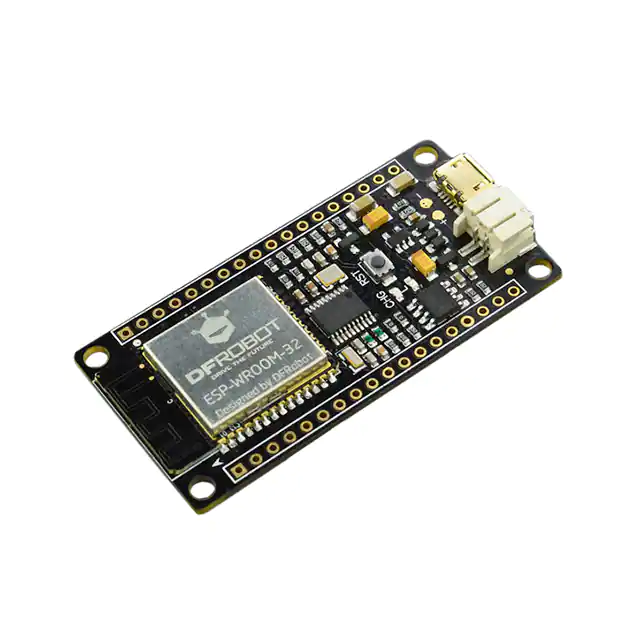
-
DFR0478
DFRobot
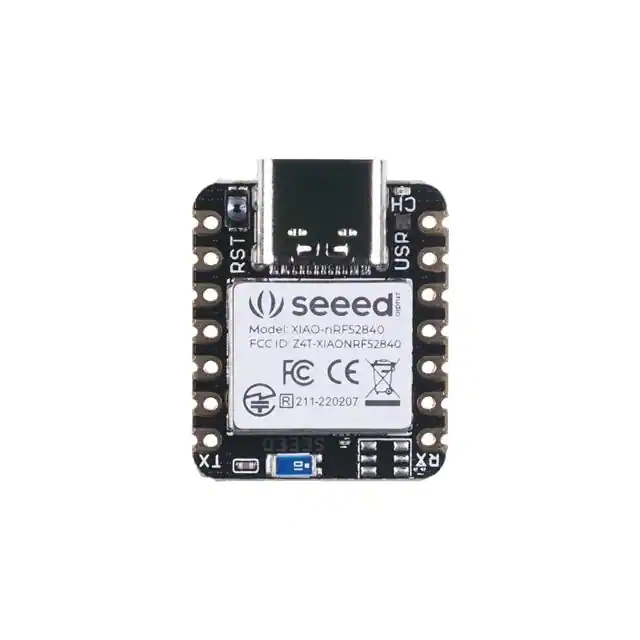
-
102010448
Seeed Technology Co., Ltd
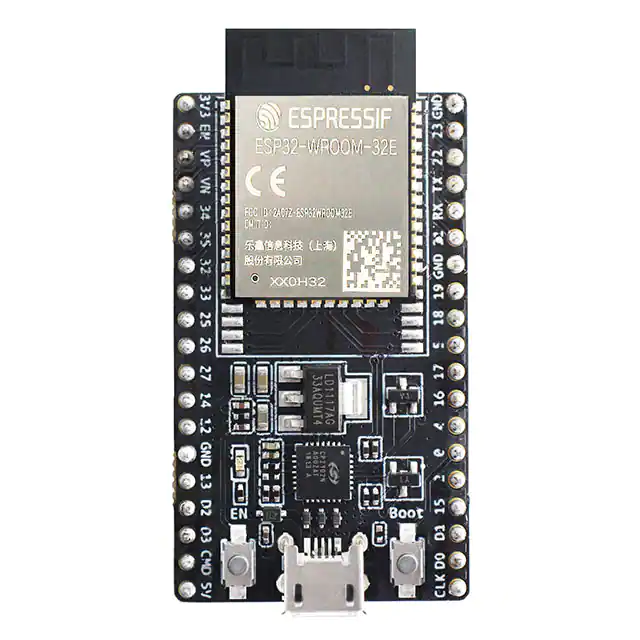
-
ESP32-DEVKITC-32E
Espressif Systems
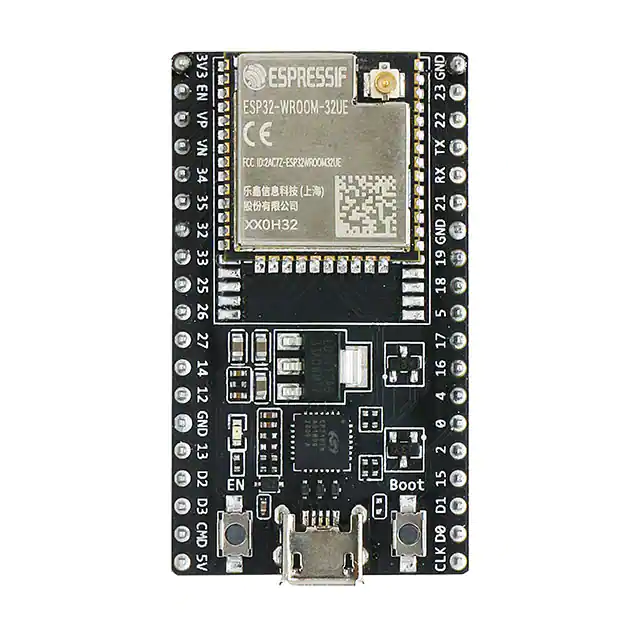
-
ESP32-DEVKITC-32UE
Espressif Systems
Tech Hub
Comparator circuit design covering voltage thresholds, input limits, open-collector outputs, LM393 wiring, op-amp differences, hysteresis, timing, window detection and practical fault diagnosis.
Schmitt triggers use separate rising and falling thresholds to stabilize slow or noisy signals. This guide covers hysteresis, 74HC14 and 74HCT14 selection, comparator calculations, RC oscillators and p…
Counterfeit components can hide behind convincing markings and passing basic function tests. This engineering reference covers source traceability, external inspection, X-ray, XRF, electrical testing, …
A practical engineering and sourcing framework covering lifecycle verification, lifetime-buy calculations, replacement qualification, supplier checks and counterfeit-risk controls.
TTL and CMOS logic families differ in thresholds, loading, output drive, power and timing. This engineering guide compares 74HC and 74HCT, calculates noise margins and checks 3.3 V/5 V compatibility.
A practical engineering guide to 3.3V and 5V logic compatibility, input thresholds, resistor dividers, translator ICs, MOSFET level shifting, I2C pull-ups, timing limits and power-sequencing risks.
The 74HC595 uses push-pull logic outputs, while the TPIC6B595 uses 50 V open-drain DMOS sinks for higher-power loads. This guide compares timing, current limits, 3.3 V interfacing, load wiring, thermal…
The 74HC595 converts serial data into eight stable parallel outputs. This guide covers pin functions, shift and storage timing, OE and MR behavior, drive-current limits, cascading, voltage compatibilit…
A technical comparison of level-sensitive latches and edge-triggered flip-flops, covering timing windows, setup and hold limits, master–slave operation, time borrowing, race-through, HDL inference and…
A D latch stores one bit while Enable controls when data can pass. This reference covers gate-level operation, truth tables, transparency, setup and hold timing, LE versus OE, common ICs and practical …