
 My Inquiry
 My Account


Broadcom Limited AFBR-710ASMZ

- Part No.:
- AFBR-710ASMZ
- Manufacturer:
- Broadcom Limited
- Category:
- Fiber Optic Transceiver Modules
- Package:
- Datasheet:
-
 AFBR-710ASMZ.pdf
- Description:
- OPTICAL TRANSCEIVER
- Quantity:
- Payment:

- Shipping:

Inventory:1,945
Please send an inquiry. Send us your inquiry, and we will respond immediately.
Product details
Overview
AFBR-710ASMZ from Broadcom (formerly Avago) is a hot-pluggable SFP+ transceiver for 10Gb Ethernet over multimode fiber, compliant with IEEE 10GBASE-SR/SW standards, featuring an 850 nm VCSEL transmitter and PIN photodiode receiver, 300 m reach on OM3 fiber, extended case temperature range of 0–85 °C, and full digital diagnostic monitoring per SFF-8472.
For engineers reviewing the AFBR-710ASMZ datasheet, pinout, applications, or equivalent options, this page delivers verified electrical interface timing, optical performance limits, real-time DDM parameters (Tx_Bias, Tx_Power, Rx_Power, temperature, Vcc), EMI-compliant mechanical design per SFF-8432, and hot-swap safety features critical for high-density data center switch/router designs.
Technical Context
The AFBR-710ASMZ implements a CML-based 10.3125 GBd serial interface with AC-coupled differential transmit (TD+/TD−) and receive (RD+/RD−) paths, integrated laser driver and post-amplifier ICs, and dual-wire serial management via SCL/SDA at up to 400 kHz. Its optical subassembly uses Avago's proprietary 850 nm VCSEL and PIN detector optimized for OM3/OM4 MMF.
Digital diagnostics are implemented across two EEPROM pages: address 0xA0 (SFF-8431 compliance) and 0xA2 (SFF-8472 DDM), enabling real-time monitoring of Tx_Bias, Tx_Power, Rx_Power, module temperature, and supply voltage - all used for Predictive Failure Identification, Compliance Prediction, and Fault Isolation without host SERDES involvement.
Key Specifications
| Parameter | Value and Actual Design Meaning |
|---|---|
| Data Rate | 10.3125 GBd - matches IEEE 10GBASE-SR line rate; enables interoperability with standard 10GbE PHYs |
| Optical Wavelength | 840–860 nm - centered on 850 nm VCSEL peak for optimal MMF coupling and modal dispersion margin |
| Link Reach | 300 m on OM3 MMF - meets IEEE 10GBASE-SR spec; requires no mode conditioning or special cabling |
| Operating Temp | 0–85 °C case temperature - supports deployment in high-heat-density switches and top-of-rack systems |
| Power Dissipation | 600 mW typical - enables thermal management in ≥48-port SFP+ line cards without forced airflow |
| Diagnostic Interface | SFF-8472 compliant two-wire (SCL/SDA) - provides host-accessible real-time Tx/Rx metrics and fault flags |
| EMI Performance | Meets FCC Class B, CISPR 22 Class B - metal housing and shielded design reduce system-level filtering requirements |
| Laser Safety | IEC 60825-1 Class 1 - built-in eye safety circuit disables transmitter if output exceeds single-fault-tolerant limit |
Pinout & Package
AFBR-710ASMZ uses the standardized 20-pin SFP+ edge connector per SFF-8431 and SFF-8432, housed in a metal-shielded, RoHS-compliant pluggable module with LC duplex optical interface. The package supports hot insertion and complies with INF-8074 mechanical specifications.
| Pin/Terminal | Circuit Role | Design Meaning |
|---|---|---|
| VeeT (Pins 1, 17, 20) | Transmitter signal ground | Provides low-inductance return path for TD+/TD−; isolated from chassis ground to suppress common-mode noise |
| TX_FAULT (Pin 2) | Open-collector fault indicator | Asserts high on catastrophic laser failure; latched until TX_DISABLE toggle or power cycle |
| TX_DISABLE (Pin 3) | LVTTL input control | High or open disables VCSEL; internal 4.7–10 kΩ pull-up ensures safe default-off state |
| SDA / SCL (Pins 4–5) | Two-wire serial data/clock | Accesses SFF-8472 DDM registers (0xA2) and SFF-8431 ID memory (0xA0); requires external pull-ups |
| RX_LOS (Pin 8) | LVTTL loss-of-signal flag | High indicates absence of valid modulated optical input; mirrored in DDM byte 110, bit 1 |
| TD+/TD− (Pins 18–19) | CML transmit input | Differential CML interface accepts 10.3125 GBd signals; internally AC-coupled and 100 Ω terminated |
| RD+/RD− (Pins 12–13) | CML receive output | Differential CML output drives host SERDES; requires external 100 Ω termination at receiver end |
| VccT / VccR (Pins 16, 15) | +3.3 V supply rails | Separate transmitter/receiver supplies; must not differ by >0.5 V to prevent damage |
Key Features
| Feature | Design Value |
|---|---|
| Predictive Failure Identification | Monitors real-time Tx_Bias and Tx_Power trends to detect early laser degradation before link errors occur |
| Compliance Prediction | Enables host to verify operating voltage, temperature, and Rx_Power against IEEE 10GBASE-SR limits pre-failure |
| Fault Isolation | Combines Tx_FAULT, RX_LOS, and DDM metrics to distinguish local transmitter, remote transmitter, or fiber plant faults |
| Hot-Pluggable EMI-Optimized Housing | SFF-8432 metal cage design achieves Class B EMI margins even in 48-port 1U switch configurations |
| Class 1 Laser Safety | Hardware-enforced shutdown on over-power events; certified to IEC 60825-1 and US FDA CDRH AEL Class 1 |
| Integrated AC Coupling & Biasing | Eliminates need for external DC-blocking caps or termination resistors on host board per SFF-8431 |
Applications
| Data Center Top-of-Rack Switch | Enterprise Core Router |
|---|---|
Use Scenario: 48-port 10GbE leaf switch connecting servers via OM3 MMF within a single rack or adjacent racks. IC Role / Device Role / Timing Role: SFP+ optical transceiver providing 10.3125 GBd serial interconnect between switch ASIC and fiber infrastructure. Use Value: 300 m OM3 reach eliminates need for costly single-mode optics; 0–85 °C operation sustains uptime during thermal stress in dense deployments. | Use Scenario: Modular core router line card aggregating traffic from access switches using multimode backbone links. IC Role / Device Role / Timing Role: Hot-pluggable 10GBASE-SR transceiver enabling non-disruptive port upgrades and field-replaceable optics. Use Value: Full SFF-8472 DDM allows centralized monitoring of link health, laser bias drift, and temperature across hundreds of ports. |
| Cloud Storage Network Interconnect | Hyperscale Server-to-Switch Link |
Use Scenario: High-throughput NVMe-over-Fabrics cluster using 10GbE for storage node interconnection over short MMF runs. IC Role / Device Role / Timing Role: Optical interface converting SERDES signals to 850 nm light for low-latency, error-resilient transport. Use Value: <0.7 UI total jitter and –7.5 dBm stressed sensitivity ensure bit-error-rate <10⁻¹² under real-world channel impairments. | Use Scenario: Direct-attach 10GbE links from server NICs to top-of-rack switches in hyperscale compute farms. IC Role / Device Role / Timing Role: Pluggable transceiver enabling flexible optics selection without redesigning motherboard layout. Use Value: SFF-8432 mechanical compliance guarantees interoperability across vendor-specific SFP+ cages and host platforms. |
Equivalent & Alternatives
The following parts are listed as comparable options for similar 10GBASE-SR SFP+ transceiver applications.
| Alternative Part | Technical Difference | Application Difference | Selection Advice |
|---|---|---|---|
| AFBR-710SMZ | Same optical specs but rated for 0–70 °C case temperature; lacks extended-temp qualification | Preferred for controlled-environment enterprise gear where ambient cooling is guaranteed | Select AFBR-710SMZ only when thermal headroom permits lower max case temp; AFBR-710ASMZ required for uncontrolled or high-power-density chassis |
| AFCT-739SMZ | 10GBASE-LR variant: 1310 nm DFB laser, 10 km SMF reach, higher power consumption (~1 W), different wavelength and dispersion tolerance | Used for campus backbone or metro links requiring single-mode fiber distance extension | Not interchangeable - AFCT-739SMZ requires SMF infrastructure and cannot operate on MMF; choose only for long-haul or hybrid fiber plant needs |
Compared with AFBR-710SMZ, the AFBR-710ASMZ adds 15 °C higher upper-case-temperature margin for thermal resilience in compact switches; compared with AFCT-739SMZ, it trades 10 km SMF reach for lower cost, lower power, and native OM3 compatibility - making it the sole fit for standardized short-reach data center MMF deployments.
Availability
AFBR-710ASMZ is available at Aetrix Electronics and suitable for data center switching, cloud storage networking, enterprise routing, and hyperscale server interconnect applications requiring stable component supply, long-term lifecycle support, and RoHS-compliant optical transceivers with full digital diagnostics.
Supply support for AFBR-710ASMZ includes scheduled delivery planning, volume procurement assistance, BOM continuity management, traceable sourcing, and lifecycle availability coordination for OEM customers, industrial embedded developers, connected-device designers, and electronics production programs.
Manufacturer
Broadcom Inc. (acquired Avago Technologies in 2016) is a global semiconductor leader specializing in wired infrastructure, optical networking, and enterprise connectivity solutions.
The AFBR-710ASMZ belongs to Avago's legacy SFP+ transceiver product line, engineered specifically for high-port-density 10GbE equipment targeting IEEE 10GBASE-SR/SW compliance, thermal robustness, and embedded digital diagnostics in carrier-grade and cloud-scale systems.
FAQ
What is the maximum supported link distance for AFBR-710ASMZ on OM4 fiber?
The AFBR-710ASMZ supports up to 400 meters on 50 µm OM4 multimode fiber, as specified in its IEEE 10GBASE-SR compliance documentation and confirmed in Table 4 of the official datasheet. This exceeds the 300 m OM3 limit and aligns with TIA-492AAAC launch condition requirements for 10GbE MMF operation.
Does AFBR-710ASMZ require external AC coupling capacitors on the host board?
No, the AFBR-710ASMZ integrates AC coupling capacitors and termination resistors per SFF-8431 specification, eliminating the need for external components on the TD+/TD− and RD+/RD− signal paths. Host board design must only provide proper CML impedance control and power filtering as shown in Figure 3 of the datasheet.
How does the digital diagnostic monitoring (DDM) in AFBR-710ASMZ support predictive maintenance?
The AFBR-710ASMZ implements SFF-8472 DDM to expose real-time values for Tx_Bias current, Tx_Optical_Power, Rx_Optical_Power, module temperature, and supply voltage. By trending these parameters - especially rising Tx_Bias with stable Tx_Power - system firmware can predict laser end-of-life before BER degradation occurs, enabling proactive replacement.
Is AFBR-710ASMZ compatible with SFP cages designed for older SFP modules?
Yes, the AFBR-710ASMZ complies with SFF-8432 Improved Pluggable Formfactor (IPF) and is mechanically compatible with INF-8074 and SFF-8431/2 compliant SFP cages. However, electrical interoperability requires host board support for SFP+ signaling levels and control logic - legacy SFP-only hosts will not recognize or power the AFBR-710ASMZ.
What safety certifications apply to AFBR-710ASMZ?
The AFBR-710ASMZ is certified Class 1 Laser Product per IEC 60825-1 and US FDA 21 CFR Part 1040.10/1040.11 (CDRH), with certification numbers CDRH 9720151-128 and TÜV file R 72121699. It also meets RoHS Directive 2002/95/EC and UL Component Recognition E173874 for IT equipment safety.
AFBR-710ASMZ Specifications
- Product attributes
- Attribute value
- Manufacturer:
- Broadcom Limited
- Series:
- -
- Packaging:
- Tray
- Product Status:
- Obsolete
- Data Rate:
- -
- Wavelength:
- -
- Applications:
- -
- Voltage - Supply:
- -
- Connector Type:
- -
- Mounting Type:
- -
AFBR-710ASMZ FAQ
1.How can I place an order for AFBR-710ASMZ through Aetrix?
Please submit a Request for Quotation (RFQ) for AFBR-710ASMZ on Aetrix. Our sales agent will provide a competitive quotation and guide you through the order confirmation once you accept the terms.
2.Are the price and stock information for AFBR-710ASMZ reliable?
The price and inventory of AFBR-710ASMZ are updated periodically and may fluctuate due to market conditions. Stock and pricing data are typically refreshed every 24 hours. Quotation validity for AFBR-710ASMZ is usually 5 days.
3.What payment methods are accepted for AFBR-710ASMZ?
We accept Wire Transfer, PayPal, Credit Card, Western Union, MoneyGram, and Escrow for AFBR-710ASMZ transactions.
Note: Certain payment methods may incur a processing fee.
4.How is shipping managed for AFBR-710ASMZ?
AFBR-710ASMZ orders can be shipped via leading logistics carriers, including DHL, UPS, FedEx, TNT, or Registered Mail.
Once your AFBR-710ASMZ order is processed, you will receive an email with the shipment details and tracking number.
Note: Tracking information may take up to 24 hours to appear. Express delivery typically takes 3–5 business days.
5.How can I obtain technical support or documentation for AFBR-710ASMZ?
For technical support, including AFBR-710ASMZ datasheets, pinout diagrams, or application guidance, please contact our engineering support team. They can provide detailed documentation and assistance for your AFBR-710ASMZ requirements.
6.How does Aetrix verify that AFBR-710ASMZ is sourced from the original manufacturer or authorized distributors?
All AFBR-710ASMZ products on Aetrix are procured from qualified distributors and authorized channels. Our dedicated quality assurance team conducts strict verification, including traceability checks and, if necessary, third-party testing. This ensures that AFBR-710ASMZ meets industry standards.
7.What is the process for return or replacement of AFBR-710ASMZ?
All AFBR-710ASMZ units undergo pre-shipment inspection (PSI). If there is an issue with AFBR-710ASMZ, returns or replacements are accepted under the following conditions:
1.Quantity discrepancies, incorrect items, or visible external defects (such as breakage or corrosion), acknowledged by Aetrix.
2.The issue is reported within 90 days of delivery.
3.The AFBR-710ASMZ part is unused and in its original packaging.
Return procedure for AFBR-710ASMZ:
1.Submit a request within 90 days.
2.Obtain a Return Material Authorization (RMA) from Aetrix.
AFBR-710ASMZ Tags
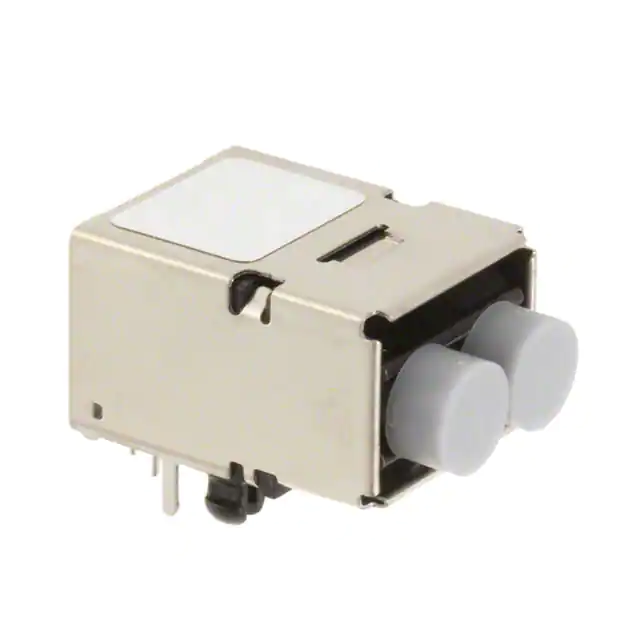
-
AFBR-5972EZ
Broadcom Limited
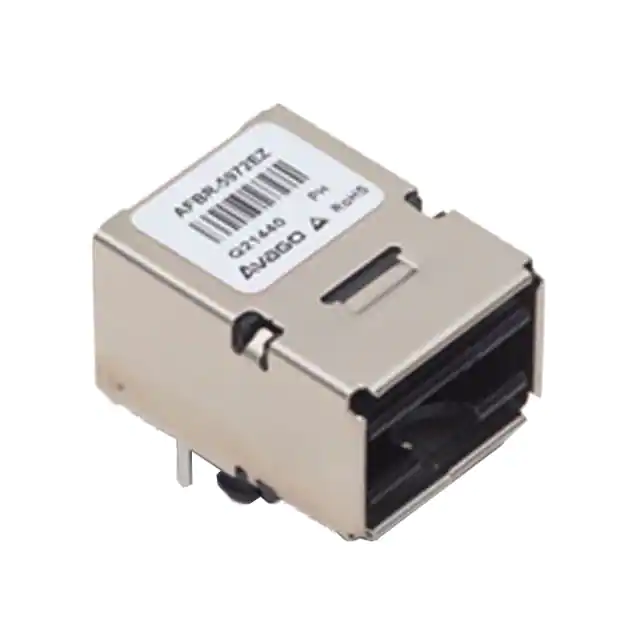
-
AFBR-5972BZ
Broadcom Limited
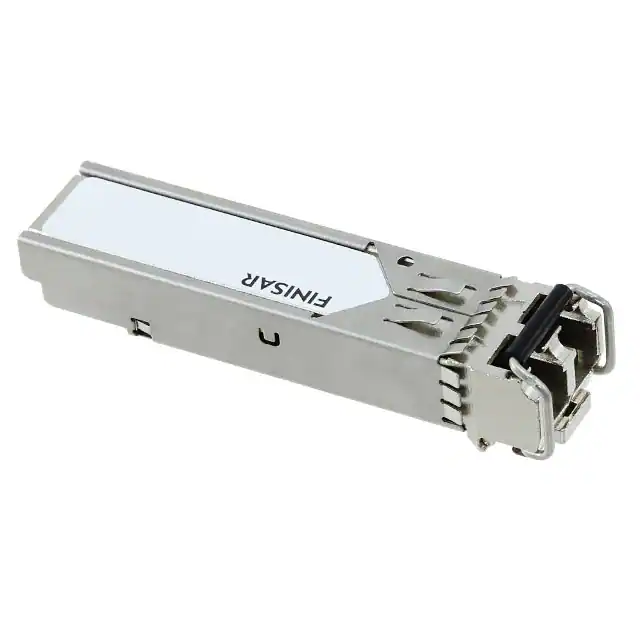
-
FTLF8519P3BNL
Coherent
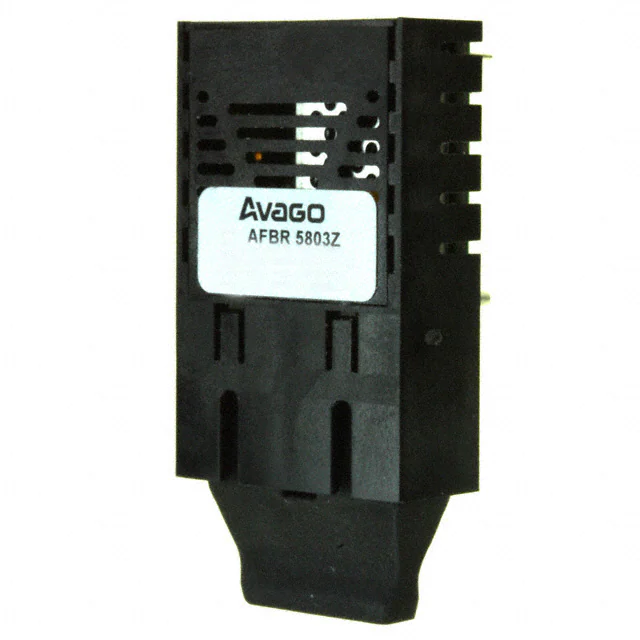
-
AFBR-5803Z
Broadcom Limited
-
AFBR-5803TZ
Broadcom Limited
-
FTLF8519P3BTL
Coherent
-
AFBR-5803ATZ
Broadcom Limited
-
AFBR-5803ATQZ
Broadcom Limited
-
FTLX8574D3BCV
Coherent
-
FTLF8526P3BNL
Coherent
-
FTLF8519F2GCL
Coherent
-
FTLF1318P3BTL
Coherent
Tech Hub
An engineering guide to open-collector, open-drain and push-pull outputs, including pull-up resistor limits, rise-time calculations, wired logic, voltage translation and power-off checks.

Comparator circuit design covering voltage thresholds, input limits, open-collector outputs, LM393 wiring, op-amp differences, hysteresis, timing, window detection and practical fault diagnosis.
Schmitt triggers use separate rising and falling thresholds to stabilize slow or noisy signals. This guide covers hysteresis, 74HC14 and 74HCT14 selection, comparator calculations, RC oscillators and p…
Counterfeit components can hide behind convincing markings and passing basic function tests. This engineering reference covers source traceability, external inspection, X-ray, XRF, electrical testing, …

A practical engineering and sourcing framework covering lifecycle verification, lifetime-buy calculations, replacement qualification, supplier checks and counterfeit-risk controls.

TTL and CMOS logic families differ in thresholds, loading, output drive, power and timing. This engineering guide compares 74HC and 74HCT, calculates noise margins and checks 3.3 V/5 V compatibility.

A practical engineering guide to 3.3V and 5V logic compatibility, input thresholds, resistor dividers, translator ICs, MOSFET level shifting, I2C pull-ups, timing limits and power-sequencing risks.

The 74HC595 uses push-pull logic outputs, while the TPIC6B595 uses 50 V open-drain DMOS sinks for higher-power loads. This guide compares timing, current limits, 3.3 V interfacing, load wiring, thermal…

The 74HC595 converts serial data into eight stable parallel outputs. This guide covers pin functions, shift and storage timing, OE and MR behavior, drive-current limits, cascading, voltage compatibilit…

A technical comparison of level-sensitive latches and edge-triggered flip-flops, covering timing windows, setup and hold limits, master–slave operation, time borrowing, race-through, HDL inference and…


