Broadcom Limited AFBR-710SMZ
- Part No.:
- AFBR-710SMZ
- Manufacturer:
- Broadcom Limited
- Category:
- Fiber Optic Transceiver Modules
- Package:
- Datasheet:
-
AFBR-710SMZ.pdf
- Description:
- OPTICAL TRANSCEIVER
- Quantity:
- Payment:

- Shipping:

Inventory:2,099
Please send an inquiry. Send us your inquiry, and we will respond immediately.
Product details
Overview
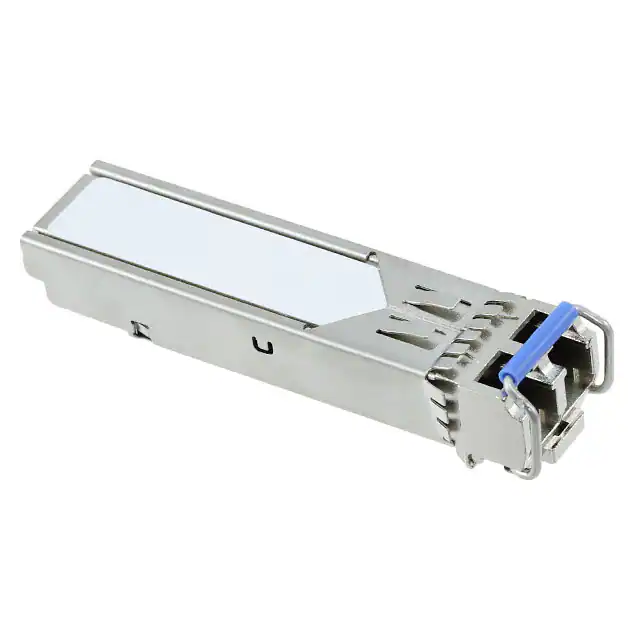
AFBR-710SMZ from Broadcom is a hot-pluggable SFP+ transceiver implementing 10GBASE-SR/SW compliance over multimode fiber using an 850 nm VCSEL transmitter and PIN photodiode receiver. It delivers 10.3125 Gb/s data rate, supports 300 m reach on OM3 MMF, operates at 0°C to 70°C case temperature, and features full digital diagnostics per SFF-8472 for real-time monitoring of Tx_Bias, Tx_Power, Rx_Power, Vcc, and temperature - enabling predictive failure identification in high-density Ethernet switches.
For engineers reviewing the AFBR-710SMZ datasheet, pinout, applications, or equivalent options, this page provides verified electrical interface timing, optical eye mask compliance, SFF-8431/8472 diagnostic register mapping, ESD immunity (25 kV air discharge to LC receptacle), and Class 1 laser safety certification - all critical for 10GbE switch/router design, thermal validation, and field-replaceable module qualification.
Technical Context
The AFBR-710SMZ integrates Broadcom's proprietary TOSA (850 nm VCSEL) and ROSA (PIN detector + transimpedance amplifier) into a shielded SFP+ housing compliant with SFF-8432. Its CML-based high-speed interface (TD±/RD±) includes internal AC coupling and 100 Ω differential termination, eliminating host board capacitors and bias resistors per SFF-8431.
Digital diagnostics operate via a two-wire I²C interface (SDA/SCL) accessing EEPROM pages at addresses 0xA0 (SFF-8431 serial ID) and 0xA2 (SFF-8472 real-time monitoring), supporting Predictive Failure Identification through Tx_Bias and Tx_Power trend analysis, Compliance Prediction via Vcc and temperature telemetry, and Fault Isolation using TX_FAULT, RX_LOS, and mirrored status flags.
Key Specifications
| Parameter | Value and Actual Design Meaning |
|---|---|
| Data Rate | 10.3125 GBd - matches IEEE 802.3ae 10GBASE-SR line rate with precise clock recovery tolerance |
| Optical Wavelength | 840–860 nm - ensures compatibility with OM3/OM4 multimode fiber modal bandwidth and dispersion limits |
| Link Reach | 300 m on 50 μm OM3 MMF - meets IEEE 10GBASE-SR minimum distance without repeaters |
| Power Dissipation | 600 mW typical - enables thermal management in ≥48-port 1U switch chassis with <10°C ambient rise per module |
| Supply Voltage | 3.135–3.465 V - tight 3.3 V tolerance prevents latch-up during hot-swap insertion transients |
| Diagnostic Interface | SFF-8472 compliant I²C - provides standardized access to real-time Tx/Rx metrics and fault flags for host firmware integration |
| Laser Safety | IEC 60825-1 Class 1 - single-fault-tolerant eye safety circuit disables transmitter if output exceeds –1.0 dBm mean power |
Pinout & Package
AFBR-710SMZ uses a standard 20-pin SFP+ edge connector per SFF-8431/8432, housed in a metal-shielded, RoHS-compliant, UL 94V-0 plastic package measuring 13.4 mm × 8.5 mm × 56.5 mm (L×W×H). The module is hot-pluggable and ESD-hardened for direct insertion into live SFP+ cages.
| Pin/Terminal | Circuit Role | Design Meaning |
|---|---|---|
| 3, TX_DISABLE | LVTTL input control | Hardware disable signal with internal 4.7–10 kΩ pull-up to VccT; asserted high shuts down VCSEL and clears TX_FAULT when toggled |
| 2, TX_FAULT | Open-collector fault flag | Active-high LVTTL output indicating catastrophic laser failure; requires external 4.7–10 kΩ pull-up to VccHost |
| 8, RS_LOS | LVTTL output status | Receiver Loss of Signal indicator - high = no valid optical input; mirrored in SFF-8472 register A2h byte 110 bit 1 |
| 4–5, SDA/SCL | I²C bidirectional bus | Two-wire serial interface accessing SFF-8431 ID (0xA0) and SFF-8472 diagnostics (0xA2); requires host-side pull-ups |
| 12–13, RD−/RD+ | CML receiver outputs | Differential CML signals with internal 100 Ω termination - directly interface to SERDES without external AC coupling |
| 18–19, TD+/TD− | CML transmitter inputs | Differential CML inputs with internal AC coupling - accept 180–700 mVpp swing; no host termination required |
Key Features
| Feature | Design Value |
|---|---|
| VCSEL + PIN Optical Subassembly | Broadcom-manufactured 850 nm VCSEL and custom ROSA deliver stable OMA (–4.3 dBm min) and sensitivity (–11.1 dBm) across 0–70°C |
| Digital Diagnostic Monitoring | Real-time access to Tx_Bias, Tx_Power, Rx_Power, Vcc, and temperature via SFF-8472 registers enables predictive maintenance and link health analytics |
| EMI-Optimized Shielding | Metal housing and SFF-8432-compliant design achieves >6 dB margin to FCC Class B limits in 48-port 1U switch configurations |
| Hot-Pluggable Mechanical Design | SFF-8432 housing with staggered pin lengths ensures ESD-safe first-contact grounding before signal engagement during live insertion |
| Class 1 Laser Safety | Integrated eye safety circuit continuously monitors optical output and disables transmitter within microseconds if mean power exceeds –1.0 dBm |
Applications
| Data Center Top-of-Rack Switch | Enterprise Core Router |
|---|---|
Use Scenario: 48-port 10GbE ToR switch connecting servers via OM3 MMF within 300 m rack-to-rack distances. IC Role / Device Role / Timing Role: SFP+ pluggable transceiver providing 10.3125 Gb/s serial optical interface with CML I/O and embedded diagnostics. Use Value: Enables high port density with 600 mW power envelope and EMI shielding that meets FCC Class B without additional chassis filtering. | Use Scenario: Modular core router line card supporting mixed 1G/10G uplinks to aggregation switches over OM4 fiber. IC Role / Device Role / Timing Role: Hot-swappable 10GBASE-SR/SW transceiver with SFF-8472 diagnostics for remote link health monitoring and failover triggering. Use Value: Predictive failure identification via Tx_Bias trend analysis reduces unplanned downtime by enabling proactive replacement before link degradation. |
| Cloud Infrastructure Spine Switch | Industrial Ethernet Backbone |
Use Scenario: High-throughput spine switch interconnecting leaf nodes in hyperscale data centers using OM3 cabling. IC Role / Device Role / Timing Role: SFP+ optical transceiver delivering IEEE 802.3ae-compliant 10GBASE-SR performance with deterministic latency and jitter <0.70 UIp-p. Use Value: Stressed eye compliance (3.5 dB vertical eye closure penalty) ensures robust operation under marginal signal integrity conditions in long backplane traces. | Use Scenario: Ruggedized industrial switch deployed in factory automation networks with ambient temperatures up to 70°C. IC Role / Device Role / Timing Role: Temperature-monitored SFP+ transceiver operating at 0–70°C case range with Class 1 laser safety for personnel protection in uncontrolled environments. Use Value: Real-time temperature telemetry via SFF-8472 allows host firmware to throttle traffic or trigger alarms before thermal derating affects BER performance. |
Equivalent & Alternatives
The following parts are listed as comparable options for similar 10GbE SFP+ transceiver applications.
| Alternative Part | Technical Difference | Application Difference | Selection Advice |
|---|---|---|---|
| AFBR-710ASMZ | Same optical specs but rated for 0°C to 85°C case temperature; higher thermal headroom for fanless or high-ambient deployments | Required for extended-temperature industrial or outdoor enclosures where ambient exceeds 70°C | Select AFBR-710ASMZ when system-level thermal modeling shows case temperature exceeding 70°C under worst-case airflow |
| AFCT-739SMZ | 10GBASE-LR variant using 1310 nm DFB laser for 10 km SMF reach; different wavelength, higher power budget (+0.5 dBm OMA), and distinct eye mask | Used for metro or campus backbone links requiring single-mode fiber transmission beyond 300 m | Choose AFCT-739SMZ only when fiber plant is single-mode and distance exceeds 400 m - not interchangeable with AFBR-710SMZ due to wavelength and fiber type mismatch |
Compared with AFBR-710ASMZ and AFCT-739SMZ, the AFBR-710SMZ offers optimal cost-performance for standard data center OM3/OM4 deployments at 0–70°C, while its diagnostic depth and EMI margin provide measurable advantages in dense switch fabric designs over alternatives lacking SFF-8472 real-time monitoring or SFF-8432 shielding compliance.
Availability
AFBR-710SMZ is available at Aetrix Electronics and suitable for data center switching, enterprise routing, cloud infrastructure spine-layer interconnects, and industrial Ethernet backbone systems requiring stable component supply, full regulatory compliance, and field-proven interoperability with major switch platforms.
Supply support for AFBR-710SMZ includes scheduled delivery planning, volume procurement assistance, BOM continuity management, traceable sourcing, and lifecycle availability coordination for OEM customers, industrial embedded developers, connected-device designers, and electronics production programs.
Manufacturer
Broadcom Inc. is a global semiconductor leader specializing in wired infrastructure, wireless communications, and enterprise software solutions, with deep expertise in optical interconnect ICs and modules.
The AFBR-710SMZ belongs to Broadcom's SFP+ transceiver product line, engineered specifically for high-density, low-power 10GbE equipment in cloud-scale data centers and carrier-grade networking gear.
FAQ
What is the maximum supported link distance for AFBR-710SMZ on OM4 multimode fiber?
The AFBR-710SMZ supports up to 400 meters on 50 μm OM4 multimode fiber at 10.3125 GBd, as specified in IEEE 802.3ae 10GBASE-SR and confirmed in the AV02-3399EN datasheet Table 8. This exceeds the 300 m OM3 limit and aligns with TIA-492AAAC launch condition requirements for guaranteed error-free operation.
Does AFBR-710SMZ require external AC coupling capacitors on the host board?
No, the AFBR-710SMZ does not require external AC coupling capacitors on the host board. As stated in the datasheet Section "Functional Data I/O", the module incorporates internal AC coupling for both TD± and RD± CML interfaces per SFF-8431, simplifying host PCB layout and reducing bill-of-materials cost.
How is laser eye safety implemented in AFBR-710SMZ?
The AFBR-710SMZ implements Class 1 eye safety per IEC 60825-1 through an integrated safety circuit that continuously monitors optical output power. If mean transmit power exceeds –1.0 dBm (the Class 1 limit), the circuit disables the VCSEL within microseconds. Certification documentation includes CDRH #9720151-197 and TUV file #R 50394970.
Can AFBR-710SMZ be used in systems requiring SFF-8472 digital diagnostics?
Yes, the AFBR-710SMZ fully supports SFF-8472 digital diagnostics via its two-wire I²C interface (SDA/SCL pins 4–5), providing real-time access to Tx_Bias, Tx_Power, Rx_Power, Vcc, and temperature at memory address 0xA2. All diagnostic registers and alarm/warning thresholds comply with SFF-8472 Rev 12.3.
What is the absolute maximum supply voltage rating for AFBR-710SMZ?
The absolute maximum supply voltage for both VccT and VccR pins of the AFBR-710SMZ is 3.8 V, as defined in Table 3 of the AV02-3399EN datasheet. Exceeding this voltage - even briefly - risks immediate catastrophic damage. The recommended operating range remains tightly controlled at 3.135–3.465 V to ensure reliable hot-swap behavior and laser driver stability.
AFBR-710SMZ Specifications
- Product attributes
- Attribute value
- Manufacturer:
- Broadcom Limited
- Series:
- -
- Packaging:
- Tray
- Product Status:
- Obsolete
- Data Rate:
- -
- Wavelength:
- -
- Applications:
- -
- Voltage - Supply:
- -
- Connector Type:
- -
- Mounting Type:
- -
AFBR-710SMZ FAQ
1.How can I place an order for AFBR-710SMZ through Aetrix?
Please submit a Request for Quotation (RFQ) for AFBR-710SMZ on Aetrix. Our sales agent will provide a competitive quotation and guide you through the order confirmation once you accept the terms.
2.Are the price and stock information for AFBR-710SMZ reliable?
The price and inventory of AFBR-710SMZ are updated periodically and may fluctuate due to market conditions. Stock and pricing data are typically refreshed every 24 hours. Quotation validity for AFBR-710SMZ is usually 5 days.
3.What payment methods are accepted for AFBR-710SMZ?
We accept Wire Transfer, PayPal, Credit Card, Western Union, MoneyGram, and Escrow for AFBR-710SMZ transactions.
Note: Certain payment methods may incur a processing fee.
4.How is shipping managed for AFBR-710SMZ?
AFBR-710SMZ orders can be shipped via leading logistics carriers, including DHL, UPS, FedEx, TNT, or Registered Mail.
Once your AFBR-710SMZ order is processed, you will receive an email with the shipment details and tracking number.
Note: Tracking information may take up to 24 hours to appear. Express delivery typically takes 3–5 business days.
5.How can I obtain technical support or documentation for AFBR-710SMZ?
For technical support, including AFBR-710SMZ datasheets, pinout diagrams, or application guidance, please contact our engineering support team. They can provide detailed documentation and assistance for your AFBR-710SMZ requirements.
6.How does Aetrix verify that AFBR-710SMZ is sourced from the original manufacturer or authorized distributors?
All AFBR-710SMZ products on Aetrix are procured from qualified distributors and authorized channels. Our dedicated quality assurance team conducts strict verification, including traceability checks and, if necessary, third-party testing. This ensures that AFBR-710SMZ meets industry standards.
7.What is the process for return or replacement of AFBR-710SMZ?
All AFBR-710SMZ units undergo pre-shipment inspection (PSI). If there is an issue with AFBR-710SMZ, returns or replacements are accepted under the following conditions:
1.Quantity discrepancies, incorrect items, or visible external defects (such as breakage or corrosion), acknowledged by Aetrix.
2.The issue is reported within 90 days of delivery.
3.The AFBR-710SMZ part is unused and in its original packaging.
Return procedure for AFBR-710SMZ:
1.Submit a request within 90 days.
2.Obtain a Return Material Authorization (RMA) from Aetrix.
AFBR-710SMZ Tags
-
AFBR-5972EZ
Broadcom Limited
-
AFBR-5972BZ
Broadcom Limited
-
FTLF8519P3BNL
Coherent
-
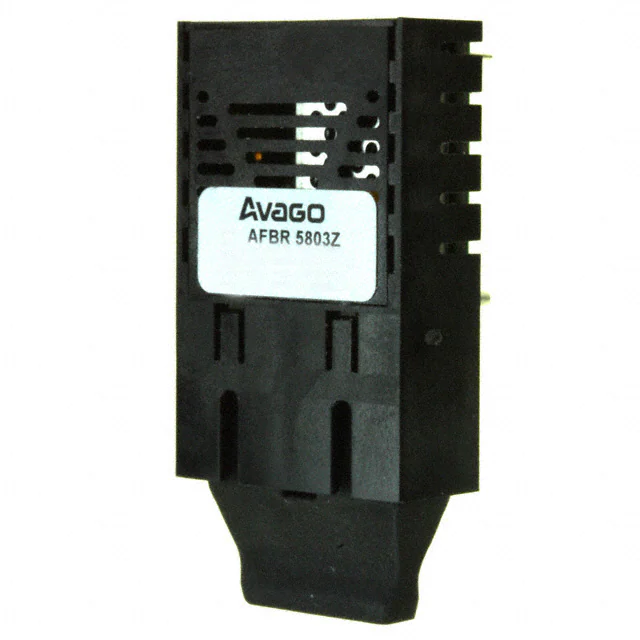
AFBR-5803Z
Broadcom Limited
-
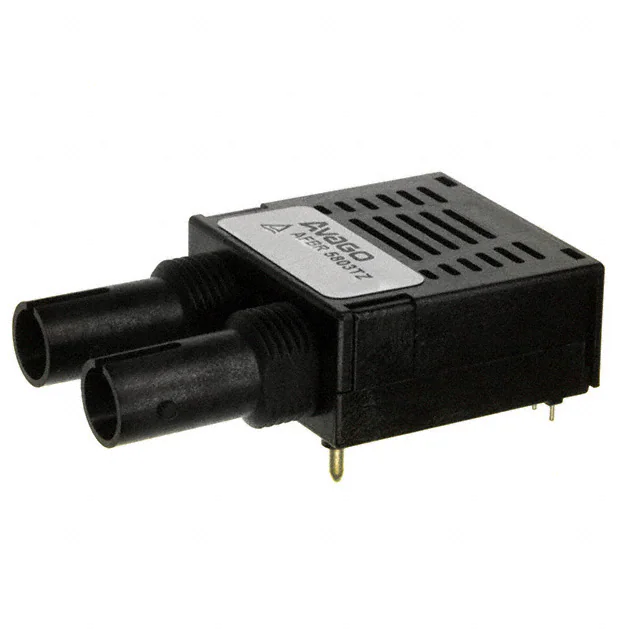
AFBR-5803TZ
Broadcom Limited
-
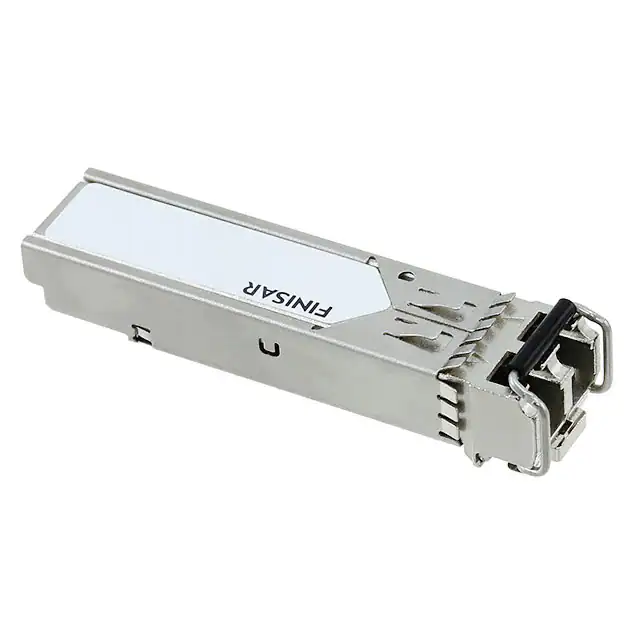
FTLF8519P3BTL
Coherent
-
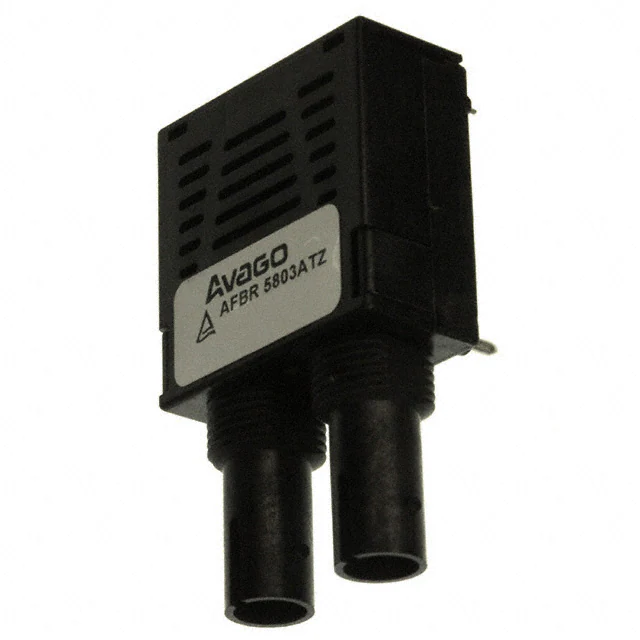
AFBR-5803ATZ
Broadcom Limited
-
AFBR-5803ATQZ
Broadcom Limited
-
FTLX8574D3BCV
Coherent
-
FTLF8526P3BNL
Coherent
-
FTLF8519F2GCL
Coherent
-
FTLF1318P3BTL
Coherent
Tech Hub
Comparator circuit design covering voltage thresholds, input limits, open-collector outputs, LM393 wiring, op-amp differences, hysteresis, timing, window detection and practical fault diagnosis.
Schmitt triggers use separate rising and falling thresholds to stabilize slow or noisy signals. This guide covers hysteresis, 74HC14 and 74HCT14 selection, comparator calculations, RC oscillators and p…
Counterfeit components can hide behind convincing markings and passing basic function tests. This engineering reference covers source traceability, external inspection, X-ray, XRF, electrical testing, …
A practical engineering and sourcing framework covering lifecycle verification, lifetime-buy calculations, replacement qualification, supplier checks and counterfeit-risk controls.
TTL and CMOS logic families differ in thresholds, loading, output drive, power and timing. This engineering guide compares 74HC and 74HCT, calculates noise margins and checks 3.3 V/5 V compatibility.
A practical engineering guide to 3.3V and 5V logic compatibility, input thresholds, resistor dividers, translator ICs, MOSFET level shifting, I2C pull-ups, timing limits and power-sequencing risks.
The 74HC595 uses push-pull logic outputs, while the TPIC6B595 uses 50 V open-drain DMOS sinks for higher-power loads. This guide compares timing, current limits, 3.3 V interfacing, load wiring, thermal…
The 74HC595 converts serial data into eight stable parallel outputs. This guide covers pin functions, shift and storage timing, OE and MR behavior, drive-current limits, cascading, voltage compatibilit…
A technical comparison of level-sensitive latches and edge-triggered flip-flops, covering timing windows, setup and hold limits, master–slave operation, time borrowing, race-through, HDL inference and…
A D latch stores one bit while Enable controls when data can pass. This reference covers gate-level operation, truth tables, transparency, setup and hold timing, LE versus OE, common ICs and practical …