Silicon Labs AMW004-E02
- Part No.:
- AMW004-E02
- Manufacturer:
- Silicon Labs
- Category:
- RF, RFID, Wireless Evaluation Boards
- Package:
- Datasheet:
-
AMW004-E02.pdf
- Description:
- MARLIN BRD W/ AMW004-A01 HORNET
- Quantity:
- Payment:

- Shipping:

Inventory:1,586
Please send an inquiry. Send us your inquiry, and we will respond immediately.
Product details
Overview
AMW004-E02 from ACKme Networks is a revision 2 evaluation board for the AMW004 'Wallaby' WICED-based Wi-Fi module, featuring dual 10-pin expansion headers, USB-UART interface, two user LEDs, two user buttons, reset control, and on-board power regulation from USB. It supports WiConnect firmware with embedded TCP/IP, TLS/SSL, HTTP(S), UDP/TCP client functionality, and GPIO control for rapid prototyping of embedded Wi-Fi applications.
For engineers reviewing the AMW004-E02 datasheet, AMW004-E02 pinout, AMW004-E02 application, or AMW004-E02 equivalent, this page delivers verified hardware interface details, expansion header signal mapping, GPIO-to-header assignments, USB serial configuration, and real-world use context for integration into IoT sensor nodes, smart home gateways, and industrial wireless edge devices.
Technical Context
The AMW004-E02 implements a pluggable evaluation architecture comprising the AAE001 bare evaluation board and the AMW004-A01 'Hornet' through-hole module adapter. It provides direct access to 20 GPIOs from the AMW004 module via two 10-pin headers (Header 1 and Header 2), with pin 1–10 and 11–20 mapped to VDD_3V3, USART1_TX/RX, I2C0_SDA/SCL, SPI_SCK/MOSI/MISO/CS, RESET_N, WAKE, USART1_RTS/CTS, and GND.
All expansion header pins are electrically buffered or resistor-limited per design: GPIO_28 connects to Header 2 Pin 1 via 220Ω resistor; WAKE signal appears on Header 1 Pin 6; and Button 1 is physically wired to Header 1 Pin 8 despite silkscreen mislabeling. No debug or SWD programming interface is included - it is strictly an evaluation and application interface platform.
Key Specifications
| Parameter | Value and Actual Design Meaning |
|---|---|
| Board Type | Evaluation board for AMW004 'Wallaby' Wi-Fi module, Revision 2 |
| Interface | USB Mini-B connector providing 5 V input and USB-UART bridge to host PC |
| Expansion Headers | Two 10-pin male headers (2×10), supporting GPIO, UART, I2C, SPI, RESET_N, WAKE, and GND |
| Power Supply | USB-powered only; onboard 3.3 V LDO regulates VDD_3V3 for AMW004 module |
| User I/O | 2 pushbuttons (BUTTON_1/BUTTON_2), 2 LEDs (LED_1/LED_2), dedicated reset button for AMW004 only |
| Firmware Support | Preloaded WiConnect v1.1.0.5 with TCP/IP stack, TLS 1.2, HTTP(S)/UDP/TCP clients, filesystem, and CLI |
Availability
AMW004-E02 is available at Aetrix Electronics and suitable for IoT gateway validation, embedded Wi-Fi sensor node development, and industrial wireless connectivity testing requiring stable component supply, full documentation access, and long-term evaluation board continuity.
Supply support for AMW004-E02 includes scheduled delivery planning, volume procurement assistance, BOM continuity management, traceable sourcing, and lifecycle availability coordination for OEM customers, industrial embedded developers, connected-device designers, and electronics production programs.
Manufacturer
ACKme Networks was a U.S.-based developer of embedded Wi-Fi modules and firmware platforms, specializing in turnkey serial Wi-Fi solutions for resource-constrained microcontroller systems before discontinuing operations.
The AMW004-E02 belongs to ACKme's 'Marlin' evaluation series designed specifically to accelerate development with the AMW004 'Wallaby' module by exposing all key interfaces - UART, SPI, I2C, GPIO, and reset - in a USB-powered, breadboard-friendly form factor.
FAQ
What is the AMW004-E02 used for?
The AMW004-E02 is a dedicated evaluation board for the AMW004 'Wallaby' Wi-Fi module, enabling rapid prototyping of serial Wi-Fi applications using ACKme's WiConnect firmware. It provides physical access to all critical module signals - including UART, SPI, I2C, GPIOs, and reset - via dual 10-pin headers, along with USB power and serial communication. Engineers use the AMW004-E02 to validate network connectivity, test TLS-secured HTTP clients, configure GPIO peripherals, and integrate Wi-Fi into MCU-based systems without designing custom carrier hardware.
Does the AMW004-E02 include a debugger or JTAG interface?
No, the AMW004-E02 does not include a debugger, JTAG, or SWD interface. It is strictly an application and interface evaluation platform - not a programming or debug tool. Firmware updates and low-level development for the underlying AMW004 module require the separate AMW004-E01 'Snapper' WICED evaluation board, which provides full Broadcom WICED SDK support, debug headers, and program capability. The AMW004-E02 relies entirely on WiConnect's serial command-line interface for configuration and operation.
How are GPIOs mapped on the AMW004-E02 expansion headers?
GPIO mapping on the AMW004-E02 is defined in Table 3 of the official Evaluation Guide: Header 1 Pin 6 carries WAKE, Header 1 Pin 8 is BUTTON_1 (despite silkscreen error), and Header 2 Pin 1 connects to GPIO_28 via a 220Ω resistor. Full mapping includes USART1_TX/RX on Pins 2/3, I2C0_SDA/SCL on Pins 2/3 (Header 2), SPI signals across Pins 4–5 and 10–11, and RESET_N on Pin 5 of both headers. All mappings are validated against the AMW004-A01 'Hornet' adapter schematic and confirmed in the February 2015 revision of ARG-MW004E-105R.
Can the AMW004-E02 be used with standard breadboards?
Yes, the AMW004-E02 is designed for breadboard compatibility: its dual 10-pin male headers (2.54 mm pitch) align with standard breadboard rows, and the board's compact footprint allows direct insertion or use with jumper wires. The pluggable architecture - combining the AAE001 base board and AMW004-A01 'Hornet' adapter - maintains mechanical stability while enabling easy module replacement. This layout supports iterative hardware testing of Wi-Fi peripheral connections, sensor interfacing, and power profiling without soldering or custom PCBs.
Is the AMW004-E02 still supported or available from ACKme Networks?
No - ACKme Networks ceased operations and discontinued all product lines, including the AMW004-E02, after 2015. However, Aetrix Electronics maintains legacy inventory and technical documentation for the AMW004-E02 to support ongoing maintenance, repair, and requalification of deployed systems. Full schematics, firmware binaries, and the original ARG-MW004E-105R Evaluation Guide remain accessible through Aetrix's engineering support portal for customers integrating or sustaining designs based on the AMW004-E02.
AMW004-E02 Specifications
- Product attributes
- Attribute value
- Manufacturer:
- Silicon Labs
- Series:
- Hornet, Marlin
- Packaging:
- Box
- Product Status:
- Obsolete
- Type:
- Transceiver; 802.11 b/g/n (Wi-Fi, WiFi, WLAN)
- Frequency:
- 2.4GHz
- Contents:
- Board(s)
- Utilized IC / Part:
- AMW004-A01
AMW004-E02 FAQ
1.How can I place an order for AMW004-E02 through Aetrix?
Please submit a Request for Quotation (RFQ) for AMW004-E02 on Aetrix. Our sales agent will provide a competitive quotation and guide you through the order confirmation once you accept the terms.
2.Are the price and stock information for AMW004-E02 reliable?
The price and inventory of AMW004-E02 are updated periodically and may fluctuate due to market conditions. Stock and pricing data are typically refreshed every 24 hours. Quotation validity for AMW004-E02 is usually 5 days.
3.What payment methods are accepted for AMW004-E02?
We accept Wire Transfer, PayPal, Credit Card, Western Union, MoneyGram, and Escrow for AMW004-E02 transactions.
Note: Certain payment methods may incur a processing fee.
4.How is shipping managed for AMW004-E02?
AMW004-E02 orders can be shipped via leading logistics carriers, including DHL, UPS, FedEx, TNT, or Registered Mail.
Once your AMW004-E02 order is processed, you will receive an email with the shipment details and tracking number.
Note: Tracking information may take up to 24 hours to appear. Express delivery typically takes 3–5 business days.
5.How can I obtain technical support or documentation for AMW004-E02?
For technical support, including AMW004-E02 datasheets, pinout diagrams, or application guidance, please contact our engineering support team. They can provide detailed documentation and assistance for your AMW004-E02 requirements.
6.How does Aetrix verify that AMW004-E02 is sourced from the original manufacturer or authorized distributors?
All AMW004-E02 products on Aetrix are procured from qualified distributors and authorized channels. Our dedicated quality assurance team conducts strict verification, including traceability checks and, if necessary, third-party testing. This ensures that AMW004-E02 meets industry standards.
7.What is the process for return or replacement of AMW004-E02?
All AMW004-E02 units undergo pre-shipment inspection (PSI). If there is an issue with AMW004-E02, returns or replacements are accepted under the following conditions:
1.Quantity discrepancies, incorrect items, or visible external defects (such as breakage or corrosion), acknowledged by Aetrix.
2.The issue is reported within 90 days of delivery.
3.The AMW004-E02 part is unused and in its original packaging.
Return procedure for AMW004-E02:
1.Submit a request within 90 days.
2.Obtain a Return Material Authorization (RMA) from Aetrix.
AMW004-E02 Tags
-
113991054
Seeed Technology Co., Ltd
-
SC0918
Raspberry Pi

-
113991114
Seeed Technology Co., Ltd

-
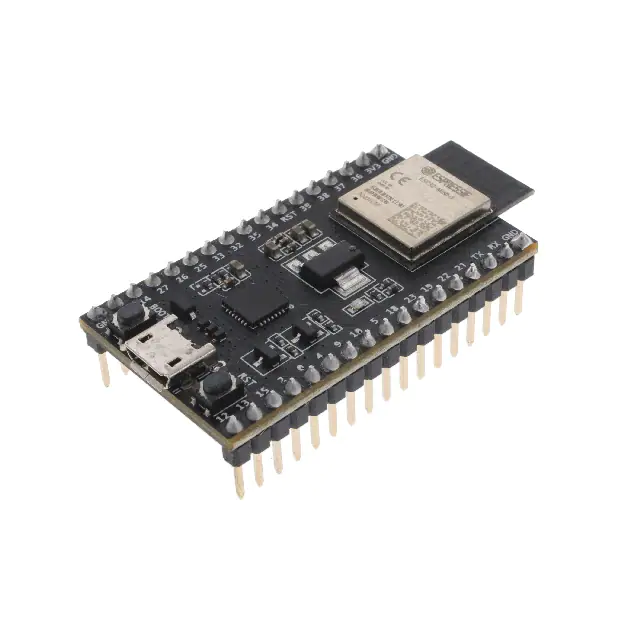
ESP32-C6-DEVKITM-1-N4
Espressif Systems
-
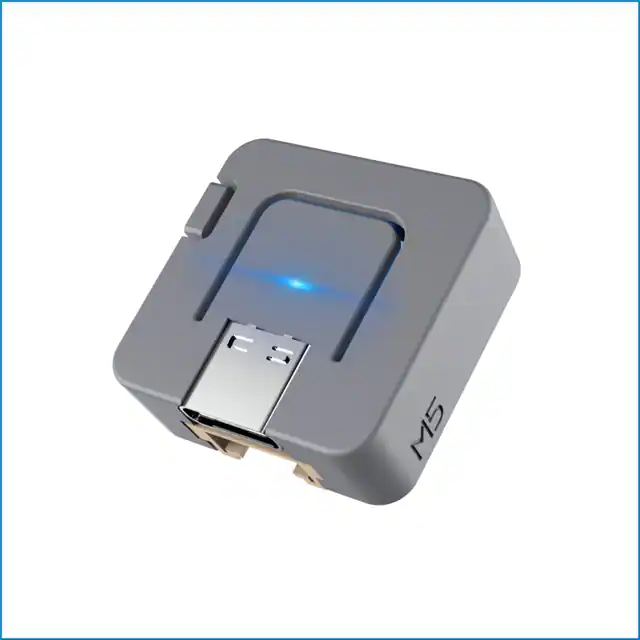
ESP32-DEVKITM-1
Espressif Systems
-
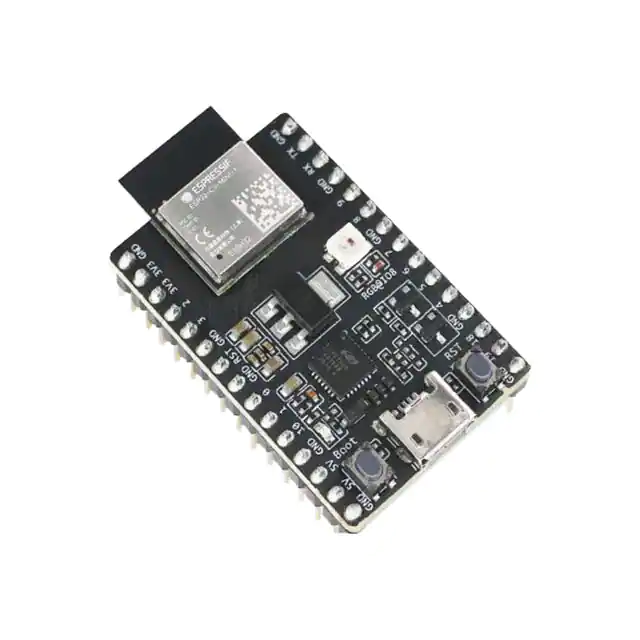
C008
M5Stack Technology Co., Ltd.
-
ESP32-C3-DEVKITC-02
Espressif Systems

-
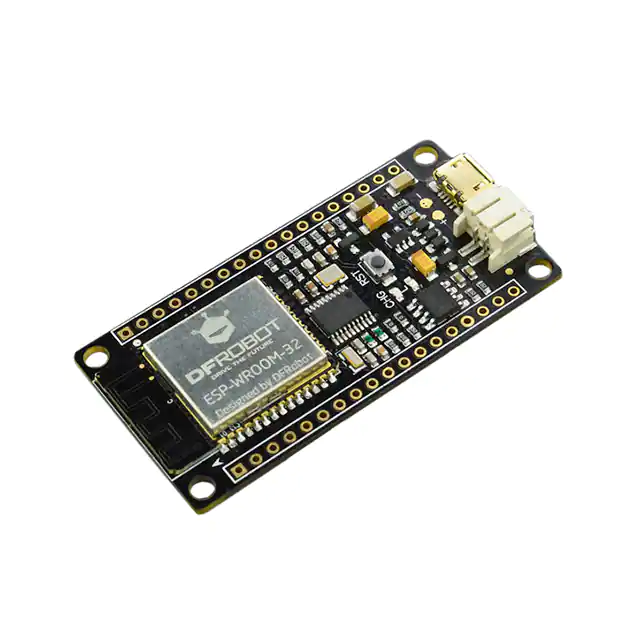
ESP32-C6-DEVKITC-1-N8
Espressif Systems
-
DFR0478
DFRobot
-
102010448
Seeed Technology Co., Ltd
-
ESP32-DEVKITC-32E
Espressif Systems
-
ESP32-DEVKITC-32UE
Espressif Systems
Tech Hub
Comparator circuit design covering voltage thresholds, input limits, open-collector outputs, LM393 wiring, op-amp differences, hysteresis, timing, window detection and practical fault diagnosis.
Schmitt triggers use separate rising and falling thresholds to stabilize slow or noisy signals. This guide covers hysteresis, 74HC14 and 74HCT14 selection, comparator calculations, RC oscillators and p…
Counterfeit components can hide behind convincing markings and passing basic function tests. This engineering reference covers source traceability, external inspection, X-ray, XRF, electrical testing, …
A practical engineering and sourcing framework covering lifecycle verification, lifetime-buy calculations, replacement qualification, supplier checks and counterfeit-risk controls.
TTL and CMOS logic families differ in thresholds, loading, output drive, power and timing. This engineering guide compares 74HC and 74HCT, calculates noise margins and checks 3.3 V/5 V compatibility.
A practical engineering guide to 3.3V and 5V logic compatibility, input thresholds, resistor dividers, translator ICs, MOSFET level shifting, I2C pull-ups, timing limits and power-sequencing risks.
The 74HC595 uses push-pull logic outputs, while the TPIC6B595 uses 50 V open-drain DMOS sinks for higher-power loads. This guide compares timing, current limits, 3.3 V interfacing, load wiring, thermal…
The 74HC595 converts serial data into eight stable parallel outputs. This guide covers pin functions, shift and storage timing, OE and MR behavior, drive-current limits, cascading, voltage compatibilit…
A technical comparison of level-sensitive latches and edge-triggered flip-flops, covering timing windows, setup and hold limits, master–slave operation, time borrowing, race-through, HDL inference and…
A D latch stores one bit while Enable controls when data can pass. This reference covers gate-level operation, truth tables, transparency, setup and hold timing, LE versus OE, common ICs and practical …