
 My Inquiry
 My Account


Diodes Incorporated AP2128K-4.2TRG1
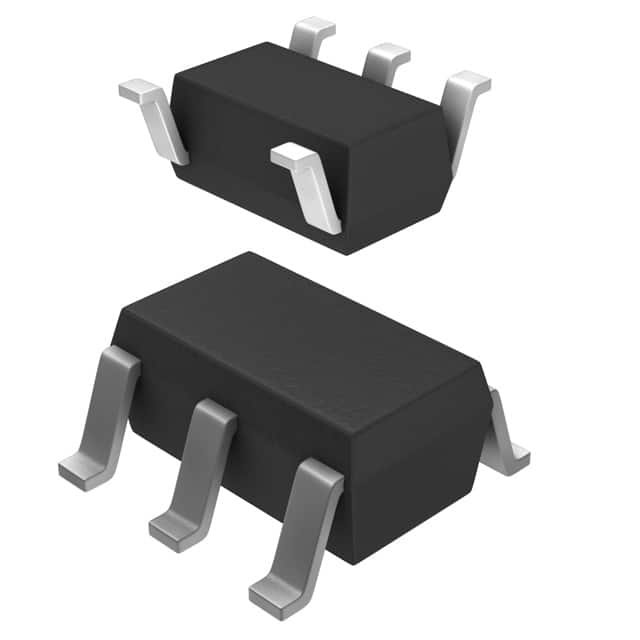
- Part No.:
- AP2128K-4.2TRG1
- Manufacturer:
- Diodes Incorporated
- Package:
- SC-74A, SOT-753
- Datasheet:
-
 AP2128K-4.2TRG1.pdf
- Description:
- IC REG LINEAR 4.2V 300MA SOT23-5
- Quantity:
- Payment:

- Shipping:

Inventory:2,860
Please send an inquiry. Send us your inquiry, and we will respond immediately.
Product details
Overview
AP2128K-4.2TRG1 from BCD Semiconductor is a fixed-output 4.2V, 300mA CMOS low-dropout regulator with 170mV dropout at full load, ±2% output voltage accuracy, and 60µVrms output noise. It operates from 2.5V to 6V input, features active shutdown (0.1µA standby), soft-start (50µs), and thermal/overcurrent protection-designed for powering RF sections and precision analog rails in portable datacom and notebook systems.
For engineers reviewing the AP2128K-4.2TRG1 datasheet, AP2128K-4.2TRG1 pinout, AP2128K-4.2TRG1 application, or AP2128K-4.2TRG1 equivalent, key selection criteria include its ultra-low noise performance, SOT-23-5 footprint compatibility with ceramic capacitors ≥1µF, shutdown logic interface, and thermal behavior under sustained 300mA loads across -40°C to +85°C ambient.
Technical Context
The AP2128K-4.2TRG1 uses a PMOS pass transistor architecture enabling low dropout and high PSRR (68dB @ 1kHz). Its internal reference (0.8V) and feedback network are trimmed to deliver 4.2V ±2% over line, load, and temperature without external resistors.
Shutdown control is active-high (1.5–6V logic threshold), enabling fast turn-off and auto-discharge via integrated 60Ω MOSFET. The device integrates thermal shutdown (165°C trip, 30°C hysteresis) and short-circuit current limiting (50mA), with stable operation using only 1µF ceramic input/output capacitors.
Key Specifications
| Parameter | Value and Actual Design Meaning |
|---|---|
| Output Voltage | Fixed 4.2V ±2% - ensures stable supply for 4.2V Li-ion battery-powered analog/RF circuits without external feedback components. |
| Max Output Current | 300mA continuous - supports moderate-power subsystems like Wi-Fi/BT baseband or sensor signal chains. |
| Dropout Voltage | 170mV @ 300mA - enables regulation down to VIN = 4.37V, critical for maintaining 4.2V rail during battery discharge. |
| PSRR | 68dB @ 1kHz - suppresses switching noise from upstream DC/DC converters feeding the LDO input. |
| Output Noise | 60µVrms (10Hz–100kHz) - preserves SNR in sensitive analog front-ends such as ADC references or RF synthesizers. |
| Quiescent Current | 60µA typical - minimizes battery drain in always-on monitoring functions. |
| Shutdown Current | 0.1µA - enables deep-sleep power states in portable devices with host-controlled rail sequencing. |
Pinout & Package
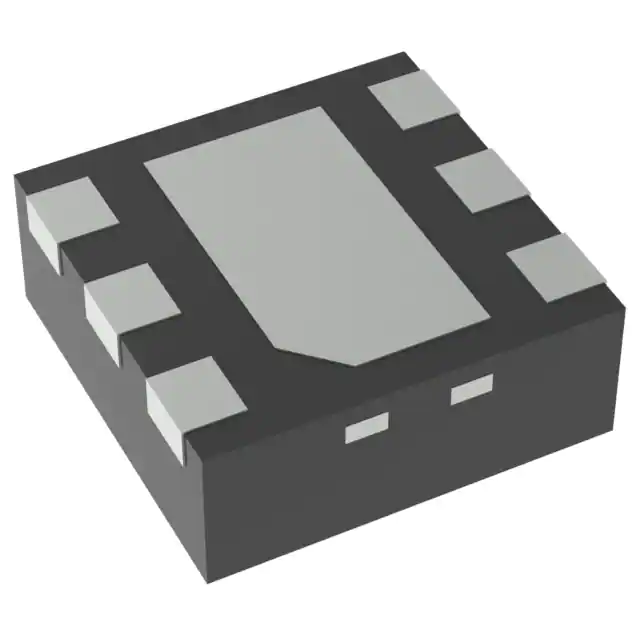
SOT-23-5 package: 2.82 × 2.65 × 1.30 mm, surface-mount, RoHS-compliant (G1 suffix), rated for -40°C to +85°C ambient operation.
| Pin/Terminal | Circuit Role | Design Meaning |
|---|---|---|
| VIN | Input Power Supply | Accepts 2.5V–6V unregulated input; requires 1µF ceramic decoupling close to pin. |
| GND | Ground Reference | Common return path for input, output, and internal circuitry; must be low-impedance connection. |
| VOUT | Regulated Output | Delivers stable 4.2V ±2%; connects to 1µF ceramic output capacitor and load. |
| SHUTDOWN | Enable/Disable Control | Active-high logic input (0–0.4V = OFF, 1.5–6V = ON); controls internal pass device and VOUT discharge path. |
| NC | No Connect | Pin 5 is internally unused in fixed-output version; must remain unconnected per datasheet. |
Key Features
| Feature | Design Value |
|---|---|
| Ultra-Low Output Noise | 60µVrms - enables direct use in PLL/VCO power rails without additional filtering. |
| Low Dropout Architecture | 170mV @ 300mA - sustains regulation through deep battery discharge while minimizing heat dissipation. |
| Integrated Soft-Start | 50µs ramp time - prevents inrush current and output overshoot during power-up. |
| Auto-Discharge Function | 60Ω internal MOSFET - rapidly discharges VOUT when SHUTDOWN is asserted, preventing backfeed or latch-up. |
| Ceramic Capacitor Compatible | Stable with ≥1µF CIN/COUT - eliminates need for costly tantalum or electrolytic capacitors, reducing BOM cost and board area. |
Applications
| Wireless Baseband Power | Li-ion Battery Monitoring |
|---|---|
Use Scenario: Supplies clean 4.2V bias to RF transceiver ICs and analog front-ends in portable hotspot modules. IC Role / Device Role / Timing Role: Primary low-noise post-regulator for RF section, rejecting switching noise from buck converter feeding VIN. Use Value: 60µVrms noise and 68dB PSRR preserve EVM and adjacent channel leakage ratio (ACLR) in 2.4GHz/5GHz transmission. |
Use Scenario: Powers fuel-gauge ICs and battery protection circuits requiring precise 4.2V reference during charge termination detection. IC Role / Device Role / Timing Role: Stable voltage source for ADC reference and comparator inputs in battery management subsystems. Use Value: ±2% output accuracy and ±100ppm/°C drift ensure <±5mV error in 4.2V threshold sensing across industrial temperature range. |
| Notebook USB-C PD Interface | Industrial Sensor Node |
Use Scenario: Provides regulated 4.2V to USB-C port controller and level-shifting logic during dual-role power negotiation. IC Role / Device Role / Timing Role: Secondary LDO supplying isolated logic domain with fast enable/disable for dynamic power state transitions. Use Value: 50µs soft-start and 0.1µA shutdown current support rapid wake/sleep cycles compliant with USB PD 3.0 power state timing. |
Use Scenario: Powers low-power microcontroller and analog sensor interface in battery-operated environmental monitors deployed outdoors. IC Role / Device Role / Timing Role: Main system rail regulator with thermal protection and wide-input capability for variable solar/battery sources. Use Value: 165°C thermal shutdown and -40°C to +85°C operation ensure reliability in uncontrolled ambient environments without heatsinking. |
Equivalent & Alternatives
The following parts are listed as comparable options for similar fixed-output LDO applications.
| Alternative Part | Technical Difference | Application Difference | Selection Advice |
|---|---|---|---|
| Torex XC6219B422MR-G | Same 4.2V fixed output, 300mA rating, but higher dropout (250mV @ 300mA) and lower PSRR (60dB @ 1kHz). | Lacks integrated VOUT discharge MOSFET; requires external circuitry for fast rail collapse. | Preferred where cost sensitivity outweighs noise/PSRR requirements and discharge is handled externally. |
| Richtek RT9193-42GB | 4.2V output, 300mA, 180mV dropout, but higher quiescent current (85µA typ) and no guaranteed 0.1µA shutdown mode. | Higher noise (85µVrms) limits use in RF-sensitive designs; no thermal hysteresis spec. | Acceptable for non-critical digital I/O rails where ultra-low noise and precise thermal recovery are not required. |
Compared with XC6219B422MR-G and RT9193-42GB, the AP2128K-4.2TRG1 delivers superior noise performance and integrated discharge functionality, making it optimal for RF and battery-monitoring applications where signal integrity and controlled power sequencing are essential.
Availability
AP2128K-4.2TRG1 is available at Aetrix Electronics and suitable for wireless baseband power, Li-ion battery monitoring, notebook USB-C PD interface, and industrial sensor node applications requiring stable component supply, long-term manufacturability, and RoHS/Green compliance.
Supply support for AP2128K-4.2TRG1 includes scheduled delivery planning, volume procurement assistance, BOM continuity management, traceable sourcing, and lifecycle availability coordination for OEM customers, industrial embedded developers, connected-device designers, and electronics production programs.
Manufacturer
BCD Semiconductor Manufacturing Limited is a Shanghai-based analog and mixed-signal IC designer specializing in high-performance power management, LED drivers, and audio amplifiers for consumer, computing, and industrial markets.
The AP2128 series belongs to BCD's ultra-low-noise LDO product line, engineered specifically for noise-sensitive analog and RF subsystems in portable electronics where traditional bipolar LDOs introduce unacceptable ripple and thermal overhead.
FAQ
Can AP2128K-4.2TRG1 operate with input voltage below 4.2V?
Yes, but only down to VIN = VOUT + VDROP. With 170mV typical dropout at 300mA, minimum functional input is 4.37V. At lighter loads, dropout decreases-for example, 100mV at 100mA allows operation down to 4.3V. Operation below 4.37V at full load causes output droop or dropout.
Is an external resistor divider required for AP2128K-4.2TRG1?
No. The "K-4.2" suffix denotes the fixed-output variant. Unlike the ADJ version, it contains internal feedback resistors trimmed to deliver 4.2V ±2% without external components. Pin 5 (ADJ/NC) is no-connect and must remain unconnected.
What is the maximum allowable power dissipation in SOT-23-5 package?
At TA = 85°C, θJA = 250°C/W limits PD to 0.62W (calculated as (150°C − 85°C)/250°C/W). For 4.2V output at 300mA with VIN = 5.5V, PD = (5.5V − 4.2V) × 0.3A = 0.39W - within safe operating area. Derating is required above 85°C ambient.
Does AP2128K-4.2TRG1 require input/output capacitors?
Yes. The datasheet mandates ≥1µF ceramic capacitors on both VIN and VOUT for stability and transient response. Using smaller values risks oscillation or excessive output ripple; tantalum or electrolytic types are unnecessary and discouraged due to ESR-related instability risks.
AP2128K-4.2TRG1 Specifications
- Product attributes
- Attribute value
- Manufacturer:
- Diodes Incorporated
- Series:
- -
- Package/Case:
- SC-74A, SOT-753
- Packaging:
- Tape & Reel (TR)
- Product Status:
- Active
- Output Configuration:
- Positive
- Output Type:
- Fixed
- Number of Regulators:
- 1
- Voltage - Input (Max):
- 6V
- Voltage - Output (Min/Fixed):
- 4.2V
- Voltage - Output (Max):
- -
- Voltage Dropout (Max):
- 0.3V @ 300mA
- Current - Output:
- 300mA
- Current - Quiescent (Iq):
- 90 µA
- Current - Supply (Max):
- -
- PSRR:
- 68dB ~ 54dB (100Hz ~ 10kHz)
- Control Features:
- Enable
- Protection Features:
- Over Current, Over Temperature
- Operating Temperature:
- -40°C ~ 85°C
- Grade:
- -
- Qualification:
- -
- Mounting Type:
- Surface Mount
- Supplier Device Package:
- SOT-23-5
AP2128K-4.2TRG1 FAQ
1.How can I place an order for AP2128K-4.2TRG1 through Aetrix?
Please submit a Request for Quotation (RFQ) for AP2128K-4.2TRG1 on Aetrix. Our sales agent will provide a competitive quotation and guide you through the order confirmation once you accept the terms.
2.Are the price and stock information for AP2128K-4.2TRG1 reliable?
The price and inventory of AP2128K-4.2TRG1 are updated periodically and may fluctuate due to market conditions. Stock and pricing data are typically refreshed every 24 hours. Quotation validity for AP2128K-4.2TRG1 is usually 5 days.
3.What payment methods are accepted for AP2128K-4.2TRG1?
We accept Wire Transfer, PayPal, Credit Card, Western Union, MoneyGram, and Escrow for AP2128K-4.2TRG1 transactions.
Note: Certain payment methods may incur a processing fee.
4.How is shipping managed for AP2128K-4.2TRG1?
AP2128K-4.2TRG1 orders can be shipped via leading logistics carriers, including DHL, UPS, FedEx, TNT, or Registered Mail.
Once your AP2128K-4.2TRG1 order is processed, you will receive an email with the shipment details and tracking number.
Note: Tracking information may take up to 24 hours to appear. Express delivery typically takes 3–5 business days.
5.How can I obtain technical support or documentation for AP2128K-4.2TRG1?
For technical support, including AP2128K-4.2TRG1 datasheets, pinout diagrams, or application guidance, please contact our engineering support team. They can provide detailed documentation and assistance for your AP2128K-4.2TRG1 requirements.
6.How does Aetrix verify that AP2128K-4.2TRG1 is sourced from the original manufacturer or authorized distributors?
All AP2128K-4.2TRG1 products on Aetrix are procured from qualified distributors and authorized channels. Our dedicated quality assurance team conducts strict verification, including traceability checks and, if necessary, third-party testing. This ensures that AP2128K-4.2TRG1 meets industry standards.
7.What is the process for return or replacement of AP2128K-4.2TRG1?
All AP2128K-4.2TRG1 units undergo pre-shipment inspection (PSI). If there is an issue with AP2128K-4.2TRG1, returns or replacements are accepted under the following conditions:
1.Quantity discrepancies, incorrect items, or visible external defects (such as breakage or corrosion), acknowledged by Aetrix.
2.The issue is reported within 90 days of delivery.
3.The AP2128K-4.2TRG1 part is unused and in its original packaging.
Return procedure for AP2128K-4.2TRG1:
1.Submit a request within 90 days.
2.Obtain a Return Material Authorization (RMA) from Aetrix.
AP2128K-4.2TRG1 Tags
-
MIC5504-1.8YM5-TR
Microchip Technology
-
MIC5504-3.3YM5-TR
Microchip Technology
-
MIC5365-3.0YC5-TR
Microchip Technology
-
MIC5365-1.8YC5-TR
Microchip Technology
-
MIC5365-2.5YC5-TR
Microchip Technology
-
MIC5365-3.3YC5-TR
Microchip Technology
-
MIC5365-3.3YD5-TR
Microchip Technology
-
MIC5317-3.3YM5-TR
Microchip Technology
-
TLV1117LV33DCYR
Texas Instruments
-
MIC5317-3.3YMT-TZ
Microchip Technology
-
MIC5528-3.3YMT-TR
Microchip Technology
-
TLV75801PDRVR
Texas Instruments
Tech Hub

Comparator circuit design covering voltage thresholds, input limits, open-collector outputs, LM393 wiring, op-amp differences, hysteresis, timing, window detection and practical fault diagnosis.
Schmitt triggers use separate rising and falling thresholds to stabilize slow or noisy signals. This guide covers hysteresis, 74HC14 and 74HCT14 selection, comparator calculations, RC oscillators and p…
Counterfeit components can hide behind convincing markings and passing basic function tests. This engineering reference covers source traceability, external inspection, X-ray, XRF, electrical testing, …

A practical engineering and sourcing framework covering lifecycle verification, lifetime-buy calculations, replacement qualification, supplier checks and counterfeit-risk controls.

TTL and CMOS logic families differ in thresholds, loading, output drive, power and timing. This engineering guide compares 74HC and 74HCT, calculates noise margins and checks 3.3 V/5 V compatibility.

A practical engineering guide to 3.3V and 5V logic compatibility, input thresholds, resistor dividers, translator ICs, MOSFET level shifting, I2C pull-ups, timing limits and power-sequencing risks.

The 74HC595 uses push-pull logic outputs, while the TPIC6B595 uses 50 V open-drain DMOS sinks for higher-power loads. This guide compares timing, current limits, 3.3 V interfacing, load wiring, thermal…

The 74HC595 converts serial data into eight stable parallel outputs. This guide covers pin functions, shift and storage timing, OE and MR behavior, drive-current limits, cascading, voltage compatibilit…

A technical comparison of level-sensitive latches and edge-triggered flip-flops, covering timing windows, setup and hold limits, master–slave operation, time borrowing, race-through, HDL inference and…

A D latch stores one bit while Enable controls when data can pass. This reference covers gate-level operation, truth tables, transparency, setup and hold timing, LE versus OE, common ICs and practical …


