
 My Inquiry
 My Account


Diodes Incorporated AP2129K-ADJTRG1
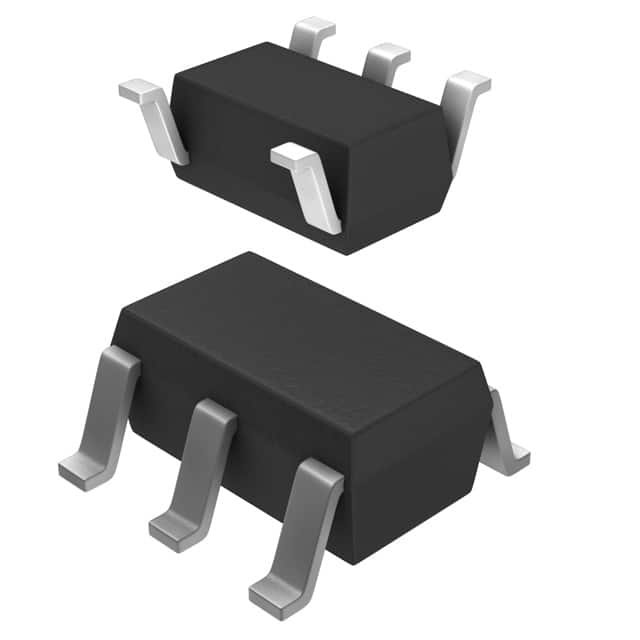
- Part No.:
- AP2129K-ADJTRG1
- Manufacturer:
- Diodes Incorporated
- Package:
- SC-74A, SOT-753
- Datasheet:
-
 AP2129K-ADJTRG1.pdf
- Description:
- IC REG LIN POS ADJ 300MA SOT23-5
- Quantity:
- Payment:

- Shipping:

Inventory:1,691
Please send an inquiry. Send us your inquiry, and we will respond immediately.
Product details
Overview
AP2129K-ADJTRG1 from Diodes Incorporated is a 300mA, adjustable-output CMOS low-dropout (LDO) voltage regulator in SOT-23-5 package, supporting 0.8V to 4.5V output via external resistor divider. It delivers ±2% output accuracy, 60µVRMS output noise, and 65dB PSRR at 1kHz, enabling stable power for noise-sensitive analog and RF circuitry in portable electronics.
For engineers reviewing the AP2129K-ADJTRG1 datasheet, AP2129K-ADJTRG1 pinout, AP2129K-ADJTRG1 application, or AP2129K-ADJTRG1 equivalent, this page provides verified electrical parameters, validated pin functions, confirmed thermal and transient behavior, and real-world use cases in battery-powered systems requiring ultra-low-noise regulation.
Technical Context
The AP2129K-ADJTRG1 implements a CMOS-based LDO architecture with internal 0.8V reference, foldback current limiting, and thermal shutdown at +165°C with +30°C hysteresis. Its active-high shutdown input enables precise system-level power sequencing, while the integrated 60Ω VOUT discharge MOSFET ensures rapid output decay during disable.
It operates across 1.8V–6V input range with 50µs soft-start time and supports ceramic capacitors as low as 1µF on both input and output. The device maintains ±100ppm/°C output voltage temperature coefficient and achieves 0.06%/V line regulation under 30mA load.
Key Specifications
| Parameter | Value and Actual Design Meaning |
|---|---|
| Output Current | 300mA continuous; supports peak 450mA for short durations without thermal shutdown. |
| Output Voltage Range | 0.8V to 4.5V adjustable; set by external R1/R2 divider referenced to 0.8V internal bandgap. |
| Dropout Voltage | 170mV typical at 300mA (for VOUT ≥ 2.6V); enables high-efficiency operation near battery end-of-life. |
| Quiescent Current | 60µA typical; critical for maintaining runtime in always-on sensor nodes and standby circuits. |
| PSRR | 65dB @ 1kHz; suppresses switching noise from upstream DC-DC converters feeding sensitive ADCs or PLLs. |
| Output Noise | 60µVRMS (10Hz–100kHz); meets low-noise requirements for RF front-ends and precision op-amp supplies. |
| Shutdown Current | 0.1µA max; reduces system leakage in deep-sleep modes of IoT edge devices. |
Pinout & Package
SOT-23-5 package: 2.9mm × 2.8mm × 1.3mm body, surface-mount, RoHS-compliant, green finish. Thermal resistance θJA = 250°C/W (no heatsink).
| Pin/Terminal | Circuit Role | Design Meaning |
|---|---|---|
| 1 - VIN | Input voltage supply | Accepts 1.8V–6V; must be decoupled with ≥1µF ceramic capacitor close to pin. |
| 2 - GND | Ground reference | Common return path for input, output, and internal regulator circuitry; requires low-impedance PCB connection. |
| 3 - Shutdown | Enable control input | Active-high logic: ≥1.5V enables regulation; ≤0.4V disables output and engages 60Ω discharge path. |
| 4 - VOUT | Regulated output | Delivers configured output voltage; requires ≥1µF ceramic capacitor for stability and transient response. |
| 5 - ADJ/NC | Feedback node (ADJ) / No connect (fixed) | Connects to resistor divider midpoint for adjustable mode; left floating in fixed versions. |
Key Features
| Feature | Design Value |
|---|---|
| Ultra-low output noise | 60µVRMS enables direct powering of RF synthesizers and high-resolution SAR ADCs without additional filtering. |
| Low-ESR capacitor compatibility | Stable with 1µF ceramic capacitors on IN/OUT-reduces BOM count and board area vs. tantalum alternatives. |
| Integrated VOUT discharge | 60Ω internal MOSFET discharges output within microseconds upon shutdown, preventing back-powering of downstream circuitry. |
| Soft-start timing | 50µs controlled ramp prevents inrush current spikes into large output capacitance or downstream LDOs. |
| Thermal protection | +165°C shutdown with +30°C hysteresis ensures safe recovery after overload without manual reset. |
Applications
| Portable Medical Sensors | Wireless IoT Edge Nodes |
|---|---|
|
Use Scenario: Powering analog front-end (AFE) and low-power MCU in wearable ECG patch. IC Role / Device Role / Timing Role: Primary LDO supplying 1.8V to ADC and 3.3V to BLE SoC via dual-rail configuration. Use Value: 60µVRMS noise preserves signal integrity of microvolt-level biopotential signals; 0.1µA shutdown current extends battery life to >12 months. |
Use Scenario: Regulating power for LoRaWAN node with sub-GHz transceiver and environmental sensors. IC Role / Device Role / Timing Role: Adjustable LDO delivering 2.2V to RF IC and 3.0V to microcontroller from single Li-ion cell. Use Value: 65dB PSRR at 1kHz rejects switching noise from boost converter; 50µs soft-start prevents radio TX lockup during wake-up. |
| Industrial Data Acquisition Modules | Embedded Camera Systems |
|
Use Scenario: Supplying precision 2.5V reference and 3.3V digital core in isolated DAQ board. IC Role / Device Role / Timing Role: Secondary LDO post-isolation, rejecting ripple from upstream flyback converter. Use Value: ±2% output accuracy and ±100ppm/°C drift ensure measurement repeatability across -40°C to +85°C industrial range. |
Use Scenario: Providing clean 1.2V core and 2.8V I/O supply to image sensor and ISP in compact surveillance camera. IC Role / Device Role / Timing Role: Dual-LDO solution using AP2129K-ADJTRG1 (1.2V) and fixed 2.8V variant on same board. Use Value: Low dropout (≤600mV at 300mA) sustains regulation as battery voltage drops below 3.0V; DFN/SOT-23-5 footprint minimizes PCB area. |
Equivalent & Alternatives
The following parts are listed as comparable options for similar adjustable LDO regulator applications.
| Alternative Part | Technical Difference | Application Difference | Selection Advice |
|---|---|---|---|
| MCP1826T-ADJ/DC | Higher quiescent current (120µA typ), lower PSRR (55dB @ 1kHz), no integrated VOUT discharge. | Lacks fast output discharge; unsuitable where back-powering of downstream logic must be prevented. | Prefer AP2129K-ADJTRG1 when <0.1µA shutdown current or 60Ω discharge is required. |
| Torex XC6210B122MR-G | Lower max output current (200mA), higher dropout (250mV @ 200mA), same 0.8V reference. | Not suitable for 300mA loads or high-current sensor arrays; limited thermal margin in SOT-23-5. | Choose AP2129K-ADJTRG1 for full 300mA capability and superior thermal performance (θJA = 250°C/W vs. 300°C/W). |
Compared with MCP1826T-ADJ/DC and XC6210B122MR-G, the AP2129K-ADJTRG1 uniquely combines 300mA output, 60µVRMS noise, 0.1µA shutdown, and integrated VOUT discharge in SOT-23-5-making it optimal for space-constrained, noise-sensitive, battery-operated systems demanding fast power sequencing.
Availability
AP2129K-ADJTRG1 is available at Aetrix Electronics and suitable for portable medical sensors, wireless IoT edge nodes, industrial data acquisition modules, and embedded camera systems requiring stable component supply with guaranteed long-term availability.
Supply support for AP2129K-ADJTRG1 includes scheduled delivery planning, volume procurement assistance, BOM continuity management, traceable sourcing, and lifecycle availability coordination for OEM customers, industrial embedded developers, connected-device designers, and electronics production programs.
Manufacturer
Diodes Incorporated is a global manufacturer of discrete semiconductors and analog ICs, specializing in high-performance, energy-efficient components for power management, signal integrity, and protection applications.
The AP2129 series belongs to Diodes' precision LDO portfolio, engineered specifically for battery-powered and noise-critical applications where ultra-low noise, tight accuracy, and minimal quiescent current are essential design requirements.
FAQ
What is the minimum input voltage required for AP2129K-ADJTRG1 to regulate at 1.2V output?
The AP2129K-ADJTRG1 requires VIN ≥ VOUT + VDROP. At 1.2V output and 300mA load, typical dropout is 600mV, so minimum VIN is 1.8V. This matches the device's specified operating range (1.8V–6V) and ensures stable regulation even as battery voltage declines.
Can AP2129K-ADJTRG1 be used with only 0.47µF output capacitance?
No. The datasheet specifies ≥1µF ceramic output capacitance for stability, transient response, and PSRR performance. Using 0.47µF risks oscillation, degraded load step response, and reduced ripple rejection-especially at 10kHz where PSRR drops to 45dB.
How does the shutdown pin behave during power-up?
The shutdown pin has an internal 3MΩ pull-down resistor. At power-up, if left unconnected, it defaults to logic low (≤0.4V), keeping the device disabled until a valid high signal (>1.5V) is applied-preventing uncontrolled output activation during system boot.
Is the 60Ω VOUT discharge path active only during shutdown, or also during fault conditions?
The 60Ω discharge MOSFET activates exclusively when the shutdown pin is driven low. It remains inactive during overcurrent or thermal shutdown events-those conditions halt regulation but retain VOUT voltage until external discharge occurs or shutdown is asserted.
AP2129K-ADJTRG1 Specifications
- Product attributes
- Attribute value
- Manufacturer:
- Diodes Incorporated
- Series:
- -
- Package/Case:
- SC-74A, SOT-753
- Packaging:
- Tape & Reel (TR)
- Product Status:
- Active
- Output Configuration:
- Positive
- Output Type:
- Adjustable
- Number of Regulators:
- 1
- Voltage - Input (Max):
- 6V
- Voltage - Output (Min/Fixed):
- 0.8V
- Voltage - Output (Max):
- 4.5V
- Voltage Dropout (Max):
- 0.3V @ 300mA
- Current - Output:
- 300mA
- Current - Quiescent (Iq):
- 90 µA
- Current - Supply (Max):
- -
- PSRR:
- 65dB ~ 45dB (100Hz ~ 10kHz)
- Control Features:
- Enable
- Protection Features:
- Over Current, Over Temperature, Under Voltage Lockout (UVLO)
- Operating Temperature:
- -40°C ~ 85°C
- Grade:
- -
- Qualification:
- -
- Mounting Type:
- Surface Mount
- Supplier Device Package:
- SOT-23-5
AP2129K-ADJTRG1 FAQ
1.How can I place an order for AP2129K-ADJTRG1 through Aetrix?
Please submit a Request for Quotation (RFQ) for AP2129K-ADJTRG1 on Aetrix. Our sales agent will provide a competitive quotation and guide you through the order confirmation once you accept the terms.
2.Are the price and stock information for AP2129K-ADJTRG1 reliable?
The price and inventory of AP2129K-ADJTRG1 are updated periodically and may fluctuate due to market conditions. Stock and pricing data are typically refreshed every 24 hours. Quotation validity for AP2129K-ADJTRG1 is usually 5 days.
3.What payment methods are accepted for AP2129K-ADJTRG1?
We accept Wire Transfer, PayPal, Credit Card, Western Union, MoneyGram, and Escrow for AP2129K-ADJTRG1 transactions.
Note: Certain payment methods may incur a processing fee.
4.How is shipping managed for AP2129K-ADJTRG1?
AP2129K-ADJTRG1 orders can be shipped via leading logistics carriers, including DHL, UPS, FedEx, TNT, or Registered Mail.
Once your AP2129K-ADJTRG1 order is processed, you will receive an email with the shipment details and tracking number.
Note: Tracking information may take up to 24 hours to appear. Express delivery typically takes 3–5 business days.
5.How can I obtain technical support or documentation for AP2129K-ADJTRG1?
For technical support, including AP2129K-ADJTRG1 datasheets, pinout diagrams, or application guidance, please contact our engineering support team. They can provide detailed documentation and assistance for your AP2129K-ADJTRG1 requirements.
6.How does Aetrix verify that AP2129K-ADJTRG1 is sourced from the original manufacturer or authorized distributors?
All AP2129K-ADJTRG1 products on Aetrix are procured from qualified distributors and authorized channels. Our dedicated quality assurance team conducts strict verification, including traceability checks and, if necessary, third-party testing. This ensures that AP2129K-ADJTRG1 meets industry standards.
7.What is the process for return or replacement of AP2129K-ADJTRG1?
All AP2129K-ADJTRG1 units undergo pre-shipment inspection (PSI). If there is an issue with AP2129K-ADJTRG1, returns or replacements are accepted under the following conditions:
1.Quantity discrepancies, incorrect items, or visible external defects (such as breakage or corrosion), acknowledged by Aetrix.
2.The issue is reported within 90 days of delivery.
3.The AP2129K-ADJTRG1 part is unused and in its original packaging.
Return procedure for AP2129K-ADJTRG1:
1.Submit a request within 90 days.
2.Obtain a Return Material Authorization (RMA) from Aetrix.
AP2129K-ADJTRG1 Tags
-
MIC5504-1.8YM5-TR
Microchip Technology
-
MIC5504-3.3YM5-TR
Microchip Technology
-
MIC5365-3.0YC5-TR
Microchip Technology
-
MIC5365-1.8YC5-TR
Microchip Technology
-
MIC5365-2.5YC5-TR
Microchip Technology
-
MIC5365-3.3YC5-TR
Microchip Technology
-
MIC5365-3.3YD5-TR
Microchip Technology
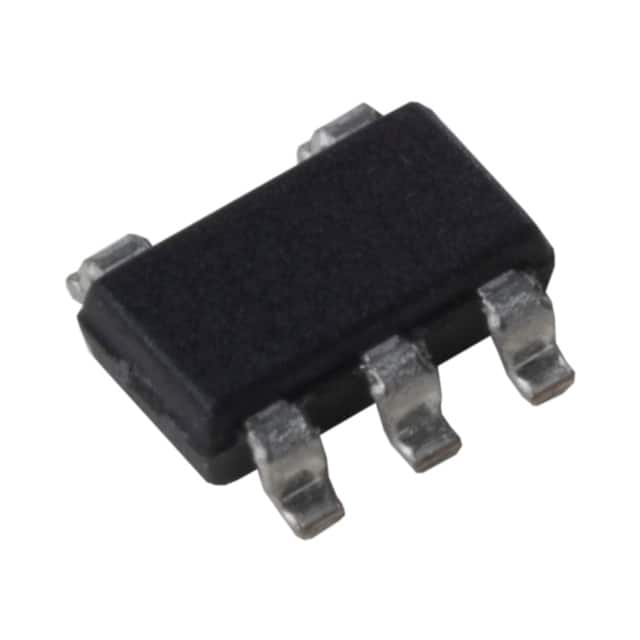
-
MIC5317-3.3YM5-TR
Microchip Technology
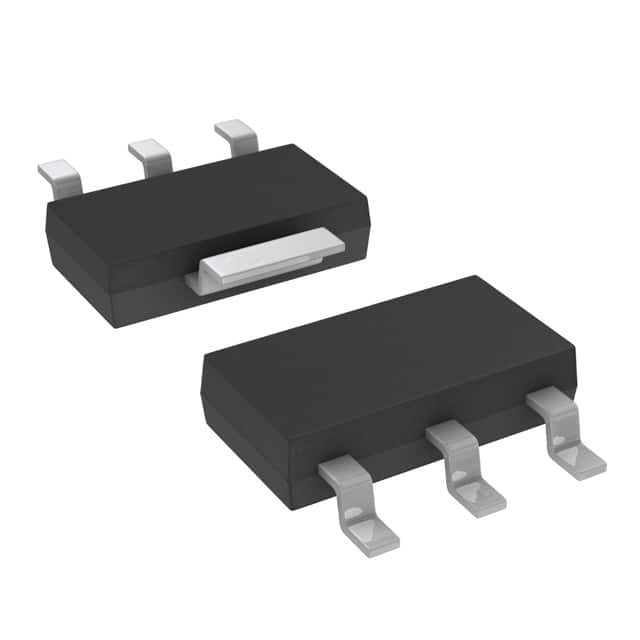
-
TLV1117LV33DCYR
Texas Instruments
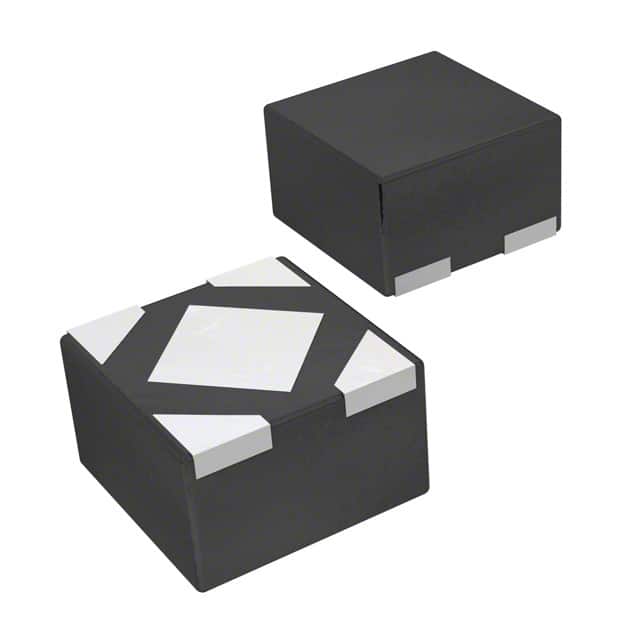
-
MIC5317-3.3YMT-TZ
Microchip Technology
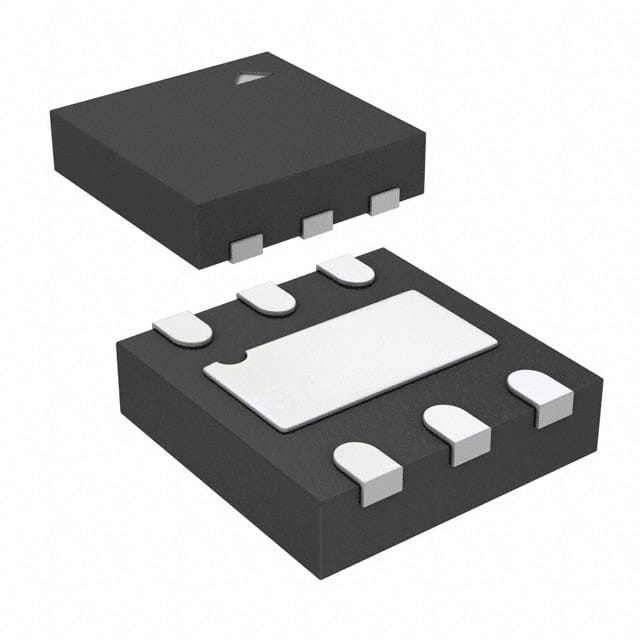
-
MIC5528-3.3YMT-TR
Microchip Technology
-
TLV75801PDRVR
Texas Instruments
Tech Hub

Comparator circuit design covering voltage thresholds, input limits, open-collector outputs, LM393 wiring, op-amp differences, hysteresis, timing, window detection and practical fault diagnosis.
Schmitt triggers use separate rising and falling thresholds to stabilize slow or noisy signals. This guide covers hysteresis, 74HC14 and 74HCT14 selection, comparator calculations, RC oscillators and p…

Counterfeit components can hide behind convincing markings and passing basic function tests. This engineering reference covers source traceability, external inspection, X-ray, XRF, electrical testing, …

A practical engineering and sourcing framework covering lifecycle verification, lifetime-buy calculations, replacement qualification, supplier checks and counterfeit-risk controls.

TTL and CMOS logic families differ in thresholds, loading, output drive, power and timing. This engineering guide compares 74HC and 74HCT, calculates noise margins and checks 3.3 V/5 V compatibility.

A practical engineering guide to 3.3V and 5V logic compatibility, input thresholds, resistor dividers, translator ICs, MOSFET level shifting, I2C pull-ups, timing limits and power-sequencing risks.

The 74HC595 uses push-pull logic outputs, while the TPIC6B595 uses 50 V open-drain DMOS sinks for higher-power loads. This guide compares timing, current limits, 3.3 V interfacing, load wiring, thermal…

The 74HC595 converts serial data into eight stable parallel outputs. This guide covers pin functions, shift and storage timing, OE and MR behavior, drive-current limits, cascading, voltage compatibilit…

A technical comparison of level-sensitive latches and edge-triggered flip-flops, covering timing windows, setup and hold limits, master–slave operation, time borrowing, race-through, HDL inference and…

A D latch stores one bit while Enable controls when data can pass. This reference covers gate-level operation, truth tables, transparency, setup and hold timing, LE versus OE, common ICs and practical …


