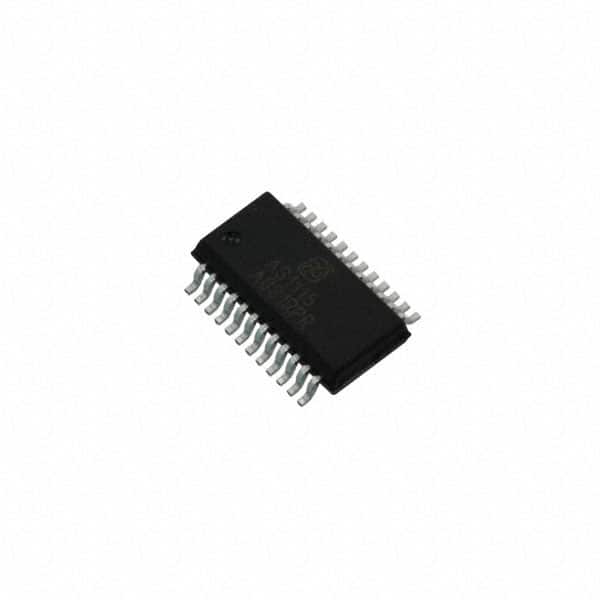
Silicon Labs CP2400-GQ
- Part No.:
- CP2400-GQ
- Manufacturer:
- Silicon Labs
- Category:
- Display Drivers
- Package:
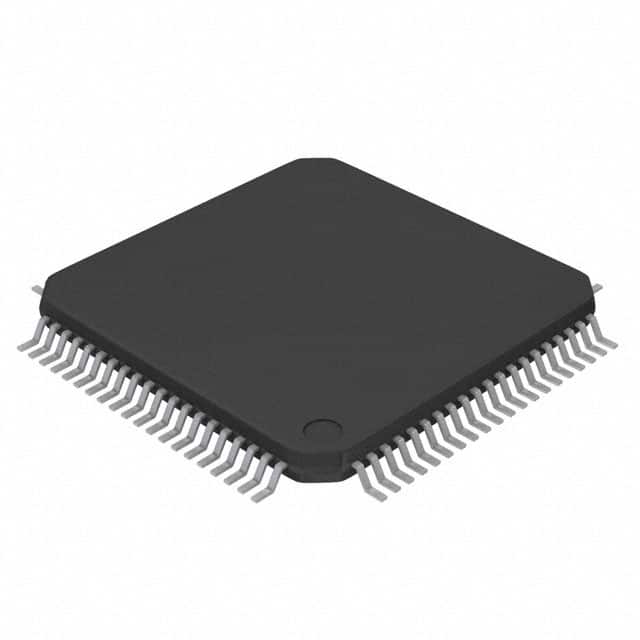
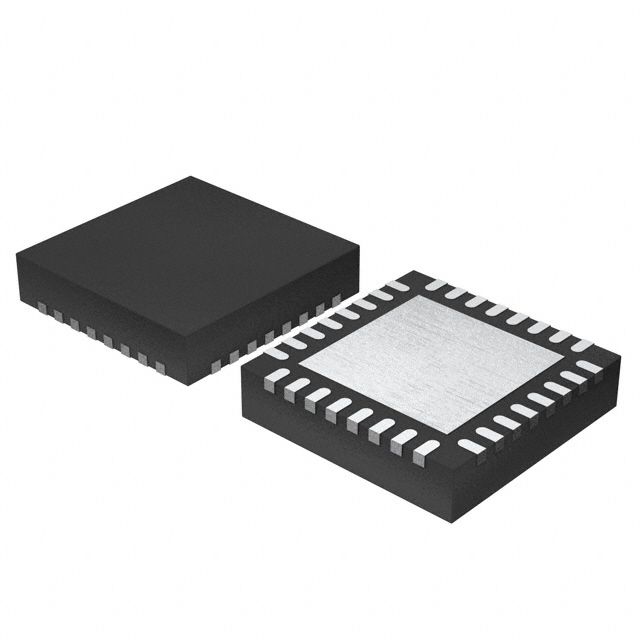
- 48-TQFP
- Datasheet:
-
CP2400-GQ.pdf
- Description:
- IC DRVR 128 SEGMENT 48TQFP
- Quantity:
- Payment:

- Shipping:

Inventory:4,486
Please send an inquiry. Send us your inquiry, and we will respond immediately.
Product details
Overview
CP2400-GQ from Silicon Laboratories is a fixed-function SPI-interface LCD driver with integrated GPIO expander, real-time clock (SmaRTClock), 256-byte SRAM, and dual 16-bit timers. It drives up to 128 segments in 48-pin QFP packages, supports static/2–4-mux displays, features on-chip bias generation via internal charge pump, and operates from 1.8–3.6 V with ultra-low power LCD mode (<2.3 µA). It serves in battery-powered display interfaces requiring timekeeping and I/O expansion.
For engineers reviewing the CP2400-GQ datasheet, CP2400-GQ pinout, CP2400-GQ application, or CP2400-GQ equivalent, key selection criteria include its 48-pin QFP package, SPI-only interface (no SMBus/I²C), 128-segment LCD drive capability, 36 GPIO expansion pins, and SmaRTClock wake-up functionality - all validated for utility meters and thermostat displays operating at –40 to +85 °C.
Technical Context
The CP2400-GQ implements a dedicated segment COM/SEG architecture with programmable mux configuration (static, 2-/3-/4-mux) and integrated charge-pump-based LCD bias generation. Its SPI interface operates at up to 2.5 Mbps with synchronous external clock or 1 Mbps with internal clock, and uses dedicated NSS, RST, and INT pins for host control and wake-up signaling.
It integrates a self-contained SmaRTClock with 32.768 kHz crystal support, self-oscillate mode, and 36-hour programmable alarm; GPIOs are configurable as push-pull or open-drain outputs with two drive levels and internal pullups; all digital I/O pins are 5 V tolerant.
Key Specifications
| Parameter | Value and Actual Design Meaning |
|---|---|
| LCD Drive Capacity | Up to 128 segments (48-pin QFP package); enables high-resolution alphanumeric or custom segment displays without external bias circuitry. |
| SPI Interface Speed | Up to 2.5 Mbps with synchronous external clock; ensures fast register access and segment RAM updates in dynamic display applications. |
| GPIO Expansion | 36 configurable I/O pins (48-pin package); supports mixed input/output roles with port match wake-up and 5 V tolerance for direct MCU interfacing. |
| SmaRTClock Current | <2.5 µA typical in RTC-enabled ultra-low-power mode; sustains accurate timekeeping for years on coin-cell batteries. |
| Operating Voltage | 1.8–3.6 V with integrated LDO; simplifies power design in single-supply embedded systems with Li-ion or alkaline battery sources. |
| Ultra-Low-Power LCD Mode | 2.1–2.3 µA typical (static–4-mux, no load); enables always-on display operation in handheld equipment with multi-year battery life. |
| Temperature Range | –40 to +85 °C; qualified for industrial and utility metering environments with extended thermal cycling requirements. |
Pinout & Package
Pb-free 48-pin QFP (9×9 mm footprint), designated by suffix "-GQ". Package includes exposed thermal pad per JEDEC MO-220 VKKD-4 variant.
| Pin/Terminal | Circuit Role | Design Meaning |
|---|---|---|
| NSS | Slave Select Input | Active-low chip select; asserts device into low-power mode when deasserted, enabling power-gating without host intervention. |
| MOSI/MISO/SCK | SPI Data/Clock | Full-duplex 4-wire interface; supports burst reads/writes to internal registers and 256-byte SRAM with deterministic timing. |
| RST | Reset Input | Asynchronous active-low reset with internal weak pullup; guarantees known state after power-up or brownout events. |
| INT | Interrupt Output | Push-pull wake-up signal driven by SmaRTClock alarm, port match, or LCD blink completion - eliminates polling overhead. |
| XTAL1/XTAL2 | Crystal Oscillator | Supports 32.768 kHz watch crystal for RTC; also accepts CMOS clock input for crystal-less operation in cost-sensitive designs. |
| CAP | Charge Pump Output | Provides regulated LCD bias voltage; requires 10 µF decoupling capacitor to stabilize contrast across temperature and supply variation. |
| P0.0–P4.3 | GPIO/LCD Pins | Multi-function pins serving as LCD segment drivers (P0–P3) or COM lines (P2/P4); software-configurable as general-purpose I/O with programmable drive strength. |
Key Features
| Feature | Design Value |
|---|---|
| Integrated LCD Bias Generation | On-chip charge pump eliminates external resistive divider or DC-DC converter, reducing BOM count and PCB area in space-constrained meters. |
| Port Match Wake-Up | Configurable GPIO edge detection triggers INT pin without CPU polling, extending battery life in sensor-activated security panels. |
| Self-Oscillate RTC Mode | Enables crystal-free timekeeping using internal AGC-controlled oscillator (14 kHz typical), lowering system cost and component count. |
| 5 V Tolerant I/O | Allows direct connection to 5 V microcontrollers without level shifters, simplifying interconnect in legacy industrial control designs. |
| Ultra-Low-Power Shutdown | 0.02 µA typical shutdown current at 3.0 V; preserves battery energy during long-term storage or seasonal device deployment. |
Applications
| Utility Meter Display | Thermostat Interface |
|---|---|
Use Scenario: Digital electricity/gas/water meter with segmented LCD showing consumption, tariff, and status codes. IC Role / Device Role / Timing Role: Primary LCD driver and timekeeper; manages segment refresh, contrast adjustment, and daily billing timestamp via SmaRTClock. Use Value: Enables 10+ year battery life using ultra-low-power LCD mode (2.3 µA) and crystal-free RTC self-oscillate mode. | Use Scenario: Residential HVAC controller with 4-digit temperature readout and mode indicators. IC Role / Device Role / Timing Role: Segment driver + GPIO expander for buttons/LEDs + real-time clock for scheduling and daylight savings correction. Use Value: Reduces MCU GPIO load by 36 pins and provides accurate timekeeping without external RTC IC or crystal. |
| Handheld Test Equipment | Home Security Keypad |
Use Scenario: Portable multimeter or insulation tester with alphanumeric LCD and function keys. IC Role / Device Role / Timing Role: LCD controller with integrated SRAM buffer and GPIO for keypad scanning and backlight control. Use Value: 256-byte SRAM offloads display data buffering from host MCU; low-power modes extend AA/AAA battery life beyond 12 months. | Use Scenario: Wireless security panel with segmented entry code display and tamper-alert LEDs. IC Role / Device Role / Timing Role: Display driver and interrupt-driven I/O expander; wakes host MCU only on keypress or alarm event via Port Match. Use Value: Eliminates continuous keypad polling; achieves sub-µA average system current in armed standby mode. |
Equivalent & Alternatives
The following parts are listed as comparable options for similar LCD driver with RTC and GPIO expansion applications.
| Alternative Part | Technical Difference | Application Difference | Selection Advice |
|---|---|---|---|
| CP2402-GM | SPI interface, 48-pin QFN (7×7 mm), same core functionality but different package and pinout; lacks PWR pin (not applicable as it's SPI-only). | Preferred where board space is constrained and QFN reflow is supported; requires PCB redesign due to incompatible footprint and pin mapping. | Select CP2402-GM only if QFN assembly infrastructure exists and thermal pad layout matches MO-220 VKKD-4. |
| PCF8576T/1 | I²C interface, 144-segment drive, no integrated RTC or GPIO expansion; requires external crystal and separate real-time clock IC. | Suitable for cost-sensitive, non-time-critical LCD displays where host MCU handles timing and I/O management. | Choose PCF8576T/1 only when I²C bus availability, lower segment count, and absence of RTC/GPIO requirements align with system architecture. |
Compared with CP2402-GM, CP2400-GQ offers identical feature set but in a larger QFP package suited for manual assembly and thermal management; versus PCF8576T/1, CP2400-GQ integrates RTC and GPIO - eliminating three external components and reducing firmware complexity in time-aware display systems.
Availability
CP2400-GQ is available at Aetrix Electronics and suitable for utility meters, thermostat displays, and handheld test equipment requiring stable component supply and long-term industrial lifecycle support.
Supply support for CP2400-GQ includes scheduled delivery planning, volume procurement assistance, BOM continuity management, traceable sourcing, and lifecycle availability coordination for OEM customers, industrial embedded developers, connected-device designers, and electronics production programs.
Manufacturer
Silicon Laboratories is a fabless semiconductor company specializing in timing, IoT, and mixed-signal solutions for embedded systems.
The CP2400 family was designed as an integrated display interface solution targeting battery-powered industrial and consumer devices needing LCD driving, real-time clock, GPIO expansion, and low-power operation - all in a single chip.
FAQ
What is the maximum LCD segment count supported by the CP2400-GQ?
The CP2400-GQ supports up to 128 segments when used in 48-pin QFP packages like the -GQ variant. This capacity is achieved using its multi-port segment driver architecture (P0–P3) and COM line assignment (P2/P4), enabling full alphanumeric or custom symbol displays without external multiplexing hardware. The 128-segment limit is fixed for this package and interface variant.
Does the CP2400-GQ support I²C or SMBus communication?
No, the CP2400-GQ exclusively supports the 4-wire SPI interface as indicated by its ordering designation and datasheet specifications. I²C/SMBus functionality is reserved for CP2401 and CP2403 variants (e.g., CP2401-GQ). Attempting I²C communication with CP2400-GQ will fail - only MOSI, MISO, SCK, and NSS pins are functional for host interaction.
What package type does the CP2400-GQ use, and what are its key mechanical dimensions?
The CP2400-GQ uses a Pb-free 48-pin TQFP package (9×9 mm body, 1.0 mm nominal height) per JEDEC MO-220 outline. Key dimensions include 0.5 mm pitch, 7.0 mm × 7.0 mm exposed pad, and 0.60 mm nominal lead length. This QFP variant facilitates manual soldering and thermal relief in industrial PCB layouts where QFN reflow may be impractical.
Can the CP2400-GQ operate without an external 32.768 kHz crystal?
Yes, the CP2400-GQ supports crystal-less operation via its SmaRTClock self-oscillate mode, which uses an internal AGC-controlled oscillator (14 kHz typical). While less accurate than crystal-based timekeeping, this mode eliminates the crystal and associated load capacitors - reducing BOM cost and board space in applications where ±5% time accuracy is acceptable.
How many GPIO pins does the CP2400-GQ provide, and what are their electrical characteristics?
The CP2400-GQ provides up to 36 GPIO pins (P0.0–P3.7 plus P4.0–P4.3) in its 48-pin QFP configuration. Each pin supports push-pull or open-drain output with selectable high/low drive strength, digital input with internal pullups, and 5 V tolerance. Output high voltage exceeds VDD – 0.7 V at 3 mA, and output low voltage stays below 0.6 V at 8.5 mA - ensuring robust interfacing with diverse MCUs.
CP2400-GQ Specifications
- Product attributes
- Attribute value
- Manufacturer:
- Silicon Labs
- Series:
- -
- Package/Case:
- 48-TQFP
- Packaging:
- Tray
- Product Status:
- Not For New Designs
- Display Type:
- LCD
- Configuration:
- 128 Segment
- Interface:
- SPI
- Digits or Characters:
- -
- Current - Supply:
- 620 µA
- Voltage - Supply:
- 1.8V ~ 3.6V
- Operating Temperature:
- -40°C ~ 85°C
- Grade:
- -
- Qualification:
- -
- Mounting Type:
- Surface Mount
- Supplier Device Package:
- 48-TQFP (7x7)
CP2400-GQ FAQ
1.How can I place an order for CP2400-GQ through Aetrix?
Please submit a Request for Quotation (RFQ) for CP2400-GQ on Aetrix. Our sales agent will provide a competitive quotation and guide you through the order confirmation once you accept the terms.
2.Are the price and stock information for CP2400-GQ reliable?
The price and inventory of CP2400-GQ are updated periodically and may fluctuate due to market conditions. Stock and pricing data are typically refreshed every 24 hours. Quotation validity for CP2400-GQ is usually 5 days.
3.What payment methods are accepted for CP2400-GQ?
We accept Wire Transfer, PayPal, Credit Card, Western Union, MoneyGram, and Escrow for CP2400-GQ transactions.
Note: Certain payment methods may incur a processing fee.
4.How is shipping managed for CP2400-GQ?
CP2400-GQ orders can be shipped via leading logistics carriers, including DHL, UPS, FedEx, TNT, or Registered Mail.
Once your CP2400-GQ order is processed, you will receive an email with the shipment details and tracking number.
Note: Tracking information may take up to 24 hours to appear. Express delivery typically takes 3–5 business days.
5.How can I obtain technical support or documentation for CP2400-GQ?
For technical support, including CP2400-GQ datasheets, pinout diagrams, or application guidance, please contact our engineering support team. They can provide detailed documentation and assistance for your CP2400-GQ requirements.
6.How does Aetrix verify that CP2400-GQ is sourced from the original manufacturer or authorized distributors?
All CP2400-GQ products on Aetrix are procured from qualified distributors and authorized channels. Our dedicated quality assurance team conducts strict verification, including traceability checks and, if necessary, third-party testing. This ensures that CP2400-GQ meets industry standards.
7.What is the process for return or replacement of CP2400-GQ?
All CP2400-GQ units undergo pre-shipment inspection (PSI). If there is an issue with CP2400-GQ, returns or replacements are accepted under the following conditions:
1.Quantity discrepancies, incorrect items, or visible external defects (such as breakage or corrosion), acknowledged by Aetrix.
2.The issue is reported within 90 days of delivery.
3.The CP2400-GQ part is unused and in its original packaging.
Return procedure for CP2400-GQ:
1.Submit a request within 90 days.
2.Obtain a Return Material Authorization (RMA) from Aetrix.
CP2400-GQ Tags
-
PCA8561AHN/AY
NXP Semiconductors

-
SN74LS47N
Texas Instruments

-
PCF85176T/1Y
NXP Semiconductors

-
PCF85176H/1,518
NXP Semiconductors

-
BU9796AMUV-E2
Rohm Semiconductor

-
PCA85176H/Q900/1,5
NXP Semiconductors

-
PCF8537AH/1,518
NXP Semiconductors

-
LM3914VX/NOPB
Texas Instruments

-
PCF85134HL/1,118
NXP Semiconductors

-
AS1115-BSST
ams-OSRAM USA INC.

-
PCA8534AH/Q900/1,5
NXP Semiconductors

-
LM3914V/NOPB
Texas Instruments
Tech Hub
Comparator circuit design covering voltage thresholds, input limits, open-collector outputs, LM393 wiring, op-amp differences, hysteresis, timing, window detection and practical fault diagnosis.
Schmitt triggers use separate rising and falling thresholds to stabilize slow or noisy signals. This guide covers hysteresis, 74HC14 and 74HCT14 selection, comparator calculations, RC oscillators and p…
Counterfeit components can hide behind convincing markings and passing basic function tests. This engineering reference covers source traceability, external inspection, X-ray, XRF, electrical testing, …
A practical engineering and sourcing framework covering lifecycle verification, lifetime-buy calculations, replacement qualification, supplier checks and counterfeit-risk controls.
TTL and CMOS logic families differ in thresholds, loading, output drive, power and timing. This engineering guide compares 74HC and 74HCT, calculates noise margins and checks 3.3 V/5 V compatibility.
A practical engineering guide to 3.3V and 5V logic compatibility, input thresholds, resistor dividers, translator ICs, MOSFET level shifting, I2C pull-ups, timing limits and power-sequencing risks.
The 74HC595 uses push-pull logic outputs, while the TPIC6B595 uses 50 V open-drain DMOS sinks for higher-power loads. This guide compares timing, current limits, 3.3 V interfacing, load wiring, thermal…
The 74HC595 converts serial data into eight stable parallel outputs. This guide covers pin functions, shift and storage timing, OE and MR behavior, drive-current limits, cascading, voltage compatibilit…
A technical comparison of level-sensitive latches and edge-triggered flip-flops, covering timing windows, setup and hold limits, master–slave operation, time borrowing, race-through, HDL inference and…
A D latch stores one bit while Enable controls when data can pass. This reference covers gate-level operation, truth tables, transparency, setup and hold timing, LE versus OE, common ICs and practical …