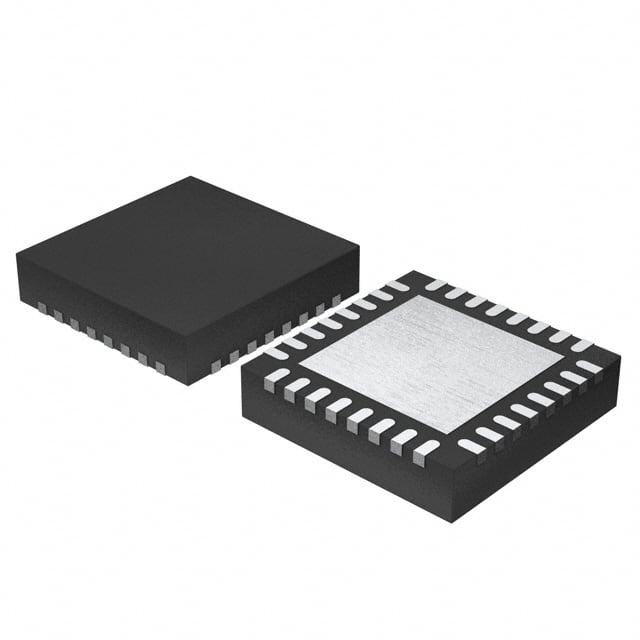
Silicon Labs CP2501-B01-GM
- Part No.:
- CP2501-B01-GM
- Manufacturer:
- Silicon Labs
- Category:
- Specialized
- Package:
- 32-VFQFN Exposed Pad
- Datasheet:
-
CP2501-B01-GM.pdf
- Description:
- IC INTERFACE SPECIALIZED 32QFN
- Quantity:
- Payment:

- Shipping:

Inventory:4,546
Please send an inquiry. Send us your inquiry, and we will respond immediately.
Product details
Overview
CP2501-B01-GM from Silicon Laboratories is a single-chip USB HID touch-screen bridge IC with integrated 8051 microcontroller, full-speed (12 Mbps) USB 2.0 peripheral controller, and support for UART/SPI/SMBus/I²C host interfaces to touch-screen modules. It operates from 3.0–3.6 V, delivers up to 48 MHz system clock, and integrates 53 kB Flash and 3.5 kB RAM for user firmware.
For engineers reviewing the CP2501-B01-GM datasheet, CP2501-B01-GM pinout, CP2501-B01-GM application, or CP2501-B01-GM equivalent, key selection considerations include its native HID touchscreen class compliance, programmable interface protocol selection (UART/SPI/SMBus), 16 GPIO configurability, built-in 3 V regulator, and QFN-32 (5×5 mm) package compatibility with space-constrained industrial HMI designs.
Technical Context
The CP2501-B01-GM implements a pipelined 8051 core running at 24 MHz or 48 MHz, directly managing USB HID descriptor reporting and real-time touch coordinate translation. Its USB peripheral controller handles enumeration, endpoint management, and remote wakeup without external PHY - all using an internal oscillator.
Interface flexibility is achieved via three concurrent master protocols: UART (5–8 data bits, bauds up to 500 kbps), 4-wire SPI (up to 4 MHz, configurable CPOL/CPHA), and SMBus/I²C (up to 400 kHz, programmable slave address). All are software-selectable and coexist under firmware control.
Key Specifications
| Parameter | Value and Actual Design Meaning |
|---|---|
| USB Speed | Full-speed 12 Mbps - meets USB 2.0 specification for HID touchscreen class devices without requiring external transceiver. |
| Core Clock | 24 MHz or 48 MHz - enables deterministic timing for touch sampling, HID report generation, and multi-interface arbitration. |
| Memory | 53 kB Flash / 3.5 kB RAM - sufficient for custom HID descriptor tables, touch calibration algorithms, and protocol translation logic. |
| Supply Range | 3.0–3.6 V - compatible with standard 3.3 V system rails; includes on-chip voltage monitor and 3 V regulator for stable VDD. |
| GPIO Count | 16 pins - configurable as input, open-drain, or push-pull for status signaling, reset control, or auxiliary module interfacing. |
| Interface Support | UART, SPI (4-wire master), SMBus/I²C (master) - allows direct connection to diverse touch-screen controllers without level-shifting or bridge ICs. |
Pinout & Package
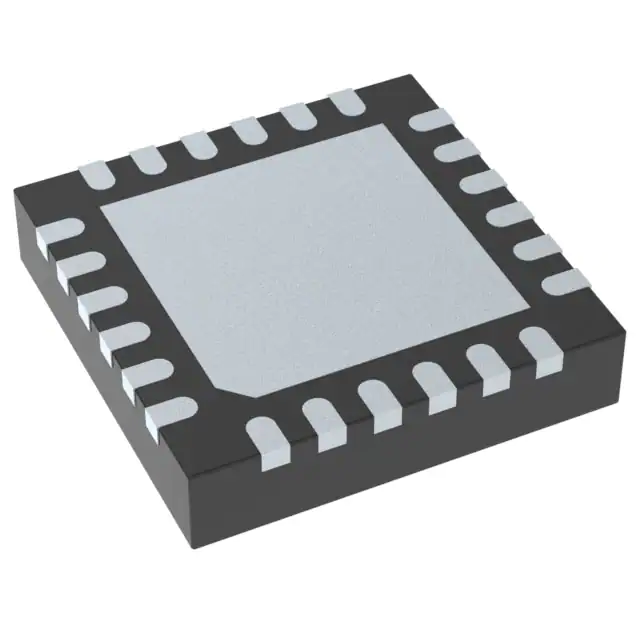
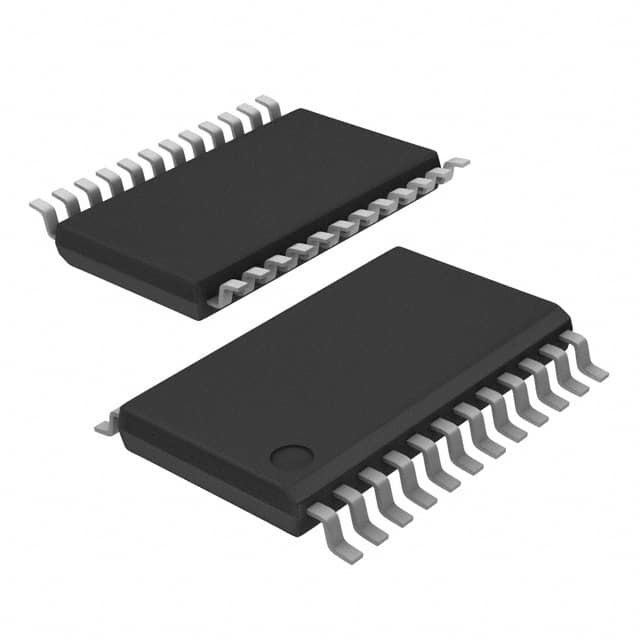
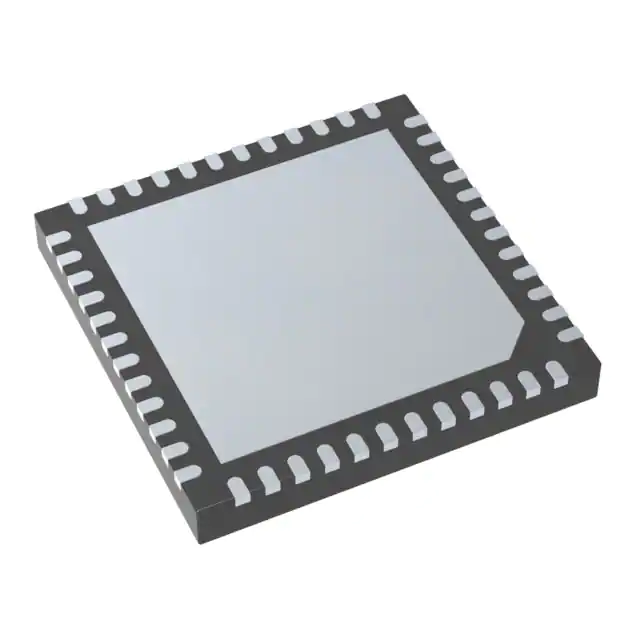
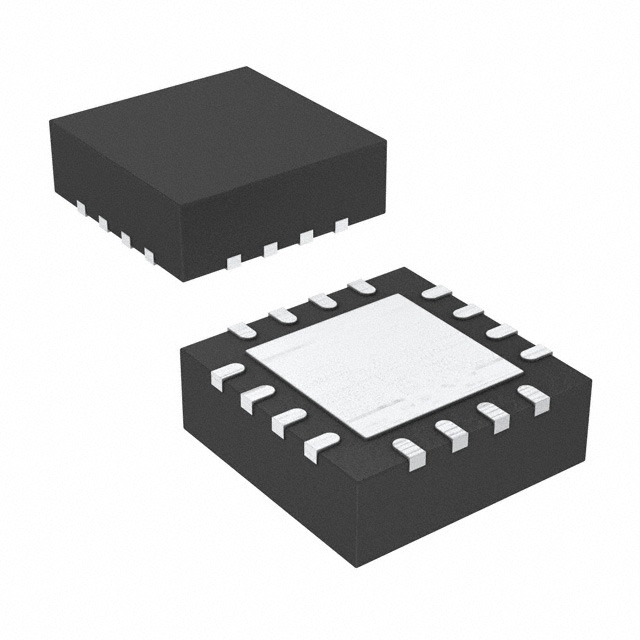
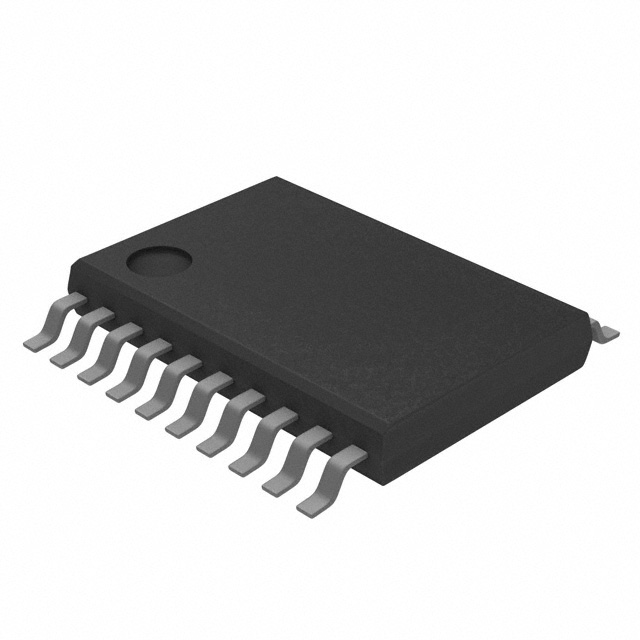
CP2501-B01-GM is housed in a 32-pin QFN package measuring 5×5 mm with exposed thermal pad, optimized for compact HMI PCB layouts and thermal dissipation in sealed enclosures.
| Pin/Terminal | Circuit Role | Design Meaning |
|---|---|---|
| VDD | Core power supply | 3.0–3.6 V regulated output from internal LDO; powers digital logic and USB PHY. |
| REGIN | Regulator input | Accepts 3.0–3.6 V external supply or VBUS; feeds internal 3 V regulator for VDD. |
| VBUS | USB bus voltage sense | Monitors USB host presence (5 V); enables automatic power mode switching between bus-powered and self-powered operation. |
| D+, D− | USB differential data pair | Direct full-speed USB 2.0 interface; no external termination or ESD protection required per spec. |
| GND | Ground reference | Common return for analog/digital domains and thermal pad connection point. |
| P0.0–P0.7, P1.0–P1.7 | GPIO bank terminals | 16 total I/O pins; individually configurable for touch module handshake, interrupt assertion, or LED control. |
| TX, RX | UART serial interface | Asynchronous full-duplex communication with programmable framing (data/stop/parity/baud). |
| SCLK, MOSI, MISO, NSS | SPI master interface | 4-wire synchronous interface supporting up to 4 MHz clock for high-throughput touch data streaming. |
Key Features
| Feature | Design Value |
|---|---|
| Pre-programmed USB HID Touchscreen Class Firmware | Eliminates need for custom USB stack development; supports Windows/macOS/Linux HID drivers out-of-box. |
| Multi-Protocol Master Interface (UART/SPI/SMBus) | Enables interoperability with legacy and modern touch controllers without hardware redesign. |
| Configurable 16 GPIO Pins | Supports touch module reset sequencing, pen detect signaling, or status LED feedback without external logic. |
| Built-in 3 V Regulator & Voltage Monitor | Reduces BOM count by replacing discrete LDO; provides brown-out detection for safe firmware reset during supply dip. |
| In-System Programmability via USB Bootloader | Allows field firmware updates over existing USB connection - no JTAG probe or programming fixture required. |
Applications
| Industrial Human-Machine Interface (HMI) | Medical Touch Display Terminal |
|---|---|
Use Scenario: Embedded panel PC in factory automation cabinet with resistive/capacitive touch overlay. IC Role / Device Role / Timing Role: USB HID bridge translating raw touch coordinates into standardized HID mouse/touch reports for OS-level interpretation. Use Value: Enables plug-and-play Windows-compatible touchscreen functionality without OS driver development or USB stack integration effort. | Use Scenario: Sterile-room diagnostic display requiring glove-compatible multi-touch input and regulatory-compliant firmware update path. IC Role / Device Role / Timing Role: Isolated touch interface controller handling pen pressure, dual-finger gestures, and USB remote wakeup for low-power standby. Use Value: Meets IEC 62304 software lifecycle requirements via in-system USB reprogramming and built-in voltage monitoring for fault-safe operation. |
| Retail Point-of-Sale (POS) Kiosk | Interactive Digital Signage |
Use Scenario: Public-facing kiosk with SPI-based capacitive touch controller and ambient light-sensing backlight control. IC Role / Device Role / Timing Role: Protocol translator and HID report generator managing simultaneous touch events and GPIO-driven backlight dimming. Use Value: Reduces MCU firmware complexity by offloading USB HID compliance and touch report formatting to dedicated silicon. | Use Scenario: Large-format wall-mounted display with UART-connected projected-capacitive touch module and USB-C host interface. IC Role / Device Role / Timing Role: Full-speed USB peripheral bridging UART touch data into HID-compliant reports with configurable VID/PID for OEM branding. Use Value: Supports custom device descriptors and strings for seamless integration into branded signage management platforms. |
Equivalent & Alternatives
The following parts are listed as comparable options for similar USB HID touchscreen bridge applications.
| Alternative Part | Technical Difference | Application Difference | Selection Advice |
|---|---|---|---|
| FTDI FT312L | Dedicated USB-to-UART bridge with fixed HID mouse profile; no programmable MCU, no SPI/SMBus, 12 kB RAM only. | Limited to UART-only touch modules; no custom HID descriptor or multi-touch gesture support. | Choose when only basic single-touch mouse emulation is needed and firmware customization is unnecessary. |
| Microchip PIC18F46J50 | Standalone 8051-compatible MCU with USB 2.0 peripheral; requires external crystal, full USB stack implementation, and interface logic. | Demands significant firmware development for HID class compliance and touch protocol translation. | Choose when full architectural control is required and engineering resources exist for USB stack porting and validation. |
Compared with FT312L and PIC18F46J50, the CP2501-B01-GM uniquely integrates pre-certified HID firmware, multi-protocol masters, and on-chip regulation - reducing time-to-market by eliminating USB stack licensing, external clock components, and discrete LDOs while enabling field-upgradable touch behavior.
Availability
CP2501-B01-GM is available at Aetrix Electronics and suitable for industrial HMI, medical display terminals, retail POS kiosks, and interactive digital signage requiring stable component supply and long-term design continuity.
Supply support for CP2501-B01-GM includes scheduled delivery planning, volume procurement assistance, BOM continuity management, traceable sourcing, and lifecycle availability coordination for OEM customers, industrial embedded developers, connected-device designers, and electronics production programs.
Manufacturer
Silicon Laboratories is a fabless semiconductor company specializing in mixed-signal ICs for timing, connectivity, and sensing applications, with emphasis on energy-efficient, system-on-chip solutions.
The CP2501-B01-GM belongs to Silicon Labs' USB bridge product line, designed specifically to simplify integration of touch-screen modules into USB-enabled systems while minimizing firmware development and BOM cost.
FAQ
Does CP2501-B01-GM require an external crystal or oscillator?
No, CP2501-B01-GM includes a built-in oscillator compliant with USB full-speed timing requirements. External crystal is not needed for USB operation, though optional for higher-precision UART baud rates. The internal oscillator supports both 24 MHz and 48 MHz system clock modes used by the 8051 core and USB PHY in CP2501-B01-GM.
Can CP2501-B01-GM support multi-touch gestures like pinch-to-zoom?
Yes, CP2501-B01-GM supports multi-touch inputs and pen-based gestures through its programmable firmware architecture. While the default HID profile includes basic mouse and single-touch emulation, the 53 kB Flash allows custom implementation of advanced gesture mapping and coordinate reporting - verified in Silicon Labs' AN719 application note for CP2501-B01-GM.
What is the maximum UART baud rate supported by CP2501-B01-GM?
The CP2501-B01-GM supports UART baud rates up to 500 kbps with programmable data bits (5–8), stop bits (1, 1.5, 2), and parity (odd/even/mark/space/none). This enables reliable communication with high-refresh-rate touch controllers without packet loss or timing jitter in CP2501-B01-GM-based designs.
Is CP2501-B01-GM compatible with I²C touch modules?
Yes, CP2501-B01-GM supports SMBus/I²C master mode up to 400 kHz with configurable slave address, making it compatible with standard I²C-based touch controllers. The SMBus interface is electrically and protocol-compatible with I²C, allowing direct connection to common touch modules without level shifters or protocol converters in CP2501-B01-GM implementations.
How is firmware updated on CP2501-B01-GM in the field?
Firmware on CP2501-B01-GM is updated in-system via its built-in USB bootloader - no external programmer or debug interface required. A host PC sends new firmware images over the same USB connection used for HID operation, leveraging Silicon Labs' Simplicity Studio tools and documented DFU protocol for CP2501-B01-GM.
CP2501-B01-GM Specifications
- Product attributes
- Attribute value
- Manufacturer:
- Silicon Labs
- Series:
- -
- Package/Case:
- 32-VFQFN Exposed Pad
- Packaging:
- Tube
- Product Status:
- Obsolete
- Applications:
- Touch Screen Interface
- Interface:
- I2C, SPI, UART
- Voltage - Supply:
- 3V ~ 3.6V
- Supplier Device Package:
- 32-QFN (5x5)
- Grade:
- -
- Qualification:
- -
- Mounting Type:
- Surface Mount
CP2501-B01-GM FAQ
1.How can I place an order for CP2501-B01-GM through Aetrix?
Please submit a Request for Quotation (RFQ) for CP2501-B01-GM on Aetrix. Our sales agent will provide a competitive quotation and guide you through the order confirmation once you accept the terms.
2.Are the price and stock information for CP2501-B01-GM reliable?
The price and inventory of CP2501-B01-GM are updated periodically and may fluctuate due to market conditions. Stock and pricing data are typically refreshed every 24 hours. Quotation validity for CP2501-B01-GM is usually 5 days.
3.What payment methods are accepted for CP2501-B01-GM?
We accept Wire Transfer, PayPal, Credit Card, Western Union, MoneyGram, and Escrow for CP2501-B01-GM transactions.
Note: Certain payment methods may incur a processing fee.
4.How is shipping managed for CP2501-B01-GM?
CP2501-B01-GM orders can be shipped via leading logistics carriers, including DHL, UPS, FedEx, TNT, or Registered Mail.
Once your CP2501-B01-GM order is processed, you will receive an email with the shipment details and tracking number.
Note: Tracking information may take up to 24 hours to appear. Express delivery typically takes 3–5 business days.
5.How can I obtain technical support or documentation for CP2501-B01-GM?
For technical support, including CP2501-B01-GM datasheets, pinout diagrams, or application guidance, please contact our engineering support team. They can provide detailed documentation and assistance for your CP2501-B01-GM requirements.
6.How does Aetrix verify that CP2501-B01-GM is sourced from the original manufacturer or authorized distributors?
All CP2501-B01-GM products on Aetrix are procured from qualified distributors and authorized channels. Our dedicated quality assurance team conducts strict verification, including traceability checks and, if necessary, third-party testing. This ensures that CP2501-B01-GM meets industry standards.
7.What is the process for return or replacement of CP2501-B01-GM?
All CP2501-B01-GM units undergo pre-shipment inspection (PSI). If there is an issue with CP2501-B01-GM, returns or replacements are accepted under the following conditions:
1.Quantity discrepancies, incorrect items, or visible external defects (such as breakage or corrosion), acknowledged by Aetrix.
2.The issue is reported within 90 days of delivery.
3.The CP2501-B01-GM part is unused and in its original packaging.
Return procedure for CP2501-B01-GM:
1.Submit a request within 90 days.
2.Obtain a Return Material Authorization (RMA) from Aetrix.
CP2501-B01-GM Tags
-
NVT4857UKAZ
NXP Semiconductors
-
TCA8418RTWR
Texas Instruments
-
PCA9546APWR
Texas Instruments
-
MD0100N8-G
Microchip Technology
-
PCA9548APW,118
NXP Semiconductors

-
PCA9540BDP,118
NXP Semiconductors

-
PCA9548APWR
Texas Instruments

-
PCA9546APW,118
NXP Semiconductors

-
PTN3360DBS,518
NXP Semiconductors

-
PCA9546ABS,118
NXP Semiconductors

-
PCA9518PWR
Texas Instruments

-
PCA9545APW,118
NXP Semiconductors
Tech Hub
Comparator circuit design covering voltage thresholds, input limits, open-collector outputs, LM393 wiring, op-amp differences, hysteresis, timing, window detection and practical fault diagnosis.
Schmitt triggers use separate rising and falling thresholds to stabilize slow or noisy signals. This guide covers hysteresis, 74HC14 and 74HCT14 selection, comparator calculations, RC oscillators and p…
Counterfeit components can hide behind convincing markings and passing basic function tests. This engineering reference covers source traceability, external inspection, X-ray, XRF, electrical testing, …
A practical engineering and sourcing framework covering lifecycle verification, lifetime-buy calculations, replacement qualification, supplier checks and counterfeit-risk controls.
TTL and CMOS logic families differ in thresholds, loading, output drive, power and timing. This engineering guide compares 74HC and 74HCT, calculates noise margins and checks 3.3 V/5 V compatibility.
A practical engineering guide to 3.3V and 5V logic compatibility, input thresholds, resistor dividers, translator ICs, MOSFET level shifting, I2C pull-ups, timing limits and power-sequencing risks.
The 74HC595 uses push-pull logic outputs, while the TPIC6B595 uses 50 V open-drain DMOS sinks for higher-power loads. This guide compares timing, current limits, 3.3 V interfacing, load wiring, thermal…
The 74HC595 converts serial data into eight stable parallel outputs. This guide covers pin functions, shift and storage timing, OE and MR behavior, drive-current limits, cascading, voltage compatibilit…
A technical comparison of level-sensitive latches and edge-triggered flip-flops, covering timing windows, setup and hold limits, master–slave operation, time borrowing, race-through, HDL inference and…
A D latch stores one bit while Enable controls when data can pass. This reference covers gate-level operation, truth tables, transparency, setup and hold timing, LE versus OE, common ICs and practical …