
 My Inquiry
 My Account


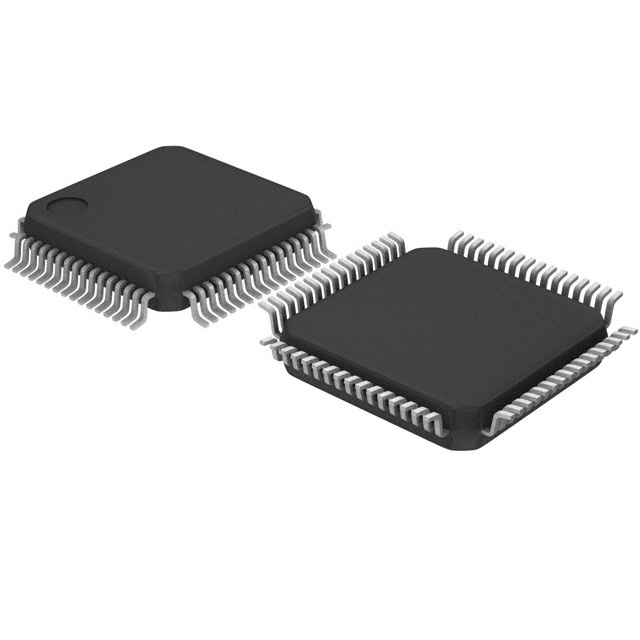
Infineon Technologies CY7C53150-20AXIT
- Part No.:
- CY7C53150-20AXIT
- Manufacturer:
- Infineon Technologies
- Category:
- Application Specific Microcontrollers
- Package:
- 64-LQFP
- Datasheet:
-
 CY7C53150-20AXIT.pdf
- Description:
- IC PROCESSOR NEURON 64LQFP
- Quantity:
- Payment:

- Shipping:

Inventory:4,777
Please send an inquiry. Send us your inquiry, and we will respond immediately.
Product details
Overview
CY7C53150-20AXIT from Cypress Semiconductor is a Neuron chip network processor implementing a full LonWorks node on a single die, integrating three 8-bit pipelined processors (application, network, MAC), 2 KB SRAM, 512 bytes Flash, 64 KB external memory interface, and a 5-pin programmable communications port for twisted-pair, powerline, or RF transceivers in building automation systems.
For engineers reviewing the CY7C53150-20AXIT datasheet, CY7C53150-20AXIT pinout, CY7C53150-20AXIT application, or CY7C53150-20AXIT equivalent, this page delivers verified functional architecture, confirmed 64-pin TQFP package mapping, validated I/O timing modes, and exact replacement guidance versus MC143150Bx and TMPN3150B1.
Technical Context
The CY7C53150 implements all seven OSI layers via off-chip LonTalk firmware loaded into external nonvolatile memory, requiring pre-programming before board assembly. Its external memory interface supports up to 64 KB address space with 6 KB internally mapped, enabling large application code storage beyond on-chip limits.
Three independent 8-bit processors execute application logic, network protocol stack, and media access control concurrently. The 5-pin CP port operates in Single-Ended, Special Purpose, or Differential Mode-supporting Differential Manchester encoding and configurable hysteresis (0–7 levels) and glitch filtering (0–3 settings) for robust noise immunity across industrial media.
Key Specifications
| Parameter | Value and Actual Design Meaning |
|---|---|
| Core Architecture | Three concurrent 8-bit pipelined processors: Application, Network, MAC |
| Memory | 2,048 bytes SRAM + 512 bytes on-chip Flash + up to 64 KB external memory address space |
| Operating Voltage | 5.0 V nominal; on-chip LVD trips at 4.1 ± 0.3 V to prevent NV memory corruption |
| Max Clock Frequency | 20 MHz input clock operation over –40°C to +85°C ambient range |
| I/O Capability | I/O0–I/O3: 20 mA sink; I/O4–I/O7: programmable pull-ups; 11-pin configurable I/O port |
| Communications Port | 5-pin CP port supporting Differential, Single-Ended, and Special Purpose modes with programmable hysteresis and glitch filtering |
| Unique ID | Factory-programmed 48-bit device identifier for automated network installation and management |
Pinout & Package
64-pin Thin Quad Flat Package (TQFP), 10 mm × 10 mm, 0.5 mm pitch, RoHS-compliant, with 16 VDD and 15 VSS pins distributed for low-noise power delivery and thermal management.
| Pin/Terminal | Circuit Role | Design Meaning |
|---|---|---|
| CLK1 | Oscillator input / external clock | Accepts 20 MHz clock source; CLK2 left open when external clock used |
| RESET | Active-low reset with built-in pull-up | Requires 100–1000 pF external capacitance; initiates cold boot or recovery sequence |
| SERVICE | Active-low service pin | Alternates I/O at 76 Hz for node discovery and diagnostic signaling |
| I/O0–I/O3 | High-sink I/O | 20 mA sink capability; Timer/Counter 1 output routed to I/O0, Timer/Counter 2 to I/O1 |
| I/O4–I/O7 | Configurable pull-up I/O | Timer/Counter 1 input selectable from I/O4–I/O7; Timer/Counter 2 input from I/O4 |
| CP0–CP4 | Communication port | Differential Mode: CP0/CP1 = receiver, CP2/CP3 = driver; CP4 = frame clock in Special Purpose Mode |
| A0–A15 | Address bus output | 16-bit external memory addressing; A15 high enables upper 32 KB of 64 KB space |
| D0–D7 | Data bus I/O | Bidirectional 8-bit data path for external memory read/write operations |
| R/W, E | Memory control outputs | R/W controls direction; E enables memory access cycle timing per external memory spec |
Key Features
| Feature | Design Value |
|---|---|
| Triple-processor concurrency | Enables real-time separation of application logic, network stack execution, and MAC layer arbitration without software scheduling overhead |
| Programmable CP port hysteresis | 8 selectable hysteresis levels (0–7) expressed as %VDD ensure reliable signal detection across noisy industrial media like powerline |
| Glitch-filtered receiver | 4 programmable filter settings (0–3) suppress transients up to 2.6 µs, preventing false edge detection in EMI-heavy environments |
| On-chip LVD circuit | Prevents flash memory write corruption during brown-out events by halting writes below 4.1 V, eliminating need for external supervisor IC |
| 48-bit unique ID | Factory-burned identifier eliminates manual node addressing; enables zero-touch commissioning in LonWorks building management networks |
Applications
| Building Automation System Node | Industrial HVAC Controller |
|---|---|
Use Scenario: Distributed temperature, humidity, and occupancy sensing across multi-zone commercial buildings using twisted-pair wiring. IC Role / Device Role / Timing Role: Full LonWorks node executing LonTalk protocol stack, managing sensor I/O, and routing messages over differential CP port. Use Value: Eliminates external microcontroller and protocol stack firmware; 20 MHz clock and 64 KB external memory support complex scheduling algorithms and firmware updates over network. |
Use Scenario: Standalone air-handling unit (AHU) controller interfacing with damper actuators, CO₂ sensors, and variable-frequency drives via RS-485 and analog I/O. IC Role / Device Role / Timing Role: Real-time I/O coordinator with dual 16-bit timers generating PWM waveforms for actuator control and measuring feedback pulses. Use Value: I/O0–I/O3 20 mA sink drives direct LED indicators and relay coils; programmable pull-ups on I/O4–I/O7 simplify connection to open-collector sensors. |
| Smart Lighting Control Panel | Energy Monitoring Gateway |
Use Scenario: Wall-mounted lighting control panel with push-button inputs, LED status indicators, and DALI-compatible transceiver interface. IC Role / Device Role / Timing Role: Application processor handles button debouncing and LED sequencing; communications processor manages DALI message framing over CP port in Special Purpose Mode. Use Value: CP2 provides bit clock and CP4 frame clock to external DALI transceiver, offloading timing-critical serial protocol handling from firmware. |
Use Scenario: Submetering gateway aggregating current/voltage readings from CT-based sensors and transmitting aggregated kWh data over powerline carrier network. IC Role / Device Role / Timing Role: Network processor receives raw ADC samples via I/O8–I/O10 serial interface; MAC processor formats and transmits packets via differential CP port to powerline transceiver. Use Value: Differential Mode CP port with 7-level hysteresis rejects common-mode noise on 240 VAC lines; 48-bit ID enables automatic identification of each submeter in fleet deployment. |
Equivalent & Alternatives
The following parts are listed as comparable options for similar LonWorks node applications.
| Alternative Part | Technical Difference | Application Difference | Selection Advice |
|---|---|---|---|
| MC143150Bx (Motorola) | Same pinout, identical register map, and compatible firmware image format; requires external ROM for LonTalk stack | Legacy design reuse where existing PCB layout and firmware toolchain target Motorola part numbers | Select when maintaining legacy production with unchanged hardware and certified firmware binaries |
| TMPN3150B1 (Toshiba) | Pin-compatible with identical memory map and CP port behavior; differs only in internal test structure and qualification flow | Drop-in replacement in Japanese OEM equipment where Toshiba sourcing is mandated for supply chain compliance | Select when regional procurement policy requires Toshiba-sourced Neuron chips with no firmware or timing changes |
Compared with MC143150Bx and TMPN3150B1, the CY7C53150-20AXIT offers identical electrical and functional behavior but adds Cypress's 0.35 µm flash process for improved reliability and lower power in sleep mode, while retaining full binary compatibility for firmware and hardware design.
Availability
CY7C53150-20AXIT is available at Aetrix Electronics and suitable for building automation systems, industrial HVAC controllers, smart lighting panels, and energy monitoring gateways requiring stable component supply across extended product lifecycles.
Supply support for CY7C53150-20AXIT includes scheduled delivery planning, volume procurement assistance, BOM continuity management, traceable sourcing, and lifecycle availability coordination for OEM customers, industrial embedded developers, connected-device designers, and electronics production programs.
Manufacturer
Cypress Semiconductor, now part of Infineon Technologies, designs high-performance mixed-signal ICs for industrial, automotive, and IoT applications with emphasis on reliability and long-term supply assurance.
The CY7C53150 belongs to Cypress's Neuron chip family, engineered specifically to implement standards-compliant LonWorks nodes with integrated protocol stack execution, deterministic I/O timing, and robust physical-layer interfacing for distributed control networks.
FAQ
Is CY7C53150-20AXIT pin-compatible with CY7C53120 devices?
No. CY7C53150 uses a 64-pin TQFP package with full external memory bus (A0–A15, D0–D7, R/W, E), while CY7C53120 variants use 32-pin SOIC or 44-pin TQFP packages without external bus signals. Pin counts, signal assignments, and package footprints are mutually incompatible.
Does CY7C53150-20AXIT include on-chip LonTalk firmware?
No. Unlike CY7C53120E2/E4, the CY7C53150 requires LonTalk system firmware to be preloaded into the first 16 KB of external nonvolatile memory (Flash, EPROM, or EEPROM) before power-up. On-chip ROM is absent; firmware cannot be downloaded over the network.
What is the purpose of the SERVICE pin in normal operation?
The SERVICE pin toggles between input and output at 76 Hz during normal operation, enabling passive node discovery by network management tools. When pulled low externally, it triggers diagnostic mode; when left floating or pulled high, it allows standard network messaging without interference.
Can I/O pins be used for both analog sensing and digital control simultaneously?
No. I/O0–I/O3 support only digital output with 20 mA sink; I/O4–I/O10 are digital-only general-purpose I/O. The CY7C53150 has no integrated ADC or DAC. Analog sensing requires external signal conditioning and conversion circuitry interfaced via these digital I/O lines or external memory-mapped peripherals.
CY7C53150-20AXIT Specifications
- Product attributes
- Attribute value
- Manufacturer:
- Infineon Technologies
- Series:
- Neuron®
- Package/Case:
- 64-LQFP
- Packaging:
- Tape & Reel (TR)
- Product Status:
- Obsolete
- Programmable:
- Not Verified
- Applications:
- Network Processor
- Core Processor:
- Pipelined
- Program Memory Type:
- FLASH (512 B)
- Controller Series:
- CY7C531xx
- RAM Size:
- 2K x 8
- Interface:
- Serial
- Number of I/O:
- 19
- Voltage - Supply:
- 4.5V ~ 5.5V
- Operating Temperature:
- -40°C ~ 85°C
- Grade:
- -
- Qualification:
- -
- Mounting Type:
- Surface Mount
- Supplier Device Package:
- 64-TQFP (14x14)
CY7C53150-20AXIT FAQ
1.How can I place an order for CY7C53150-20AXIT through Aetrix?
Please submit a Request for Quotation (RFQ) for CY7C53150-20AXIT on Aetrix. Our sales agent will provide a competitive quotation and guide you through the order confirmation once you accept the terms.
2.Are the price and stock information for CY7C53150-20AXIT reliable?
The price and inventory of CY7C53150-20AXIT are updated periodically and may fluctuate due to market conditions. Stock and pricing data are typically refreshed every 24 hours. Quotation validity for CY7C53150-20AXIT is usually 5 days.
3.What payment methods are accepted for CY7C53150-20AXIT?
We accept Wire Transfer, PayPal, Credit Card, Western Union, MoneyGram, and Escrow for CY7C53150-20AXIT transactions.
Note: Certain payment methods may incur a processing fee.
4.How is shipping managed for CY7C53150-20AXIT?
CY7C53150-20AXIT orders can be shipped via leading logistics carriers, including DHL, UPS, FedEx, TNT, or Registered Mail.
Once your CY7C53150-20AXIT order is processed, you will receive an email with the shipment details and tracking number.
Note: Tracking information may take up to 24 hours to appear. Express delivery typically takes 3–5 business days.
5.How can I obtain technical support or documentation for CY7C53150-20AXIT?
For technical support, including CY7C53150-20AXIT datasheets, pinout diagrams, or application guidance, please contact our engineering support team. They can provide detailed documentation and assistance for your CY7C53150-20AXIT requirements.
6.How does Aetrix verify that CY7C53150-20AXIT is sourced from the original manufacturer or authorized distributors?
All CY7C53150-20AXIT products on Aetrix are procured from qualified distributors and authorized channels. Our dedicated quality assurance team conducts strict verification, including traceability checks and, if necessary, third-party testing. This ensures that CY7C53150-20AXIT meets industry standards.
7.What is the process for return or replacement of CY7C53150-20AXIT?
All CY7C53150-20AXIT units undergo pre-shipment inspection (PSI). If there is an issue with CY7C53150-20AXIT, returns or replacements are accepted under the following conditions:
1.Quantity discrepancies, incorrect items, or visible external defects (such as breakage or corrosion), acknowledged by Aetrix.
2.The issue is reported within 90 days of delivery.
3.The CY7C53150-20AXIT part is unused and in its original packaging.
Return procedure for CY7C53150-20AXIT:
1.Submit a request within 90 days.
2.Obtain a Return Material Authorization (RMA) from Aetrix.
CY7C53150-20AXIT Tags
-
CYPD3175-24LQXQ
Infineon Technologies

-
SLB9672VU20FW1523XTMA1
Infineon Technologies
-
SLB9670VQ20FW785XTMA1
Infineon Technologies
-
SLB9672XU20FW1523XTMA1
Infineon Technologies
-
SLB9673XU20FW2613XTMA1
Infineon Technologies
-
CYPD3125-40LQXIT
Infineon Technologies
-
AT97SC3204-U2A1A-20
Microchip Technology
-
AT97SC3204-U2A1A-10
Microchip Technology
-
SLM9670AQ20FW1311XTMA1
Infineon Technologies
-
SLB9672XU20FW1613XTMA1
Infineon Technologies
-
SLB9672AU20FW1613XTMA1
Infineon Technologies
-
SLB9673AU20FW2613XTMA1
Infineon Technologies
Tech Hub

18650 battery guide covering lithium-ion cell basics, 3.6V/3.7V voltage, 4.2V charging, mAh and Wh capacity, protected cells, chargers, BMS, series-parallel packs, holders, welding and sourcing checks.…

Hall effect sensor guide covering working principle, linear and digital sensors, Arduino circuits, current sensing, speed detection, automotive applications, A3144 examples, signal filtering and datash…

Product Change Notification guide for electronic components, covering PCN meaning, PCN vs PDN/EOL, common change types, risk levels, form-fit-function review, engineering validation, BOM control, LTB/L…

A practical guide to blend door actuators, covering HVAC function, symptoms, location, AC and heater issues, reset and calibration, replacement cost, electrical diagnosis, compatibility checks, and rep…

Engineering guide to Raspberry Pi alternatives, covering chip-level differences, Orange Pi, ROCK, Jetson, Banana Pi, NanoPi, Compute Module, Pico, GPIO, camera, HAT compatibility, and replacement risks…

Engineering guide to dynamic load response testing for high-current buck converters, covering load step setup, slew rate, Vcore undershoot, overshoot, recovery time, probe location, output capacitors a…
Engineering guide to output capacitor selection for ASIC Vcore rails, covering bulk capacitors, polymer capacitors, MLCC decoupling, DC bias, ESR, ESL, placement, transient response and substitution ri…
Engineering guide to high-current ASIC Vcore rails, covering 12-phase buck architecture, PMBus control, dynamic load testing, output capacitor networks, smart power stage selection, thermal design and …

Voltage regulator guide covering linear, LDO, 7805, Zener, adjustable, buck, VRM and alternator regulators, with design checks, testing methods, troubleshooting and datasheet-based selection.

Amplifier guide covering voltage, current and power amplification, gain, feedback, amplifier classes, audio and RF applications, op-amp circuits, transimpedance amplifiers, datasheet selection and trou…


