
 My Inquiry
 My Account


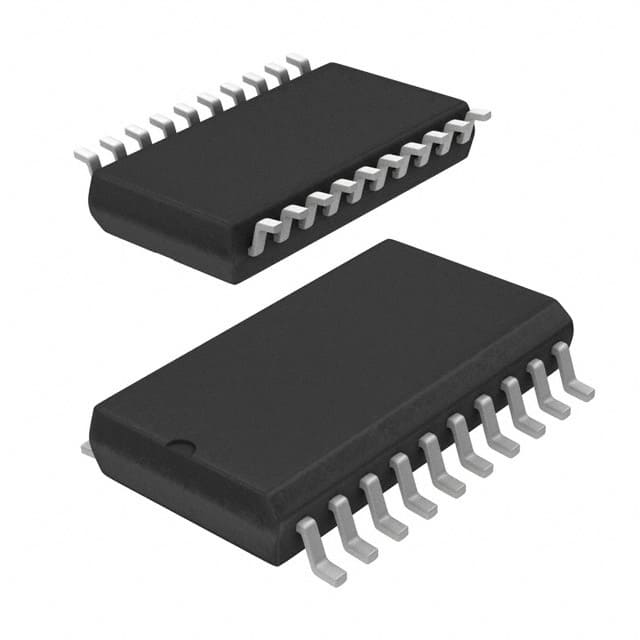
Infineon Technologies CY7C63001A-SXC
- Part No.:
- CY7C63001A-SXC
- Manufacturer:
- Infineon Technologies
- Category:
- Application Specific Microcontrollers
- Package:
- 20-SOIC (0.295", 7.50mm Width)
- Datasheet:
-
 CY7C63001A-SXC.pdf
- Description:
- IC MCU 4K USB MCU LS 20SOIC
- Quantity:
- Payment:

- Shipping:

Inventory:1,622
Please send an inquiry. Send us your inquiry, and we will respond immediately.
Product details
Overview
CY7C63001A-SXC from Cypress Semiconductor is an 8-bit RISC USB microcontroller with integrated 1.5-Mbps USB Serial Interface Engine (SIE), 4 Kbytes EPROM, 128 bytes RAM, and 12 GPIOs (8 low-current Port 0 + 4 high-current Port 1 pins). It operates at 12 MHz internal clock derived from a 6-MHz ceramic resonator and targets low-speed human-interface devices including optical mice.
For engineers reviewing the CY7C63001A-SXC datasheet, CY7C63001A-SXC pinout, CY7C63001A-SXC application, or CY7C63001A-SXC equivalent, key selection criteria include USB 1.1 low-speed compliance, OTP programmability, Schmitt-trigger I/O with programmable sink current, suspend/wake-up via CEXT, and 20-pin SOIC package compatibility.
Technical Context
The CY7C63001A-SXC implements a Harvard-architecture RISC core with 35 USB-optimized instructions and supports exactly one USB device address with two endpoints: control (EP0) and data (EP1), each backed by an 8-byte FIFO. Its USB transceiver requires external 1.5-kΩ pull-up on D+ for low-speed enumeration.
It integrates a free-running 8-bit timer, watchdog timer clocked by a 1.024-ms tick, power-on reset circuitry, and Instant-On Now™ suspend mode activated via bit 3 of SCR (0xFF). Wake-up sources are strictly limited to USB activity, GPIO edge interrupts, or CEXT RC timeout - no deep-sleep or RTC functionality is present.
Key Specifications
| Parameter | Value and Actual Design Meaning |
|---|---|
| USB Speed | 1.5 Mbps low-speed only; compliant with USB Specification v1.1; no full-speed capability. |
| Memory | 4 Kbytes OTP EPROM program memory + 128 bytes RAM; upper 16 bytes reserved for dual 8-byte USB FIFOs. |
| GPIO Count | 12 total: P0.0–P0.7 (8 low-current, Schmitt-trigger, pull-up programmable) + P1.0–P1.3 (4 high-current, LED-drive capable). |
| Clock Source | 6-MHz external ceramic resonator (XTALIN/XTALOUT); internally doubled to 12-MHz CPU clock. |
| Supply Range | 4.0 V to 5.25 V DC; VPP = 12.5 V required only during EPROM programming; tied to GND in normal operation. |
| Operating Temp | 0°C to +70°C ambient; no industrial or extended temperature grade support per datasheet. |
| Suspend Mode | Hardware-enabled via SCR bit 3; wakes only on USB SE0, GPIO edge, or CEXT RC timeout - no software-only wake. |
Pinout & Package
Package: 20-pin SOIC (-SXC suffix), RoHS-compliant, body width 7.5 mm, standard JEDEC MS-013AC footprint.
| Pin/Terminal | Circuit Role | Design Meaning |
|---|---|---|
| P0.0–P0.3 | Port 0 bidirectional I/O (low-current) | Schmitt-trigger inputs with programmable pull-up; sink current configurable in 16 levels; interrupt-capable on edge. |
| P0.4–P0.7 | Port 0 bidirectional I/O (low-current) | Same as P0.0–P0.3; pins 20, 19, 18, 17 in SOIC; used for photo-transistor interface in mouse designs. |
| P1.0–P1.3 | Port 1 bidirectional I/O (high-current) | LED drive capable (up to 20 mA sink); interrupt-enabled; pins 5, 16, 6, 15 in SOIC; not present on CY7C63001A's 20-pin variant beyond P1.3. |
| D+, D– | USB differential data lines | Bidirectional low-speed USB transceiver I/O; requires 1.5-kΩ pull-up on D+ to VCC for device enumeration. |
| XTALIN/XTALOUT | Ceramic resonator interface | 6-MHz fundamental-mode resonator connection; internal oscillator doubler generates 12-MHz core clock. |
| CEXT | Open-drain wake-up timer input/output | Schmitt-trigger input + open-drain output; connects to external RC for programmable suspend wake-up interval. |
| VCC, VSS | Power supply and ground | VCC accepts 4.0–5.25 V; VSS is single ground reference; no separate analog/digital ground pins. |
| VPP | EPROM programming voltage | 12.5 V input during OTP programming; must be tied to GND during normal operation to prevent latch-up. |
Key Features
| Feature | Design Value |
|---|---|
| USB-optimized RISC core | 35-instruction set with dedicated USB SIE control opcodes; eliminates need for external USB protocol logic. |
| Integrated low-speed transceiver | No external PHY required; D+/D– pins directly connect to USB connector with single pull-up resistor. |
| Programmable I/O sink current | 16-level current control per pin (P0/P1 Isink registers 0x30–0x3F); enables precise LED brightness tuning without external resistors. |
| Instant-On Now™ suspend | Sub-10 µA quiescent current in suspend; wake latency < 100 µs from USB SE0 or GPIO event; no firmware polling needed. |
| OTP security fuse | One-time programmable bit prevents EPROM readback; protects firmware IP from reverse engineering during production. |
Applications
| Optical Mouse | USB Joystick |
|---|---|
|
Use Scenario: Optical sensor tracking with quadrature encoder output and button polling over USB. IC Role / Device Role / Timing Role: Primary USB controller handling HID report generation, sensor timing via GPIO interrupts, and LED status indication. Use Value: Eliminates external USB interface IC; P0 pins directly interface phototransistors with Schmitt-trigger noise immunity; P1 pins drive status LEDs with calibrated current. |
Use Scenario: Analog joystick potentiometer scanning and push-button debouncing for gaming peripherals. IC Role / Device Role / Timing Role: USB HID device controller executing periodic polling of analog inputs via external ADC or resistive ladder, and encoding reports. Use Value: On-chip 8-bit timer enables precise 10-ms polling intervals; GPIO interrupt capability allows immediate response to button press events without CPU polling. |
| Gamepad | USB Keypad |
|
Use Scenario: Multi-button matrix scanning with vibration motor control and status LEDs. IC Role / Device Role / Timing Role: Low-speed USB HID device managing button state machine, motor drive via P1 outputs, and LED feedback. Use Value: High-current P1 pins directly drive 20-mA vibration motors; programmable sink current prevents LED overdrive; suspend mode extends battery life between user interactions. |
Use Scenario: Membrane keypad with backlighting and USB HID keyboard report transmission. IC Role / Device Role / Timing Role: USB keyboard controller scanning rows/columns via GPIO, debouncing in firmware, and sending scancode reports. Use Value: 12 GPIOs support 3×4 matrix + 2 status LEDs; CEXT RC wake-up enables instant response after idle; OTP ensures firmware integrity across production batches. |
Equivalent & Alternatives
The following parts are listed as comparable options for similar USB peripheral controller applications.
| Alternative Part | Technical Difference | Application Difference | Selection Advice |
|---|---|---|---|
| CY7C63101A-SQC | 16-GPIO variant in 24-pin QSOP; adds P1.4–P1.7; same EPROM/RAM/USB engine. | Supports larger button matrices or dual-LED arrays; requires PCB redesign for 24-pin footprint. | Select when >12 GPIOs are needed and QSOP packaging is acceptable. |
| AN2131QC | USB 1.1 low-speed controller with 8051 core, 16 KB RAM, no OTP - uses external EEPROM. | Requires external non-volatile storage; higher BOM cost but field-upgradable firmware. | Select when firmware updates post-deployment are mandatory and OTP immutability is unacceptable. |
Compared with CY7C63001A-SXC, CY7C63101A-SQC offers expanded I/O in a larger package while preserving identical USB timing and OTP security; AN2131QC trades OTP simplicity for field-programmability at the cost of added external memory and higher system-level complexity.
Availability
CY7C63001A-SXC is available at Aetrix Electronics and suitable for optical mouse design, USB joystick manufacturing, and gamepad production requiring stable component supply and long-term lifecycle support.
Supply support for CY7C63001A-SXC includes scheduled delivery planning, volume procurement assistance, BOM continuity management, traceable sourcing, and lifecycle availability coordination for OEM customers, industrial embedded developers, connected-device designers, and electronics production programs.
Manufacturer
Cypress Semiconductor (now part of Infineon Technologies) is a fabless semiconductor company founded in 1982, specializing in programmable system-on-chip (PSoC), USB controllers, and mixed-signal solutions.
The CY7C63xxA product line was designed specifically for cost-sensitive, low-speed USB human-interface devices - delivering integrated SIE, OTP memory, and GPIO optimization to eliminate external components in mouse, joystick, and gamepad designs.
FAQ
Is CY7C63001A-SXC compatible with USB 2.0 hosts?
Yes, it is fully backward-compatible with USB 2.0 and later hosts because it implements only the USB 1.1 low-speed (1.5 Mbps) specification. USB 2.0 hosts include dedicated low-speed controllers and automatically negotiate the correct speed during enumeration - no driver or firmware changes are required.
Can the internal EPROM be reprogrammed after initial programming?
No - the CY7C63001A-SXC contains One-Time Programmable (OTP) EPROM. Once programmed, the memory cannot be erased or rewritten. The security fuse bit, when set, permanently blocks readback of code contents, making it suitable for production firmware with IP protection requirements.
What is the role of the CEXT pin in suspend mode?
The CEXT pin serves as both input and open-drain output for an external RC network that generates a wake-up pulse after suspend. When configured as an input, its Schmitt trigger detects rising edges from the RC decay; when used as an output, it discharges the capacitor to initiate wake-up - enabling precise, hardware-timed resume without CPU involvement.
Does CY7C63001A-SXC support USB remote wakeup?
Yes - it supports USB remote wakeup from suspend mode via three hardware sources: detection of USB bus activity (SE0), any enabled GPIO pin edge interrupt, or the CEXT RC timeout signal. The device asserts resume signaling automatically upon wake event detection; no firmware action is required to initiate the USB resume sequence.
CY7C63001A-SXC Specifications
- Product attributes
- Attribute value
- Manufacturer:
- Infineon Technologies
- Series:
- M8™
- Package/Case:
- 20-SOIC (0.295", 7.50mm Width)
- Packaging:
- Tube
- Product Status:
- Obsolete
- Programmable:
- Not Verified
- Applications:
- USB Microcontroller
- Core Processor:
- M8A
- Program Memory Type:
- OTP (4kB)
- Controller Series:
- CY7C630xx
- RAM Size:
- 128 x 8
- Interface:
- USB
- Number of I/O:
- 12
- Voltage - Supply:
- 4V ~ 5.25V
- Operating Temperature:
- 0°C ~ 70°C
- Grade:
- -
- Qualification:
- -
- Mounting Type:
- Surface Mount
- Supplier Device Package:
- 20-SOIC
CY7C63001A-SXC FAQ
1.How can I place an order for CY7C63001A-SXC through Aetrix?
Please submit a Request for Quotation (RFQ) for CY7C63001A-SXC on Aetrix. Our sales agent will provide a competitive quotation and guide you through the order confirmation once you accept the terms.
2.Are the price and stock information for CY7C63001A-SXC reliable?
The price and inventory of CY7C63001A-SXC are updated periodically and may fluctuate due to market conditions. Stock and pricing data are typically refreshed every 24 hours. Quotation validity for CY7C63001A-SXC is usually 5 days.
3.What payment methods are accepted for CY7C63001A-SXC?
We accept Wire Transfer, PayPal, Credit Card, Western Union, MoneyGram, and Escrow for CY7C63001A-SXC transactions.
Note: Certain payment methods may incur a processing fee.
4.How is shipping managed for CY7C63001A-SXC?
CY7C63001A-SXC orders can be shipped via leading logistics carriers, including DHL, UPS, FedEx, TNT, or Registered Mail.
Once your CY7C63001A-SXC order is processed, you will receive an email with the shipment details and tracking number.
Note: Tracking information may take up to 24 hours to appear. Express delivery typically takes 3–5 business days.
5.How can I obtain technical support or documentation for CY7C63001A-SXC?
For technical support, including CY7C63001A-SXC datasheets, pinout diagrams, or application guidance, please contact our engineering support team. They can provide detailed documentation and assistance for your CY7C63001A-SXC requirements.
6.How does Aetrix verify that CY7C63001A-SXC is sourced from the original manufacturer or authorized distributors?
All CY7C63001A-SXC products on Aetrix are procured from qualified distributors and authorized channels. Our dedicated quality assurance team conducts strict verification, including traceability checks and, if necessary, third-party testing. This ensures that CY7C63001A-SXC meets industry standards.
7.What is the process for return or replacement of CY7C63001A-SXC?
All CY7C63001A-SXC units undergo pre-shipment inspection (PSI). If there is an issue with CY7C63001A-SXC, returns or replacements are accepted under the following conditions:
1.Quantity discrepancies, incorrect items, or visible external defects (such as breakage or corrosion), acknowledged by Aetrix.
2.The issue is reported within 90 days of delivery.
3.The CY7C63001A-SXC part is unused and in its original packaging.
Return procedure for CY7C63001A-SXC:
1.Submit a request within 90 days.
2.Obtain a Return Material Authorization (RMA) from Aetrix.
CY7C63001A-SXC Tags
-
CYPD3175-24LQXQ
Infineon Technologies

-
SLB9672VU20FW1523XTMA1
Infineon Technologies
-
SLB9670VQ20FW785XTMA1
Infineon Technologies
-
SLB9672XU20FW1523XTMA1
Infineon Technologies
-
SLB9673XU20FW2613XTMA1
Infineon Technologies
-
CYPD3125-40LQXIT
Infineon Technologies
-
AT97SC3204-U2A1A-20
Microchip Technology
-
AT97SC3204-U2A1A-10
Microchip Technology
-
SLM9670AQ20FW1311XTMA1
Infineon Technologies
-
SLB9672XU20FW1613XTMA1
Infineon Technologies
-
SLB9672AU20FW1613XTMA1
Infineon Technologies
-
SLB9673AU20FW2613XTMA1
Infineon Technologies
Tech Hub

18650 battery guide covering lithium-ion cell basics, 3.6V/3.7V voltage, 4.2V charging, mAh and Wh capacity, protected cells, chargers, BMS, series-parallel packs, holders, welding and sourcing checks.…

Hall effect sensor guide covering working principle, linear and digital sensors, Arduino circuits, current sensing, speed detection, automotive applications, A3144 examples, signal filtering and datash…

Product Change Notification guide for electronic components, covering PCN meaning, PCN vs PDN/EOL, common change types, risk levels, form-fit-function review, engineering validation, BOM control, LTB/L…

A practical guide to blend door actuators, covering HVAC function, symptoms, location, AC and heater issues, reset and calibration, replacement cost, electrical diagnosis, compatibility checks, and rep…

Engineering guide to Raspberry Pi alternatives, covering chip-level differences, Orange Pi, ROCK, Jetson, Banana Pi, NanoPi, Compute Module, Pico, GPIO, camera, HAT compatibility, and replacement risks…
Engineering guide to dynamic load response testing for high-current buck converters, covering load step setup, slew rate, Vcore undershoot, overshoot, recovery time, probe location, output capacitors a…
Engineering guide to output capacitor selection for ASIC Vcore rails, covering bulk capacitors, polymer capacitors, MLCC decoupling, DC bias, ESR, ESL, placement, transient response and substitution ri…
Engineering guide to high-current ASIC Vcore rails, covering 12-phase buck architecture, PMBus control, dynamic load testing, output capacitor networks, smart power stage selection, thermal design and …
Voltage regulator guide covering linear, LDO, 7805, Zener, adjustable, buck, VRM and alternator regulators, with design checks, testing methods, troubleshooting and datasheet-based selection.
Amplifier guide covering voltage, current and power amplification, gain, feedback, amplifier classes, audio and RF applications, op-amp circuits, transimpedance amplifiers, datasheet selection and trou…


