
 My Inquiry
 My Account


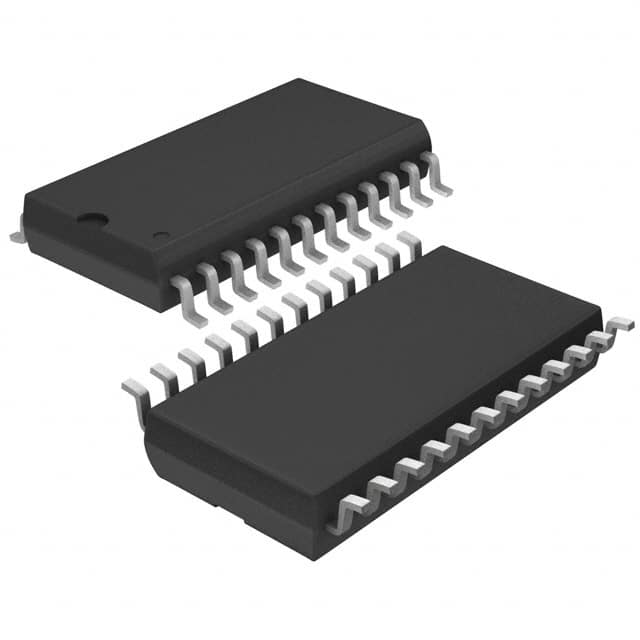
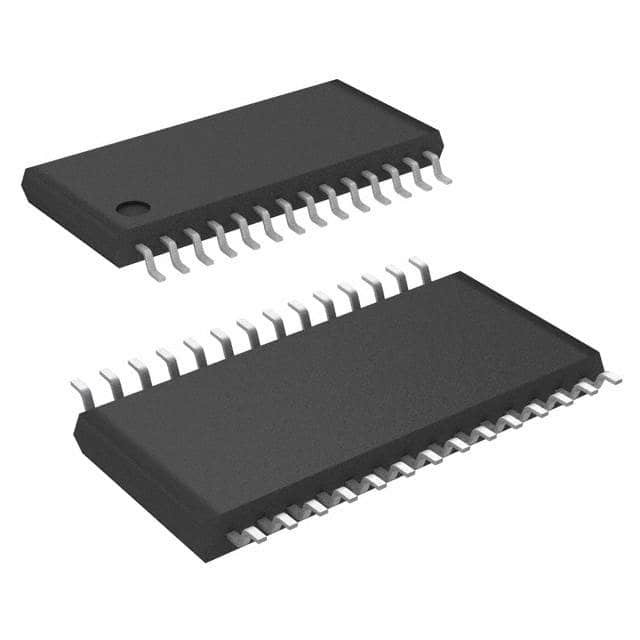
Infineon Technologies CY7C63743C-SXCT
- Part No.:
- CY7C63743C-SXCT
- Manufacturer:
- Infineon Technologies
- Category:
- Application Specific Microcontrollers
- Package:
- 24-SOIC (0.295", 7.50mm Width)
- Datasheet:
-
 CY7C63743C-SXCT.pdf
- Description:
- IC MCU 8K LS USB/PS-2 24-SOIC
- Quantity:
- Payment:

- Shipping:

Inventory:2,190
Please send an inquiry. Send us your inquiry, and we will respond immediately.
Product details
Overview
CY7C63743C-SXCT from Cypress Semiconductor is an 8-bit RISC one-time-programmable (OTP) microcontroller integrating low-speed USB 2.0 and PS/2 dual-mode peripheral control, featuring 8 KB EPROM, 256 bytes RAM, internal 6-MHz oscillator, and 16 GPIO pins with 50 mA sink capability per pin. It eliminates external crystal, pull-up resistors, and mode-switching components for mice, gamepads, and joysticks.
For engineers reviewing the CY7C63743C-SXCT datasheet, CY7C63743C-SXCT pinout, CY7C63743C-SXCT application, or CY7C63743C-SXCT equivalent, key selection criteria include dual-mode auto-configuration without GPIO overhead, integrated 3.3V regulator for D– pull-up, USB HID 1.1 compliance, and 24-pin SOIC/QSOP/PDIP package compatibility.
Technical Context
The CY7C63743C implements a Harvard-architecture RISC core running at 12 MHz CPU clock derived from internal 6-MHz oscillator (±1.5% USB-tuned accuracy) or optional external 6-MHz ceramic resonator. Its USB Serial Interface Engine (SIE) supports one device address and three endpoints (Control, Interrupt, Bulk), with D+/D– pins multiplexed as PS/2 SCLK/SDATA.
It integrates four 8-bit input capture timers (two per P0.0/P0.1), a 12-bit free-running timer with 128-μs/1.024-ms interrupt outputs, maskable GPIO interrupts on all 16 I/O pins, and internal brown-out reset at 3.75 V. Operating voltage is 4.0–5.5 VDC; temperature range is 0°C to 70°C.
Key Specifications
| Parameter | Value and Actual Design Meaning |
|---|---|
| USB Compliance | USB 2.0 low-speed (1.5 Mbps); HID 1.1 compliant - enables plug-and-play operation with host OS without custom drivers |
| Memory | 8 KB OTP EPROM + 256 bytes RAM - sufficient for full HID descriptor, report handling, and PS/2 protocol stack in single firmware image |
| GPIO | 16 programmable I/O pins (P0[7:0], P1[7:0]), 50 mA sink per pin - drives LEDs, switches, and RF receiver modules directly without external buffers |
| Internal Oscillator | 6-MHz ±1.5% (USB-tuned) - eliminates external crystal/resonator, reducing BOM count and board area by ≥2 components |
| USB Pull-up | Integrated 3.3V regulator on VREG/P2.0 - powers 1.3-kΩ D– pull-up resistor internally, removing need for external LDO or resistor network |
| Capture Timers | Four 8-bit registers (two per P0.0/P0.1) - captures edge timestamps for wireless RF signal decoding without CPU polling |
| Supply Range | 4.0 V to 5.5 VDC - compatible with standard 5 V rail in PS/2 peripherals and USB bus-powered designs |
Pinout & Package
CY7C63743C-SXCT is available in 24-pin SOIC, 24-pin PDIP, and 24-pin QSOP packages. All variants share identical pin mapping and electrical characteristics.
| Pin/Terminal | Circuit Role | Design Meaning |
|---|---|---|
| 1, 2, 3, 4, 21, 22, 23, 24 | P0.0–P0.7 | Port 0 GPIO; P0.0/P0.1 feed Capture Timers A/B - enables direct RF pulse timing for wireless peripherals |
| 5, 6, 7, 8, 17, 18, 19, 20 | P1.0–P1.7 | Port 1 GPIO; all pins support maskable interrupts and 50 mA sink - suitable for button matrix scanning and LED drive |
| 13, 14 | D+/SCLK, D–/SDATA | USB differential pair / PS/2 bidirectional data clock - auto-configures mode via traffic detection; no external mode-select logic required |
| 11 | VCC | Main power supply (4.0–5.5 V) - powers core, USB transceiver, and I/O banks |
| 9, 10 | VSS | Dual ground pins - reduces noise coupling between analog (USB transceiver) and digital (core/I/O) sections |
| 12 | VREG/P2.0 | 3.3V regulated output for USB D– pull-up; also functions as general-purpose input - removes external regulator and resistor |
| 15 | XTALIN/P2.1 | Optional 6-MHz resonator input or general-purpose input - used only if higher clock precision than internal oscillator is required |
| 16 | XTALOUT | Oscillator output - left unconnected when using internal oscillator mode |
| 10 | VPP | Programming voltage pin - grounded during normal operation; required only during OTP programming |
Key Features
| Feature | Design Value |
|---|---|
| Crystalless USB operation | Internal 6-MHz oscillator meets USB low-speed timing tolerance (±1.5%) - eliminates crystal, load capacitors, and layout sensitivity |
| Dual-mode auto-configuration | USB/PS/2 mode selected automatically by host handshake - no firmware GPIO management or external mode-switching circuitry needed |
| Integrated 3.3V USB pull-up regulator | VREG pin delivers stable 3.3V to 1.3-kΩ D– pull-up - removes discrete LDO, feedback resistors, and decoupling caps |
| High-drive GPIO | 50 mA sink per pin across all 16 I/O - directly drives RGB LEDs, buzzer coils, or optocoupler inputs without external drivers |
| Input capture timers | Four 8-bit registers tied to P0.0/P0.1 - captures RF carrier timing edges for wireless mouse/gamepad synchronization without CPU overhead |
Applications
| Wireless Optical Mouse | Gaming Gamepad |
|---|---|
|
Use Scenario: Battery-powered optical mouse with 2.4 GHz RF link to PC. IC Role / Device Role / Timing Role: Dual-mode peripheral controller managing USB HID report generation and PS/2 fallback; captures RF packet timing via P0.0/P0.1. Use Value: Eliminates crystal and pull-up resistor, reducing PCB area by 3.2 mm² and BOM cost by $0.18; internal wake-up timer enables <100 μA suspend current. |
Use Scenario: Multi-button, analog-stick gamepad supporting both USB and legacy PS/2 ports. IC Role / Device Role / Timing Role: Single-chip interface translating button/stick states into HID reports or PS/2 scan codes; uses P1.x for tactile switch scanning. Use Value: No mode-selection hardware or firmware GPIO arbitration - host-initiated protocol negotiation ensures zero-latency mode switching. |
| Industrial Joystick | POS Peripheral Keyboard |
|
Use Scenario: Ruggedized joystick for factory HMI with ESD-prone environment. IC Role / Device Role / Timing Role: Robust I/O controller with 50 mA sink per pin driving mechanical limit switches and status LEDs; USB HID Class-compliant reporting. Use Value: High-current GPIO tolerates contact bounce and ESD transients up to ±8 kV (HBM); internal brown-out reset prevents lockup during 5 V rail sag. |
Use Scenario: Point-of-sale keyboard with mixed membrane and mechanical keys. IC Role / Device Role / Timing Role: Scan matrix of 64 keys and generate PS/2 scancodes or USB HID keyboard reports based on host enumeration. Use Value: Shared D+/D– pins reduce connector count; internal pull-ups on SCLK/SDATA eliminate 2 external 10-kΩ resistors. |
Equivalent & Alternatives
The following parts are listed as comparable options for similar low-speed USB and PS/2 peripheral controller applications.
| Alternative Part | Technical Difference | Application Difference | Selection Advice |
|---|---|---|---|
| CY7C63723C | 18-pin SOIC/PDIP; 8 GPIO (P0[7:0] only); no P1 port; same core, memory, and USB/PS/2 engine | Limited to simpler peripherals (e.g., basic mice) due to fewer I/O pins and no capture timers on P1 | Select when design requires ≤8 GPIO and minimal PCB area; not suitable for multi-function gamepads or RF timing capture |
| AN1181 (Microchip) | 8-bit PIC16F631-based; USB 1.1 only; no PS/2 mode; requires external 48-MHz oscillator for USB clock synthesis | Supports USB HID only; lacks native PS/2 fallback and auto-configuration logic | Choose only for USB-only designs where PS/2 compatibility is unnecessary and external clocking is acceptable |
Compared with CY7C63723C and AN1181, CY7C63743C-SXCT uniquely delivers full 16-GPIO flexibility, dual-mode auto-detection without firmware intervention, and integrated timing capture-enabling single-firmware wireless peripherals with USB/PS/2 interoperability and reduced component count.
Availability
CY7C63743C-SXCT is available at Aetrix Electronics and suitable for industrial human-machine interfaces, gaming peripherals, and point-of-sale terminals requiring stable component supply and long-term lifecycle support.
Supply support for CY7C63743C-SXCT includes scheduled delivery planning, volume procurement assistance, BOM continuity management, traceable sourcing, and lifecycle availability coordination for OEM customers, industrial embedded developers, connected-device designers, and electronics production programs.
Manufacturer
Cypress Semiconductor (now part of Infineon Technologies) is a fabless semiconductor company specializing in USB, memory, and programmable system-on-chip solutions for embedded applications.
CY7C63743C belongs to the enCoRe™ USB family, designed specifically to minimize external components in dual-mode USB/PS/2 peripherals while maintaining full HID compliance and real-time I/O responsiveness.
FAQ
Is CY7C63743C-SXCT still recommended for new designs?
No. Cypress explicitly marks CY7C63743C as "Not Recommended for New Designs" in its official datasheet (Rev. *D, October 2010). This reflects end-of-life planning and lack of ongoing process node migration. Aetrix Electronics maintains limited legacy stock for replacement and maintenance programs but advises evaluating Infineon's XMC1000 or EZ-USB™ FX3 families for new projects requiring USB 2.0 functionality.
Does CY7C63743C-SXCT require an external crystal for USB operation?
No. The device features an internal 6-MHz oscillator tuned to ±1.5% accuracy, meeting USB low-speed timing requirements without any external crystal or resonator. An external 6-MHz ceramic resonator is optional and only used when tighter clock precision is needed - it connects to XTALIN/P2.1 and XTALOUT pins.
How does dual-mode USB/PS/2 auto-configuration work without GPIO control?
The USB Serial Interface Engine (SIE) detects host-initiated traffic on D+/D– lines to determine protocol: USB reset signaling triggers USB mode; PS/2 clock/data handshaking activates PS/2 mode. Internal logic routes signals and enables appropriate pull-ups and interrupt handlers - no firmware GPIO manipulation or external mode-select circuitry is required.
What is the function of the VREG/P2.0 pin?
VREG/P2.0 provides a regulated 3.3V output (±5%) to drive the mandatory 1.3-kΩ pull-up resistor on the USB D– line. During normal operation, it sources ~250 µA. When unused, it can serve as a general-purpose input (P2.0). It must not be loaded beyond its specified current limit to maintain USB compliance.
CY7C63743C-SXCT Specifications
- Product attributes
- Attribute value
- Manufacturer:
- Infineon Technologies
- Series:
- enCoRe™
- Package/Case:
- 24-SOIC (0.295", 7.50mm Width)
- Packaging:
- Tape & Reel (TR)
- Product Status:
- Obsolete
- Programmable:
- Not Verified
- Applications:
- USB Microcontroller
- Core Processor:
- M8B
- Program Memory Type:
- OTP (8kB)
- Controller Series:
- CY7C637xx
- RAM Size:
- 256 x 8
- Interface:
- PS/2, USB
- Number of I/O:
- 16
- Voltage - Supply:
- 3.5V ~ 5.5V
- Operating Temperature:
- 0°C ~ 70°C
- Grade:
- -
- Qualification:
- -
- Mounting Type:
- Surface Mount
- Supplier Device Package:
- 24-SOIC
CY7C63743C-SXCT FAQ
1.How can I place an order for CY7C63743C-SXCT through Aetrix?
Please submit a Request for Quotation (RFQ) for CY7C63743C-SXCT on Aetrix. Our sales agent will provide a competitive quotation and guide you through the order confirmation once you accept the terms.
2.Are the price and stock information for CY7C63743C-SXCT reliable?
The price and inventory of CY7C63743C-SXCT are updated periodically and may fluctuate due to market conditions. Stock and pricing data are typically refreshed every 24 hours. Quotation validity for CY7C63743C-SXCT is usually 5 days.
3.What payment methods are accepted for CY7C63743C-SXCT?
We accept Wire Transfer, PayPal, Credit Card, Western Union, MoneyGram, and Escrow for CY7C63743C-SXCT transactions.
Note: Certain payment methods may incur a processing fee.
4.How is shipping managed for CY7C63743C-SXCT?
CY7C63743C-SXCT orders can be shipped via leading logistics carriers, including DHL, UPS, FedEx, TNT, or Registered Mail.
Once your CY7C63743C-SXCT order is processed, you will receive an email with the shipment details and tracking number.
Note: Tracking information may take up to 24 hours to appear. Express delivery typically takes 3–5 business days.
5.How can I obtain technical support or documentation for CY7C63743C-SXCT?
For technical support, including CY7C63743C-SXCT datasheets, pinout diagrams, or application guidance, please contact our engineering support team. They can provide detailed documentation and assistance for your CY7C63743C-SXCT requirements.
6.How does Aetrix verify that CY7C63743C-SXCT is sourced from the original manufacturer or authorized distributors?
All CY7C63743C-SXCT products on Aetrix are procured from qualified distributors and authorized channels. Our dedicated quality assurance team conducts strict verification, including traceability checks and, if necessary, third-party testing. This ensures that CY7C63743C-SXCT meets industry standards.
7.What is the process for return or replacement of CY7C63743C-SXCT?
All CY7C63743C-SXCT units undergo pre-shipment inspection (PSI). If there is an issue with CY7C63743C-SXCT, returns or replacements are accepted under the following conditions:
1.Quantity discrepancies, incorrect items, or visible external defects (such as breakage or corrosion), acknowledged by Aetrix.
2.The issue is reported within 90 days of delivery.
3.The CY7C63743C-SXCT part is unused and in its original packaging.
Return procedure for CY7C63743C-SXCT:
1.Submit a request within 90 days.
2.Obtain a Return Material Authorization (RMA) from Aetrix.
CY7C63743C-SXCT Tags
-
CYPD3175-24LQXQ
Infineon Technologies

-
SLB9672VU20FW1523XTMA1
Infineon Technologies
-
SLB9670VQ20FW785XTMA1
Infineon Technologies
-
SLB9672XU20FW1523XTMA1
Infineon Technologies
-
SLB9673XU20FW2613XTMA1
Infineon Technologies
-
CYPD3125-40LQXIT
Infineon Technologies
-
AT97SC3204-U2A1A-20
Microchip Technology
-
AT97SC3204-U2A1A-10
Microchip Technology
-
SLM9670AQ20FW1311XTMA1
Infineon Technologies
-
SLB9672XU20FW1613XTMA1
Infineon Technologies
-
SLB9672AU20FW1613XTMA1
Infineon Technologies
-
SLB9673AU20FW2613XTMA1
Infineon Technologies
Tech Hub

Guide to electronic component obsolescence covering EOL risk, PCN/PDN notices, last-time buy planning, replacement options, form-fit-function validation, counterfeit risk and BOM lifecycle management.

18650 battery guide covering lithium-ion cell basics, 3.6V/3.7V voltage, 4.2V charging, mAh and Wh capacity, protected cells, chargers, BMS, series-parallel packs, holders, welding and sourcing checks.…

Hall effect sensor guide covering working principle, linear and digital sensors, Arduino circuits, current sensing, speed detection, automotive applications, A3144 examples, signal filtering and datash…

Product Change Notification guide for electronic components, covering PCN meaning, PCN vs PDN/EOL, common change types, risk levels, form-fit-function review, engineering validation, BOM control, LTB/L…

A practical guide to blend door actuators, covering HVAC function, symptoms, location, AC and heater issues, reset and calibration, replacement cost, electrical diagnosis, compatibility checks, and rep…

Engineering guide to Raspberry Pi alternatives, covering chip-level differences, Orange Pi, ROCK, Jetson, Banana Pi, NanoPi, Compute Module, Pico, GPIO, camera, HAT compatibility, and replacement risks…
Engineering guide to dynamic load response testing for high-current buck converters, covering load step setup, slew rate, Vcore undershoot, overshoot, recovery time, probe location, output capacitors a…
Engineering guide to output capacitor selection for ASIC Vcore rails, covering bulk capacitors, polymer capacitors, MLCC decoupling, DC bias, ESR, ESL, placement, transient response and substitution ri…
Engineering guide to high-current ASIC Vcore rails, covering 12-phase buck architecture, PMBus control, dynamic load testing, output capacitor networks, smart power stage selection, thermal design and …
Voltage regulator guide covering linear, LDO, 7805, Zener, adjustable, buck, VRM and alternator regulators, with design checks, testing methods, troubleshooting and datasheet-based selection.


