
 My Inquiry
 My Account


Infineon Technologies CY7C63743-PXC
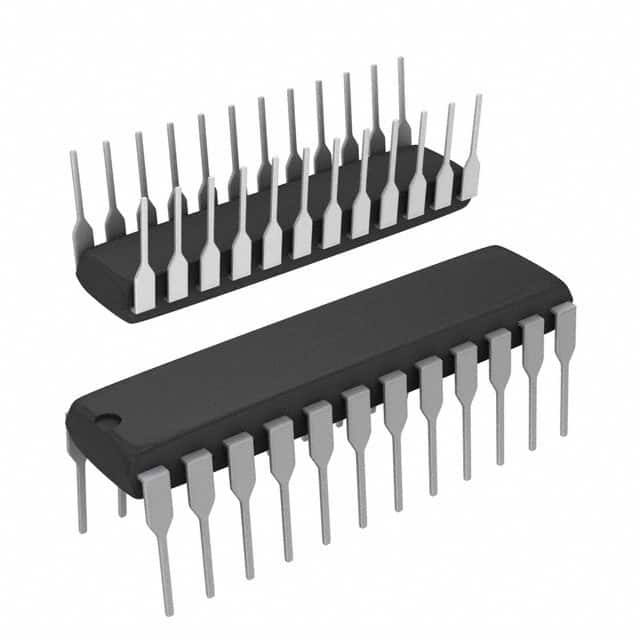
- Part No.:
- CY7C63743-PXC
- Manufacturer:
- Infineon Technologies
- Category:
- Application Specific Microcontrollers
- Package:
- 24-DIP (0.300", 7.62mm)
- Datasheet:
-
 CY7C63743-PXC.pdf
- Description:
- IC MCU 8K USB/PS2 LS 24DIP
- Quantity:
- Payment:

- Shipping:

Inventory:3,517
Please send an inquiry. Send us your inquiry, and we will respond immediately.
Product details
Overview
CY7C63743-PXC from Cypress Semiconductor is an 8-bit RISC OTP microcontroller integrating low-speed USB 2.0 and PS/2 interface logic, internal 6-MHz oscillator, 3.3V USB pull-up regulator (VREG/P2.0), 8 KB EPROM, 256-byte RAM, and 16 GPIO pins with 50 mA sink capability per pin. It operates from 4.0–5.5 V at 0–70°C and targets dual-mode human-interface devices.
For engineers reviewing the CY7C63743-PXC datasheet, CY7C63743-PXC pinout, CY7C63743-PXC application, or CY7C63743-PXC equivalent, key selection criteria include crystalless USB timing compliance, auto-configurable USB/PS/2 mode switching without GPIO overhead, integrated 3.3V VREG for D– pull-up, and capture timer support for RF wireless input decoding.
Technical Context
The CY7C63743-PXC implements a Harvard-architecture RISC core running at 12 MHz CPU clock derived from an internal 6-MHz oscillator tunable to ±1.5% for USB timing compliance. It embeds a full USB Serial Interface Engine (SIE) supporting one device address and three endpoints, plus native PS/2 protocol handling via shared D+/SCLK and D–/SDATA pins.
Its I/O subsystem includes two configurable ports (P0.0–P0.7, P1.0–P1.7), each pin supporting CMOS output, open-drain, high-Z input, or internal pull-up - with maskable edge-triggered interrupts and dedicated capture inputs on P0.0/P0.1. A 12-bit free-running timer and four 8-bit input capture registers enable precise event timing for wireless receiver interfaces.
Key Specifications
| Parameter | Value and Actual Design Meaning |
|---|---|
| USB Compliance | USB 2.0 Low-Speed (1.5 Mbps); HID v1.1 compliant - enables plug-and-play enumeration on Windows/macOS/Linux without custom drivers. |
| Core Clock | 12 MHz internal CPU clock - derived from tunable 6-MHz oscillator; eliminates external crystal/resonator and reduces BOM cost. |
| Memory | 8 KB OTP EPROM + 256-byte RAM - sufficient for HID descriptor storage, endpoint FIFOs, and firmware for mice/gamepads. |
| I/O Drive | 50 mA sink per GPIO pin - directly drives LEDs, small relays, or optocouplers without external buffers. |
| USB Regulator | 3.3 V ±5% on VREG/P2.0 - powers 1.3 kΩ pull-up resistor on D–, meeting USB voltage tolerance for LS device detection. |
| Capture Timers | Four 8-bit registers (two per P0.0/P0.1) - captures timestamped edges for RF remote signal decoding or encoder quadrature analysis. |
| Operating Voltage | 4.0–5.5 V DC - compatible with standard 5 V rail in PS/2 peripherals and USB bus-powered designs. |
Pinout & Package
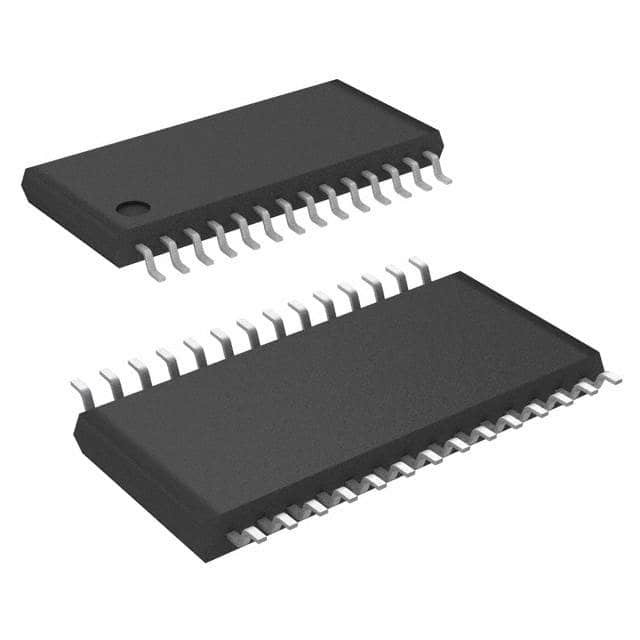
CY7C63743-PXC is packaged in 24-pin SOIC (small outline integrated circuit), with 0.300-inch body width and standard 1.27 mm pitch. Pin 1 is marked by a notch or dot; pin numbering follows counter-clockwise convention from top-left corner.
| Pin/Terminal | Circuit Role | Design Meaning |
|---|---|---|
| P0.0 | Capture Timer A input | Rising/falling edge-triggered input for precise timing of external events (e.g., RF packet start). |
| P0.1 | Capture Timer B input | Independent edge-capture channel for secondary timing source (e.g., quadrature encoder phase B). |
| D+/SCLK | USB D+ / PS/2 clock bidirectional | Shared physical pin; auto-detected mode - no GPIO or external switch required for USB/PS/2 selection. |
| D–/SDATA | USB D– / PS/2 data bidirectional | Same dual-role as D+/SCLK; internal pull-ups active in PS/2 mode; USB transceiver integrated. |
| VREG/P2.0 | 3.3 V regulated output / GPIO input | Provides stable 3.3 V for USB D– pull-up; configurable as general-purpose input when regulator disabled. |
| XTALIN/P2.1 | Oscillator input / GPIO input | Accepts 6 MHz ceramic resonator or external clock; defaults to internal oscillator mode unless externally driven. |
| VCC | Power supply | 4.0–5.5 V main supply; powers core, I/O, and USB transceiver. |
| VSS | Ground | Two dedicated ground pins (pins 9 and 10) - reduce noise coupling in mixed-signal USB/PS/2 operation. |
Key Features
| Feature | Design Value |
|---|---|
| Crystalless USB operation | Internal oscillator tuned to ±1.5% accuracy eliminates external crystal/resonator - reduces component count and board area by ≥2 parts. |
| Auto-configurable USB/PS/2 mode | No GPIO pins or external logic needed to switch protocols - mode detected automatically on bus activity, simplifying firmware and hardware design. |
| Integrated 3.3 V USB regulator | VREG/P2.0 delivers regulated 3.3 V for D– pull-up - ensures reliable USB device enumeration without discrete LDO or resistor network. |
| High-drive GPIO (50 mA sink) | Each of 16 pins sinks up to 50 mA - directly interfaces LEDs, tactile feedback actuators, or level-shifting circuits without external drivers. |
| Dual-edge capture timers | Separate rising/falling edge registers per P0.0/P0.1 - enables accurate pulse-width measurement for IR remote protocols or motor encoder signals. |
Applications
| Wireless Optical Mouse | Gaming Keypad with Dual-Mode Support |
|---|---|
|
Use Scenario: Battery-powered optical mouse using 2.4 GHz RF link to host PC, requiring USB or PS/2 enumeration based on host port type. IC Role / Device Role / Timing Role: Primary controller managing optical sensor, RF transceiver, and dual-mode interface - handles HID report generation and automatic protocol selection. Use Value: Eliminates external crystal and pull-up resistors; internal 3.3 V regulator and crystalless timing reduce standby current and bill-of-materials cost. |
Use Scenario: Mechanical gaming keypad supporting both legacy PS/2 motherboards and modern USB hosts, with RGB backlighting and macro programming. IC Role / Device Role / Timing Role: System-on-chip controller executing HID keyboard reports, driving LED arrays via GPIO, and managing mode negotiation without host intervention. Use Value: 50 mA GPIO sink drives multiple LEDs per key; auto-switching between USB/PS/2 avoids manual DIP switches or firmware reflash. |
| Industrial Joystick with Encoder Feedback | RF Remote Control Transmitter |
|
Use Scenario: Factory-floor joystick with quadrature encoder axes and push-button controls, deployed in environments where USB and PS/2 ports coexist. IC Role / Device Role / Timing Role: Real-time position decoder using P0.0/P0.1 capture timers for encoder edge timing; generates HID joystick reports over selected interface. Use Value: Hardware capture timers offload CPU from polling; dual-mode support ensures compatibility across OEM control panels and legacy HMIs. |
Use Scenario: Consumer IR/RF remote transmitter with learn-mode functionality, requiring precise pulse timing for NEC, RC-5, or proprietary protocols. IC Role / Device Role / Timing Role: Pulse-width and period measurement engine using four 8-bit capture registers - timestamps transitions on P0.0/P0.1 for signal analysis. Use Value: On-chip capture eliminates need for external logic or high-speed MCU; internal oscillator provides consistent timing across temperature range. |
Equivalent & Alternatives
The following parts are listed as comparable options for similar low-speed USB + PS/2 peripheral controller applications.
| Alternative Part | Technical Difference | Application Difference | Selection Advice |
|---|---|---|---|
| CY7C63723-PXI | 18-pin SOIC/PDIP; fewer GPIO (10 total), no P1.2–P1.7 or P0.4–P0.5; identical core, memory, and USB/PS/2 functionality. | Suitable for space-constrained mice or compact keypads where 16 GPIO not required. | Select when board layout favors smaller package and I/O count can be reduced without compromising feature set. |
| AN98512 (Cypress reference design) | Not a direct replacement IC; evaluation platform using CY7C63743 with preloaded HID firmware and RF module interface. | Used for rapid prototyping of wireless HID devices - not a production-ready drop-in part. | Choose for development validation; not suitable for volume production due to non-orderable status and board-level integration. |
Compared with CY7C63723-PXI, CY7C63743-PXC offers six additional GPIO and QSOP/SOIC/PDIP flexibility; versus AN98512, it is the underlying silicon enabling that reference design - making CY7C63743-PXC the only production-orderable, pin-compatible solution for full-featured dual-mode peripherals.
Availability
CY7C63743-PXC is available at Aetrix Electronics and suitable for industrial human-interface devices, gaming peripherals, and embedded HID controllers requiring stable component supply, long-term lifecycle assurance, and RoHS-compliant packaging.
Supply support for CY7C63743-PXC includes scheduled delivery planning, volume procurement assistance, BOM continuity management, traceable sourcing, and lifecycle availability coordination for OEM customers, industrial embedded developers, connected-device designers, and electronics production programs.
Manufacturer
Cypress Semiconductor (now part of Infineon Technologies) is a fabless semiconductor company specializing in programmable system-on-chip solutions, USB controllers, and mixed-signal ICs for embedded applications.
The enCoRe™ USB product line was designed specifically to reduce component count in low-speed USB peripherals - integrating oscillator, regulator, transceiver, and dual-mode logic into a single 8-bit RISC microcontroller for mice, keypads, and joysticks.
FAQ
Does CY7C63743-PXC require an external crystal for USB operation?
No. The device features an internal 6-MHz oscillator tunable to ±1.5% for USB low-speed timing compliance. An external 6-MHz ceramic resonator is optional for higher precision but not required. The internal oscillator eliminates crystal-related EMI and reduces BOM cost by one component.
How does automatic USB/PS/2 mode switching work without GPIO control?
Mode detection is handled entirely in hardware: USB traffic on D+/D– triggers USB mode; PS/2 clock/data activity on the same pins activates PS/2 mode. No firmware GPIO configuration or external logic is needed - the SIE and PS/2 state machine manage protocol selection autonomously.
What is the function of the VREG/P2.0 pin, and can it be used as a general-purpose input?
VREG/P2.0 delivers a regulated 3.3 V output for the USB D– pull-up resistor. When the regulator is disabled via firmware, the pin becomes a standard CMOS input (P2.0). This dual function allows shared pin usage while maintaining USB compliance during active enumeration.
Can CY7C63743-PXC support custom HID descriptors beyond standard mouse/keyboard profiles?
Yes. The 8 KB EPROM and flexible firmware architecture allow implementation of custom HID descriptors, including vendor-defined reports, multi-interface configurations, and non-standard usage pages - provided descriptor size fits within endpoint 0 buffer constraints and adheres to HID specification structure.
CY7C63743-PXC Specifications
- Product attributes
- Attribute value
- Manufacturer:
- Infineon Technologies
- Series:
- enCoRe™
- Package/Case:
- 24-DIP (0.300", 7.62mm)
- Packaging:
- Tube
- Product Status:
- Obsolete
- Programmable:
- Not Verified
- Applications:
- USB Microcontroller
- Core Processor:
- M8B
- Program Memory Type:
- OTP (8kB)
- Controller Series:
- CY7C637xx
- RAM Size:
- 256 x 8
- Interface:
- PS/2, USB
- Number of I/O:
- 16
- Voltage - Supply:
- 4V ~ 5.5V
- Operating Temperature:
- 0°C ~ 70°C
- Grade:
- -
- Qualification:
- -
- Mounting Type:
- Through Hole
- Supplier Device Package:
- 24-PDIP
CY7C63743-PXC FAQ
1.How can I place an order for CY7C63743-PXC through Aetrix?
Please submit a Request for Quotation (RFQ) for CY7C63743-PXC on Aetrix. Our sales agent will provide a competitive quotation and guide you through the order confirmation once you accept the terms.
2.Are the price and stock information for CY7C63743-PXC reliable?
The price and inventory of CY7C63743-PXC are updated periodically and may fluctuate due to market conditions. Stock and pricing data are typically refreshed every 24 hours. Quotation validity for CY7C63743-PXC is usually 5 days.
3.What payment methods are accepted for CY7C63743-PXC?
We accept Wire Transfer, PayPal, Credit Card, Western Union, MoneyGram, and Escrow for CY7C63743-PXC transactions.
Note: Certain payment methods may incur a processing fee.
4.How is shipping managed for CY7C63743-PXC?
CY7C63743-PXC orders can be shipped via leading logistics carriers, including DHL, UPS, FedEx, TNT, or Registered Mail.
Once your CY7C63743-PXC order is processed, you will receive an email with the shipment details and tracking number.
Note: Tracking information may take up to 24 hours to appear. Express delivery typically takes 3–5 business days.
5.How can I obtain technical support or documentation for CY7C63743-PXC?
For technical support, including CY7C63743-PXC datasheets, pinout diagrams, or application guidance, please contact our engineering support team. They can provide detailed documentation and assistance for your CY7C63743-PXC requirements.
6.How does Aetrix verify that CY7C63743-PXC is sourced from the original manufacturer or authorized distributors?
All CY7C63743-PXC products on Aetrix are procured from qualified distributors and authorized channels. Our dedicated quality assurance team conducts strict verification, including traceability checks and, if necessary, third-party testing. This ensures that CY7C63743-PXC meets industry standards.
7.What is the process for return or replacement of CY7C63743-PXC?
All CY7C63743-PXC units undergo pre-shipment inspection (PSI). If there is an issue with CY7C63743-PXC, returns or replacements are accepted under the following conditions:
1.Quantity discrepancies, incorrect items, or visible external defects (such as breakage or corrosion), acknowledged by Aetrix.
2.The issue is reported within 90 days of delivery.
3.The CY7C63743-PXC part is unused and in its original packaging.
Return procedure for CY7C63743-PXC:
1.Submit a request within 90 days.
2.Obtain a Return Material Authorization (RMA) from Aetrix.
CY7C63743-PXC Tags
-
CYPD3175-24LQXQ
Infineon Technologies

-
SLB9672VU20FW1523XTMA1
Infineon Technologies
-
SLB9670VQ20FW785XTMA1
Infineon Technologies
-
SLB9672XU20FW1523XTMA1
Infineon Technologies
-
SLB9673XU20FW2613XTMA1
Infineon Technologies
-
CYPD3125-40LQXIT
Infineon Technologies
-
AT97SC3204-U2A1A-20
Microchip Technology
-
AT97SC3204-U2A1A-10
Microchip Technology
-
SLM9670AQ20FW1311XTMA1
Infineon Technologies
-
SLB9672XU20FW1613XTMA1
Infineon Technologies
-
SLB9672AU20FW1613XTMA1
Infineon Technologies
-
SLB9673AU20FW2613XTMA1
Infineon Technologies
Tech Hub

18650 battery guide covering lithium-ion cell basics, 3.6V/3.7V voltage, 4.2V charging, mAh and Wh capacity, protected cells, chargers, BMS, series-parallel packs, holders, welding and sourcing checks.…

Hall effect sensor guide covering working principle, linear and digital sensors, Arduino circuits, current sensing, speed detection, automotive applications, A3144 examples, signal filtering and datash…

Product Change Notification guide for electronic components, covering PCN meaning, PCN vs PDN/EOL, common change types, risk levels, form-fit-function review, engineering validation, BOM control, LTB/L…

A practical guide to blend door actuators, covering HVAC function, symptoms, location, AC and heater issues, reset and calibration, replacement cost, electrical diagnosis, compatibility checks, and rep…

Engineering guide to Raspberry Pi alternatives, covering chip-level differences, Orange Pi, ROCK, Jetson, Banana Pi, NanoPi, Compute Module, Pico, GPIO, camera, HAT compatibility, and replacement risks…

Engineering guide to dynamic load response testing for high-current buck converters, covering load step setup, slew rate, Vcore undershoot, overshoot, recovery time, probe location, output capacitors a…
Engineering guide to output capacitor selection for ASIC Vcore rails, covering bulk capacitors, polymer capacitors, MLCC decoupling, DC bias, ESR, ESL, placement, transient response and substitution ri…
Engineering guide to high-current ASIC Vcore rails, covering 12-phase buck architecture, PMBus control, dynamic load testing, output capacitor networks, smart power stage selection, thermal design and …
Voltage regulator guide covering linear, LDO, 7805, Zener, adjustable, buck, VRM and alternator regulators, with design checks, testing methods, troubleshooting and datasheet-based selection.

Amplifier guide covering voltage, current and power amplification, gain, feedback, amplifier classes, audio and RF applications, op-amp circuits, transimpedance amplifiers, datasheet selection and trou…


