
 My Inquiry
 My Account


Infineon Technologies CY7C68000A-56LTXC
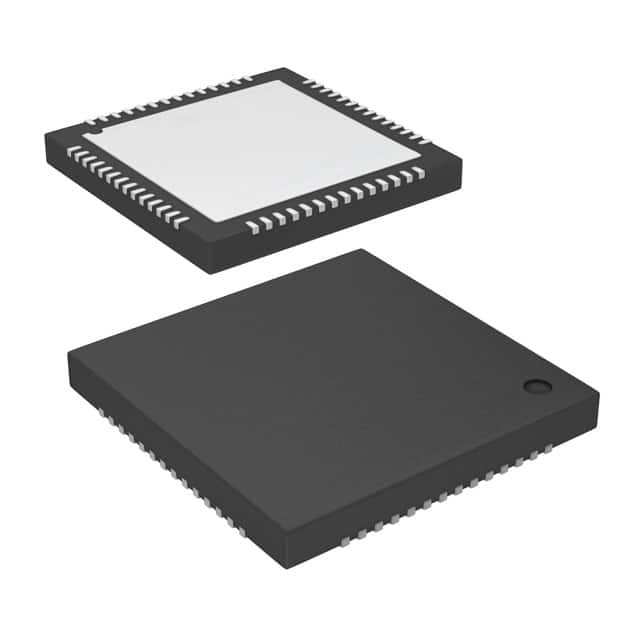
- Part No.:
- CY7C68000A-56LTXC
- Manufacturer:
- Infineon Technologies
- Category:
- Drivers, Receivers, Transceivers
- Package:
- 56-VFQFN Exposed Pad
- Datasheet:
-
 CY7C68000A-56LTXC.pdf
- Description:
- IC TRANSCEIVER FULL 1/1 56QFN
- Quantity:
- Payment:

- Shipping:

Inventory:2,962
Please send an inquiry. Send us your inquiry, and we will respond immediately.
Product details
Overview
CY7C68000A-56LTXC from Cypress Semiconductor is a USB 2.0 UTMI-compliant transceiver IC supporting both High-Speed (480 Mbps) and Full-Speed (12 Mbps) operation, with integrated 1.5 kΩ DPLUS pull-up, on-chip PLL, and internal USB line termination. It interfaces directly to Intel Monahans application processors via an 8-bit @ 60 MHz or 16-bit @ 30 MHz parallel bus and operates at 3.3 V.
For engineers reviewing the CY7C68000A-56LTXC datasheet, CY7C68000A-56LTXC pinout, CY7C68000A-56LTXC application, or CY7C68000A-56LTXC equivalent, key selection considerations include UTMI interface compliance, dual-speed signaling support, tristate-enabled bus sharing, internal clock recovery, and package-specific pin mapping for QFN-56.
Technical Context
The CY7C68000A implements a full-featured UTMI+ Level 1 physical layer transceiver with synchronous field and EOP detection/generation, NRZI encoding/decoding, and bit stuffing/unstuffing logic. Its on-chip PLL locks to a 24 MHz ±100 ppm crystal to generate precise 30 MHz (16-bit mode) or 60 MHz (8-bit mode) parallel interface clocks.
It supports three operational modes via OpMode[1:0]: normal data transfer (00), soft disconnect (01), and NRZI/bitsstuff bypass (10). LineState[1:0] outputs provide real-time, CLK-synchronized USB differential line state (J/K/SE0/SE1), while Tri_state enables full I/O tristating only during Suspend mode.
Key Specifications
| Parameter | Value and Actual Design Meaning |
|---|---|
| USB Speed Support | High-Speed (480 Mbps) and Full-Speed (12 Mbps); no Low-Speed support. |
| Parallel Interface | Configurable 8-bit bidirectional @ 60 MHz or 16-bit bidirectional @ 30 MHz. |
| Supply Voltage | 3.3 V nominal; separate AVCC/AGND pins for analog section isolation. |
| Internal Termination | Integrated 1.5 kΩ DPLUS pull-up and USB data line impedance matching; no external resistors required. |
| Crystal Input | 24 MHz ±100 ppm parallel-resonant fundamental-mode crystal; drives internal PLL. |
| UTMI Compliance | UTMI+ Level 1 compliant (v1.05); certified for USB 2.0 device operation. |
| Suspend/Tristate | Suspend mode reduces power; Tri_state pin enables full I/O tristating only when suspended. |
Pinout & Package
Package: 56-pin QFN (7 mm × 7 mm, 0.5 mm pitch), RoHS-compliant, lead-free. Pinout validated per Cypress Document #38-08052 Rev. *H, Page 4.
| Pin | Circuit Role | Design Meaning |
|---|---|---|
| D[15:0] | Bidirectional Data Bus | 16-bit parallel interface; width selected by DataBus16_8; D[7:0] always active in 8-bit mode. |
| CLK | Output Clock | 30 MHz (16-bit) or 60 MHz (8-bit); synchronizes all parallel data transfers and LineState outputs. |
| XcvrSelect / TermSelect | Input Control | XcvrSelect selects FS/HS transceivers; TermSelect enables FS pull-up or HS termination on DPLUS. |
| Tri_state | Input Enable | Activates full I/O tristating only when Suspend = 1; enables UTMI bus sharing with other devices. |
| LineState[1:0] | Output Status | CLK-synchronized reflection of DMINUS/DPLUS states (00=SE0, 01=J, 10=K, 11=SE1). |
| XTALIN / XTALOUT | Crystal Interface | Drives 24 MHz crystal; internal oscillator + PLL generate system clocks; no external clock generator needed. |
Key Features
| Feature | Design Value |
|---|---|
| Integrated USB Termination | Eliminates 4 external resistors (DPLUS pull-up + D+/D− terminations), reducing BOM count and PCB area. |
| UTMI Bus Tristating | Enables shared UTMI bus architecture in multi-peripheral mobile SoCs, conserving GPIO resources. |
| Dynamic Speed Switching | Hardware-selectable FS/HS transceiver and termination paths allow runtime negotiation without firmware reconfiguration. |
| On-Chip Clock Recovery | Recovers 480 Mbps or 12 Mbps serial timing from USB stream; removes need for external clock domain crossing logic. |
| Test Mode Support | OpMode[1:0] provides non-driving and NRZI/bitsstuff bypass modes for signal integrity validation and debug. |
Applications
| Smartphone USB Interface | DSL Modem Host Controller |
|---|---|
|
Use Scenario: High-bandwidth peripheral attachment in space-constrained smartphone baseband SoC designs. IC Role / Device Role / Timing Role: UTMI PHY transceiver bridging SoC USB controller to Type-A/B connector; handles HS/FS switching and clock recovery. Use Value: Reduces external component count by integrating termination and PLL, enabling smaller form factor and lower EMI. |
Use Scenario: Adding USB 2.0 host capability to legacy DSL modem chipsets lacking native UTMI support. IC Role / Device Role / Timing Role: Standalone USB 2.0 PHY providing compliant physical layer signaling and parallel interface to host controller ASIC. Use Value: Enables USB mass storage and printer connectivity without redesigning core modem silicon. |
| Portable Media Player Docking | Wireless LAN USB Adapter |
|
Use Scenario: High-reliability synchronization between PMP and PC during bulk file transfer over USB 2.0. IC Role / Device Role / Timing Role: USB 2.0 device-side transceiver managing HS packet framing, EOP/SYNC generation, and bit stuffing. Use Value: Ensures deterministic latency and error-free streaming via hardware-level NRZI encoding and CRC-checked receive path. |
Use Scenario: Compact USB dongle implementing 802.11n/g wireless connectivity with minimal bill-of-materials. IC Role / Device Role / Timing Role: USB 2.0 device transceiver interfacing WLAN MAC to USB host; supports suspend/resume for power efficiency. Use Value: Delivers 480 Mbps link bandwidth while maintaining <100 μA suspend current via controlled tristate behavior. |
Equivalent & Alternatives
The following parts are listed as comparable options for similar USB 2.0 UTMI transceiver applications.
| Alternative Part | Technical Difference | Application Difference | Selection Advice |
|---|---|---|---|
| SMSC USB3317C | UTMI+ Level 2 compliant; includes integrated USB switch and VBUS detection; requires external 1.5 kΩ pull-up. | Targeted at hub-based or VBUS-aware designs; lacks native Monahans optimization and tristate bus sharing logic. | Preferred when VBUS monitoring or multi-port switching is required; not drop-in for CY7C68000A's shared-bus mobile use case. |
| Microchip USB2502 | Embedded UTMI PHY in USB 2.0 hub controller; no standalone transceiver mode; fixed 16-bit interface; no OpMode test modes. | Designed for embedded hub applications only; cannot serve as discrete PHY for custom SoC interfaces. | Select only when integrating hub functionality; incompatible as direct replacement for discrete UTMI PHY role. |
Compared with SMSC USB3317C and Microchip USB2502, the CY7C68000A offers unique tristate-enabled UTMI bus sharing, Monahans-optimized timing, and dedicated test modes-making it optimal for mobile SoC coexistence and debug-critical designs where discrete PHY control is essential.
Availability
CY7C68000A-56LTXC is available at Aetrix Electronics and suitable for smartphone baseband interfaces, DSL modem host extensions, portable media player docking systems, and wireless LAN USB adapters requiring stable component supply and long-term industrial availability.
Supply support for CY7C68000A-56LTXC includes scheduled delivery planning, volume procurement assistance, BOM continuity management, traceable sourcing, and lifecycle availability coordination for OEM customers, industrial embedded developers, connected-device designers, and electronics production programs.
Manufacturer
Cypress Semiconductor (now part of Infineon Technologies) is a fabless semiconductor company specializing in programmable system-on-chip (PSoC), memory, and USB connectivity solutions for embedded systems.
The MoBL-USB™ TX2 product line was designed specifically to deliver low-power, high-integration USB 2.0 physical layer transceivers for mobile and portable applications, with emphasis on SoC interface simplicity and UTMI compliance.
FAQ
What is the function of the Tri_state pin, and when can it be activated?
The Tri_state pin enables full tristating of all I/Os and outputs, allowing the UTMI bus to be shared with other devices. It is only functional when the device is in Suspend mode (Suspend = 1). Activation occurs within ~50 ns of Tri_state assertion, and deactivation restores drive within ~50 ns. Unused inputs must be tied HIGH or LOW to prevent floating.
Does CY7C68000A-56LTXC require an external crystal, and what are its specifications?
Yes - it requires a 24 MHz ±100 ppm parallel-resonant, fundamental-mode crystal with 27–33 pF load capacitance and ≤500 μW drive level. The crystal connects between XTALIN and XTALOUT. An external 24 MHz square wave may substitute for XTALIN if XTALOUT is left open, but crystal operation is preferred for jitter-sensitive HS links.
How does the CY7C68000A handle USB High-Speed versus Full-Speed selection?
FS/HS selection uses two independent controls: XcvrSelect chooses the transceiver (0 = HS, 1 = FS), while TermSelect configures termination (0 = HS termination/SE0, 1 = FS termination/1.5 kΩ pull-up). Both signals must be coordinated - e.g., HS operation requires XcvrSelect = 0 and TermSelect = 0 - to meet USB 2.0 electrical compliance.
Can CY7C68000A-56LTXC operate in Low-Speed (1.5 Mbps) USB mode?
No - the CY7C68000A does not support Low-Speed USB signaling. Its transceiver architecture is optimized exclusively for Full-Speed (12 Mbps) and High-Speed (480 Mbps) modes per USB 2.0 specification. LS mode is explicitly excluded in the functional overview and electrical characterization.
CY7C68000A-56LTXC Specifications
- Product attributes
- Attribute value
- Manufacturer:
- Infineon Technologies
- Series:
- CY7C
- Package/Case:
- 56-VFQFN Exposed Pad
- Packaging:
- Tray
- Product Status:
- Obsolete
- Type:
- Transceiver
- Protocol:
- USB 2.0
- Number of Drivers/Receivers:
- 1/1
- Duplex:
- Full
- Receiver Hysteresis:
- -
- Data Rate:
- -
- Voltage - Supply:
- 3V ~ 3.6V
- Operating Temperature:
- 0°C ~ 70°C
- Grade:
- -
- Qualification:
- -
- Mounting Type:
- Surface Mount
- Supplier Device Package:
- 56-QFN (8x8)
CY7C68000A-56LTXC FAQ
1.How can I place an order for CY7C68000A-56LTXC through Aetrix?
Please submit a Request for Quotation (RFQ) for CY7C68000A-56LTXC on Aetrix. Our sales agent will provide a competitive quotation and guide you through the order confirmation once you accept the terms.
2.Are the price and stock information for CY7C68000A-56LTXC reliable?
The price and inventory of CY7C68000A-56LTXC are updated periodically and may fluctuate due to market conditions. Stock and pricing data are typically refreshed every 24 hours. Quotation validity for CY7C68000A-56LTXC is usually 5 days.
3.What payment methods are accepted for CY7C68000A-56LTXC?
We accept Wire Transfer, PayPal, Credit Card, Western Union, MoneyGram, and Escrow for CY7C68000A-56LTXC transactions.
Note: Certain payment methods may incur a processing fee.
4.How is shipping managed for CY7C68000A-56LTXC?
CY7C68000A-56LTXC orders can be shipped via leading logistics carriers, including DHL, UPS, FedEx, TNT, or Registered Mail.
Once your CY7C68000A-56LTXC order is processed, you will receive an email with the shipment details and tracking number.
Note: Tracking information may take up to 24 hours to appear. Express delivery typically takes 3–5 business days.
5.How can I obtain technical support or documentation for CY7C68000A-56LTXC?
For technical support, including CY7C68000A-56LTXC datasheets, pinout diagrams, or application guidance, please contact our engineering support team. They can provide detailed documentation and assistance for your CY7C68000A-56LTXC requirements.
6.How does Aetrix verify that CY7C68000A-56LTXC is sourced from the original manufacturer or authorized distributors?
All CY7C68000A-56LTXC products on Aetrix are procured from qualified distributors and authorized channels. Our dedicated quality assurance team conducts strict verification, including traceability checks and, if necessary, third-party testing. This ensures that CY7C68000A-56LTXC meets industry standards.
7.What is the process for return or replacement of CY7C68000A-56LTXC?
All CY7C68000A-56LTXC units undergo pre-shipment inspection (PSI). If there is an issue with CY7C68000A-56LTXC, returns or replacements are accepted under the following conditions:
1.Quantity discrepancies, incorrect items, or visible external defects (such as breakage or corrosion), acknowledged by Aetrix.
2.The issue is reported within 90 days of delivery.
3.The CY7C68000A-56LTXC part is unused and in its original packaging.
Return procedure for CY7C68000A-56LTXC:
1.Submit a request within 90 days.
2.Obtain a Return Material Authorization (RMA) from Aetrix.
CY7C68000A-56LTXC Tags

-
ATA6561-GAQW-N
Microchip Technology
-
ATA6561-GBQW-N
Microchip Technology
-
AM26LS32ACDR
Texas Instruments

-
SP485CN-L/TR
MaxLinear, Inc.
-
SP485EN-L/TR
MaxLinear, Inc.
-
SP485EEN-L/TR
MaxLinear, Inc.
-
SP485ECN-L/TR
MaxLinear, Inc.
-
THVD1400DR
Texas Instruments
-
AM26C31IDR
Texas Instruments

-
TLIN1021ADRQ1
Texas Instruments
-
MAX232IDR
Texas Instruments
-
AM26C32IDR
Texas Instruments
Tech Hub

LDO regulator guide covering low dropout voltage, power dissipation, thermal design, PSRR, output noise, capacitor stability, adjustable LDO circuits, LDO vs buck converter and datasheet selection chec…

Conditional Access Module guide covering CAM meaning, CI/CI+ interface, smart card authorization, DVB security workflow, TV and set-top box compatibility, internal electronics, ESD protection, connecto…

Guide to electronic component obsolescence covering EOL risk, PCN/PDN notices, last-time buy planning, replacement options, form-fit-function validation, counterfeit risk and BOM lifecycle management.

18650 battery guide covering lithium-ion cell basics, 3.6V/3.7V voltage, 4.2V charging, mAh and Wh capacity, protected cells, chargers, BMS, series-parallel packs, holders, welding and sourcing checks.…

Hall effect sensor guide covering working principle, linear and digital sensors, Arduino circuits, current sensing, speed detection, automotive applications, A3144 examples, signal filtering and datash…

Product Change Notification guide for electronic components, covering PCN meaning, PCN vs PDN/EOL, common change types, risk levels, form-fit-function review, engineering validation, BOM control, LTB/L…

A practical guide to blend door actuators, covering HVAC function, symptoms, location, AC and heater issues, reset and calibration, replacement cost, electrical diagnosis, compatibility checks, and rep…

Engineering guide to Raspberry Pi alternatives, covering chip-level differences, Orange Pi, ROCK, Jetson, Banana Pi, NanoPi, Compute Module, Pico, GPIO, camera, HAT compatibility, and replacement risks…

Engineering guide to dynamic load response testing for high-current buck converters, covering load step setup, slew rate, Vcore undershoot, overshoot, recovery time, probe location, output capacitors a…
Engineering guide to output capacitor selection for ASIC Vcore rails, covering bulk capacitors, polymer capacitors, MLCC decoupling, DC bias, ESR, ESL, placement, transient response and substitution ri…


