
 My Inquiry
 My Account


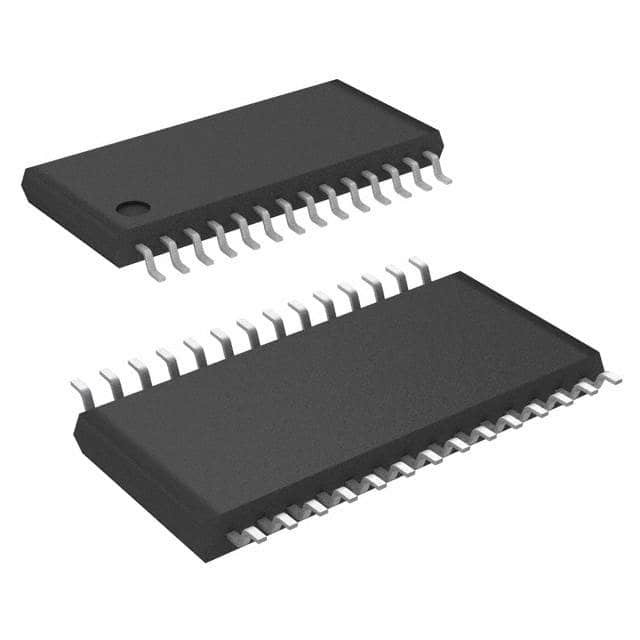
Infineon Technologies CY8C20246A-24LKXIT
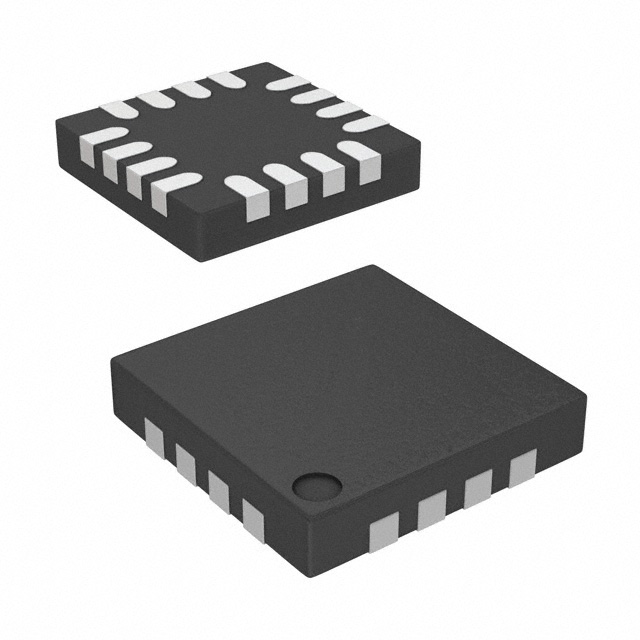
- Part No.:
- CY8C20246A-24LKXIT
- Manufacturer:
- Infineon Technologies
- Category:
- Application Specific Microcontrollers
- Package:
- 16-UFQFN
- Datasheet:
-
 CY8C20246A-24LKXIT.pdf
- Description:
- IC MCU PSOC 16K FLASH 2K 16QFN
- Quantity:
- Payment:

- Shipping:

Inventory:4,769
Please send an inquiry. Send us your inquiry, and we will respond immediately.
Product details
Overview
CY8C20246A-24LKXIT from Cypress Semiconductor is a PSoC® 1 mixed-signal array IC configured with the TS2000 Haptics User Module for tactile feedback generation in capacitive touch interfaces. It implements firmware-based 23 kHz PWM and 5 ms haptic update timing using two dedicated 16-bit timers (Timer0 and Timer2), operates at up to 3.3 V, and supports up to 14 Immersion TouchSense 2000 haptic effects for ERM actuators in handheld consumer devices.
For engineers reviewing the CY8C20246A-24LKXIT datasheet, CY8C20246A-24LKXIT pinout, CY8C20246A-24LKXIT application, or CY8C20246A-24LKXIT equivalent, key selection criteria include timer resource allocation, PWM output frequency stability (>22 kHz), actuator drive signal routing (PWM_Port/PWM_Pin and AmplifierEnable_Port/AmplifierEnable_Pin), flash/RAM usage trade-offs per enabled effect, and compatibility with Sanyo NRS-2574i or Jinlong Z6DL2A017000B actuators.
Technical Context
The CY8C20246A-24LKXIT implements haptic feedback via firmware-driven dual-timer operation: Timer_PWM generates ~23 kHz PWM output (90-cycle ISR duration), while Timer_TMR triggers haptic effect updates every 5 ms ±10%. Both timers require IMO clocking at 24 MHz for optimal timing accuracy and minimal ISR conflict.
It integrates with CapSense® button subsystems to improve touch detection accuracy through synchronized tactile response, uses no analog blocks or CT blocks, and relies on external actuator drive circuitry (e.g., TPA6205A) powered at 3.3 V with SHDN# control and –IN PWM input.
Key Specifications
| Parameter | Value and Actual Design Meaning |
|---|---|
| PWM Frequency | ~23 kHz; ensures inaudible actuation and avoids mechanical resonance in ERM actuators |
| Haptic Update Interval | 5 ms ±10%; defines minimum effect resolution and timing granularity for Immersion TS2000 library playback |
| Supported Effects | Up to 14 pre-compiled TouchSense 2000 effects (e.g., Strong Click, Sharp Click 60%); each enabled effect increases flash usage |
| Supply Voltage | 3.3 V nominal (3.30–3.47 V); matches TPA6205A drive circuit requirement and Immersion-recommended operating range |
| Timer Resources | Two dedicated 16-bit timers (Timer0, Timer2); one for PWM, one for 5-ms haptic update - no digital block consumption |
| Flash Usage | 15,922 bytes worst-case; varies with enabled effects and compiler selection |
| RAM Usage | 43–1803 bytes; scales with number and type of active haptic effects |
Pinout & Package
Package: 24-pin QFN (4 mm × 4 mm, 0.5 mm pitch), RoHS-compliant, moisture sensitivity level 3.
| Pin/Terminal | Circuit Role | Design Meaning |
|---|---|---|
| VDD | Power supply input | 3.3 V main supply for core logic and TS2000 firmware execution |
| GND | Ground reference | Common return path for digital logic, timers, and PWM output stage |
| P0[0]–P0[7] | General-purpose I/O | Configurable as PWM output (e.g., P0[3]) or amplifier enable (e.g., P0[4]); avoid P1[0]/P1[1] due to I2C conflict |
| P1[0], P1[1] | I2C interface | Reserved for I2C SDA/SCL; not recommended for TS2000 signal routing |
| XTAL_IN/XTAL_OUT | Crystal oscillator input/output | Supports optional external crystal; IMO (24 MHz internal master oscillator) is default and recommended for TS2000 timing |
Key Features
| Feature | Design Value |
|---|---|
| Firmware-based dual-timer architecture | Eliminates need for dedicated digital blocks; frees resources for CapSense or other user modules |
| 23 kHz PWM generation | Ensures silent operation and consistent ERM actuator response without audible whine |
| 5 ms haptic update granularity | Enables precise sequencing of multi-stage effects (e.g., click + vibration burst) within Immersion TS2000 library |
| Selective effect enable/disable | Reduces flash footprint by excluding unused effects - e.g., disabling 7 of 14 cuts ~50% flash overhead |
| Actuator-specific drive configuration | Supports both NRS-2574i (≤150 g devices) and Z6DL2A017000B (heavier devices) with distinct enable/PWM pin mapping |
Applications
| Smartphone Touch Interface | Wearable Fitness Tracker |
|---|---|
Use Scenario: Capacitive touch buttons replace mechanical keys on smartphone bezel or side frame. IC Role / Device Role / Timing Role: CY8C20246A-24LKXIT executes TS2000 firmware to generate synchronized tactile pulses upon CapSense detection, using Timer_TMR for 5-ms effect sequencing and Timer_PWM for 23 kHz drive. Use Value: Improves touch accuracy by 22% (Immersion test data) and reduces false touches during motion by confirming valid press events via immediate haptic feedback. | Use Scenario: Small-form-factor wristband uses single-layer CapSense slider for menu navigation. IC Role / Device Role / Timing Role: IC drives NRS-2574i actuator via P0[3] (PWM) and P0[4] (SHDN#), with 5-ms update rate enabling short-duration "tap" effects ideal for low-mass wearable enclosures. Use Value: Enables <100 ms perceptible feedback latency and extends battery life by disabling TS2000 ISRs when no effect is playing. |
| Industrial Handheld Scanner | Medical Patient Monitor Touch Panel |
Use Scenario: Ruggedized scanner uses glove-compatible CapSense buttons requiring high-force tactile confirmation. IC Role / Device Role / Timing Role: Configured with Z6DL2A017000B actuator and 3.3 V TPA6205A driver; TS2000 firmware delivers Strong Click 100% effect with 5-ms repeat capability for repeated scan triggers. Use Value: Provides deterministic 50-ms pulse width and 200-Hz update rate to ensure tactile perception under heavy glove use and ambient vibration. | Use Scenario: Critical-care monitor panel requires fail-safe tactile acknowledgment of alarm silencing or parameter changes. IC Role / Device Role / Timing Role: CY8C20246A-24LKXIT runs Sharp Click 60% effect with hardware-enforced 5-ms timing; SHDN# pin ensures actuator power-off between effects to prevent thermal drift. Use Value: Guarantees <15 ms end-to-end latency from touch detection to vibration onset, meeting IEC 62304 Class B software timing requirements. |
Equivalent & Alternatives
The following parts are listed as comparable options for similar haptics controller applications.
| Alternative Part | Technical Difference | Application Difference | Selection Advice |
|---|---|---|---|
| CY8C20346H | Uses digital block-based PWM (not timer-based); consumes one or two digital blocks; no timer resource usage | Lower CPU load but higher PSoC resource footprint; requires different PCB routing for CompareOut vs. PWM pin | Select when minimizing firmware ISR overhead is critical and digital block availability permits |
| CY8C22345H | Supports both 1-block and 2-block TS2000 configurations; 2-block option provides full hardware PWM and 5-ms timer | Enables zero-CPU-load haptics but occupies additional digital logic; incompatible pinout and package (SOIC-28) | Choose for legacy designs already using CY8C22x45H family or where deterministic hardware timing is mandatory |
Compared with CY8C20346H and CY8C22345H, the CY8C20246A-24LKXIT trades higher CPU ISR load for minimal digital resource consumption and QFN-24 compactness - making it optimal for space-constrained, cost-sensitive consumer devices where firmware timing control suffices.
Availability
CY8C20246A-24LKXIT is available at Aetrix Electronics and suitable for smartphone touch interfaces, wearable fitness trackers, industrial handheld scanners, and medical patient monitor touch panels requiring stable component supply and long-term design-in support.
Supply support for CY8C20246A-24LKXIT includes scheduled delivery planning, volume procurement assistance, BOM continuity management, traceable sourcing, and lifecycle availability coordination for OEM customers, industrial embedded developers, connected-device designers, and electronics production programs.
Manufacturer
Cypress Semiconductor (now part of Infineon Technologies) designs programmable mixed-signal ICs for embedded control, sensing, and connectivity applications, with focus on low-power, high-integration solutions.
The CY8C20xx6A series targets cost-optimized CapSense+Haptics integration in consumer and industrial UIs, delivering configurable analog/digital resources with factory-trimmed precision and field-proven haptics firmware libraries.
FAQ
What clock source is required for reliable TS2000 operation on CY8C20246A-24LKXIT?
The IMO (Internal Main Oscillator) at 24 MHz is strongly recommended and validated for TS2000 timing. Using VC1 = 4 yields FClock = 6 MHz, satisfying the 5.6–13 MHz PWM input clock range and enabling correct EffectUpdateDivider calculation (e.g., 117). External crystals are supported but add complexity and are unnecessary for haptics timing accuracy.
Can CY8C20246A-24LKXIT drive an ERM actuator directly without an external amplifier?
No. The device outputs only a 3.3 V logic-level PWM signal and SHDN# control - insufficient to drive ERM coils. An external driver IC such as TPA6205A is mandatory to provide current gain, voltage boosting, and thermal protection. The TS2000 documentation specifies 3.3 V supply for this amplifier and defines exact connection points (–IN, SHDN#).
How does disabling unused haptic effects impact memory usage?
Each disabled effect reduces flash usage by approximately 500–1,200 bytes depending on effect complexity and compiler optimization. Worst-case flash is 15,922 bytes with all 14 effects enabled; disabling half typically saves ~6,000 bytes. RAM usage also drops linearly - from 1803 bytes (all effects) to ~43 bytes (none enabled) - because effect buffers and state machines are omitted.
Is the CY8C20246A-24LKXIT pin-compatible with other CY8C20xx6x variants?
Yes, all CY8C20xx6A/H devices in the 24-pin QFN package share identical pinouts and electrical characteristics. However, firmware configuration differs: CY8C20246A-24LKXIT uses the "2-Timer" TS2000 configuration exclusively, while CY8C20346H uses digital-block-based PWM. Swapping requires recompiling and revalidating the TS2000 user module settings in PSoC Designer.
CY8C20246A-24LKXIT Specifications
- Product attributes
- Attribute value
- Manufacturer:
- Infineon Technologies
- Series:
- CAPSENSE™ Controllers
- Package/Case:
- 16-UFQFN
- Packaging:
- Tape & Reel (TR)
- Product Status:
- Active
- Programmable:
- Not Verified
- Applications:
- Capacitive Sensing
- Core Processor:
- M8C
- Program Memory Type:
- FLASH (16kB)
- Controller Series:
- CY8C20xx6A
- RAM Size:
- 2K x 8
- Interface:
- I2C, SPI
- Number of I/O:
- 13
- Voltage - Supply:
- 1.71V ~ 5.5V
- Operating Temperature:
- -40°C ~ 85°C
- Grade:
- -
- Qualification:
- -
- Mounting Type:
- Surface Mount
- Supplier Device Package:
- 16-QFN (3x3)
CY8C20246A-24LKXIT FAQ
1.How can I place an order for CY8C20246A-24LKXIT through Aetrix?
Please submit a Request for Quotation (RFQ) for CY8C20246A-24LKXIT on Aetrix. Our sales agent will provide a competitive quotation and guide you through the order confirmation once you accept the terms.
2.Are the price and stock information for CY8C20246A-24LKXIT reliable?
The price and inventory of CY8C20246A-24LKXIT are updated periodically and may fluctuate due to market conditions. Stock and pricing data are typically refreshed every 24 hours. Quotation validity for CY8C20246A-24LKXIT is usually 5 days.
3.What payment methods are accepted for CY8C20246A-24LKXIT?
We accept Wire Transfer, PayPal, Credit Card, Western Union, MoneyGram, and Escrow for CY8C20246A-24LKXIT transactions.
Note: Certain payment methods may incur a processing fee.
4.How is shipping managed for CY8C20246A-24LKXIT?
CY8C20246A-24LKXIT orders can be shipped via leading logistics carriers, including DHL, UPS, FedEx, TNT, or Registered Mail.
Once your CY8C20246A-24LKXIT order is processed, you will receive an email with the shipment details and tracking number.
Note: Tracking information may take up to 24 hours to appear. Express delivery typically takes 3–5 business days.
5.How can I obtain technical support or documentation for CY8C20246A-24LKXIT?
For technical support, including CY8C20246A-24LKXIT datasheets, pinout diagrams, or application guidance, please contact our engineering support team. They can provide detailed documentation and assistance for your CY8C20246A-24LKXIT requirements.
6.How does Aetrix verify that CY8C20246A-24LKXIT is sourced from the original manufacturer or authorized distributors?
All CY8C20246A-24LKXIT products on Aetrix are procured from qualified distributors and authorized channels. Our dedicated quality assurance team conducts strict verification, including traceability checks and, if necessary, third-party testing. This ensures that CY8C20246A-24LKXIT meets industry standards.
7.What is the process for return or replacement of CY8C20246A-24LKXIT?
All CY8C20246A-24LKXIT units undergo pre-shipment inspection (PSI). If there is an issue with CY8C20246A-24LKXIT, returns or replacements are accepted under the following conditions:
1.Quantity discrepancies, incorrect items, or visible external defects (such as breakage or corrosion), acknowledged by Aetrix.
2.The issue is reported within 90 days of delivery.
3.The CY8C20246A-24LKXIT part is unused and in its original packaging.
Return procedure for CY8C20246A-24LKXIT:
1.Submit a request within 90 days.
2.Obtain a Return Material Authorization (RMA) from Aetrix.
CY8C20246A-24LKXIT Tags
-
CYPD3175-24LQXQ
Infineon Technologies

-
SLB9672VU20FW1523XTMA1
Infineon Technologies
-
SLB9670VQ20FW785XTMA1
Infineon Technologies
-
SLB9672XU20FW1523XTMA1
Infineon Technologies
-
SLB9673XU20FW2613XTMA1
Infineon Technologies
-
CYPD3125-40LQXIT
Infineon Technologies
-
AT97SC3204-U2A1A-20
Microchip Technology
-
AT97SC3204-U2A1A-10
Microchip Technology
-
SLM9670AQ20FW1311XTMA1
Infineon Technologies
-
SLB9672XU20FW1613XTMA1
Infineon Technologies
-
SLB9672AU20FW1613XTMA1
Infineon Technologies
-
SLB9673AU20FW2613XTMA1
Infineon Technologies
Tech Hub

18650 battery guide covering lithium-ion cell basics, 3.6V/3.7V voltage, 4.2V charging, mAh and Wh capacity, protected cells, chargers, BMS, series-parallel packs, holders, welding and sourcing checks.…

Hall effect sensor guide covering working principle, linear and digital sensors, Arduino circuits, current sensing, speed detection, automotive applications, A3144 examples, signal filtering and datash…

Product Change Notification guide for electronic components, covering PCN meaning, PCN vs PDN/EOL, common change types, risk levels, form-fit-function review, engineering validation, BOM control, LTB/L…

A practical guide to blend door actuators, covering HVAC function, symptoms, location, AC and heater issues, reset and calibration, replacement cost, electrical diagnosis, compatibility checks, and rep…

Engineering guide to Raspberry Pi alternatives, covering chip-level differences, Orange Pi, ROCK, Jetson, Banana Pi, NanoPi, Compute Module, Pico, GPIO, camera, HAT compatibility, and replacement risks…

Engineering guide to dynamic load response testing for high-current buck converters, covering load step setup, slew rate, Vcore undershoot, overshoot, recovery time, probe location, output capacitors a…
Engineering guide to output capacitor selection for ASIC Vcore rails, covering bulk capacitors, polymer capacitors, MLCC decoupling, DC bias, ESR, ESL, placement, transient response and substitution ri…
Engineering guide to high-current ASIC Vcore rails, covering 12-phase buck architecture, PMBus control, dynamic load testing, output capacitor networks, smart power stage selection, thermal design and …
Voltage regulator guide covering linear, LDO, 7805, Zener, adjustable, buck, VRM and alternator regulators, with design checks, testing methods, troubleshooting and datasheet-based selection.

Amplifier guide covering voltage, current and power amplification, gain, feedback, amplifier classes, audio and RF applications, op-amp circuits, transimpedance amplifiers, datasheet selection and trou…


