
 My Inquiry
 My Account


Infineon Technologies CY8C4127AZQ-S445
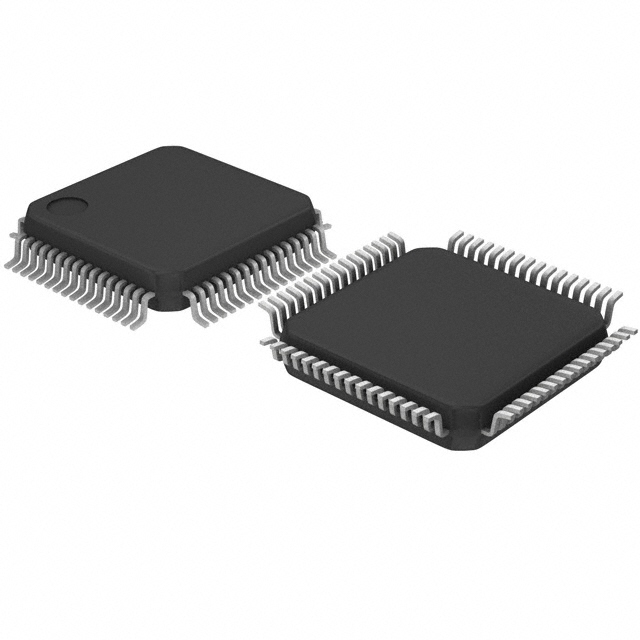
- Part No.:
- CY8C4127AZQ-S445
- Manufacturer:
- Infineon Technologies
- Category:
- Microcontrollers
- Package:
- 64-LQFP
- Datasheet:
-
 CY8C4127AZQ-S445.pdf
- Description:
- IC MCU 32BIT 128KB FLASH 64TQFP
- Quantity:
- Payment:

- Shipping:

Inventory:3,042
Please send an inquiry. Send us your inquiry, and we will respond immediately.
Product details
Overview
CY8C4127AZQ-S445 from Infineon Technologies (acquired Cypress Semiconductor) is a PSoC 4100S Plus programmable system-on-chip featuring a 48-MHz Arm Cortex-M0+ CPU, 128 KB flash, 16 KB SRAM, integrated CapSense capacitive sensing, CAN 2.0B interface, and programmable analog/digital blocks. It targets embedded human-interface, motor control, and industrial sensing applications requiring mixed-signal reconfigurability and low-power operation down to 2.5 µA in Deep Sleep.
For engineers reviewing the CY8C4127AZQ-S445 datasheet, CY8C4127AZQ-S445 pinout, CY8C4127AZQ-S445 application, or CY8C4127AZQ-S445 equivalent, key selection criteria include its 54-GPIO count, CAN 2.0B + TRNG + SmartSense™ auto-tuning support, 12-bit SAR ADC with sequencer, and compatibility with PSoC Creator IDE for hardware/firmware co-design.
Technical Context
The device integrates an Arm Cortex-M0+ core with tightly coupled flash (two wait states at 48 MHz) and zero-wait-state 16 KB SRAM, enabling deterministic real-time execution. Its clock system combines IMO (±2%), ILO (32 kHz), WCO, ECO (4–33 MHz), and PLL to generate precise timing for analog peripherals and TCPWM blocks.
Analog subsystem includes two opamps operable in Deep Sleep, a 12-bit 1-Msps SAR ADC with differential input and channel sequencer, two IDACs, two low-power comparators, and a dedicated capacitance-sensing block supporting CSD-based CapSense with >5:1 SNR and water tolerance. Digital resources comprise five reconfigurable SCBs (I²C/SPI/UART), eight 16-bit TCPWM blocks with quadrature decode and kill-signal triggering, and programmable logic blocks for Boolean operations on GPIOs.
Key Specifications
| Parameter | Value and Actual Design Meaning |
|---|---|
| CPU Core | Arm Cortex-M0+, 48 MHz max - delivers deterministic real-time control with single-cycle multiply for motor and sensor algorithms. |
| Flash Memory | 128 KB with Read Accelerator - enables near-SRAM speed code execution and supports firmware updates without performance penalty. |
| SRAM | 16 KB, zero wait-state - provides fast data buffering for ADC sampling, CapSense processing, and communication stacks. |
| ADC | 12-bit SAR, 1 Msps, differential mode + sequencer - captures high-fidelity sensor signals with hardware-averaged noise reduction across multiple channels. |
| CapSense | Cypress CSD engine with SmartSense™ auto-tuning - eliminates manual calibration for touch buttons/sliders in varying environmental conditions. |
| CAN Interface | CAN 2.0B with TTCAN support - enables time-triggered deterministic messaging for industrial automation and automotive body electronics. |
| Power Modes | Deep Sleep current = 2.5 µA with opamps active - sustains analog monitoring while minimizing energy use in battery-powered endpoints. |
Pinout & Package
Package: 44-pin TQFP (0.8 mm pitch), 10 × 10 mm body, exposed thermal pad (EP). Pinout validated per Cypress datasheet 002-19966 Rev. *H, Page 10–12.
| Pin/Terminal | Circuit Role | Design Meaning |
|---|---|---|
| P0[0]–P0[7] | GPIO Port 0 | Programmable digital/analog/CapSense pins; support drive strength/slew rate configuration and hardware filtering for robust I/O. |
| P1[0]–P1[7] | GPIO Port 1 | Same as P0; includes dedicated CapSense shield and analog routing capability to CTBm blocks. |
| P2[0]–P2[7] | GPIO Port 2 | Supports LCD segment drive, CAN TX/RX, and SWD debug interface (SWDIO/SWCLK). |
| P3[0]–P3[7] | GPIO Port 3 | Includes ECO/WCO crystal connections and high-speed analog input paths to SAR ADC MUX. |
| VDD/VSS | Power Supply/Ground | Single 1.71–5.5 V supply; internal LDO supports wide-input operation without external regulators. |
| XRES | Reset Input | Active-low asynchronous reset; debounced internally to prevent false triggers from noise. |
Key Features
| Feature | Design Value |
|---|---|
| Programmable Analog Blocks | Two opamps + two comparators + SAR ADC + IDACs - enable custom sensor front-ends (e.g., bridge amplification, current sourcing) without external components. |
| CapSense with SmartSense™ | Hardware-accelerated auto-calibration - reduces development time for touch interfaces by eliminating manual tuning of sensitivity and baseline tracking. |
| Reconfigurable SCBs | Five Serial Communication Blocks - allow dynamic runtime switching between I²C, SPI, and UART protocols on shared pins, simplifying multi-interface BOM consolidation. |
| TCPWM Flexibility | Eight 16-bit timer/counter/PWM units with center-aligned, edge-aligned, and pseudo-random modes - support precise motor phase control and LED dimming with hardware-triggered fault shutdown. |
| Secure Debug Control | SWD interface with firmware-controllable disable - prevents unauthorized access to flash contents while allowing secure field updates via authenticated bootloaders. |
Applications
| Industrial HMI Panels | Smart Motor Drives |
|---|---|
Use Scenario: Touch-enabled operator interface for PLC-controlled machinery with waterproof overlay and glove operation. IC Role / Device Role / Timing Role: Primary MCU handling CapSense button/slider scanning, CAN bus communication with controller, and local PWM fan control. Use Value: CSD engine's >5:1 SNR and water tolerance ensure reliable touch detection under condensation or splashing; CAN 2.0B enables deterministic command/response cycles. | Use Scenario: Closed-loop BLDC motor control in HVAC blowers with overcurrent protection and thermal monitoring. IC Role / Device Role / Timing Role: Real-time motor commutation controller using TCPWM kill signals triggered by comparator outputs monitoring phase current. Use Value: Hardware comparator-to-TCPWM kill path achieves <100 ns response time for fault shutdown, meeting IEC 61800-5-1 safety requirements. |
| Medical Patient Monitors | IoT Edge Sensor Nodes |
Use Scenario: Portable vital-sign monitor with ECG electrode interface, OLED display, and Bluetooth LE connectivity (via external transceiver). IC Role / Device Role / Timing Role: Signal acquisition hub performing analog front-end conditioning (opamp gain/IDAC bias), 12-bit ADC sampling, and CapSense for buttonless UI navigation. Use Value: Deep Sleep mode draws only 2.5 µA while maintaining opamp-based electrode biasing, extending battery life beyond 7 days on coin cell. | Use Scenario: Battery-powered environmental sensor node measuring temperature, humidity, and air quality with periodic wake-up and wireless upload. IC Role / Device Role / Timing Role: Low-power system controller managing sensor polling, data aggregation, and wake-up scheduling via WCO and RTC. Use Value: Integrated TRNG generates cryptographically secure keys for TLS handshake with cloud backend, eliminating need for external security IC. |
Equivalent & Alternatives
The following parts are listed as comparable options for similar programmable mixed-signal microcontroller applications.
| Alternative Part | Technical Difference | Application Difference | Selection Advice |
|---|---|---|---|
| CY8C4127LQI-S433 | Same PSoC 4100S Plus family, 48-pin QFN package, no CAN block, lower GPIO count (42), same flash/SRAM. | Lacks CAN 2.0B interface; suitable for non-networked HMI or sensor nodes where CAN is unnecessary. | Select when CAN is not required and space-constrained PCB favors QFN over TQFP. |
| STM32G071CBT6 | Arm Cortex-M0+, 64 MHz, 128 KB flash, 36 KB SRAM, no integrated CapSense or programmable analog blocks, CAN FD capable. | Requires external components for capacitive touch and analog signal conditioning; superior raw compute but less analog integration. | Select when higher CPU throughput and CAN FD are prioritized over analog reconfigurability and touch integration. |
Compared with CY8C4127LQI-S433 and STM32G071CBT6, CY8C4127AZQ-S445 uniquely combines CapSense, CAN 2.0B, and programmable analog blocks in a single die-reducing BOM count and layout complexity for touch-enabled industrial controllers where mixed-signal flexibility outweighs raw clock speed.
Availability
CY8C4127AZQ-S445 is available at Aetrix Electronics and suitable for industrial HMI panels, smart motor drives, medical patient monitors, and IoT edge sensor nodes requiring stable component supply and long-term design continuity.
Supply support for CY8C4127AZQ-S445 includes scheduled delivery planning, volume procurement assistance, BOM continuity management, traceable sourcing, and lifecycle availability coordination for OEM customers, industrial embedded developers, connected-device designers, and electronics production programs.
Manufacturer
Infineon Technologies acquired Cypress Semiconductor in 2020 and now develops, manufactures, and supports the PSoC portfolio. Cypress pioneered programmable analog-digital SoCs for embedded systems requiring hardware flexibility.
This part belongs to the PSoC 4100S Plus product line, designed specifically for cost-sensitive, low-power applications demanding integrated capacitive sensing, CAN connectivity, and reconfigurable mixed-signal peripherals without external components.
FAQ
What development tools are required to program CY8C4127AZQ-S445?
PSoC Creator IDE (free Windows-based tool) is mandatory for schematic-driven hardware configuration and component-based firmware generation. It auto-generates APIs for CapSense, TCPWM, SCB, and analog blocks. Debugging uses standard Arm SWD via MiniProg3 or KitProg2 programmers; no JTAG adapter is needed.
Does CY8C4127AZQ-S445 support USB connectivity?
No, this device lacks native USB PHY or USB controller. It supports UART, I²C, and SPI for host communication. For USB bridging, external transceivers like CP2102N or integrated solutions such as CY7C65215 must be used alongside the PSoC's SCB configured as UART.
Can the CapSense functionality operate independently of the CPU?
Yes. The CapSense CSD block runs autonomously using the WCO or IMO clock source. It performs scanning, baseline tracking, and noise filtering in hardware, generating interrupts only upon threshold crossing-enabling CPU sleep during idle touch periods.
What is the maximum operating temperature for continuous Deep Sleep mode?
The device is rated for industrial temperature range (–40°C to +85°C). Deep Sleep mode with 2.5 µA current is fully specified across this range per datasheet Section 15.2 (Device Level Specifications), with no derating required up to +85°C ambient.
CY8C4127AZQ-S445 Specifications
- Product attributes
- Attribute value
- Manufacturer:
- Infineon Technologies
- Package/Case:
- 64-LQFP
- Series:
- PSOC™ 4 CY8C4100S Plus
- Packaging:
- Tray
- Product Status:
- Active
- Programmable:
- Not Verified
- Core Processor:
- ARM® Cortex®-M0+
- Core Size:
- 32-Bit Single-Core
- Speed:
- 24MHz
- Connectivity:
- I2C, IrDA, LINbus, Microwire, SmartCard, SPI, SSP, UART/USART
- Peripherals:
- Brown-out Detect/Reset, CapSense, LCD, POR, PWM, WDT
- Number of I/O:
- 54
- Program Memory Size:
- 128KB (128K x 8)
- Program Memory Type:
- FLASH
- EEPROM Size:
- -
- RAM Size:
- 16K x 8
- Voltage - Supply (Vcc/Vdd):
- 1.71V ~ 5.5V
- Data Converters:
- A/D 16x10b Slope, 16x12b SAR; D/A 2xIDAC
- Oscillator Type:
- Internal
- Operating Temperature:
- -40°C ~ 105°C (TA)
- Grade:
- -
- Qualification:
- -
- Mounting Type:
- Surface Mount
- Supplier Device Package:
CY8C4127AZQ-S445 FAQ
1.How can I place an order for CY8C4127AZQ-S445 through Aetrix?
Please submit a Request for Quotation (RFQ) for CY8C4127AZQ-S445 on Aetrix. Our sales agent will provide a competitive quotation and guide you through the order confirmation once you accept the terms.
2.Are the price and stock information for CY8C4127AZQ-S445 reliable?
The price and inventory of CY8C4127AZQ-S445 are updated periodically and may fluctuate due to market conditions. Stock and pricing data are typically refreshed every 24 hours. Quotation validity for CY8C4127AZQ-S445 is usually 5 days.
3.What payment methods are accepted for CY8C4127AZQ-S445?
We accept Wire Transfer, PayPal, Credit Card, Western Union, MoneyGram, and Escrow for CY8C4127AZQ-S445 transactions.
Note: Certain payment methods may incur a processing fee.
4.How is shipping managed for CY8C4127AZQ-S445?
CY8C4127AZQ-S445 orders can be shipped via leading logistics carriers, including DHL, UPS, FedEx, TNT, or Registered Mail.
Once your CY8C4127AZQ-S445 order is processed, you will receive an email with the shipment details and tracking number.
Note: Tracking information may take up to 24 hours to appear. Express delivery typically takes 3–5 business days.
5.How can I obtain technical support or documentation for CY8C4127AZQ-S445?
For technical support, including CY8C4127AZQ-S445 datasheets, pinout diagrams, or application guidance, please contact our engineering support team. They can provide detailed documentation and assistance for your CY8C4127AZQ-S445 requirements.
6.How does Aetrix verify that CY8C4127AZQ-S445 is sourced from the original manufacturer or authorized distributors?
All CY8C4127AZQ-S445 products on Aetrix are procured from qualified distributors and authorized channels. Our dedicated quality assurance team conducts strict verification, including traceability checks and, if necessary, third-party testing. This ensures that CY8C4127AZQ-S445 meets industry standards.
7.What is the process for return or replacement of CY8C4127AZQ-S445?
All CY8C4127AZQ-S445 units undergo pre-shipment inspection (PSI). If there is an issue with CY8C4127AZQ-S445, returns or replacements are accepted under the following conditions:
1.Quantity discrepancies, incorrect items, or visible external defects (such as breakage or corrosion), acknowledged by Aetrix.
2.The issue is reported within 90 days of delivery.
3.The CY8C4127AZQ-S445 part is unused and in its original packaging.
Return procedure for CY8C4127AZQ-S445:
1.Submit a request within 90 days.
2.Obtain a Return Material Authorization (RMA) from Aetrix.
CY8C4127AZQ-S445 Tags

-
ATTINY4-TSHR
Microchip Technology
-
ATTINY10-TSHR
Microchip Technology
-
ATTINY10-TS8R
Microchip Technology

-
ATTINY202-SSNR
Microchip Technology
-
ATTINY202-SSFR
Microchip Technology
-
ATTINY402-SSNR
Microchip Technology

-
PIC16F15213T-I/MF
Microchip Technology
-
PIC16F15213-E/MF
Microchip Technology

-
PIC10F200T-I/OT
Microchip Technology
-
ATTINY412-SSNR
Microchip Technology
-
PIC10F202T-I/OT
Microchip Technology

-
ATTINY404-SSNR
Microchip Technology
Tech Hub

Comparator circuit design covering voltage thresholds, input limits, open-collector outputs, LM393 wiring, op-amp differences, hysteresis, timing, window detection and practical fault diagnosis.
Schmitt triggers use separate rising and falling thresholds to stabilize slow or noisy signals. This guide covers hysteresis, 74HC14 and 74HCT14 selection, comparator calculations, RC oscillators and p…
Counterfeit components can hide behind convincing markings and passing basic function tests. This engineering reference covers source traceability, external inspection, X-ray, XRF, electrical testing, …

A practical engineering and sourcing framework covering lifecycle verification, lifetime-buy calculations, replacement qualification, supplier checks and counterfeit-risk controls.

TTL and CMOS logic families differ in thresholds, loading, output drive, power and timing. This engineering guide compares 74HC and 74HCT, calculates noise margins and checks 3.3 V/5 V compatibility.

A practical engineering guide to 3.3V and 5V logic compatibility, input thresholds, resistor dividers, translator ICs, MOSFET level shifting, I2C pull-ups, timing limits and power-sequencing risks.

The 74HC595 uses push-pull logic outputs, while the TPIC6B595 uses 50 V open-drain DMOS sinks for higher-power loads. This guide compares timing, current limits, 3.3 V interfacing, load wiring, thermal…

The 74HC595 converts serial data into eight stable parallel outputs. This guide covers pin functions, shift and storage timing, OE and MR behavior, drive-current limits, cascading, voltage compatibilit…

A technical comparison of level-sensitive latches and edge-triggered flip-flops, covering timing windows, setup and hold limits, master–slave operation, time borrowing, race-through, HDL inference and…

A D latch stores one bit while Enable controls when data can pass. This reference covers gate-level operation, truth tables, transparency, setup and hold timing, LE versus OE, common ICs and practical …


