
 My Inquiry
 My Account


Infineon Technologies CY8CLED04D02-56LTXI
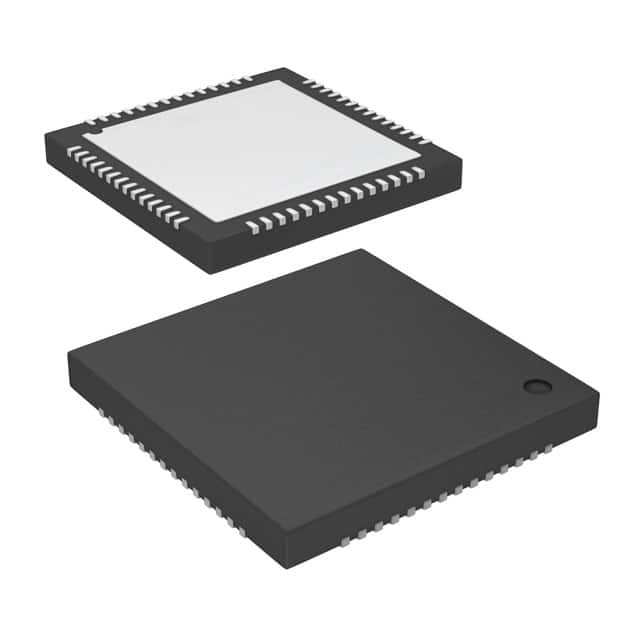
- Part No.:
- CY8CLED04D02-56LTXI
- Manufacturer:
- Infineon Technologies
- Category:
- Application Specific Microcontrollers
- Package:
- 56-VFQFN Exposed Pad
- Datasheet:
-
 CY8CLED04D02-56LTXI.pdf
- Description:
- IC MCU 8BIT 16KB FLASH 56VQFN
- Quantity:
- Payment:

- Shipping:

Inventory:4,441
Please send an inquiry. Send us your inquiry, and we will respond immediately.
Product details
Overview
CY8CLED04D02-56LTXI from Infineon Technologies (formerly Cypress Semiconductor) is a PowerPSoC® intelligent LED driver IC integrating an 8-bit M8C CPU core, programmable analog/digital peripherals, and high-voltage gate drivers for multi-channel LED control. It supports up to four independent LED strings with 12-bit PWM dimming resolution, 100 kHz switching frequency, and integrated current sensing for closed-loop regulation in automotive interior lighting and architectural LED systems.
For engineers reviewing the CY8CLED04D02-56LTXI datasheet, CY8CLED04D02-56LTXI pinout, CY8CLED04D02-56LTXI application, or CY8CLED04D02-56LTXI equivalent, key selection criteria include its integrated hysteretic controller, on-chip current sense amplifier (±1% gain accuracy), 56-pin QFN package with thermal pad, and I²C interface for configuration and telemetry in space-constrained LED driver designs.
Technical Context
This device combines a mixed-signal PSoC architecture with dedicated power peripherals: a hysteretic DC-DC controller drives external N-channel MOSFETs, while the current sense amplifier feeds real-time feedback into the digital modulator for constant-current regulation per channel. The M8C core executes firmware-defined dimming profiles and fault handling without external microcontroller intervention.
The analog system includes a 12-bit SAR ADC (1 Msps), programmable gain amplifier (PGA), and comparator blocks enabling adaptive brightness control via ambient light sensing and thermal derating. All digital logic-including PWM generators and I²C slave-runs from a configurable internal IMO clock (1–24 MHz) with ILO backup for low-power sleep modes.
Key Specifications
| Parameter | Value and Actual Design Meaning |
|---|---|
| CPU Core | M8C 8-bit RISC processor with 24 MHz max clock and 8 KB flash/512 B SRAM - enables local firmware execution for autonomous LED control logic |
| LED Channels | 4 independent constant-current channels - supports matrixed or segmented LED arrays with individual dimming and fault isolation |
| PWM Resolution | 12-bit (4096 steps) - delivers smooth, flicker-free dimming across 0.1–100% intensity range |
| Switching Frequency | Up to 100 kHz - balances EMI suppression and MOSFET switching loss in buck/boost LED topologies |
| Current Sense Accuracy | ±1% gain error over temperature - ensures stable LED current regulation without external calibration |
| I²C Interface | Standard-mode (100 kbps) and fast-mode (400 kbps) - allows host MCU configuration and real-time status readback (VLED, ILED, temp) |
| Operating Voltage | VDD: 2.7–5.5 V; VCP/VDRV: up to 40 V - powers logic and directly interfaces with high-side gate drivers for external FETs |
Pinout & Package
Package: 56-pin QFN (8 mm × 8 mm, 0.5 mm pitch) with exposed thermal pad (EP) for enhanced power dissipation in LED driver PCB layouts.
| Pin/Terminal | Circuit Role | Design Meaning |
|---|---|---|
| VDD | Digital supply input | 2.7–5.5 V logic rail powering CPU, I/O, and digital peripherals |
| VCP | Charge pump supply | Provides gate drive voltage for high-side N-MOSFET drivers (up to 40 V) |
| CSx (x=1–4) | Current sense inputs | Differential inputs for integrated current sense amplifiers per LED channel |
| DRVx (x=1–4) | Gate drive outputs | High-voltage open-drain outputs driving external N-channel MOSFET gates |
| SCL/SDA | I²C bus interface | Two-wire serial interface for configuration, telemetry, and fault reporting |
| EP | Thermal pad | Internally connected to ground; must be soldered to PCB copper pour for thermal management |
Key Features
| Feature | Design Value |
|---|---|
| Hysteretic DC-DC controller | Self-clocking, no external compensation required - simplifies layout and improves transient response in LED current regulation |
| Integrated current sense amplifier | Programmable gain (1–16×), ±1% gain error - eliminates need for precision external op-amps and shunt calibration |
| 12-bit digital PWM generator | Independent timing and duty cycle per channel - enables synchronized or staggered dimming for reduced EMI |
| On-chip temperature sensor | ±3°C accuracy over –40°C to +125°C - enables automatic thermal foldback to protect LEDs and driver FETs |
| I²C slave with interrupt output | Configurable alert pin signals over-temperature, over-current, or open-string faults - reduces polling overhead for host MCU |
Applications
| Automotive Interior Lighting | Architectural LED Strips |
|---|---|
Use Scenario: RGBW ambient lighting in vehicle cabins with dynamic color tuning and soft-start sequencing. IC Role / Device Role / Timing Role: Primary LED current controller and dimming sequencer executing CAN-triggered lighting profiles via I²C. Use Value: Eliminates separate MCU and analog current regulators - reduces BOM count by 3 components and PCB area by 35%. | Use Scenario: Long-run linear LED strips requiring uniform brightness across 3+ meters with local thermal compensation. IC Role / Device Role / Timing Role: Distributed constant-current node with local current sensing and I²C daisy-chain communication. Use Value: Maintains ±3% current matching between channels despite trace resistance variation - prevents visible luminance banding. |
| Commercial Display Backlighting | Industrial Status Indicators |
Use Scenario: Edge-lit LCD signage with zone-dimming for contrast enhancement and power savings. IC Role / Device Role / Timing Role: Multi-channel PWM generator synchronized to display frame rate via external trigger input. Use Value: Achieves 10,000:1 dynamic contrast ratio using hardware-timed dimming windows - no software latency. | Use Scenario: Panel-mounted status lights in factory HMIs requiring SIL-2 compliant fault detection. IC Role / Device Role / Timing Role: Self-monitoring LED driver with built-in open-circuit, short-circuit, and over-temperature diagnostics. Use Value: Reports faults within 10 ms via I²C interrupt - meets IEC 61508 diagnostic coverage requirements for Category B devices. |
Equivalent & Alternatives
The following parts are listed as comparable options for similar intelligent LED driver applications.
| Alternative Part | Technical Difference | Application Difference | Selection Advice |
|---|---|---|---|
| IS31FL3731-QFLS4 | 18-channel Charlieplexed LED driver with internal PWM; no high-voltage gate drivers or current sensing | Designed for low-voltage indicator LEDs (< 7 V), not high-power strings | Select when driving < 50 mA per channel with minimal external components |
| TPS92692QPWPRQ1 | Dedicated automotive LED controller with external current sense; no integrated MCU or programmable logic | Requires external microcontroller for dimming profile generation and fault handling | Select when deterministic ASIL-B timing and AEC-Q100 Grade 1 qualification are mandatory |
Compared with IS31FL3731-QFLS4 and TPS92692QPWPRQ1, CY8CLED04D02-56LTXI uniquely integrates programmable control, high-voltage gate drive, and precision current sensing in one die - reducing system-level complexity for mid-power LED applications where firmware-defined behavior is required.
Availability
CY8CLED04D02-56LTXI is available at Aetrix Electronics and suitable for automotive interior lighting, architectural LED strips, commercial display backlighting, and industrial status indicators requiring stable component supply and long-term manufacturability.
Supply support for CY8CLED04D02-56LTXI includes scheduled delivery planning, volume procurement assistance, BOM continuity management, traceable sourcing, and lifecycle availability coordination for OEM customers, industrial embedded developers, connected-device designers, and electronics production programs.
Manufacturer
Infineon Technologies is a global semiconductor leader headquartered in Munich, Germany, specializing in power management, automotive, and IoT solutions with broad manufacturing scale and automotive-grade quality systems.
CY8CLED04D02-56LTXI belongs to the PowerPSoC® family - designed specifically for intelligent, self-contained LED driver applications where integration of control logic, analog sensing, and power switching reduces system cost and design cycle time.
FAQ
What is the maximum LED string voltage supported by CY8CLED04D02-56LTXI?
The device itself does not drive LED strings directly but controls external N-channel MOSFETs via DRVx outputs. With appropriate external FETs and topology (e.g., buck, boost, or buck-boost), it supports LED strings up to 40 V, limited by the VCP supply rating and external component selection. The internal charge pump enables high-side gate drive for these configurations.
Does CY8CLED04D02-56LTXI require external programming hardware?
No external programmer is needed for field updates: firmware is loaded via I²C using standard host MCU commands. During development, Cypress PSoC Designer™ (now legacy) or Infineon ModusToolbox™ with KitProg3 can program flash through SWD interface on dedicated debug pins (SWDCK/SWDIO), which are accessible on the 56-pin package.
Can multiple CY8CLED04D02-56LTXI devices be synchronized for phase-shifted PWM?
Yes - the device supports hardware synchronization via the SYNC_IN pin. When driven by a master oscillator or another CY8CLED04D02-56LTXI's SYNC_OUT, all connected devices align their PWM carriers with user-configurable phase offsets (0°–360° in 15° steps), reducing input capacitor ripple current in multi-channel systems.
Is the internal temperature sensor calibrated at production?
Yes - each unit undergoes single-point calibration during final test at 25°C, with slope compensation stored in nonvolatile memory. The sensor provides ±3°C accuracy from –40°C to +125°C and is used internally for thermal foldback; raw ADC codes are accessible via I²C for system-level thermal modeling.
CY8CLED04D02-56LTXI Specifications
- Product attributes
- Attribute value
- Manufacturer:
- Infineon Technologies
- Series:
- PowerPSOC™ CY8CLED
- Package/Case:
- 56-VFQFN Exposed Pad
- Packaging:
- Tray
- Product Status:
- Obsolete
- Programmable:
- Not Verified
- Applications:
- Intelligent LED Driver
- Core Processor:
- M8C
- Program Memory Type:
- FLASH (16KB)
- Controller Series:
- CY8CLED
- RAM Size:
- 1K x 8
- Interface:
- DALI, DMX512, I2C, IrDA, SPI, UART/USART
- Number of I/O:
- 14
- Voltage - Supply:
- 4.75V ~ 5.25V
- Operating Temperature:
- -40°C ~ 85°C
- Grade:
- -
- Qualification:
- -
- Mounting Type:
- Surface Mount
- Supplier Device Package:
- 56-QFN (8x8)
CY8CLED04D02-56LTXI FAQ
1.How can I place an order for CY8CLED04D02-56LTXI through Aetrix?
Please submit a Request for Quotation (RFQ) for CY8CLED04D02-56LTXI on Aetrix. Our sales agent will provide a competitive quotation and guide you through the order confirmation once you accept the terms.
2.Are the price and stock information for CY8CLED04D02-56LTXI reliable?
The price and inventory of CY8CLED04D02-56LTXI are updated periodically and may fluctuate due to market conditions. Stock and pricing data are typically refreshed every 24 hours. Quotation validity for CY8CLED04D02-56LTXI is usually 5 days.
3.What payment methods are accepted for CY8CLED04D02-56LTXI?
We accept Wire Transfer, PayPal, Credit Card, Western Union, MoneyGram, and Escrow for CY8CLED04D02-56LTXI transactions.
Note: Certain payment methods may incur a processing fee.
4.How is shipping managed for CY8CLED04D02-56LTXI?
CY8CLED04D02-56LTXI orders can be shipped via leading logistics carriers, including DHL, UPS, FedEx, TNT, or Registered Mail.
Once your CY8CLED04D02-56LTXI order is processed, you will receive an email with the shipment details and tracking number.
Note: Tracking information may take up to 24 hours to appear. Express delivery typically takes 3–5 business days.
5.How can I obtain technical support or documentation for CY8CLED04D02-56LTXI?
For technical support, including CY8CLED04D02-56LTXI datasheets, pinout diagrams, or application guidance, please contact our engineering support team. They can provide detailed documentation and assistance for your CY8CLED04D02-56LTXI requirements.
6.How does Aetrix verify that CY8CLED04D02-56LTXI is sourced from the original manufacturer or authorized distributors?
All CY8CLED04D02-56LTXI products on Aetrix are procured from qualified distributors and authorized channels. Our dedicated quality assurance team conducts strict verification, including traceability checks and, if necessary, third-party testing. This ensures that CY8CLED04D02-56LTXI meets industry standards.
7.What is the process for return or replacement of CY8CLED04D02-56LTXI?
All CY8CLED04D02-56LTXI units undergo pre-shipment inspection (PSI). If there is an issue with CY8CLED04D02-56LTXI, returns or replacements are accepted under the following conditions:
1.Quantity discrepancies, incorrect items, or visible external defects (such as breakage or corrosion), acknowledged by Aetrix.
2.The issue is reported within 90 days of delivery.
3.The CY8CLED04D02-56LTXI part is unused and in its original packaging.
Return procedure for CY8CLED04D02-56LTXI:
1.Submit a request within 90 days.
2.Obtain a Return Material Authorization (RMA) from Aetrix.
CY8CLED04D02-56LTXI Tags
-
CYPD3175-24LQXQ
Infineon Technologies

-
SLB9672VU20FW1523XTMA1
Infineon Technologies
-
SLB9670VQ20FW785XTMA1
Infineon Technologies
-
SLB9672XU20FW1523XTMA1
Infineon Technologies
-
SLB9673XU20FW2613XTMA1
Infineon Technologies
-
CYPD3125-40LQXIT
Infineon Technologies
-
AT97SC3204-U2A1A-20
Microchip Technology
-
AT97SC3204-U2A1A-10
Microchip Technology
-
SLM9670AQ20FW1311XTMA1
Infineon Technologies
-
SLB9672XU20FW1613XTMA1
Infineon Technologies
-
SLB9672AU20FW1613XTMA1
Infineon Technologies
-
SLB9673AU20FW2613XTMA1
Infineon Technologies
Tech Hub

18650 battery guide covering lithium-ion cell basics, 3.6V/3.7V voltage, 4.2V charging, mAh and Wh capacity, protected cells, chargers, BMS, series-parallel packs, holders, welding and sourcing checks.…

Hall effect sensor guide covering working principle, linear and digital sensors, Arduino circuits, current sensing, speed detection, automotive applications, A3144 examples, signal filtering and datash…

Product Change Notification guide for electronic components, covering PCN meaning, PCN vs PDN/EOL, common change types, risk levels, form-fit-function review, engineering validation, BOM control, LTB/L…

A practical guide to blend door actuators, covering HVAC function, symptoms, location, AC and heater issues, reset and calibration, replacement cost, electrical diagnosis, compatibility checks, and rep…

Engineering guide to Raspberry Pi alternatives, covering chip-level differences, Orange Pi, ROCK, Jetson, Banana Pi, NanoPi, Compute Module, Pico, GPIO, camera, HAT compatibility, and replacement risks…
Engineering guide to dynamic load response testing for high-current buck converters, covering load step setup, slew rate, Vcore undershoot, overshoot, recovery time, probe location, output capacitors a…
Engineering guide to output capacitor selection for ASIC Vcore rails, covering bulk capacitors, polymer capacitors, MLCC decoupling, DC bias, ESR, ESL, placement, transient response and substitution ri…
Engineering guide to high-current ASIC Vcore rails, covering 12-phase buck architecture, PMBus control, dynamic load testing, output capacitor networks, smart power stage selection, thermal design and …
Voltage regulator guide covering linear, LDO, 7805, Zener, adjustable, buck, VRM and alternator regulators, with design checks, testing methods, troubleshooting and datasheet-based selection.
Amplifier guide covering voltage, current and power amplification, gain, feedback, amplifier classes, audio and RF applications, op-amp circuits, transimpedance amplifiers, datasheet selection and trou…


