
 My Inquiry
 My Account


Infineon Technologies CYUSB3312-88LTXI
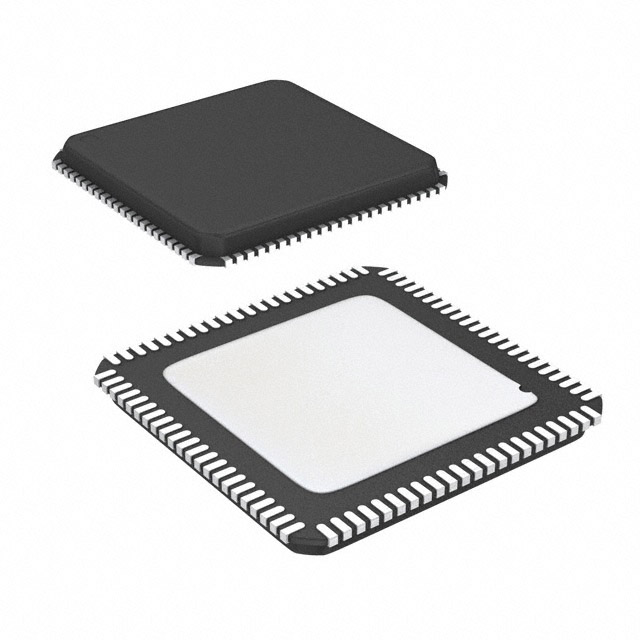
- Part No.:
- CYUSB3312-88LTXI
- Manufacturer:
- Infineon Technologies
- Category:
- Application Specific Microcontrollers
- Package:
- 88-VFQFN Exposed Pad
- Datasheet:
-
 CYUSB3312-88LTXI.pdf
- Description:
- IC USB 3.0 HUB 2-PORT 88QFN
- Quantity:
- Payment:

- Shipping:

Inventory:1,501
Please send an inquiry. Send us your inquiry, and we will respond immediately.
Product details
Overview
CYUSB3312-88LTXI from Infineon is a USB 3.2 Gen 1 (5 Gbps) hub controller with 2 downstream USB 3.0 ports, integrated ARM® Cortex®-M0 CPU (16 KB RAM, 32 KB ROM), USB BC v1.2 charging support per port, and industrial temperature range (–40°C to +85°C). It enables embedded docking stations with shared-link capability and ghost charging for unhosted device power delivery.
For engineers reviewing the CYUSB3312-88LTXI datasheet, CYUSB3312-88LTXI pinout, CYUSB3312-88LTXI application, or CYUSB3312-88LTXI equivalent, key selection criteria include USB 3.0 dual-port topology, on-chip I2C master/slave interface, pin-strapped configuration, SS/USB 2.0 link power management (U0–U3/L0–L3), and industrial-grade QFN packaging.
Technical Context
The CYUSB3312 implements two independent hub controllers: an SS hub supporting full-duplex 5 Gbps operation and U0–U3 link states, and a USB 2.0 hub with four transaction translators (Multi-TT), L0–L3 power states, and suspend/resume signaling. Its Cortex-M0 subsystem handles real-time battery charging control, vendor-command execution, and shared-link arbitration.
Configuration is supported via pin-straps (VID, port count, power switch ganging), eFuse, or I2C EEPROM, enabling flexible BOM reduction. The device integrates termination, pull-up/down resistors, and GPIOs for overcurrent detection, LED status indication, and external power switch control - all operating within a single 1.2 V / 3.3 V dual-rail supply.
Key Specifications
| Parameter | Value and Actual Design Meaning |
|---|---|
| USB Speed Support | 5 Gbps SuperSpeed, 480 Mbps High-Speed, 12 Mbps Full-Speed, 1.5 Mbps Low-Speed on all ports |
| Downstream Ports | 2 × USB 3.0-compliant DS ports with dedicated transaction translators and shared-link capability |
| Charging Compliance | USB Battery Charging v1.2 per port, including ghost charging (DCP emulation without upstream host) |
| CPU Core | ARM® Cortex®-M0 with 16 KB RAM and 32 KB ROM for firmware execution and configuration management |
| Configuration Interface | I2C master/slave/multi-master support; pin-strap and eFuse options for VID/PID, port enable, and power switch polarity |
| Operating Temperature | Industrial grade: –40°C to +85°C ambient, validated for continuous operation in embedded dock and monitor systems |
| Supply Voltages | 1.2 V core, 3.3 V I/O; integrated regulators reduce external component count |
Pinout & Package
Package: 88-pin QFN (10 mm × 10 mm × 1.0 mm), exposed thermal pad, RoHS-compliant, industrial temperature grade.
| Pin/Terminal | Circuit Role | Design Meaning |
|---|---|---|
| US_DP / US_DM | Upstream differential pair | Connects to host controller; supports SS and USB 2.0 signaling on same pins |
| DS1_DP / DS1_DM / DS2_DP / DS2_DM | Downstream differential pairs | Each pair carries bidirectional SS + USB 2.0 traffic; supports shared-link mode for concurrent SS/USB 2.0 device attachment |
| I2C_SDA / I2C_SCL | I2C interface signals | Enable configuration via external EEPROM or master; support in-system programming of connected I2C devices |
| PWR_EN1 / PWR_EN2 | Port power enable outputs | Drive external N-channel MOSFETs; configurable as ganged or individual per port |
| OVR_CURR1 / OVR_CURR2 | Overcurrent detection inputs | Monitor downstream load current; trigger automatic port disable on fault |
| LED_SUSP / LED_SS / LED_HS | Status indicator outputs | Drive LEDs for suspend, SuperSpeed active, and USB 2.0 activity per port |
Key Features
| Feature | Design Value |
|---|---|
| Shared Link Mode | Enables each DS port to simultaneously connect one embedded SS device and one removable USB 2.0 device-doubling effective device capacity without extra ports |
| Ghost Charging | Emulates Dedicated Charging Port (DCP) on each DS port when upstream host is absent, enabling battery top-up for peripherals in standalone mode |
| USB-to-I2C Bridge | Vendor-command support allows firmware-controlled I2C transactions over USB, enabling remote ISP of external ASSPs or EEPROMs |
| Pin-Strap Configuration | Eliminates need for external configuration EEPROM in cost-sensitive designs; supports VID, PID, port count, and power switch logic via hardwired pins |
| WHQL Certification | Pre-certified for Windows XP through Windows 11, reducing driver validation effort for OEM system integrators |
Applications
| Docking Station | Embedded Monitor Hub |
|---|---|
Use Scenario: A compact desktop dock connects laptop to dual 4K displays, Ethernet, and USB peripherals via single USB-C upstream link. IC Role / Device Role / Timing Role: CYUSB3312 acts as the primary USB 3.0 hub controller managing bandwidth allocation, charging negotiation, and port power sequencing. Use Value: Shared-link mode allows simultaneous connection of internal DisplayPort Alt Mode bridge (SS) and legacy USB keyboard/mouse (FS/LS), maximizing port utility in space-constrained PCB layout. | Use Scenario: A smart monitor integrates USB hub functionality to provide peripheral connectivity while acting as a display endpoint. IC Role / Device Role / Timing Role: Serves as embedded hub with ghost charging to power connected webcams or headsets even when PC host is powered off. Use Value: Eliminates need for separate charging IC or always-on host dependency-reducing BOM and enabling "monitor-as-hub" UX in hybrid work environments. |
| Industrial Tablet Cradle | Digital Signage Controller |
Use Scenario: Rugged tablet docks into a kiosk cradle for data sync, firmware update, and battery recharge in field-deployed applications. IC Role / Device Role / Timing Role: Manages USB 3.0 data transfer at 5 Gbps while enforcing BC v1.2 charging profiles and overcurrent protection during hot-plug events. Use Value: Industrial temperature rating (–40°C to +85°C) and integrated termination ensure reliable operation in uncontrolled ambient environments like factory floors or outdoor kiosks. | Use Scenario: Digital signage media player uses USB to drive multiple content update dongles, touch overlay controllers, and Wi-Fi adapters. IC Role / Device Role / Timing Role: Provides isolated USB 2.0/3.0 routing with Multi-TT architecture to prevent bandwidth contention between high-priority video update and low-bandwidth HID traffic. Use Value: Dedicated transaction translators per port guarantee deterministic latency for touch response and firmware update synchronization across heterogeneous peripherals. |
Equivalent & Alternatives
The following parts are listed as comparable options for similar USB 3.0 hub controller applications.
| Alternative Part | Technical Difference | Application Difference | Selection Advice |
|---|---|---|---|
| CYUSB3314-88LTXI | 4 downstream USB 3.0 ports; identical feature set and package; higher port count increases PCB routing complexity and power demand | Suitable for full-featured docking stations requiring ≥4 peripheral connections | Select when expanding beyond dual-port requirements without changing firmware or layout strategy |
| UPD720210K8-711-BAC-A | Renesas USB 3.0 hub with 4 DS ports; no integrated Cortex-M0 CPU; no ghost charging or shared-link mode; requires external EEPROM for configuration | Better suited for cost-optimized PC motherboard hubs where embedded intelligence and charging are not required | Choose only if design prioritizes lowest unit cost over firmware flexibility, charging autonomy, or embedded system integration |
Compared with CYUSB3314-88LTXI, CYUSB3312 offers lower pin count and reduced power consumption for dual-port use cases; versus UPD720210, it delivers autonomous charging and real-time configuration without external memory, at the cost of higher firmware development overhead.
Availability
CYUSB3312-88LTXI is available at Aetrix Electronics and suitable for docking stations, embedded monitors, industrial tablet cradles, and digital signage controllers requiring stable component supply across extended product lifecycles.
Supply support for CYUSB3312-88LTXI includes scheduled delivery planning, volume procurement assistance, BOM continuity management, traceable sourcing, and lifecycle availability coordination for OEM customers, industrial embedded developers, connected-device designers, and electronics production programs.
Manufacturer
Infineon Technologies is a German semiconductor manufacturer specializing in power management, sensing, connectivity, and security solutions for industrial, automotive, and consumer markets.
The EZ-USB™ HX3 product line targets embedded USB hub applications demanding intelligent power management, autonomous charging, and flexible configuration-enabling compact, self-contained docking and peripheral aggregation systems.
FAQ
Does CYUSB3312-88LTXI support USB 3.2 Gen 1x2 or Gen 2?
No. CYUSB3312-88LTXI complies strictly with USB 3.2 Gen 1 (formerly USB 3.0) at 5 Gbps per lane. It does not support Gen 1x2 (10 Gbps aggregate) or Gen 2 (10 Gbps single-lane) signaling, nor does its PHY or link layer implement associated encoding or training sequences.
Can the integrated Cortex-M0 be used for custom application code beyond hub configuration?
Yes. The Cortex-M0 subsystem provides 16 KB of RAM and access to GPIOs, I2C, and USB vendor commands. Customers may implement custom firmware for tasks such as dynamic port power capping, thermal throttling, or HID emulation-subject to Infineon's SDK licensing and flash programming constraints.
Is pin-strapping the only way to configure VID/PID without external EEPROM?
No. While pin-strapping supports static VID/PID assignment, CYUSB3312 also supports configuration via eFuse (one-time programmable) and I2C EEPROM (field-updatable). Pin-straps are optimal for fixed-configuration, high-volume production; EEPROM enables post-manufacture customization.
What is the maximum sustained power dissipation for CYUSB3312-88LTXI in 88-QFN package?
At full 2-port 5 Gbps operation with all features enabled, typical power dissipation is 1.2 W. The 88-QFN package is rated for ≤1.5 W continuous operation under industrial ambient conditions (85°C), verified per Infineon's thermal characterization in datasheet section 12.
CYUSB3312-88LTXI Specifications
- Product attributes
- Attribute value
- Manufacturer:
- Infineon Technologies
- Series:
- HX3
- Package/Case:
- 88-VFQFN Exposed Pad
- Packaging:
- Tray
- Product Status:
- Active
- Programmable:
- Not Verified
- Applications:
- USB 3.0 Hub Controller
- Core Processor:
- ARM® Cortex®-M0
- Program Memory Type:
- ROM (32kB)
- Controller Series:
- CYUSB
- RAM Size:
- 16K x 8
- Interface:
- I2C
- Number of I/O:
- 10
- Voltage - Supply:
- 1.14V ~ 1.26V, 2.5V ~ 2.7V, 3V ~ 3.6V
- Operating Temperature:
- -40°C ~ 85°C (TA)
- Grade:
- -
- Qualification:
- -
- Mounting Type:
- Surface Mount
- Supplier Device Package:
- 88-QFN (10x10)
CYUSB3312-88LTXI FAQ
1.How can I place an order for CYUSB3312-88LTXI through Aetrix?
Please submit a Request for Quotation (RFQ) for CYUSB3312-88LTXI on Aetrix. Our sales agent will provide a competitive quotation and guide you through the order confirmation once you accept the terms.
2.Are the price and stock information for CYUSB3312-88LTXI reliable?
The price and inventory of CYUSB3312-88LTXI are updated periodically and may fluctuate due to market conditions. Stock and pricing data are typically refreshed every 24 hours. Quotation validity for CYUSB3312-88LTXI is usually 5 days.
3.What payment methods are accepted for CYUSB3312-88LTXI?
We accept Wire Transfer, PayPal, Credit Card, Western Union, MoneyGram, and Escrow for CYUSB3312-88LTXI transactions.
Note: Certain payment methods may incur a processing fee.
4.How is shipping managed for CYUSB3312-88LTXI?
CYUSB3312-88LTXI orders can be shipped via leading logistics carriers, including DHL, UPS, FedEx, TNT, or Registered Mail.
Once your CYUSB3312-88LTXI order is processed, you will receive an email with the shipment details and tracking number.
Note: Tracking information may take up to 24 hours to appear. Express delivery typically takes 3–5 business days.
5.How can I obtain technical support or documentation for CYUSB3312-88LTXI?
For technical support, including CYUSB3312-88LTXI datasheets, pinout diagrams, or application guidance, please contact our engineering support team. They can provide detailed documentation and assistance for your CYUSB3312-88LTXI requirements.
6.How does Aetrix verify that CYUSB3312-88LTXI is sourced from the original manufacturer or authorized distributors?
All CYUSB3312-88LTXI products on Aetrix are procured from qualified distributors and authorized channels. Our dedicated quality assurance team conducts strict verification, including traceability checks and, if necessary, third-party testing. This ensures that CYUSB3312-88LTXI meets industry standards.
7.What is the process for return or replacement of CYUSB3312-88LTXI?
All CYUSB3312-88LTXI units undergo pre-shipment inspection (PSI). If there is an issue with CYUSB3312-88LTXI, returns or replacements are accepted under the following conditions:
1.Quantity discrepancies, incorrect items, or visible external defects (such as breakage or corrosion), acknowledged by Aetrix.
2.The issue is reported within 90 days of delivery.
3.The CYUSB3312-88LTXI part is unused and in its original packaging.
Return procedure for CYUSB3312-88LTXI:
1.Submit a request within 90 days.
2.Obtain a Return Material Authorization (RMA) from Aetrix.
CYUSB3312-88LTXI Tags
-
CYPD3175-24LQXQ
Infineon Technologies

-
SLB9672VU20FW1523XTMA1
Infineon Technologies
-
SLB9670VQ20FW785XTMA1
Infineon Technologies
-
SLB9672XU20FW1523XTMA1
Infineon Technologies
-
SLB9673XU20FW2613XTMA1
Infineon Technologies
-
CYPD3125-40LQXIT
Infineon Technologies
-
AT97SC3204-U2A1A-20
Microchip Technology
-
AT97SC3204-U2A1A-10
Microchip Technology
-
SLM9670AQ20FW1311XTMA1
Infineon Technologies
-
SLB9672XU20FW1613XTMA1
Infineon Technologies
-
SLB9672AU20FW1613XTMA1
Infineon Technologies
-
SLB9673AU20FW2613XTMA1
Infineon Technologies
Tech Hub

18650 battery guide covering lithium-ion cell basics, 3.6V/3.7V voltage, 4.2V charging, mAh and Wh capacity, protected cells, chargers, BMS, series-parallel packs, holders, welding and sourcing checks.…

Hall effect sensor guide covering working principle, linear and digital sensors, Arduino circuits, current sensing, speed detection, automotive applications, A3144 examples, signal filtering and datash…

Product Change Notification guide for electronic components, covering PCN meaning, PCN vs PDN/EOL, common change types, risk levels, form-fit-function review, engineering validation, BOM control, LTB/L…

A practical guide to blend door actuators, covering HVAC function, symptoms, location, AC and heater issues, reset and calibration, replacement cost, electrical diagnosis, compatibility checks, and rep…

Engineering guide to Raspberry Pi alternatives, covering chip-level differences, Orange Pi, ROCK, Jetson, Banana Pi, NanoPi, Compute Module, Pico, GPIO, camera, HAT compatibility, and replacement risks…
Engineering guide to dynamic load response testing for high-current buck converters, covering load step setup, slew rate, Vcore undershoot, overshoot, recovery time, probe location, output capacitors a…
Engineering guide to output capacitor selection for ASIC Vcore rails, covering bulk capacitors, polymer capacitors, MLCC decoupling, DC bias, ESR, ESL, placement, transient response and substitution ri…
Engineering guide to high-current ASIC Vcore rails, covering 12-phase buck architecture, PMBus control, dynamic load testing, output capacitor networks, smart power stage selection, thermal design and …
Voltage regulator guide covering linear, LDO, 7805, Zener, adjustable, buck, VRM and alternator regulators, with design checks, testing methods, troubleshooting and datasheet-based selection.
Amplifier guide covering voltage, current and power amplification, gain, feedback, amplifier classes, audio and RF applications, op-amp circuits, transimpedance amplifiers, datasheet selection and trou…


