
 My Inquiry
 My Account


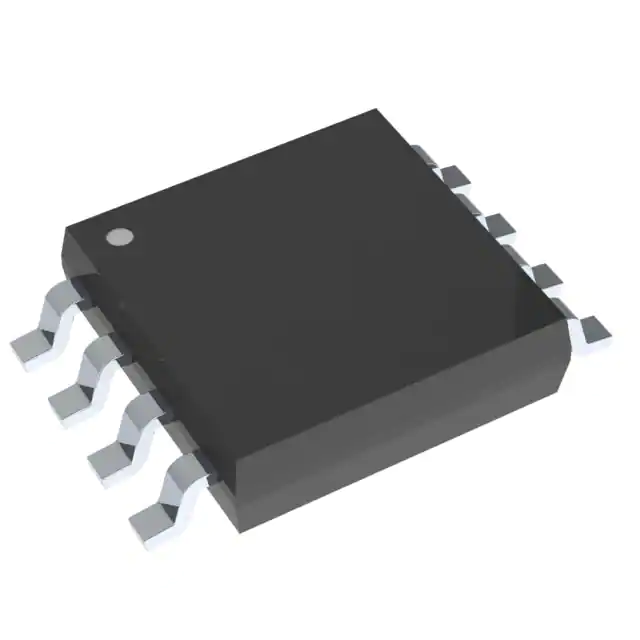
Analog Devices Inc./Maxim Integrated DS2433S+T&R
- Part No.:
- DS2433S+T&R
- Manufacturer:
- Analog Devices Inc./Maxim Integrated
- Category:
- Memory
- Package:
- 8-SOIC (0.209", 5.30mm Width)
- Datasheet:
-
 DS2433S+T&R.pdf
- Description:
- IC EEPROM 4KBIT 1-WIRE 8SOIC
- Quantity:
- Payment:

- Shipping:

Inventory:3,285
Please send an inquiry. Send us your inquiry, and we will respond immediately.
Product details
Overview
DS2433S+T&R from Maxim Integrated is a 4Kb 1-Wire® EEPROM IC with factory-lasered 64-bit ROM (8-bit family code 0x23, 48-bit unique serial number, 8-bit CRC), 16 pages × 256-bit EEPROM memory, and 256-bit scratchpad buffer. It operates parasitically from a single data line at 2.8V–6.0V across –40°C to +85°C and supports both standard (16.3kbps) and Overdrive (142kbps) communication modes. It is used for calibration storage, board identification, and product revision tracking in embedded sensor nodes.
For engineers reviewing the DS2433S+T&R datasheet, DS2433S+T&R pinout, DS2433S+T&R application, or DS2433S+T&R equivalent, key selection considerations include its 1-Wire interface compatibility, parasite-power capability, page-based write-verify protocol, SO-8 package footprint, and absence of external VCC requirement - critical for space-constrained, low-pin-count designs requiring traceable device identity.
Technical Context
The DS2433S+T&R implements a strict 1-Wire hierarchical protocol: bus initialization must precede ROM function commands (e.g., Skip ROM 0xCC or Match ROM 0x55), which then enable memory functions (Write Scratchpad 0x0F, Read Scratchpad 0xAA, Copy Scratchpad 0x55). Its internal address registers (TA1, TA2, E/S) govern scratchpad targeting and transfer status, with E/S providing ending offset and Partial Flag (PF) for integrity validation.
Parasite power operation relies on controlled I/O line timing and pullup resistor selection (1.5kΩ–5kΩ); during Copy Scratchpad execution (≤5ms), bus voltage must remain ≥2.8V. The 8-bit CRC (X⁸+X⁵+X⁴+1) ensures ROM authenticity, while CRC16 (X¹⁶+X¹⁵+X²+1, inverted) verifies scratchpad writes - both computed in hardware without host CPU overhead.
Key Specifications
| Parameter | Value and Actual Design Meaning |
|---|---|
| Memory Size | 4096 bits EEPROM (16 × 256-bit pages) + 256-bit scratchpad buffer for verified writes |
| Interface | Single-pin 1-Wire® (open-drain), no VCC required - reduces PCB routing and connector count |
| Data Rate | 16.3kbps (standard mode) or 142kbps (Overdrive mode) - enables faster calibration updates in production test |
| Supply Range | 2.8V to 6.0V parasitic power - eliminates dedicated power rail for sensor node ID storage |
| Operating Temp | –40°C to +85°C - qualified for industrial and automotive under-hood environments |
| ROM Identity | 64-bit factory-lasered ID (0x23 family code + 48-bit serial + 8-bit CRC) - guarantees unclonable device traceability |
| Write Endurance | 100,000 write/erase cycles per memory page - supports field firmware revision logging |
Pinout & Package
DS2433S+T&R is supplied in an 8-pin SO (Small Outline) surface-mount package (208 mils wide), pin-compatible with industry-standard SOIC-8 footprints. Pin 1 is Ground, Pin 2 is Data (1-Wire I/O), Pins 3–8 are No Connect (NC).
| Pin/Terminal | Circuit Role | Design Meaning |
|---|---|---|
| 1 | Ground (GND) | Reference return path for parasitic power harvesting and signal integrity |
| 2 | Data (I/O) | Open-drain 1-Wire bidirectional bus - carries power, clock, address, and data |
| 3–8 | No Connect (NC) | Unbonded die pads - no electrical function; must remain floating per datasheet |
Key Features
| Feature | Design Value |
|---|---|
| Factory-Lasered 64-Bit ROM | Provides cryptographically verifiable, globally unique identity - eliminates manual serialization in manufacturing |
| Scratchpad + Copy Protocol | Enables atomic, error-checked EEPROM writes: data written to scratchpad first, verified via CRC16 or readback, then copied to final location |
| Parasite-Power Operation | Derives all operating energy from the 1-Wire data line - removes need for local VCC decoupling and simplifies 2-wire cabling |
| Overdrive Mode Support | Boosts write throughput by 8.7× (142kbps vs. 16.3kbps) - accelerates calibration data loading in high-volume test systems |
| Page-Partitioned Memory | 16 independent 256-bit pages allow selective reprogramming without erasing full memory - preserves calibration offsets during firmware updates |
Applications
| Calibration Data Storage | Board-Level Identification |
|---|---|
|
Use Scenario: Storing temperature sensor gain/offset coefficients, ADC reference trim values, and sensor-specific linearization tables in factory test. IC Role / Device Role / Timing Role: Nonvolatile, tamper-resistant identity and calibration store accessed via 1-Wire during system boot or calibration cycle. Use Value: Eliminates external EEPROM and associated address lines; enables plug-and-play sensor replacement with automatic parameter recall. |
Use Scenario: Embedding unique board revision, manufacturing date, and test station ID onto PCBs for automated assembly line traceability. IC Role / Device Role / Timing Role: Permanent, laser-programmed identity node on MicroLAN bus - queried during firmware initialization or diagnostic mode. Use Value: Provides immutable hardware fingerprint for warranty control, counterfeit detection, and field failure root-cause analysis. |
| Product Revision Tracking | Secure Peripheral Authentication |
|
Use Scenario: Recording firmware version, hardware revision, and last update timestamp in consumer electronics accessories (e.g., battery packs, chargers). IC Role / Device Role / Timing Role: Write-once or infrequently updated EEPROM node - stores revision metadata accessible over 1-Wire during host enumeration. Use Value: Enables host systems to enforce compatibility policies (e.g., block outdated battery firmware) without secure MCU involvement. |
Use Scenario: Authenticating third-party peripherals (e.g., printer cartridges, medical probes) using factory-ROM identity before enabling full functionality. IC Role / Device Role / Timing Role: Cryptographic identity anchor - ROM CRC validates authenticity; scratchpad stores challenge-response tokens or session keys. Use Value: Prevents unauthorized accessories via hardware-rooted identity, avoiding software-only authentication vulnerabilities. |
Equivalent & Alternatives
The following parts are listed as comparable options for similar 1-Wire EEPROM applications.
| Alternative Part | Technical Difference | Application Difference | Selection Advice |
|---|---|---|---|
| DS2431+T&R | 1024-bit EEPROM (4 × 256-bit pages), same 64-bit ROM, identical SO-8 pinout and 1-Wire protocol | Limited memory depth - suitable only for minimal ID + calibration data; insufficient for multi-sensor calibration sets | Select DS2431+T&R when board space or cost constraints outweigh memory requirements and legacy design reuse is prioritized. |
| DS28EC20+T&R | 20Kb EEPROM (80 × 256-bit pages), enhanced security features (SHA-256 authentication), same 1-Wire interface and SO-8 package | Supports cryptographic challenge-response and protected memory zones - required for regulated medical or payment peripherals | Choose DS28EC20+T&R when secure authentication, larger calibration storage, or regulatory compliance (e.g., FDA, PCI) drives design requirements. |
Compared with DS2433S+T&R, DS2431+T&R offers lower cost and footprint compatibility but lacks sufficient memory for complex calibration datasets, while DS28EC20+T&R adds cryptographic security and 5× memory capacity at higher unit cost and firmware complexity - making DS2433S+T&R the optimal balance for industrial ID and moderate calibration storage.
Availability
DS2433S+T&R is available at Aetrix Electronics and suitable for calibration data storage, board-level identification, and product revision tracking requiring stable component supply, long-term obsolescence management, and RoHS-compliant tape-and-reel delivery.
Supply support for DS2433S+T&R includes scheduled delivery planning, volume procurement assistance, BOM continuity management, traceable sourcing, and lifecycle availability coordination for OEM customers, industrial embedded developers, connected-device designers, and electronics production programs.
Manufacturer
Maxim Integrated (now part of Analog Devices) is a semiconductor company specializing in analog, mixed-signal, and digital ICs for industrial, communications, and computing applications.
The DS2433S+T&R belongs to Maxim's 1-Wire EEPROM product line, designed specifically for low-pin-count, parasitically powered identification and nonvolatile data storage in distributed sensor networks and embedded systems.
FAQ
What is the primary function of the DS2433S+T&R in a system?
The DS2433S+T&R serves as a parasitically powered, single-pin 1-Wire EEPROM that provides guaranteed unique device identity (via 64-bit lasered ROM) and 4Kb of user-programmable nonvolatile memory. Its core function is to store calibration constants, board IDs, and revision metadata in space-constrained embedded systems where minimizing interconnects is critical. The DS2433S+T&R eliminates the need for separate power and address lines, enabling direct connection to a microcontroller GPIO pin.
Does the DS2433S+T&R require an external power supply?
No, the DS2433S+T&R operates entirely from parasite power harvested from the 1-Wire data line - no external VCC connection is needed. It functions across 2.8V–6.0V with appropriate pullup resistor sizing (1.5kΩ–5kΩ). During Copy Scratchpad operations (≤5ms), the bus voltage must remain ≥2.8V; this is ensured by strong pullup or active drive during write cycles. The DS2433S+T&R's design inherently supports 2-wire cabling (data + ground) in sensor modules and accessories.
How does the DS2433S+T&R ensure data integrity during writes?
The DS2433S+T&R enforces data integrity through a two-stage write process: first, data is written to a 256-bit scratchpad and verified via hardware-generated CRC16 (X¹⁶+X¹⁵+X²+1, inverted) or readback; second, only after verification does the Copy Scratchpad command transfer data to EEPROM. The E/S register reports ending offset and Partial Flag (PF) to detect incomplete writes or power loss. This protocol prevents partial or corrupted writes - a critical reliability feature for DS2433S+T&R in unattended field deployments.
What is the significance of the 64-bit ROM in the DS2433S+T&R?
The 64-bit ROM in the DS2433S+T&R consists of an 8-bit family code (0x23), a unique 48-bit serial number, and an 8-bit CRC - all factory-lasered and permanently unalterable. This provides absolute, collision-free device identity for MicroLAN networks, enabling reliable enumeration of multiple DS2433S+T&R devices on a shared bus. The ROM allows hosts to perform Match ROM or Search ROM operations, making DS2433S+T&R ideal for asset tracking, anti-counterfeiting, and automated calibration management where each unit must be individually addressable and authenticatable.
Is the DS2433S+T&R compatible with other 1-Wire devices on the same bus?
Yes, the DS2433S+T&R is fully compatible with other 1-Wire devices (e.g., DS18B20, DS2401) on the same multidrop bus due to its built-in multidrop controller and adherence to the standardized 1-Wire protocol hierarchy. It responds to standard ROM commands (Skip ROM, Match ROM, Search ROM) and memory functions, allowing coexistence with temperature sensors, iButtons, and other slaves. However, Overdrive mode activation requires coordination across all Overdrive-capable devices, and bus timing must comply with the slowest device's specification - confirming DS2433S+T&R interoperability in mixed-node MicroLAN systems.
DS2433S+T&R Specifications
- Product attributes
- Attribute value
- Manufacturer:
- Analog Devices Inc./Maxim Integrated
- Series:
- -
- Package/Case:
- 8-SOIC (0.209", 5.30mm Width)
- Packaging:
- Tape & Reel (TR)
- Product Status:
- Obsolete
- Programmable:
- Not Verified
- Memory Type:
- Non-Volatile
- Memory Format:
- EEPROM
- Technology:
- EEPROM
- Memory Size:
- 4Kbit
- Memory Organization:
- 256 x 16
- Memory Interface:
- 1-Wire®
- Clock Frequency:
- -
- Write Cycle Time - Word, Page:
- -
- Access Time:
- 2 µs
- Voltage - Supply:
- -
- Operating Temperature:
- -40°C ~ 85°C (TA)
- Grade:
- -
- Qualification:
- -
- Mounting Type:
- Surface Mount
- Supplier Device Package:
- 8-SOIC
DS2433S+T&R FAQ
1.How can I place an order for DS2433S+T&R through Aetrix?
Please submit a Request for Quotation (RFQ) for DS2433S+T&R on Aetrix. Our sales agent will provide a competitive quotation and guide you through the order confirmation once you accept the terms.
2.Are the price and stock information for DS2433S+T&R reliable?
The price and inventory of DS2433S+T&R are updated periodically and may fluctuate due to market conditions. Stock and pricing data are typically refreshed every 24 hours. Quotation validity for DS2433S+T&R is usually 5 days.
3.What payment methods are accepted for DS2433S+T&R?
We accept Wire Transfer, PayPal, Credit Card, Western Union, MoneyGram, and Escrow for DS2433S+T&R transactions.
Note: Certain payment methods may incur a processing fee.
4.How is shipping managed for DS2433S+T&R?
DS2433S+T&R orders can be shipped via leading logistics carriers, including DHL, UPS, FedEx, TNT, or Registered Mail.
Once your DS2433S+T&R order is processed, you will receive an email with the shipment details and tracking number.
Note: Tracking information may take up to 24 hours to appear. Express delivery typically takes 3–5 business days.
5.How can I obtain technical support or documentation for DS2433S+T&R?
For technical support, including DS2433S+T&R datasheets, pinout diagrams, or application guidance, please contact our engineering support team. They can provide detailed documentation and assistance for your DS2433S+T&R requirements.
6.How does Aetrix verify that DS2433S+T&R is sourced from the original manufacturer or authorized distributors?
All DS2433S+T&R products on Aetrix are procured from qualified distributors and authorized channels. Our dedicated quality assurance team conducts strict verification, including traceability checks and, if necessary, third-party testing. This ensures that DS2433S+T&R meets industry standards.
7.What is the process for return or replacement of DS2433S+T&R?
All DS2433S+T&R units undergo pre-shipment inspection (PSI). If there is an issue with DS2433S+T&R, returns or replacements are accepted under the following conditions:
1.Quantity discrepancies, incorrect items, or visible external defects (such as breakage or corrosion), acknowledged by Aetrix.
2.The issue is reported within 90 days of delivery.
3.The DS2433S+T&R part is unused and in its original packaging.
Return procedure for DS2433S+T&R:
1.Submit a request within 90 days.
2.Obtain a Return Material Authorization (RMA) from Aetrix.
DS2433S+T&R Tags

-
M24C02-WMN6TP
STMicroelectronics
-
AT24C02C-XHM-T
Microchip Technology
-
AT21CS01-STUM10-T
Microchip Technology

-
AT24C02C-SSHM-T
Microchip Technology

-
24LC01BT-I/OT
Microchip Technology
-
M24C02-FMC6TG
STMicroelectronics
-
AT24CS02-SSHM-T
Microchip Technology

-
93LC46BT-I/OT
Microchip Technology
-
AT24C04C-SSHM-T
Microchip Technology

-
24LC01BT-I/SN
Microchip Technology
-
24AA02UIDT-I/OT
Microchip Technology
-
AT24C08C-STUM-T
Microchip Technology
Tech Hub

Comparator circuit design covering voltage thresholds, input limits, open-collector outputs, LM393 wiring, op-amp differences, hysteresis, timing, window detection and practical fault diagnosis.
Schmitt triggers use separate rising and falling thresholds to stabilize slow or noisy signals. This guide covers hysteresis, 74HC14 and 74HCT14 selection, comparator calculations, RC oscillators and p…

Counterfeit components can hide behind convincing markings and passing basic function tests. This engineering reference covers source traceability, external inspection, X-ray, XRF, electrical testing, …

A practical engineering and sourcing framework covering lifecycle verification, lifetime-buy calculations, replacement qualification, supplier checks and counterfeit-risk controls.

TTL and CMOS logic families differ in thresholds, loading, output drive, power and timing. This engineering guide compares 74HC and 74HCT, calculates noise margins and checks 3.3 V/5 V compatibility.

A practical engineering guide to 3.3V and 5V logic compatibility, input thresholds, resistor dividers, translator ICs, MOSFET level shifting, I2C pull-ups, timing limits and power-sequencing risks.

The 74HC595 uses push-pull logic outputs, while the TPIC6B595 uses 50 V open-drain DMOS sinks for higher-power loads. This guide compares timing, current limits, 3.3 V interfacing, load wiring, thermal…

The 74HC595 converts serial data into eight stable parallel outputs. This guide covers pin functions, shift and storage timing, OE and MR behavior, drive-current limits, cascading, voltage compatibilit…

A technical comparison of level-sensitive latches and edge-triggered flip-flops, covering timing windows, setup and hold limits, master–slave operation, time borrowing, race-through, HDL inference and…

A D latch stores one bit while Enable controls when data can pass. This reference covers gate-level operation, truth tables, transparency, setup and hold timing, LE versus OE, common ICs and practical …


