Analog Devices Inc./Maxim Integrated DS28DG02E-3C+
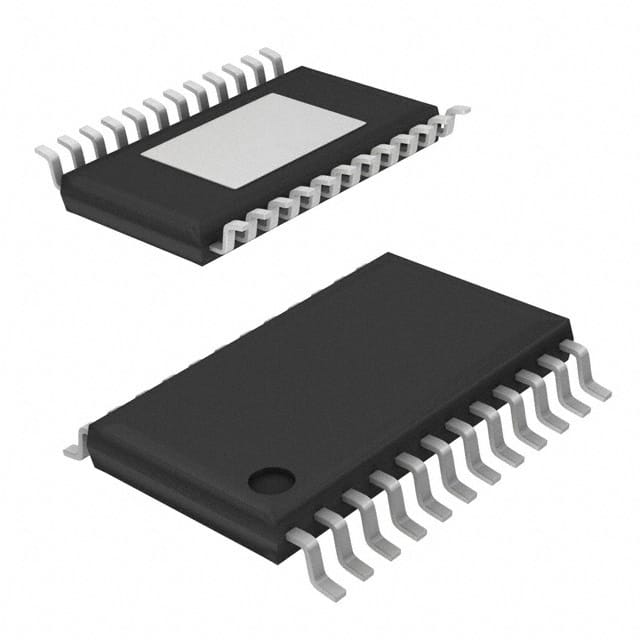
- Part No.:
- DS28DG02E-3C+
- Manufacturer:
- Analog Devices Inc./Maxim Integrated
- Category:
- Memory
- Package:
- 28-TSSOP (0.173", 4.40mm Width) Exposed Pad
- Datasheet:
-
DS28DG02E-3C+.pdf
- Description:
- IC EEPROM 2KBIT SPI 2MHZ 28TSSOP
- Quantity:
- Payment:

- Shipping:

Inventory:1,794
Please send an inquiry. Send us your inquiry, and we will respond immediately.
Product details
Overview
The DS28DG02E-3C+ from Maxim Integrated is a 2Kb SPI EEPROM with integrated 12-bit parallel I/O (PIO), real-time clock/calendar with alarm, CPU reset monitor, battery voltage monitor, and watchdog timer - all in a single 28-pin TSSOP package. It operates from 2.2V to 5.25V over -40°C to +85°C, supports up to 2MHz SPI communication, and delivers 200k write cycles per EEPROM page with 40-year data retention at +85°C. It is used in asset-tracking systems and patient-monitoring devices requiring nonvolatile configuration, time-stamped logging, and system supervision.
For engineers reviewing the DS28DG02E-3C+ datasheet, DS28DG02E-3C+ pinout, DS28DG02E-3C+ application, or DS28DG02E-3C+ equivalent, this page provides verified technical context, confirmed pin functions, validated alternative parts, and design-meaningful specifications - including factory-set 3.3V ±5% VCC trip point, user-programmable battery thresholds (2.25V/2.0V/1.75V), and RTC alarm granularity down to 1-second intervals.
Technical Context
The DS28DG02E-3C+ integrates four functional domains on a single die: a 2Kb (256 × 8) EEPROM organized in four 64-byte blocks with hardware write-protection (WPZ pin), twelve reconfigurable PIOs supporting push-pull or open-drain outputs and LED drive capability, an RTC/calendar with BCD format and automatic leap-year compensation, and dual voltage monitors - one for VCC (factory-trimmed 3.3V −5%) and one for VBAT (user-selectable thresholds).
Its SPI interface complies with modes (0,0) and (1,1) at up to 2MHz, with guaranteed timing margins including 50ns data setup/hold and 120ns output valid time. The RSTZ pin serves triple duty: power-fail reset (with hysteresis), manual reset input (debounced), and watchdog alarm output - all controlled via nonvolatile multifunction registers starting at address 134h.
Key Specifications
| Parameter | Value and Actual Design Meaning |
|---|---|
| EEPROM Size | 2Kb (256 × 8), split into four 64-byte blocks with independent write protection via WPZ pin |
| SPI Interface | Supports modes (0,0) and (1,1) up to 2MHz; enables reliable host MCU communication without protocol translation |
| VCC Monitor Trip Point | Factory-set at 3.3V −5% (2.97V), with ±2.5% tolerance over temperature - ensures deterministic reset during brownout |
| Battery Monitor Thresholds | User-programmable: 2.25V, 2.0V, 1.75V, or 2.5V −5%; enables flexible backup power management in portable medical devices |
| RTC Accuracy | ±46ppm deviation with 32.768kHz crystal (12.5pF, ESR ≤45kΩ); supports precise timestamping for regulatory-compliant log records |
| PIO Drive Capability | Each of 12 PIOs sinks up to 30mA at VCC = 5.25V (VOL = 0.5V); sufficient to directly drive LEDs or small relays without external buffers |
| Operating Range | 2.2V to 5.25V supply, −40°C to +85°C ambient - qualified for industrial and medical environments |
Pinout & Package
DS28DG02E-3C+ uses a 28-lead, 4.4mm TSSOP-EP package with exposed paddle soldered to PCB ground for thermal and electrical stability. Pin numbering follows standard TSSOP layout (pin 1 = X1, pin 28 = VBAT), with 12 dedicated PIO lines, 3 alarm/reset outputs (RSTZ, WDOZ, ALMZ), and full SPI interface (CSZ, SCK, SI, SO).
| Pin/Terminal | Circuit Role | Design Meaning |
|---|---|---|
| X1, X2 | 32.768kHz crystal terminals | Connect to external tuning fork crystal or TCXO; enable autonomous RTC operation during VCC loss |
| RSTZ | Open-drain reset/alarm output & manual reset input | Asserts low on VCC undervoltage, watchdog timeout, or RTC/battery alarm; debounced pushbutton input accepted |
| WDI | Watchdog input (active high) | Must be toggled within programmable timeout (0.2s–1.6s) to prevent WDOZ/ALMZ assertion |
| WDOZ | Open-drain watchdog alarm output | Independent alarm path - can be enabled/disabled separately from ALMZ for fault-isolation designs |
| WPZ | Hardware write-protect input (active low) | Locks EEPROM blocks and NV registers when pulled low; overrides software write-enable commands |
| PIO0–PIO11 | Configurable bidirectional I/O lines | Each individually set as input/output; output type (push-pull/open-drain) and current mode (low/high) programmable in groups |
| VBAT | Backup battery supply | Powers RTC and RSTZ during main supply failure; must be ≥1.5V for RTC retention and reset holdover |
Key Features
| Feature | Design Value |
|---|---|
| Unique 64-bit registration number | Factory-programmed ROM (addresses 118h–11Fh) enables device-level traceability and secure identification in asset-tracking systems |
| RTC with leap-year compensation | Automatically adjusts calendar for years divisible by 4 (excluding year 2100); eliminates firmware date-handling overhead |
| Programmable watchdog timeout | Four selectable intervals (0.2s/0.4s/0.8s/1.6s) stored in NV register - allows tuning for specific system recovery latency requirements |
| EEPROM endurance & retention | 200k write cycles per 16-byte page at +25°C; 40-year data retention at +85°C - meets long-life deployment needs in medical equipment |
| ESD protection | ±4kV per IEC 1000-4-2 (except crystal pins) - enhances robustness in field-deployed broadband access gear |
Applications
| Asset Tracking | Patient Monitoring |
|---|---|
Use Scenario: Tamper-evident GPS loggers embedded in shipping containers record location, temperature, and door-open events with timestamps. IC Role / Device Role / Timing Role: DS28DG02E-3C+ stores sensor metadata and calibration data in EEPROM, maintains accurate UTC time via RTC, and triggers alarms on unauthorized access using PIO-controlled sensors. Use Value: Eliminates need for separate RTC, supervisor, and I/O expander ICs - reducing BOM count and PCB area while ensuring time-consistent event logging. | Use Scenario: Portable Holter heart monitors capture ECG waveforms continuously for 24–72 hours and tag each segment with precise timestamps. IC Role / Device Role / Timing Role: DS28DG02E-3C+ provides battery-backed RTC for clinical-grade time stamps, monitors battery health to warn of imminent shutdown, and resets the host MCU if power drops below safe operating voltage. Use Value: Guarantees regulatory-compliant time accuracy and data integrity even during brief power interruptions - critical for FDA-cleared diagnostics. |
| Home Lighting Control | Broadband Access Equipment |
Use Scenario: Smart lighting hubs schedule on/off events, dimming profiles, and occupancy-triggered responses across multiple zones. IC Role / Device Role / Timing Role: DS28DG02E-3C+ stores user-configured schedules in EEPROM, executes daily RTC alarms to trigger actions, and uses PIOs to drive relay drivers or communicate with DALI bus transceivers. Use Value: Enables offline scheduling resilience - lights operate correctly even after network outages or gateway reboots due to local timekeeping and nonvolatile storage. | Use Scenario: DSLAM line cards perform periodic self-tests, store firmware version history, and log voltage excursions on power rails. IC Role / Device Role / Timing Role: DS28DG02E-3C+ acts as a system supervisor: monitors +3.3V rail with precision VCC detector, logs faults to EEPROM with RTC timestamps, and asserts RSTZ to recover hung processors. Use Value: Reduces mean time to repair (MTTR) by providing time-correlated diagnostic data - accelerating root-cause analysis in carrier-class infrastructure. |
Equivalent & Alternatives
The following parts are listed as comparable options for similar multifunction supervisory EEPROM applications.
| Alternative Part | Technical Difference | Application Difference | Selection Advice |
|---|---|---|---|
| MAX6900AETM+ | 2Kb SPI EEPROM + RTC only (no PIO, no watchdog, no battery monitor); 16-pin TQFN; 3.3V fixed VCC trip | Lacks system supervision features - suitable only where RTC+EEPROM suffices without I/O or fault response | Select when cost and footprint are primary constraints and full DS28DG02E-3C+ feature set is unused |
| DS1339S-33+T&R | Serial RTC with 56-byte SRAM + trickle-charge controller; no EEPROM, no PIO, no voltage monitoring; 8-pin SO | Provides basic timekeeping and battery backup only - requires external EEPROM and supervisor IC for full functionality | Choose only for legacy RTC replacement where existing design already implements I/O and monitoring externally |
Compared with MAX6900AETM+ and DS1339S-33+T&R, the DS28DG02E-3C+ uniquely consolidates EEPROM, RTC, 12-channel PIO, dual voltage monitors, and watchdog into one package - reducing interconnect complexity, eliminating timing skew between subsystems, and enabling unified firmware control of all supervisory functions.
Availability
DS28DG02E-3C+ is available at Aetrix Electronics and suitable for asset-tracking systems, patient-monitoring devices, and broadband access network equipment requiring stable component supply, long-term lifecycle support, and RoHS-compliant packaging.
Supply support for DS28DG02E-3C+ includes scheduled delivery planning, volume procurement assistance, BOM continuity management, traceable sourcing, and lifecycle availability coordination for OEM customers, industrial embedded developers, connected-device designers, and electronics production programs.
Manufacturer
Maxim Integrated (now part of Analog Devices) designs precision analog, mixed-signal, and digital ICs for industrial, medical, communications, and consumer applications.
The DS28DG02E-3C+ belongs to Maxim's system-supervisor family, engineered to replace discrete reset ICs, RTC modules, EEPROMs, and I/O expanders in space-constrained embedded systems demanding high reliability and time-critical fault response.
FAQ
What is the factory-set VCC trip point for DS28DG02E-3C+?
The DS28DG02E-3C+ has a factory-set VCC monitor trip point of 3.3V −5%, equaling 2.97V nominal, with ±2.5% tolerance over −40°C to +85°C. This value is trimmed during production and cannot be altered in the field. The hysteresis is 0.4–0.6% of VTRIP, preventing chatter during slow-rising/falling VCC transitions. This specification is documented in the Electrical Characteristics table on page 2 of the DS28DG02 datasheet.
Can DS28DG02E-3C+ operate without a backup battery connected to VBAT?
Yes, DS28DG02E-3C+ can operate without a VBAT connection, but with functional trade-offs: the RTC stops counting when VCC falls below VPOR (2.13V), RSTZ loses battery-backed holdover capability, and the device cannot maintain time during power loss. To retain RTC function, connect VBAT to VCC; however, doing so disables battery voltage monitoring. The DS28DG02E-3C+ datasheet explicitly states this behavior in Note 1 on page 2.
How many EEPROM write cycles does DS28DG02E-3C+ support per page?
The DS28DG02E-3C+ guarantees 200,000 write cycles per 16-byte EEPROM page at +25°C, as specified in the Electrical Characteristics table (page 2). Each of the four 64-byte blocks consists of four such pages. Endurance is not rated per byte or per block - it applies strictly to individual 16-byte pages. Write cycle time is capped at 10ms maximum, and page writes require proper command sequencing via SPI.
Does DS28DG02E-3C+ support both SPI mode (0,0) and (1,1)?
Yes, DS28DG02E-3C+ natively supports SPI modes (0,0) and (1,1) at clock frequencies up to 2MHz, as confirmed in the Features section (page 1) and SPI Interface Timing table (page 4). It automatically detects and adapts to the host MCU's CPOL/CPHA settings without configuration. This dual-mode compatibility simplifies integration with diverse microcontrollers, including those using legacy or inverted clock polarity conventions.
What is the purpose of the WPZ pin on DS28DG02E-3C+?
The WPZ (Write-Protect) pin on DS28DG02E-3C+ is an active-low hardware lock that overrides all software write commands when asserted. When WPZ is pulled low, it protects selected EEPROM blocks (1, 2, or all 4) and all NV registers from accidental or malicious modification - even if the host issues WREN or WRITE commands. This physical safeguard is critical in deployed systems where firmware updates must not corrupt calibration data or security keys stored in DS28DG02E-3C+ EEPROM.
DS28DG02E-3C+ Specifications
- Product attributes
- Attribute value
- Manufacturer:
- Analog Devices Inc./Maxim Integrated
- Series:
- -
- Package/Case:
- 28-TSSOP (0.173", 4.40mm Width) Exposed Pad
- Packaging:
- Tube
- Product Status:
- Obsolete
- Programmable:
- Not Verified
- Memory Type:
- Non-Volatile
- Memory Format:
- EEPROM
- Technology:
- EEPROM
- Memory Size:
- 2Kbit
- Memory Organization:
- 256 x 8
- Memory Interface:
- SPI
- Clock Frequency:
- 2 MHz
- Write Cycle Time - Word, Page:
- -
- Access Time:
- -
- Voltage - Supply:
- 2.2V ~ 5.25V
- Operating Temperature:
- -40°C ~ 85°C (TA)
- Grade:
- -
- Qualification:
- -
- Mounting Type:
- Surface Mount
- Supplier Device Package:
- 28-TSSOP-EP
DS28DG02E-3C+ FAQ
1.How can I place an order for DS28DG02E-3C+ through Aetrix?
Please submit a Request for Quotation (RFQ) for DS28DG02E-3C+ on Aetrix. Our sales agent will provide a competitive quotation and guide you through the order confirmation once you accept the terms.
2.Are the price and stock information for DS28DG02E-3C+ reliable?
The price and inventory of DS28DG02E-3C+ are updated periodically and may fluctuate due to market conditions. Stock and pricing data are typically refreshed every 24 hours. Quotation validity for DS28DG02E-3C+ is usually 5 days.
3.What payment methods are accepted for DS28DG02E-3C+?
We accept Wire Transfer, PayPal, Credit Card, Western Union, MoneyGram, and Escrow for DS28DG02E-3C+ transactions.
Note: Certain payment methods may incur a processing fee.
4.How is shipping managed for DS28DG02E-3C+?
DS28DG02E-3C+ orders can be shipped via leading logistics carriers, including DHL, UPS, FedEx, TNT, or Registered Mail.
Once your DS28DG02E-3C+ order is processed, you will receive an email with the shipment details and tracking number.
Note: Tracking information may take up to 24 hours to appear. Express delivery typically takes 3–5 business days.
5.How can I obtain technical support or documentation for DS28DG02E-3C+?
For technical support, including DS28DG02E-3C+ datasheets, pinout diagrams, or application guidance, please contact our engineering support team. They can provide detailed documentation and assistance for your DS28DG02E-3C+ requirements.
6.How does Aetrix verify that DS28DG02E-3C+ is sourced from the original manufacturer or authorized distributors?
All DS28DG02E-3C+ products on Aetrix are procured from qualified distributors and authorized channels. Our dedicated quality assurance team conducts strict verification, including traceability checks and, if necessary, third-party testing. This ensures that DS28DG02E-3C+ meets industry standards.
7.What is the process for return or replacement of DS28DG02E-3C+?
All DS28DG02E-3C+ units undergo pre-shipment inspection (PSI). If there is an issue with DS28DG02E-3C+, returns or replacements are accepted under the following conditions:
1.Quantity discrepancies, incorrect items, or visible external defects (such as breakage or corrosion), acknowledged by Aetrix.
2.The issue is reported within 90 days of delivery.
3.The DS28DG02E-3C+ part is unused and in its original packaging.
Return procedure for DS28DG02E-3C+:
1.Submit a request within 90 days.
2.Obtain a Return Material Authorization (RMA) from Aetrix.
DS28DG02E-3C+ Tags
-
M24C02-WMN6TP
STMicroelectronics
-
AT24C02C-XHM-T
Microchip Technology
-
AT21CS01-STUM10-T
Microchip Technology

-
AT24C02C-SSHM-T
Microchip Technology
-
24LC01BT-I/OT
Microchip Technology
-
M24C02-FMC6TG
STMicroelectronics

-
AT24CS02-SSHM-T
Microchip Technology

-
93LC46BT-I/OT
Microchip Technology

-
AT24C04C-SSHM-T
Microchip Technology

-
24LC01BT-I/SN
Microchip Technology

-
24AA02UIDT-I/OT
Microchip Technology
-
AT24C08C-STUM-T
Microchip Technology
Tech Hub

Comparator circuit design covering voltage thresholds, input limits, open-collector outputs, LM393 wiring, op-amp differences, hysteresis, timing, window detection and practical fault diagnosis.
Schmitt triggers use separate rising and falling thresholds to stabilize slow or noisy signals. This guide covers hysteresis, 74HC14 and 74HCT14 selection, comparator calculations, RC oscillators and p…
Counterfeit components can hide behind convincing markings and passing basic function tests. This engineering reference covers source traceability, external inspection, X-ray, XRF, electrical testing, …
A practical engineering and sourcing framework covering lifecycle verification, lifetime-buy calculations, replacement qualification, supplier checks and counterfeit-risk controls.
TTL and CMOS logic families differ in thresholds, loading, output drive, power and timing. This engineering guide compares 74HC and 74HCT, calculates noise margins and checks 3.3 V/5 V compatibility.
A practical engineering guide to 3.3V and 5V logic compatibility, input thresholds, resistor dividers, translator ICs, MOSFET level shifting, I2C pull-ups, timing limits and power-sequencing risks.
The 74HC595 uses push-pull logic outputs, while the TPIC6B595 uses 50 V open-drain DMOS sinks for higher-power loads. This guide compares timing, current limits, 3.3 V interfacing, load wiring, thermal…
The 74HC595 converts serial data into eight stable parallel outputs. This guide covers pin functions, shift and storage timing, OE and MR behavior, drive-current limits, cascading, voltage compatibilit…
A technical comparison of level-sensitive latches and edge-triggered flip-flops, covering timing windows, setup and hold limits, master–slave operation, time borrowing, race-through, HDL inference and…
A D latch stores one bit while Enable controls when data can pass. This reference covers gate-level operation, truth tables, transparency, setup and hold timing, LE versus OE, common ICs and practical …