Send an Inquiry

To receive a quote for your project, please fill in the following information, and we’ll get back to you promptly.

Name*
Company*
Email Address*
Phone/WhatsApp
Part Number*
Quantity*
Message
Submit Inventory List

Please fill in the following information, and we’ll get back to you promptly.

Name*
Company*
Email Address*
Phone/WhatsApp
Upload My List
Message

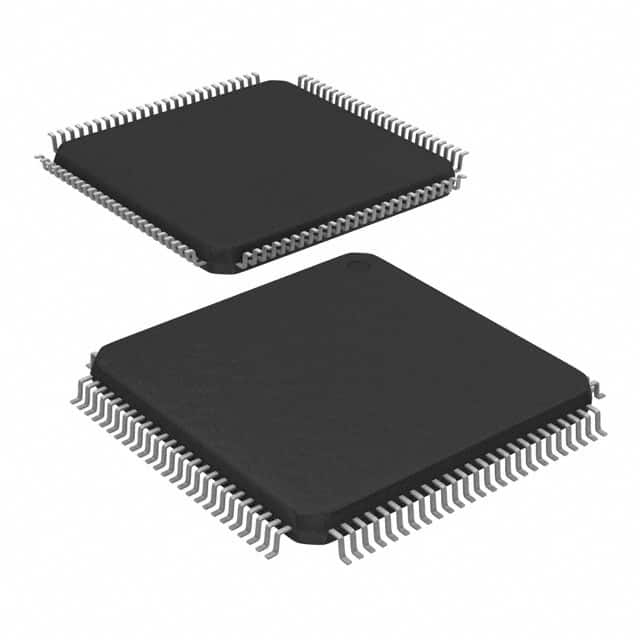
Silicon Labs EFM32G280F32G-E-QFP100R
Part No.:
EFM32G280F32G-E-QFP100R
Manufacturer:
Silicon Labs
Category:
Microcontrollers
Package:
100-LQFP
Datasheet:
AetrixEFM32G280F32G-E-QFP100R.pdf
Description:
IC MCU 32BIT 32KB FLASH 100LQFP
Quantity:
Payment:
Payment
Shipping:
Shipping

Inventory:4,619

Please send an inquiry. Send us your inquiry, and we will respond immediately.

Part Number
Quantity*
Price
Name*
Company
Email*
Comments

Product details

Overview

EFM32G280F32G-E-QFP100R from Silicon Labs is a 32-bit ARM Cortex-M3 microcontroller optimized for ultra-low-power battery-operated systems. It delivers 32 MHz operation, 32 kB Flash, 8 kB RAM, 0.6 μA Stop mode current, and hardware AES encryption - enabling long-life energy metering, smart accessories, and security system control with autonomous peripheral operation.

For engineers reviewing the EFM32G280F32G-E-QFP100R datasheet, EFM32G280F32G-E-QFP100R pinout, EFM32G280F32G-E-QFP100R application, or EFM32G280F32G-E-QFP100R equivalent, key selection factors include verified EM3/EM2 power states, LQFP100 package compatibility, PRS-enabled peripheral autonomy, and LEUART support at 32.768 kHz.

Technical Context

The EFM32G280F32G-E-QFP100R implements the ARM Cortex-M3 core with Memory Protection Unit (MPU), Wake-up Interrupt Controller, and SysTick timer. Its Energy Management Unit (EMU) supports five energy modes (EM0–EM4), with EM2 (Deep Sleep) and EM3 (Stop) retaining RAM and CPU state while enabling RTC, LETIMER, and PRS-triggered wake-up.

Clock management includes dual oscillators (HFXO/LFXO), HFRCO, LFRCO, and AUXHFRCO, all individually gated via the Clock Management Unit (CMU). Peripheral Reflex System (PRS) enables direct inter-peripheral signaling without CPU intervention - critical for low-energy sensor fusion and real-time control loops.

Key Specifications

ParameterValue and Actual Design Meaning
CoreARM Cortex-M3 @ 32 MHz - delivers 1.25 DMIPS/MHz for deterministic real-time execution in resource-constrained embedded applications.
Flash / RAM32 kB Flash / 8 kB RAM - sufficient for secure bootloader, sensor stack, and local decision logic without external memory.
Energy ModesEM0 (180 μA/MHz), EM1 (45 μA/MHz), EM2 (0.9 μA), EM3 (0.6 μA), EM4 (20 nA) - enables multi-year battery life in intermittent-sensing devices.
Analog Peripherals12-bit 1 Msps ADC (8 SE/4 diff), 12-bit 500 ksps DAC (2 SE/1 diff), 2 ACMP - supports precision analog front-end for metering and biometric sensing.
Communication3× USART (UART/SPI/IrDA/ISO7816), 2× LEUART, 1× I²C, PRS-triggered DMA - allows concurrent low-power sensor comms and host interface without CPU load.
SecurityHardware AES-128/256 accelerator (54/75 cycles) - enables authenticated firmware updates and encrypted sensor data at sub-millisecond latency.
PackageLQFP100 (14 × 14 mm, 0.5 mm pitch) - provides 80 GPIOs with configurable drive strength, pull-up/down, and input filtering for industrial I/O expansion.

Pinout & Package

LQFP100 package: 100-pin quad flat pack with exposed thermal pad, 0.5 mm pitch, 14 mm × 14 mm body, RoHS-compliant matte tin finish. Pin 1 marked by dot; pin numbering counterclockwise from top-left corner.

Pin/TerminalCircuit RoleDesign Meaning
VDDCore & I/O supply1.98–3.8 V single supply - powers CPU, peripherals, and GPIOs; requires local 100 nF + 4.7 μF decoupling per VDD group.
VSSGround referenceDedicated analog/digital ground pins - must be connected to low-impedance PCB plane to minimize noise coupling into ADC/DAC.
PA0–PA7, PB0–PB15, PC0–PC15, PD0–PD15, PE0–PE15General-purpose I/OUp to 80 programmable GPIOs - support push-pull, open-drain, Schmitt-trigger input, and PRS routing to peripherals like TIMER or ADC.
HFXTAL / HFXTAL_NHigh-frequency crystal inputSupports 4–32 MHz crystals - used for precise timing in USB, high-speed UART, or RF subsystem synchronization.
LFXTAL / LFXTAL_NLow-frequency crystal input32.768 kHz crystal connection - enables RTC, LETIMER, and EM2 wake-up with ±20 ppm accuracy over -40°C to +85°C.
SWDIO / SWCLKDebug interface2-pin Serial Wire Debug - allows full JTAG-equivalent debug, flash programming, and real-time trace without dedicated debug header.

Key Features

FeatureDesign Value
Autonomous PRS networkEnables TIMER → ADC → DMA chain without CPU wake-up - reduces active time by >90% in periodic sensor sampling.
LEUART with 32.768 kHz clockFull-duplex UART at 9600 baud in EM2 - eliminates need for high-frequency oscillator during sleep, cutting background power by 5× vs standard UART.
Hardware AES acceleratorEncrypts 128-bit blocks in 54 cycles - enables OTA firmware signing verification in <100 μs, preserving low-energy scheduling integrity.
Configurable GPIO locationsPeripheral functions remappable across multiple pins - simplifies PCB layout for EMI-sensitive or space-constrained designs without signal layer rework.
Integrated LCD controllerDrives up to 4×40 segments with voltage boost and contrast control - supports segment-based displays in smart meters and medical wearables without external driver IC.

Applications

Energy MeteringSmart Wearables

Use Scenario: Residential gas/water meter with pulse counting, temperature compensation, and LoRaWAN telemetry.

IC Role / Device Role / Timing Role: Primary MCU managing metrology ADC sampling, pulse accumulation, RTC timestamping, and secure packet encryption before wireless transmission.

Use Value: EM2 retention of RTC + PRS-triggered ADC capture enables 10-second interval readings at <1 μA average current - extending battery life to 15+ years.

Use Scenario: Fitness band measuring heart rate via PPG, storing session data, and syncing via BLE bridge.

IC Role / Device Role / Timing Role: Sensor hub aggregating optical, accelerometer, and battery voltage data; LEUART interfaces with BLE SoC in ultra-low-power burst mode.

Use Value: Hardware AES encrypts biometric logs pre-storage; 8 kB RAM holds 72 hours of compressed sensor history without external memory.

Alarm SystemsHome Automation

Use Scenario: Wireless door/window sensor with tamper detection, ambient light sensing, and encrypted Zigbee reporting.

IC Role / Device Role / Timing Role: Low-power event processor waking on GPIO interrupt (magnet removal), reading ACMP for tamper, and triggering encrypted alert via radio interface.

Use Value: EM4 shutoff mode draws only 20 nA; wake-up from EM4 to EM0 in 2 μs ensures immediate response to intrusion events.

Use Scenario: Smart thermostat controlling HVAC via relay, reading NTC sensors, and displaying status on segmented LCD.

IC Role / Device Role / Timing Role: Main controller running PID loop, driving integrated LCD, managing I²C temperature/humidity sensors, and communicating via UART to Wi-Fi module.

Use Value: On-chip LCD controller drives 4×40 display directly; 32 kB Flash hosts full UI stack and calibration tables - eliminating external display driver cost and BOM count.

Equivalent & Alternatives

The following parts are listed as comparable options for similar microcontroller applications.

Alternative PartTechnical DifferenceApplication DifferenceSelection Advice
EFM32G280F64G-E-QFP10064 kB Flash / 16 kB RAM; identical package, clock, and peripheral setSupports larger firmware images (e.g., dual-bank OTA, extended crypto libraries)Select when firmware size exceeds 32 kB or future-proofing for feature expansion is required.
EFM32G880F32G-E-QFP100Same Flash/RAM, but adds USB 2.0 interface and enhanced ESD protection (±8 kV HBM)Suitable for USB-connected diagnostics tools or field-programmable devices requiring plug-and-play update capabilityChoose only if native USB device functionality or higher ESD immunity is mandatory for end-product certification.

Compared with EFM32G280F32G-E-QFP100R, the F64G variant offers headroom for complex firmware growth without layout change, while the G880 variant trades USB capability for slightly higher cost and no power advantage - making the original part optimal for cost-sensitive, purely serial-connected battery systems.

Availability

EFM32G280F32G-E-QFP100R is available at Aetrix Electronics and suitable for energy metering, smart wearables, alarm systems, and home automation requiring stable component supply across multi-year production cycles.

Supply support for EFM32G280F32G-E-QFP100R includes scheduled delivery planning, volume procurement assistance, BOM continuity management, traceable sourcing, and lifecycle availability coordination for OEM customers, industrial embedded developers, connected-device designers, and electronics production programs.

Manufacturer

Silicon Labs is a fabless semiconductor company specializing in low-power wireless and mixed-signal ICs for IoT, industrial, and consumer markets.

The EFM32 Gecko family was designed specifically for battery-powered edge nodes demanding sub-μA sleep currents, fast wake-up, and autonomous peripheral operation - targeting metering, sensing, and security applications where energy efficiency is non-negotiable.

FAQ

What is the maximum operating frequency and supply voltage range for the EFM32G280F32G-E-QFP100R?

The EFM32G280F32G-E-QFP100R operates at up to 32 MHz across a supply voltage range of 1.98 V to 3.8 V. This wide voltage window supports direct battery operation (e.g., two AA cells or LiSOCl₂) without regulation, and maintains full peripheral functionality including ADC accuracy and Flash write endurance throughout the range.

Does the EFM32G280F32G-E-QFP100R support hardware encryption, and what algorithms are implemented?

Yes, the EFM32G280F32G-E-QFP100R includes a dedicated hardware AES accelerator supporting both 128-bit and 256-bit keys. Encryption/decryption completes in 54 cycles (AES-128) or 75 cycles (AES-256), enabling secure boot validation, encrypted sensor log storage, and authenticated wireless packet generation without CPU overhead.

How many GPIO pins are available on the EFM32G280F32G-E-QFP100R, and what configuration options do they support?

The EFM32G280F32G-E-QFP100R provides up to 80 general-purpose I/O pins in its LQFP100 package. Each GPIO supports push-pull, open-drain, pull-up/pull-down resistors, Schmitt-trigger input, programmable drive strength (2–20 mA), and input filtering - all configurable per-pin via the GPIO module registers.

What low-energy communication interfaces does the EFM32G280F32G-E-QFP100R include for battery-constrained applications?

The EFM32G280F32G-E-QFP100R integrates two Low Energy UART (LEUART) channels that operate autonomously in EM2 using only a 32.768 kHz clock, plus one standard UART and three USARTs supporting SPI/IrDA/ISO7816. This enables concurrent low-power sensor telemetry and host interface without waking the CPU.

Is the EFM32G280F32G-E-QFP100R pin-compatible with other EFM32G family members in the same LQFP100 package?

Yes, all EFM32G280 and EFM32G880 variants in LQFP100 (e.g., EFM32G280F64G-E-QFP100, EFM32G880F32G-E-QFP100) share identical pinouts and electrical characteristics. This allows direct substitution within the same footprint for memory scaling or feature upgrades without PCB redesign.

EFM32G280F32G-E-QFP100R Specifications

Product attributes
Attribute value
Manufacturer:
Silicon Labs
Package/Case:
100-LQFP
Series:
Gecko
Packaging:
Tape & Reel (TR)
Product Status:
Active
Programmable:
Not Verified
Core Processor:
ARM® Cortex®-M3
Core Size:
32-Bit Single-Core
Speed:
32MHz
Connectivity:
EBI/EMI, I2C, IrDA, SmartCard, SPI, UART/USART
Peripherals:
Brown-out Detect/Reset, DMA, POR, PWM, WDT
Number of I/O:
86
Program Memory Size:
32KB (32K x 8)
Program Memory Type:
FLASH
EEPROM Size:
-
RAM Size:
8K x 8
Voltage - Supply (Vcc/Vdd):
1.98V ~ 3.8V
Data Converters:
A/D 8x12b; D/A 2x12b
Oscillator Type:
Internal
Operating Temperature:
-40°C ~ 85°C (TA)
Grade:
-
Qualification:
-
Mounting Type:
Surface Mount
Supplier Device Package:

EFM32G280F32G-E-QFP100R FAQ

1.How can I place an order for EFM32G280F32G-E-QFP100R through Aetrix?

Please submit a Request for Quotation (RFQ) for EFM32G280F32G-E-QFP100R on Aetrix. Our sales agent will provide a competitive quotation and guide you through the order confirmation once you accept the terms.

2.Are the price and stock information for EFM32G280F32G-E-QFP100R reliable?

The price and inventory of EFM32G280F32G-E-QFP100R are updated periodically and may fluctuate due to market conditions. Stock and pricing data are typically refreshed every 24 hours. Quotation validity for EFM32G280F32G-E-QFP100R is usually 5 days.

3.What payment methods are accepted for EFM32G280F32G-E-QFP100R?

We accept Wire Transfer, PayPal, Credit Card, Western Union, MoneyGram, and Escrow for EFM32G280F32G-E-QFP100R transactions.

Note: Certain payment methods may incur a processing fee.

4.How is shipping managed for EFM32G280F32G-E-QFP100R?

EFM32G280F32G-E-QFP100R orders can be shipped via leading logistics carriers, including DHL, UPS, FedEx, TNT, or Registered Mail.

Once your EFM32G280F32G-E-QFP100R order is processed, you will receive an email with the shipment details and tracking number.

Note: Tracking information may take up to 24 hours to appear. Express delivery typically takes 3–5 business days.

5.How can I obtain technical support or documentation for EFM32G280F32G-E-QFP100R?

For technical support, including EFM32G280F32G-E-QFP100R datasheets, pinout diagrams, or application guidance, please contact our engineering support team. They can provide detailed documentation and assistance for your EFM32G280F32G-E-QFP100R requirements.

6.How does Aetrix verify that EFM32G280F32G-E-QFP100R is sourced from the original manufacturer or authorized distributors?

All EFM32G280F32G-E-QFP100R products on Aetrix are procured from qualified distributors and authorized channels. Our dedicated quality assurance team conducts strict verification, including traceability checks and, if necessary, third-party testing. This ensures that EFM32G280F32G-E-QFP100R meets industry standards.

7.What is the process for return or replacement of EFM32G280F32G-E-QFP100R?

All EFM32G280F32G-E-QFP100R units undergo pre-shipment inspection (PSI). If there is an issue with EFM32G280F32G-E-QFP100R, returns or replacements are accepted under the following conditions:

1.Quantity discrepancies, incorrect items, or visible external defects (such as breakage or corrosion), acknowledged by Aetrix.

2.The issue is reported within 90 days of delivery.

3.The EFM32G280F32G-E-QFP100R part is unused and in its original packaging.

Return procedure for EFM32G280F32G-E-QFP100R:

1.Submit a request within 90 days.

2.Obtain a Return Material Authorization (RMA) from Aetrix.

EFM32G280F32G-E-QFP100R Tags

  • EFM32G280F32G-E-QFP100R
  • EFM32G280F32G-E-QFP100R PDF
  • EFM32G280F32G-E-QFP100R Datasheet
  • EFM32G280F32G-E-QFP100R Specifications
  • EFM32G280F32G-E-QFP100R Images
  • Silicon Labs
  • Silicon Labs EFM32G280F32G-E-QFP100R
  • Buy EFM32G280F32G-E-QFP100R
  • EFM32G280F32G-E-QFP100R Price
  • EFM32G280F32G-E-QFP100R Distributor
  • EFM32G280F32G-E-QFP100R Supplier
  • EFM32G280F32G-E-QFP100R Wholesale
Related Products
ATTINY4-TSHR
ATTINY4-TSHR

Microchip Technology

ATTINY10-TSHR
ATTINY10-TSHR

Microchip Technology

ATTINY10-TS8R
ATTINY10-TS8R

Microchip Technology

ATTINY202-SSNR
ATTINY202-SSNR

Microchip Technology

ATTINY202-SSFR
ATTINY202-SSFR

Microchip Technology

ATTINY402-SSNR
ATTINY402-SSNR

Microchip Technology

PIC16F15213T-I/MF
PIC16F15213T-I/MF

Microchip Technology

PIC16F15213-E/MF
PIC16F15213-E/MF

Microchip Technology

PIC10F200T-I/OT
PIC10F200T-I/OT

Microchip Technology

ATTINY412-SSNR
ATTINY412-SSNR

Microchip Technology

PIC10F202T-I/OT
PIC10F202T-I/OT

Microchip Technology

ATTINY404-SSNR
ATTINY404-SSNR

Microchip Technology

Tech Hub

Search

Search

PRODUCT

PRODUCT

PHONE

PHONE

USER

USER