Send an Inquiry

To receive a quote for your project, please fill in the following information, and we’ll get back to you promptly.

Name*
Company*
Email Address*
Phone/WhatsApp
Part Number*
Quantity*
Message
Submit Inventory List

Please fill in the following information, and we’ll get back to you promptly.

Name*
Company*
Email Address*
Phone/WhatsApp
Upload My List
Message

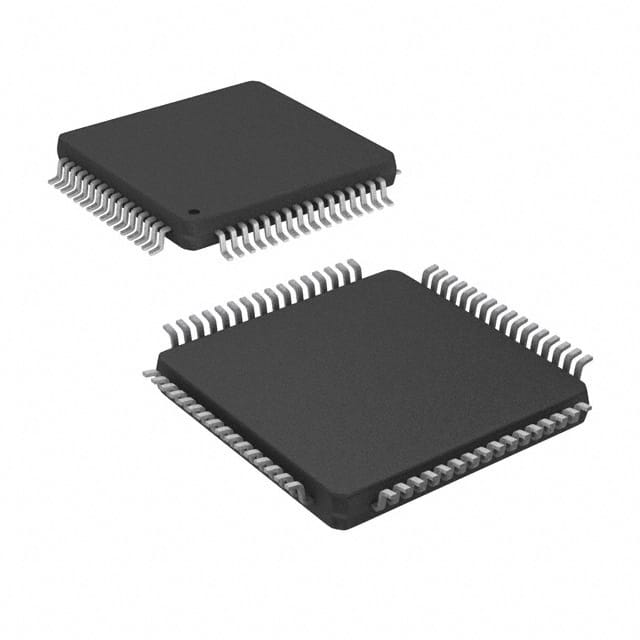
Silicon Labs EFM32LG232F64G-F-QFP64R
Part No.:
EFM32LG232F64G-F-QFP64R
Manufacturer:
Silicon Labs
Category:
Microcontrollers
Package:
64-TQFP
Datasheet:
AetrixEFM32LG232F64G-F-QFP64R.pdf
Description:
IC MCU 32BIT 64KB FLASH 64TQFP
Quantity:
Payment:
Payment
Shipping:
Shipping

Inventory:1,805

Please send an inquiry. Send us your inquiry, and we will respond immediately.

Part Number
Quantity*
Price
Name*
Company
Email*
Comments

Product details

Overview

EFM32LG232F64G-F-QFP64R from Silicon Labs is a 32-bit ARM Cortex-M33-based microcontroller with TrustZone security, 64 kB Flash, 32 kB RAM, and QFP64 package. It integrates AES-256, ECC, SHA-2, and secure boot for embedded IoT endpoints requiring certified firmware integrity and hardware-enforced isolation.

For engineers reviewing the EFM32LG232F64G-F-QFP64R datasheet, EFM32LG232F64G-F-QFP64R pinout, EFM32LG232F64G-F-QFP64R application, or EFM32LG232F64G-F-QFP64R equivalent, key selection considerations include TrustZone debug lock behavior, TPIU access constraints, SE firmware version compatibility (≥1.2.14/2.2.1), and secure debug configuration impact on trace functionality.

Technical Context

This MCU implements ARMv8-M architecture with TrustZone-enabled memory protection, supporting secure/non-secure world separation. It includes a Secure Element (SE) firmware interface, configurable debug access permission bits (DBGLOCK/NIDLOCK), and integrated TPIU for SWO trace output - though TPIU access stalls the core when DBGLOCK and NIDLOCK are both set.

The device relies on SE firmware versions ≥1.2.14 or ≥2.2.1 to avoid TPIU-induced stall conditions. Its clock tree delivers 48 MHz max system frequency, and it supports low-energy modes down to 1.2 µA in EM2 Deep Sleep with RTC retention.

Key Specifications

ParameterValue and Actual Design Meaning
CPU CoreARM Cortex-M33 with TrustZone, enabling hardware-isolated secure/non-secure execution environments
Flash / RAM64 kB Flash (with secure boot verification), 32 kB RAM (partitionable between secure/non-secure worlds)
Max Frequency48 MHz - determines real-time throughput ceiling for sensor fusion or protocol stack execution
PackageQFP64 (10 × 10 mm, 0.5 mm pitch) - enables standard PCB assembly and thermal management in space-constrained edge nodes
Security FeaturesAES-256, ECC P-256/P-384, SHA-256, secure boot, and configurable TrustZone DAP bits (DBGLOCK/NIDLOCK)
Low-Energy ModesEM2 Deep Sleep at 1.2 µA with RTC - supports battery-powered operation for >10 years in metering applications
TPIU SupportIntegrated Trace Port Interface Unit - functional only when DBGLOCK and NIDLOCK are not both asserted; otherwise causes core stall

Pinout & Package

EFM32LG232F64G-F-QFP64R uses a 64-pin Quad Flat Package (QFP) with 0.5 mm pitch, 10 mm × 10 mm body size, and exposed thermal pad. Pin assignments follow Silicon Labs' EFM32LG232 family layout, including dedicated VDD/VSS pairs per power domain, SWDIO/SWCLK for debug, and multiple GPIOs with peripheral routing flexibility.

Pin/TerminalCircuit RoleDesign Meaning
VDDCore & I/O Supply3.0–3.8 V input powering CPU, peripherals, and GPIOs; requires local decoupling per datasheet layout rules
VSSGND ReferenceDigital ground return path; multiple pins ensure low-impedance reference for noise-sensitive analog and RF sections
SWDIO / SWCLKDebug InterfaceTwo-wire Serial Wire Debug signals - used for programming, secure debug unlock, and runtime inspection of secure/non-secure memory
PA0–PA7, PB0–PB15, etc.Configurable GPIOMulti-function pins supporting UART, I²C, SPI, ADC, and timer capture - routed via PRS and GPIO matrix for flexible signal chaining
TRACECLK / TRACED0–3TPIU OutputTrace clock and data lines - active only when DBGLOCK=0 or NIDLOCK=0; assertion of both bits disables TPIU and stalls core

Key Features

FeatureDesign Value
TrustZone Memory ProtectionHardware-enforced isolation between secure firmware (SE, crypto keys) and non-secure application code - prevents privilege escalation attacks
Secure Boot with Signature VerificationValidates ECDSA-signed firmware images before execution using immutable public key stored in SE - blocks unauthorized firmware updates
Configurable Debug Lock BitsDBGLOCK and NIDLOCK bits control invasive/non-invasive debug access - once set, require full device erase to reset
Low-Power Peripheral Reflex System (PRS)Hardware-triggered peripheral interaction without CPU intervention - enables sub-µA autonomous sensing in EM2/EM3 modes
Integrated AES-256 & SHA-256 AcceleratorsDedicated crypto engines reduce encryption latency by >90% vs. software-only implementation - critical for OTA update signing/verification

Applications

Smart Utility MeteringIndustrial Sensor Node

Use Scenario: Battery-powered gas/water meter transmitting encrypted consumption data hourly over NB-IoT.

IC Role / Device Role / Timing Role: Primary secure host MCU managing sensor acquisition, AES-256 payload encryption, and secure OTA update validation.

Use Value: EM2 Deep Sleep current of 1.2 µA extends battery life beyond 10 years; TrustZone isolates metering logic from communication stack to prevent tampering.

Use Scenario: Wireless vibration sensor on rotating machinery with predictive maintenance analytics.

IC Role / Device Role / Timing Role: Edge AI inference accelerator coordinating accelerometer sampling, FFT processing, and anomaly detection.

Use Value: PRS-driven autonomous ADC-to-DMA transfer reduces CPU wake time by 70%; secure boot ensures only signed firmware executes on field-deployed units.

Medical Wearable HubSecure Access Control Terminal

Use Scenario: Bluetooth LE gateway aggregating ECG, SpO₂, and temperature data from clinical-grade wearables.

IC Role / Device Role / Timing Role: Secure co-processor handling BLE link encryption, health data signing, and secure storage of patient identifiers.

Use Value: ECC P-384 key generation in <50 ms enables fast pairing; isolated secure world prevents leakage of private keys during BLE stack operation.

Use Scenario: Physical access terminal verifying RFID credentials and enforcing multi-factor authentication via PIN + biometric match.

IC Role / Device Role / Timing Role: Root-of-trust controller validating credential signatures, managing secure element communication, and enforcing policy-based access decisions.

Use Value: Configurable DBGLOCK/NIDLOCK prevents physical debug access post-deployment; secure boot blocks malicious firmware injection attempts.

Equivalent & Alternatives

The following parts are listed as comparable options for similar secure microcontroller applications.

Alternative PartTechnical DifferenceApplication DifferenceSelection Advice
EFM32PG23B200F512IM48ARM Cortex-M33, 512 kB Flash, 64 kB RAM, QFN48 - no TPIU stall issue in SE v2.2.1+; higher memory densityBetter suited for complex BLE mesh stacks or dual-role gateways requiring larger code footprintSelect when >128 kB Flash needed and QFN48 footprint acceptable; verify TPIU usage aligns with DBGLOCK/NIDLOCK state
EFM32GG11B820F2048GL192ARM Cortex-M4, 2048 kB Flash, 512 kB RAM, BGA192 - lacks TrustZone but offers FPU and higher compute throughputPreferred for floating-point intensive tasks (e.g., motor control, audio DSP) where hardware security is handled externallyChoose when deterministic FP performance outweighs on-chip TrustZone; requires external secure element for key management

Compared with EFM32LG232F64G-F-QFP64R, the EFM32PG23 offers greater memory headroom and updated SE firmware immunity to TPIU stall, while the EFM32GG11 trades TrustZone for raw computational power and larger memory - making each suitable for distinct security-performance trade-offs in endpoint design.

Availability

EFM32LG232F64G-F-QFP64R is available at Aetrix Electronics and suitable for smart metering, industrial sensor nodes, medical wearable hubs, and secure access terminals requiring stable component supply across multi-year production cycles.

Supply support for EFM32LG232F64G-F-QFP64R includes scheduled delivery planning, volume procurement assistance, BOM continuity management, traceable sourcing, and lifecycle availability coordination for OEM customers, industrial embedded developers, connected-device designers, and electronics production programs.

Manufacturer

Silicon Labs is a fabless semiconductor company specializing in secure, low-power wireless SoCs and timing solutions for IoT, industrial, and consumer markets.

The EFM32LG232F64G-F-QFP64R belongs to the Leopard Gecko (EFM32LG) family - designed specifically for energy-efficient, security-critical edge devices requiring hardware-enforced trust boundaries and long battery life.

FAQ

What is the root cause of the TPIU access failure in EFM32LG232F64G-F-QFP64R?

The TPIU access failure in EFM32LG232F64G-F-QFP64R stems from an undocumented ARM Cortex-M33 behavior: when both TrustZone Debug Access Permission bits (DBGLOCK and NIDLOCK) are asserted, the M33 stalls waiting for a ready signal from the TPIU due to missing clock input. This defect is resolved in SE firmware versions ≥1.2.14 or ≥2.2.1. EFM32LG232F64G-F-QFP64R users must avoid setting both bits unless running patched firmware.

Does EFM32LG232F64G-F-QFP64R support secure debug unlock after DBGLOCK is set?

No - once DBGLOCK is set on EFM32LG232F64G-F-QFP64R, secure debug unlock is permanently disabled until the device undergoes full erase. The DBGLOCK bit cannot be cleared by software or debug commands; only commander security erasedevice restores debug access. This behavior applies regardless of Secure Debug Unlock state prior to locking.

Can EFM32LG232F64G-F-QFP64R operate safely with TrustZone enabled but DBGLOCK/NIDLOCK unset?

Yes - EFM32LG232F64G-F-QFP64R operates fully and safely with TrustZone memory protection enabled while DBGLOCK and NIDLOCK remain unset. In this configuration, TPIU trace (e.g., SWO) functions normally, secure/non-secure world transitions execute correctly, and debug access remains available for development and certification testing.

What firmware version is required to eliminate the TPIU stall issue on EFM32LG232F64G-F-QFP64R?

EFM32LG232F64G-F-QFP64R requires SE firmware version 1.2.14 or later (for GSDK v4.x) or 2.2.1 or later (for GSDK v5.x) to eliminate the TPIU stall issue. These versions correct the clock gating behavior affecting TPIU readiness. Users must update firmware via the Silicon Labs Simplicity Studio toolchain before deploying devices with DBGLOCK/NIDLOCK enabled.

How does EFM32LG232F64G-F-QFP64R handle secure boot verification?

EFM32LG232F64G-F-QFP64R performs secure boot by validating ECDSA-P256 signatures of the application image against a public key stored in immutable SE memory. The verification occurs in the secure world before any non-secure code executes. If signature check fails, the device halts boot - ensuring only cryptographically authenticated firmware runs on EFM32LG232F64G-F-QFP64R.

EFM32LG232F64G-F-QFP64R Specifications

Product attributes
Attribute value
Manufacturer:
Silicon Labs
Package/Case:
64-TQFP
Series:
Leopard Gecko
Packaging:
Tape & Reel (TR)
Product Status:
Obsolete
Programmable:
Not Verified
Core Processor:
ARM® Cortex®-M3
Core Size:
32-Bit Single-Core
Speed:
48MHz
Connectivity:
I2C, IrDA, SmartCard, SPI, UART/USART
Peripherals:
Brown-out Detect/Reset, DMA, I2S, POR, PWM, WDT
Number of I/O:
53
Program Memory Size:
64KB (64K x 8)
Program Memory Type:
FLASH
EEPROM Size:
-
RAM Size:
32K x 8
Voltage - Supply (Vcc/Vdd):
1.98V ~ 3.8V
Data Converters:
A/D 8x12b SAR; D/A 2x12b
Oscillator Type:
Internal
Operating Temperature:
-40°C ~ 85°C (TA)
Grade:
-
Qualification:
-
Mounting Type:
Surface Mount
Supplier Device Package:

EFM32LG232F64G-F-QFP64R FAQ

1.How can I place an order for EFM32LG232F64G-F-QFP64R through Aetrix?

Please submit a Request for Quotation (RFQ) for EFM32LG232F64G-F-QFP64R on Aetrix. Our sales agent will provide a competitive quotation and guide you through the order confirmation once you accept the terms.

2.Are the price and stock information for EFM32LG232F64G-F-QFP64R reliable?

The price and inventory of EFM32LG232F64G-F-QFP64R are updated periodically and may fluctuate due to market conditions. Stock and pricing data are typically refreshed every 24 hours. Quotation validity for EFM32LG232F64G-F-QFP64R is usually 5 days.

3.What payment methods are accepted for EFM32LG232F64G-F-QFP64R?

We accept Wire Transfer, PayPal, Credit Card, Western Union, MoneyGram, and Escrow for EFM32LG232F64G-F-QFP64R transactions.

Note: Certain payment methods may incur a processing fee.

4.How is shipping managed for EFM32LG232F64G-F-QFP64R?

EFM32LG232F64G-F-QFP64R orders can be shipped via leading logistics carriers, including DHL, UPS, FedEx, TNT, or Registered Mail.

Once your EFM32LG232F64G-F-QFP64R order is processed, you will receive an email with the shipment details and tracking number.

Note: Tracking information may take up to 24 hours to appear. Express delivery typically takes 3–5 business days.

5.How can I obtain technical support or documentation for EFM32LG232F64G-F-QFP64R?

For technical support, including EFM32LG232F64G-F-QFP64R datasheets, pinout diagrams, or application guidance, please contact our engineering support team. They can provide detailed documentation and assistance for your EFM32LG232F64G-F-QFP64R requirements.

6.How does Aetrix verify that EFM32LG232F64G-F-QFP64R is sourced from the original manufacturer or authorized distributors?

All EFM32LG232F64G-F-QFP64R products on Aetrix are procured from qualified distributors and authorized channels. Our dedicated quality assurance team conducts strict verification, including traceability checks and, if necessary, third-party testing. This ensures that EFM32LG232F64G-F-QFP64R meets industry standards.

7.What is the process for return or replacement of EFM32LG232F64G-F-QFP64R?

All EFM32LG232F64G-F-QFP64R units undergo pre-shipment inspection (PSI). If there is an issue with EFM32LG232F64G-F-QFP64R, returns or replacements are accepted under the following conditions:

1.Quantity discrepancies, incorrect items, or visible external defects (such as breakage or corrosion), acknowledged by Aetrix.

2.The issue is reported within 90 days of delivery.

3.The EFM32LG232F64G-F-QFP64R part is unused and in its original packaging.

Return procedure for EFM32LG232F64G-F-QFP64R:

1.Submit a request within 90 days.

2.Obtain a Return Material Authorization (RMA) from Aetrix.

EFM32LG232F64G-F-QFP64R Tags

  • EFM32LG232F64G-F-QFP64R
  • EFM32LG232F64G-F-QFP64R PDF
  • EFM32LG232F64G-F-QFP64R Datasheet
  • EFM32LG232F64G-F-QFP64R Specifications
  • EFM32LG232F64G-F-QFP64R Images
  • Silicon Labs
  • Silicon Labs EFM32LG232F64G-F-QFP64R
  • Buy EFM32LG232F64G-F-QFP64R
  • EFM32LG232F64G-F-QFP64R Price
  • EFM32LG232F64G-F-QFP64R Distributor
  • EFM32LG232F64G-F-QFP64R Supplier
  • EFM32LG232F64G-F-QFP64R Wholesale
Related Products
ATTINY4-TSHR
ATTINY4-TSHR

Microchip Technology

ATTINY10-TSHR
ATTINY10-TSHR

Microchip Technology

ATTINY10-TS8R
ATTINY10-TS8R

Microchip Technology

ATTINY202-SSNR
ATTINY202-SSNR

Microchip Technology

ATTINY202-SSFR
ATTINY202-SSFR

Microchip Technology

ATTINY402-SSNR
ATTINY402-SSNR

Microchip Technology

PIC16F15213T-I/MF
PIC16F15213T-I/MF

Microchip Technology

PIC16F15213-E/MF
PIC16F15213-E/MF

Microchip Technology

PIC10F200T-I/OT
PIC10F200T-I/OT

Microchip Technology

ATTINY412-SSNR
ATTINY412-SSNR

Microchip Technology

PIC10F202T-I/OT
PIC10F202T-I/OT

Microchip Technology

ATTINY404-SSNR
ATTINY404-SSNR

Microchip Technology

Tech Hub
Search

Search

PRODUCT

PRODUCT

PHONE

PHONE

USER

USER