Send an Inquiry

To receive a quote for your project, please fill in the following information, and we’ll get back to you promptly.

Name*
Company*
Email Address*
Phone/WhatsApp
Part Number*
Quantity*
Message
Submit Inventory List

Please fill in the following information, and we’ll get back to you promptly.

Name*
Company*
Email Address*
Phone/WhatsApp
Upload My List
Message

Silicon Labs EFM32LG390F256-BGA112

Part No.:
EFM32LG390F256-BGA112
Manufacturer:
Silicon Labs
Category:
Microcontrollers
Package:
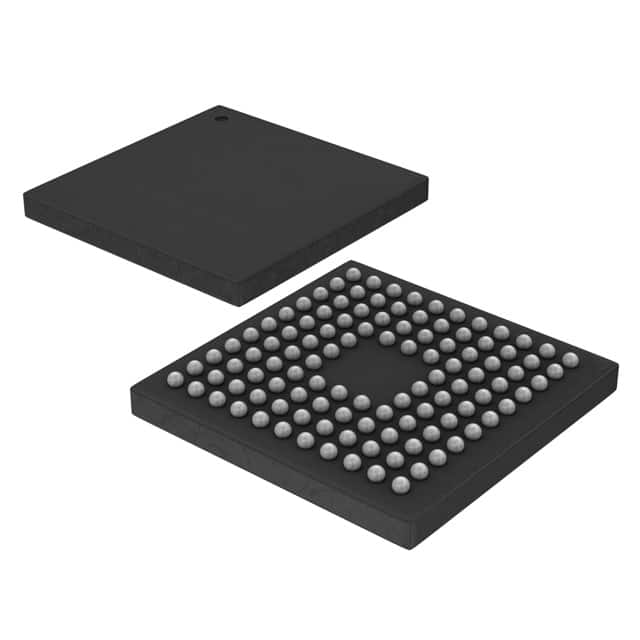
112-LFBGA
Datasheet:
AetrixEFM32LG390F256-BGA112.pdf
Description:
IC MCU 32BIT 256KB FLASH 112BGA
Quantity:
Payment:
Payment
Shipping:
Shipping

Inventory:4,136

Please send an inquiry. Send us your inquiry, and we will respond immediately.

Part Number
Quantity*
Price
Name*
Company
Email*
Comments

Product details

Overview

EFM32LG390F256-BGA112 from Silicon Laboratories is a 32-bit ARM Cortex-M3 microcontroller optimized for ultra-low-power battery-operated systems, featuring 256 kB flash, 32 kB RAM, 48 MHz operation, 0.65 μA Stop mode current, and hardware AES encryption. It integrates autonomous peripherals including LESENSE, LCD controller, ADC/DAC, and USB 2.0 with on-chip PHY.

For engineers reviewing the EFM32LG390F256-BGA112 datasheet, EFM32LG390F256-BGA112 pinout, EFM32LG390F256-BGA112 application, or EFM32LG390F256-BGA112 equivalent, key selection considerations include energy mode transitions (EM0–EM4), peripheral reflex system autonomy, BGA112 package I/O count (up to 93 GPIO), and backup power domain support for RTC retention during main supply loss.

Technical Context

The EFM32LG390F256-BGA112 implements a flexible energy management architecture with five defined energy modes (EM0–EM4), where EM3 Stop mode retains CPU state and RAM at 0.65 μA while enabling brown-out detection and wake-up via external interrupts or PRS-triggered events. Its Peripheral Reflex System (PRS) enables autonomous inter-peripheral signaling without CPU intervention.

Core clocking supports multiple oscillators: HFXO (up to 48 MHz), LFXO (32.768 kHz), HFRCO/LFRCO/ULFRCO, and AUXHFRCO - allowing dynamic switching between precision and low-power sources. The integrated USB 2.0 controller includes an on-chip PHY and embedded 5 V-to-3.3 V regulator, supporting host and OTG roles.

Key Specifications

ParameterValue and Actual Design Meaning
CPU CoreARM Cortex-M3 @ 48 MHz - delivers deterministic real-time performance with Thumb-2 instruction set and 3-stage pipeline.
Memory256 kB flash / 32 kB RAM - sufficient for complex firmware with bootloader, secure boot, and sensor fusion algorithms.
Energy ModesEM0 (211 μA/MHz), EM1 (63 μA/MHz), EM2 (0.95 μA), EM3 (0.65 μA), EM4 (20 nA) - enables multi-tiered power gating per subsystem.
Analog Peripherals12-bit 1 Msps ADC (8 SE/4 diff), 12-bit 500 ksps DAC (2 SE/1 diff), 3 opamps (6.1 MHz GBW), 2 ACMPs - supports precision sensor signal chain without external components.
Communication3× USART (SPI/I²C/UART/SmartCard/IrDA/I²S), 2× I²C (SMBus), 2× LEUART, USB 2.0 Host/OTG - enables mixed wired/wireless connectivity in constrained environments.
Security & TimingHardware AES-128/256 accelerator (54/75 cycles), 24-bit + 32-bit RTC, BURTC, LETIMER - provides cryptographic acceleration and timekeeping across all energy modes.
PackageBGA112 (6 × 6 mm, 0.5 mm pitch) - high-density layout suitable for compact portable devices with thermal and routing constraints.

Pinout & Package

BGA112 package: 6 mm × 6 mm body, 0.5 mm ball pitch, 112 I/O balls arranged in 11 × 11 array with corner balls omitted. Compatible with standard reflow profiles and IPC-7351B land pattern.

Pin/TerminalCircuit RoleDesign Meaning
VDDMain power supply1.98–3.8 V input; powers core, analog, and digital domains; requires local 100 nF decoupling per VDD ball group.
VSSGND referenceGround return for all domains; multiple VSS balls ensure low-impedance return path and reduce noise coupling.
PA0–PA15General-purpose I/OConfigurable push-pull/open-drain with programmable drive strength; supports PRS output and external interrupt generation.
PC0–PC15GPIO + alternate functionsSupports USART0/1/2, I²C0/1, LEUART0/1, ADC inputs, DAC outputs, and timer capture/compare channels.
USB_DP / USB_DMUSB 2.0 differential pairIntegrated PHY eliminates need for external transceiver; supports full-speed (12 Mbps) operation with internal termination and biasing.
XTAL0 / XTAL1HFXO crystal interfaceConnects to 4–32 MHz crystal; enables precise timing for USB, audio, or RF synchronization; supports automatic failover to HFRCO.
LFXO_IN / LFXO_OUTLFXO crystal interfaceDrives 32.768 kHz watch crystal for RTC/BURTC; maintains timekeeping in EM2/EM3 with <0.5 ppm drift over temperature.

Key Features

FeatureDesign Value
Autonomous Peripheral Reflex System (PRS)12-channel event router enabling DMA triggers, timer starts, and ADC conversions without CPU involvement - reduces active time by up to 70% in sensor polling loops.
Low Energy Sensor Interface (LESENSE)Capacitive, inductive, or resistive sensor monitoring in EM2 (0.95 μA); supports up to 16 channels with programmable thresholds and autonomous wake-up - ideal for touch/button interfaces in wearables.
Backup Power DomainDedicated VBAT-supplied domain retaining RTC, BURTC, and 16 retention registers during main supply loss - ensures uninterrupted timekeeping and state recovery after power failure.
Integrated LCD ControllerDrives up to 8×36 segment LCD directly; includes voltage boost, contrast control, and frame animation engine - eliminates external display driver IC in metering and medical displays.
Hardware AES Accelerator128/256-bit key encryption/decryption in 54/75 clock cycles; operates independently of CPU and supports DMA-based data streaming - accelerates secure firmware updates and BLE pairing.

Applications

Smart Utility MeteringWearable Health Monitor

Use Scenario: Battery-powered gas/water/electricity meters requiring decade-long operation on primary cells with periodic wireless reporting.

IC Role / Device Role / Timing Role: Main system controller managing sensor acquisition (pressure, flow, temperature), secure data logging, LoRaWAN/NB-IoT modem interfacing, and ultra-low-power RTC-driven wake-up scheduling.

Use Value: EM4 shutoff mode (20 nA) extends battery life beyond 10 years; hardware AES ensures regulatory compliance for encrypted utility data transmission.

Use Scenario: Compact wrist-worn fitness tracker measuring heart rate, motion, and skin temperature with continuous display and Bluetooth Low Energy (BLE) connectivity.

IC Role / Device Role / Timing Role: Central MCU coordinating optical PPG sensor, accelerometer, OLED/LCD display, BLE stack, and capacitive touch buttons via LESENSE.

Use Value: LESENSE autonomously detects button presses in EM2 (0.95 μA); integrated LCD controller drives segmented display without external driver; USB OTG enables firmware updates via PC.

Industrial Wireless Sensor NodeHome Security Panel

Use Scenario: Self-powered environmental sensor node deployed in HVAC ducts or factory floors, measuring temperature, humidity, and vibration using battery or energy harvesting.

IC Role / Device Role / Timing Role: Low-power data aggregator with PRS-linked ADC sampling, wake-up on threshold breach, and sub-GHz RF transceiver control (e.g., Si446x).

Use Value: PRS-triggered ADC conversion in EM2 eliminates CPU polling overhead; 3 opamps condition analog sensor signals on-chip; 256 kB flash stores adaptive calibration tables.

Use Scenario: Panel-mounted security system with keypad, siren, door/window sensors, and cellular/GSM backup communication.

IC Role / Device Role / Timing Role: Primary controller handling tamper detection, alarm logic, real-time clock, backup battery supervision, and secure communication with cloud gateway.

Use Value: Backup RTC and retention registers maintain time and alarm state during AC power loss; hardware AES secures OTA firmware updates; USB host mode allows diagnostic tool connection.

Equivalent & Alternatives

The following parts are listed as comparable options for similar microcontroller applications.

Alternative PartTechnical DifferenceApplication DifferenceSelection Advice
EFM32PG23B510F512IM48ARM Cortex-M33 core, 76.8 MHz max, 512 kB flash, 64 kB RAM, PSA Level 3 certified, lower EM0 current (110 μA/MHz), no USB PHYRequires external USB transceiver; targets higher-security industrial IoT with secure boot and crypto isolationSelect when PSA-certified security, higher compute throughput, or larger memory footprint is required - not drop-in due to different core, package (QFN48), and missing USB PHY.
STM32L476RGARM Cortex-M4F core, 80 MHz, 1 MB flash, 128 kB RAM, 1.14 μA Stop mode, no integrated LCD controller or LESENSELacks autonomous sensor interface and direct LCD drive; relies on external components for capacitive sensing or displaySelect for floating-point math-intensive tasks (e.g., motor control) or when larger memory and USB FS device-only support suffice - differs in pinout, peripheral set, and energy mode behavior.

Compared with EFM32LG390F256-BGA112, the EFM32PG23 offers stronger security and higher performance but sacrifices USB integration and BGA112 density, while STM32L476RG trades ultra-low-energy autonomy for computational headroom and memory scale - making EFM32LG390F256-BGA112 optimal for compact, long-life, sensor-rich designs needing self-contained timing and display control.

Availability

EFM32LG390F256-BGA112 is available at Aetrix Electronics and suitable for smart metering, wearable health monitors, industrial wireless sensor nodes, and home security panels requiring stable component supply and long-term lifecycle assurance.

Supply support for EFM32LG390F256-BGA112 includes scheduled delivery planning, volume procurement assistance, BOM continuity management, traceable sourcing, and lifecycle availability coordination for OEM customers, industrial embedded developers, connected-device designers, and electronics production programs.

Manufacturer

Silicon Laboratories is a fabless semiconductor company specializing in silicon, software, and solutions for the Internet of Things, infrastructure, and timing markets.

The EFM32 Leopard Gecko family was designed for energy-constrained applications demanding extended battery life, autonomous peripheral operation, and rich analog integration - targeting metering, healthcare, and industrial sensing.

FAQ

What is the maximum operating frequency of the EFM32LG390F256-BGA112?

The EFM32LG390F256-BGA112 operates at a maximum CPU frequency of 48 MHz using the HFXO or HFRCO clock source. This speed is fully supported across all active energy modes (EM0–EM2) and enables real-time processing of sensor data, USB transactions, and cryptographic operations without throttling. The device maintains timing accuracy through dynamic clock scaling and oscillator failover mechanisms documented in Section 4.10 of the datasheet.

Does the EFM32LG390F256-BGA112 support USB device, host, and OTG functionality?

Yes, the EFM32LG390F256-BGA112 integrates a full-featured USB 2.0 controller compliant with USB 2.0 specification, supporting device, host, and OTG roles. It includes an on-chip PHY, embedded 5 V-to-3.3 V regulator, and dedicated USB voltage regulator - eliminating external components. The USB module supports full-speed (12 Mbps) operation and is accessible via USB_DP/USB_DM pins in the BGA112 package.

How many GPIO pins does the EFM32LG390F256-BGA112 provide, and what configuration options are available?

The EFM32LG390F256-BGA112 provides up to 93 general-purpose I/O pins in the BGA112 package. Each GPIO supports configurable drive modes (push-pull, open-drain), programmable pull-up/pull-down resistors, input filtering, and adjustable drive strength. Pin locations are remappable via the Alternate Functionality Pinout, enabling flexible PCB routing while maintaining peripheral function integrity.

What energy modes does the EFM32LG390F256-BGA112 support, and what is the lowest achievable current draw?

The EFM32LG390F256-BGA112 supports five energy modes: EM0 (Run), EM1 (Sleep), EM2 (Deep Sleep), EM3 (Stop), and EM4 (Shutoff). The lowest current draw is 20 nA in EM4 Shutoff mode with all clocks disabled and only VBAT-supplied retention registers active. With RTC enabled in EM4, current rises to 0.4 μA - verified under 3 V supply per Section 4.5.4 of the datasheet.

Is hardware AES encryption available on the EFM32LG390F256-BGA112, and what key lengths does it support?

Yes, the EFM32LG390F256-BGA112 includes a dedicated hardware AES accelerator supporting both 128-bit and 256-bit keys. Encryption and decryption execute in 54 and 75 clock cycles respectively, independent of CPU load. The module supports ECB, CTR, and CBC modes and interfaces with DMA for zero-CPU-overhead bulk data processing - critical for secure firmware updates and encrypted sensor data logging in EFM32LG390F256-BGA112-based systems.

EFM32LG390F256-BGA112 Specifications

Product attributes
Attribute value
Manufacturer:
Silicon Labs
Package/Case:
112-LFBGA
Series:
Leopard Gecko
Packaging:
Tape & Reel (TR)
Product Status:
Obsolete
Programmable:
Not Verified
Core Processor:
ARM® Cortex®-M3
Core Size:
32-Bit Single-Core
Speed:
48MHz
Connectivity:
EBI/EMI, I2C, IrDA, SmartCard, SPI, UART/USART, USB
Peripherals:
Brown-out Detect/Reset, DMA, POR, PWM, WDT
Number of I/O:
87
Program Memory Size:
256KB (256K x 8)
Program Memory Type:
FLASH
EEPROM Size:
-
RAM Size:
32K x 8
Voltage - Supply (Vcc/Vdd):
1.98V ~ 3.8V
Data Converters:
A/D 8x12b; D/A 2x12b
Oscillator Type:
Internal
Operating Temperature:
-40°C ~ 85°C (TA)
Grade:
-
Qualification:
-
Mounting Type:
Surface Mount
Supplier Device Package:

EFM32LG390F256-BGA112 FAQ

1.How can I place an order for EFM32LG390F256-BGA112 through Aetrix?

Please submit a Request for Quotation (RFQ) for EFM32LG390F256-BGA112 on Aetrix. Our sales agent will provide a competitive quotation and guide you through the order confirmation once you accept the terms.

2.Are the price and stock information for EFM32LG390F256-BGA112 reliable?

The price and inventory of EFM32LG390F256-BGA112 are updated periodically and may fluctuate due to market conditions. Stock and pricing data are typically refreshed every 24 hours. Quotation validity for EFM32LG390F256-BGA112 is usually 5 days.

3.What payment methods are accepted for EFM32LG390F256-BGA112?

We accept Wire Transfer, PayPal, Credit Card, Western Union, MoneyGram, and Escrow for EFM32LG390F256-BGA112 transactions.

Note: Certain payment methods may incur a processing fee.

4.How is shipping managed for EFM32LG390F256-BGA112?

EFM32LG390F256-BGA112 orders can be shipped via leading logistics carriers, including DHL, UPS, FedEx, TNT, or Registered Mail.

Once your EFM32LG390F256-BGA112 order is processed, you will receive an email with the shipment details and tracking number.

Note: Tracking information may take up to 24 hours to appear. Express delivery typically takes 3–5 business days.

5.How can I obtain technical support or documentation for EFM32LG390F256-BGA112?

For technical support, including EFM32LG390F256-BGA112 datasheets, pinout diagrams, or application guidance, please contact our engineering support team. They can provide detailed documentation and assistance for your EFM32LG390F256-BGA112 requirements.

6.How does Aetrix verify that EFM32LG390F256-BGA112 is sourced from the original manufacturer or authorized distributors?

All EFM32LG390F256-BGA112 products on Aetrix are procured from qualified distributors and authorized channels. Our dedicated quality assurance team conducts strict verification, including traceability checks and, if necessary, third-party testing. This ensures that EFM32LG390F256-BGA112 meets industry standards.

7.What is the process for return or replacement of EFM32LG390F256-BGA112?

All EFM32LG390F256-BGA112 units undergo pre-shipment inspection (PSI). If there is an issue with EFM32LG390F256-BGA112, returns or replacements are accepted under the following conditions:

1.Quantity discrepancies, incorrect items, or visible external defects (such as breakage or corrosion), acknowledged by Aetrix.

2.The issue is reported within 90 days of delivery.

3.The EFM32LG390F256-BGA112 part is unused and in its original packaging.

Return procedure for EFM32LG390F256-BGA112:

1.Submit a request within 90 days.

2.Obtain a Return Material Authorization (RMA) from Aetrix.

EFM32LG390F256-BGA112 Tags

  • EFM32LG390F256-BGA112
  • EFM32LG390F256-BGA112 PDF
  • EFM32LG390F256-BGA112 Datasheet
  • EFM32LG390F256-BGA112 Specifications
  • EFM32LG390F256-BGA112 Images
  • Silicon Labs
  • Silicon Labs EFM32LG390F256-BGA112
  • Buy EFM32LG390F256-BGA112
  • EFM32LG390F256-BGA112 Price
  • EFM32LG390F256-BGA112 Distributor
  • EFM32LG390F256-BGA112 Supplier
  • EFM32LG390F256-BGA112 Wholesale
Related Products
ATTINY4-TSHR
ATTINY4-TSHR

Microchip Technology

ATTINY10-TSHR
ATTINY10-TSHR

Microchip Technology

ATTINY10-TS8R
ATTINY10-TS8R

Microchip Technology

ATTINY202-SSNR
ATTINY202-SSNR

Microchip Technology

ATTINY202-SSFR
ATTINY202-SSFR

Microchip Technology

ATTINY402-SSNR
ATTINY402-SSNR

Microchip Technology

PIC16F15213T-I/MF
PIC16F15213T-I/MF

Microchip Technology

PIC16F15213-E/MF
PIC16F15213-E/MF

Microchip Technology

PIC10F200T-I/OT
PIC10F200T-I/OT

Microchip Technology

ATTINY412-SSNR
ATTINY412-SSNR

Microchip Technology

PIC10F202T-I/OT
PIC10F202T-I/OT

Microchip Technology

ATTINY404-SSNR
ATTINY404-SSNR

Microchip Technology

Tech Hub
Search

Search

PRODUCT

PRODUCT

PHONE

PHONE

USER

USER