Semtech Corporation GB4571-CKAE3
- Part No.:
- GB4571-CKAE3
- Manufacturer:
- Semtech Corporation
- Category:
- Video Processing
- Package:
- -
- Datasheet:
-
GB4571-CKAE3.pdf
- Description:
- IC VIDEO BUFFER 8SOIC
- Quantity:
- Payment:

- Shipping:

Inventory:1,337
Please send an inquiry. Send us your inquiry, and we will respond immediately.
Product details
Overview
GB4571-CKAE3 from Gennum Corporation is a precision video buffer IC with strobed DC restore functionality, designed for accurate back porch clamping in analog video signal chains. It operates from ±4.5 V to ±13.2 V supplies, delivers ±0.1 dB flatness to 80 MHz, achieves ±1 mV clamping accuracy, and supports NTSC/PAL/SECAM/RGB signals in broadcast-grade video equipment.
For engineers reviewing the GB4571-CKAE3 datasheet, pinout, applications, or equivalent options, key selection criteria include clamping distortion (±1 mV), recovery time (190–600 µs for 0.1 V offset), differential phase (≤0.05°), supply voltage range, and SOIC-8 Pb-free packaging compatibility with production switchers and linear keyers.
Technical Context
The GB4571-CKAE3 implements a strobed operational transconductance amplifier (OTA) architecture with a 600 kHz low-pass filtered differential input to reject color burst and high-frequency noise during clamping. Its non-linear V-to-I feedback converter enables faster recovery from large DC offsets while preserving loop stability during steady-state operation.
Clamping occurs only when the STROBE input is low, integrating over the full back porch period to minimize noise sensitivity-unlike sample-and-hold methods. The CHOLD capacitor (pin 1) stores the corrective voltage, and internal Darlington emitter-follower output ensures ±0.1 dB bandwidth to 80 MHz with optimal 18 pF load capacitance.
Key Specifications
| Parameter | Value and Actual Design Meaning |
|---|---|
| Clamping Accuracy | ±1 mV typical - enables precise DC level restoration critical for broadcast video fidelity |
| Small Signal Bandwidth | 80 MHz (±0.1 dB) - preserves composite video harmonics up to 80 MHz without gain droop |
| Differential Phase | ≤0.05° at 3.58/4.43 MHz - minimizes hue shift in NTSC/PAL decoding paths |
| Supply Voltage Range | ±4.5 V to ±13.2 V - supports legacy ±5 V and high-headroom ±12 V video systems |
| Recovery Time | 190–600 µs (0.1 V offset) - ensures stable clamping after vertical interval transitions |
| Clamping Distortion | ±1 mV amplitude, ≤3 µs duration - prevents visible artifacts during fast signal transitions |
| Input Resistance | 25 kΩ - matches standard video termination without loading source stages |
Pinout & Package
GB4571-CKAE3 is housed in an 8-pin SOIC package (JEDEC MS-012, 3.9 mm width), RoHS-compliant and Pb-free per ordering suffix E3.
| Pin/Terminal | Circuit Role | Design Meaning |
|---|---|---|
| 1 (CHOLD) | Hold Capacitor Connection | Integrates OTA output current to generate DC correction voltage; requires external capacitor for loop stability |
| 2 (VIN) | Inverting Input | Accepts AC-coupled video input; 25 kΩ input resistance avoids source loading |
| 3 (VCLAMP) | Clamp Reference Input | Sets target DC level for restoration; range = VEE + 3.0 V to VCC − 4.5 V |
| 4 (GND) | Analog Ground | Reference node for internal biasing and signal path; separate from power ground in layout |
| 5 (STROBE) | Active-Low Clamping Enable | Triggers integration window on back porch pulse; min pulse width = 2.0 µs |
| 6 (VEE) | Negative Supply Rail | Supports dual-supply operation down to ±4.5 V; must be decoupled locally |
| 7 (VOUT) | Buffered Video Output | Darlington emitter-follower output; 8.6–40 Ω impedance depending on frequency |
| 8 (VCC) | Positive Supply Rail | Supports dual-supply operation up to ±13.2 V; requires 0.1 µF bypass capacitor |
Key Features
| Feature | Design Value |
|---|---|
| Strobed Integration Clamping | Full back porch integration reduces noise sensitivity vs. sample-and-hold, achieving ±1 mV accuracy |
| Non-linear V-to-I Feedback | Accelerates recovery from large DC offsets while maintaining loop stability during steady-state |
| Ultra-low Differential Phase | ≤0.05° at color subcarrier frequencies preserves hue fidelity in NTSC/PAL decoding |
| Wide Supply Range | ±4.5 V to ±13.2 V accommodates both legacy and high-dynamic-range analog video systems |
| Pb-Free SOIC Packaging | E3 suffix denotes RoHS-compliant, lead-free 8-pin SOIC for industrial and broadcast manufacturing |
Applications
| NTSC/PAL Broadcast Processing | Multimedia Graphics Overlay |
|---|---|
Use Scenario: Restoring DC level of composite video signals in broadcast encoders and distribution amplifiers. IC Role / Device Role / Timing Role: Precision strobed DC restorer synchronized to horizontal back porch pulses from sync separators like GS4881. Use Value: Maintains ±1 mV clamping accuracy across temperature, preventing luminance shifts in NTSC/PAL transmission. | Use Scenario: Blending computer-generated graphics with live video feeds in broadcast studios. IC Role / Device Role / Timing Role: DC restoration front-end for RGB or YUV overlay paths prior to keyer mixing. Use Value: Eliminates baseline wander in mixed-signal paths, ensuring clean chroma key edges and artifact-free overlays. |
| Production Video Switchers | Linear Keyers |
Use Scenario: Signal conditioning between input sources and routing matrices in multi-camera production switchers. IC Role / Device Role / Timing Role: Input-stage video buffer with DC restore to stabilize signal baselines before crosspoint switching. Use Value: Enables consistent black level alignment across diverse input sources (cameras, playback decks, graphics), reducing manual setup. | Use Scenario: Real-time luma-key generation using analog video difference techniques. IC Role / Device Role / Timing Role: High-fidelity DC restoration stage preceding comparator-based key signal extraction. Use Value: Delivers <±1 mV clamping distortion, minimizing false keying and edge shimmer in linear key operations. |
Equivalent & Alternatives
The following parts are listed as comparable options for similar video DC restoration applications.
| Alternative Part | Technical Difference | Application Difference | Selection Advice |
|---|---|---|---|
| EL4571CN | Same pinout, ±5 V only supply range (no ±13.2 V support); 0.1 dB flatness to 75 MHz | Limited to fixed ±5 V systems; lower max bandwidth than GB4571-CKAE3 | Select when operating exclusively at ±5 V and 75 MHz bandwidth suffices |
| LMH6732MA | Not pin-compatible; wideband op-amp requiring external clamping circuitry; no integrated strobe logic | Requires discrete OTA, hold cap, and timing control - increases BOM count and layout complexity | Select only when custom clamping timing or multi-channel integration is required |
Compared with EL4571CN and LMH6732MA, GB4571-CKAE3 provides integrated strobe-controlled DC restoration in a single SOIC-8 package with wider supply range, higher bandwidth, and guaranteed ±1 mV accuracy - reducing design risk and board area in broadcast infrastructure.
Availability
GB4571-CKAE3 is available at Aetrix Electronics and suitable for NTSC/PAL broadcast processing, multimedia graphics overlay, and production switchers requiring stable component supply with Pb-free compliance and industrial temperature range (0°C to 70°C).
Supply support for GB4571-CKAE3 includes scheduled delivery planning, volume procurement assistance, BOM continuity management, traceable sourcing, and lifecycle availability coordination for OEM customers, industrial embedded developers, connected-device designers, and electronics production programs.
Manufacturer
Gennum Corporation was a Canadian semiconductor company specializing in high-performance analog and mixed-signal ICs for video, communications, and timing applications before its acquisition by Microchip Technology in 2011.
The GB4571 product line was engineered specifically for precision analog video signal conditioning-targeting broadcast infrastructure where DC level stability, differential gain/phase performance, and clamping accuracy directly impact picture quality.
FAQ
What is the recommended value for the CHOLD capacitor on GB4571-CKAE3?
The CHOLD capacitor (pin 1) must be selected to maintain closed-loop stability. Per the datasheet, the ratio CIN:CHOLD should be approximately 20,000:1. With typical CIN ≈ 2 pF, CHOLD should be ~40 nF. Larger values improve low-frequency stability but increase recovery time; smaller values reduce recovery time but risk oscillation. Always verify stability with actual video waveforms and scope measurements on GB4571-CKAE3.
Does GB4571-CKAE3 support SECAM video signals?
Yes, GB4571-CKAE3 explicitly supports SECAM video signals, as confirmed in the Applications section of the datasheet alongside NTSC, PAL, and RGB. Its wide bandwidth (80 MHz), low differential phase (≤0.05°), and ±1 mV clamping accuracy ensure faithful DC restoration across all major analog broadcast standards-including SECAM's dual FM subcarriers-without requiring configuration changes.
Can GB4571-CKAE3 operate from a single supply?
No, GB4571-CKAE3 requires dual symmetric supplies (±VS) ranging from ±4.5 V to ±13.2 V. Its internal architecture-including Darlington output stage and strobed OTA-depends on true bipolar rails. Single-supply operation is not supported, and attempting it will result in undefined behavior or device damage. For single-supply designs, external level-shifting circuitry or alternative ICs must be used instead of GB4571-CKAE3.
What is the minimum STROBE pulse width required for reliable clamping on GB4571-CKAE3?
The minimum active-low STROBE pulse width for GB4571-CKAE3 is 2.0 µs, as specified in the Electrical Characteristics table under "Strobe Pulse Width (tPWL)." Pulses shorter than this may fail to fully integrate the back porch period, resulting in reduced clamping accuracy or instability. For robust operation in broadcast systems, use ≥2.5 µs pulses aligned to the horizontal back porch, as validated in the typical application circuit with GS4881 sync separator.
How does GB4571-CKAE3 achieve faster recovery from DC offset changes compared to sample-and-hold clamps?
GB4571-CKAE3 uses a non-linear V-to-I converter in its feedback path: larger VIN–VCLAMP differences drive proportionally larger corrective currents into the CHOLD capacitor, accelerating recovery from large offsets. In contrast, sample-and-hold clamps apply fixed corrections regardless of error magnitude. This adaptive response-combined with full back porch integration-gives GB4571-CKAE3 recovery times of 190–600 µs (0.1 V offset), significantly faster than conventional methods while maintaining stability.
GB4571-CKAE3 Specifications
- Product attributes
- Attribute value
- Manufacturer:
- Semtech Corporation
- Series:
- -
- Package/Case:
- -
- Packaging:
- Tube
- Product Status:
- Obsolete
- Function:
- Buffer
- Applications:
- Video
- Standards:
- NTSC, PAL, SECAM
- Control Interface:
- -
- Voltage - Supply:
- 4.5V ~ 13.2V
- Mounting Type:
- Surface Mount
- Grade:
- -
- Qualification:
- -
- Supplier Device Package:
- 8-SOIC
GB4571-CKAE3 FAQ
1.How can I place an order for GB4571-CKAE3 through Aetrix?
Please submit a Request for Quotation (RFQ) for GB4571-CKAE3 on Aetrix. Our sales agent will provide a competitive quotation and guide you through the order confirmation once you accept the terms.
2.Are the price and stock information for GB4571-CKAE3 reliable?
The price and inventory of GB4571-CKAE3 are updated periodically and may fluctuate due to market conditions. Stock and pricing data are typically refreshed every 24 hours. Quotation validity for GB4571-CKAE3 is usually 5 days.
3.What payment methods are accepted for GB4571-CKAE3?
We accept Wire Transfer, PayPal, Credit Card, Western Union, MoneyGram, and Escrow for GB4571-CKAE3 transactions.
Note: Certain payment methods may incur a processing fee.
4.How is shipping managed for GB4571-CKAE3?
GB4571-CKAE3 orders can be shipped via leading logistics carriers, including DHL, UPS, FedEx, TNT, or Registered Mail.
Once your GB4571-CKAE3 order is processed, you will receive an email with the shipment details and tracking number.
Note: Tracking information may take up to 24 hours to appear. Express delivery typically takes 3–5 business days.
5.How can I obtain technical support or documentation for GB4571-CKAE3?
For technical support, including GB4571-CKAE3 datasheets, pinout diagrams, or application guidance, please contact our engineering support team. They can provide detailed documentation and assistance for your GB4571-CKAE3 requirements.
6.How does Aetrix verify that GB4571-CKAE3 is sourced from the original manufacturer or authorized distributors?
All GB4571-CKAE3 products on Aetrix are procured from qualified distributors and authorized channels. Our dedicated quality assurance team conducts strict verification, including traceability checks and, if necessary, third-party testing. This ensures that GB4571-CKAE3 meets industry standards.
7.What is the process for return or replacement of GB4571-CKAE3?
All GB4571-CKAE3 units undergo pre-shipment inspection (PSI). If there is an issue with GB4571-CKAE3, returns or replacements are accepted under the following conditions:
1.Quantity discrepancies, incorrect items, or visible external defects (such as breakage or corrosion), acknowledged by Aetrix.
2.The issue is reported within 90 days of delivery.
3.The GB4571-CKAE3 part is unused and in its original packaging.
Return procedure for GB4571-CKAE3:
1.Submit a request within 90 days.
2.Obtain a Return Material Authorization (RMA) from Aetrix.
GB4571-CKAE3 Tags
-
HDMI2C1-6C1
STMicroelectronics
-
ADA4430-1YKSZ-R7
Analog Devices Inc.

-
LM1881MX/NOPB
Texas Instruments
-
SN75DP130SSRGZR
Texas Instruments
-
EQCO30T5.2
Microchip Technology
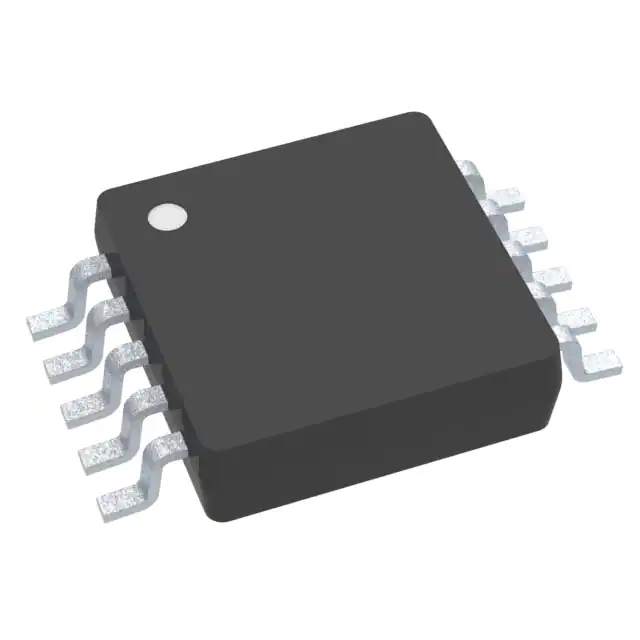
-
LMH1980MM/NOPB
Texas Instruments

-
EQCO30R5.D
Microchip Technology

-
SII9022ACNU
Lattice Semiconductor Corporation

-
SN65DP159RGZR
Texas Instruments
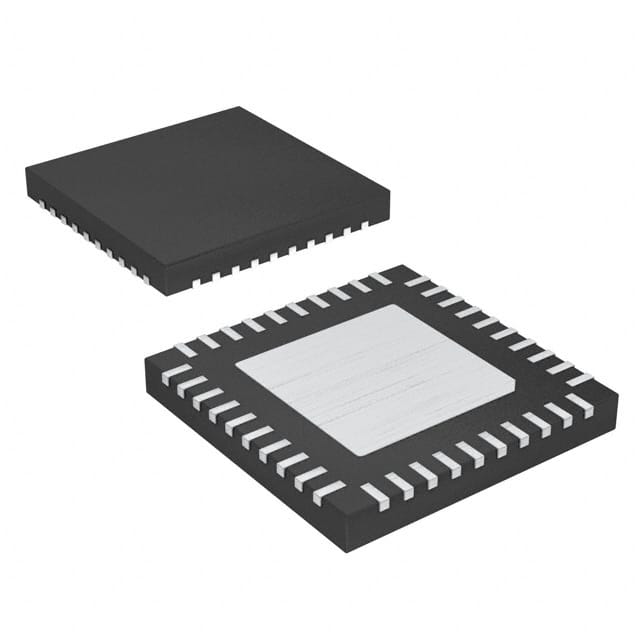
-
SN65DP159RSBR
Texas Instruments
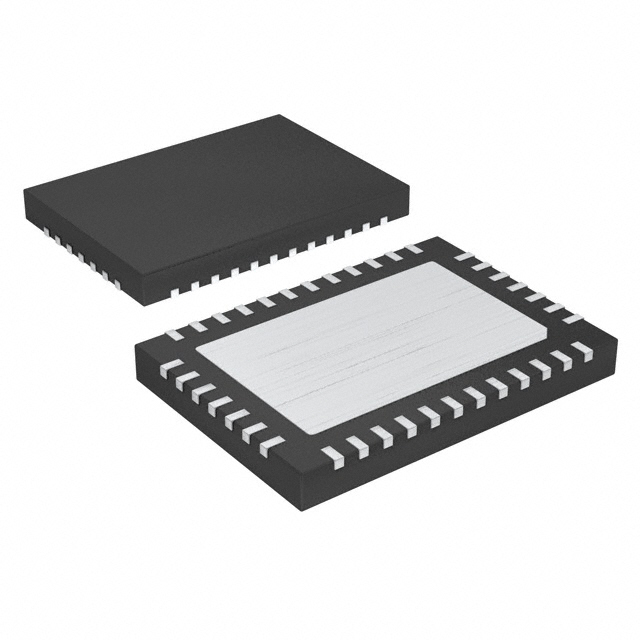
-
SN65DP141RLJR
Texas Instruments
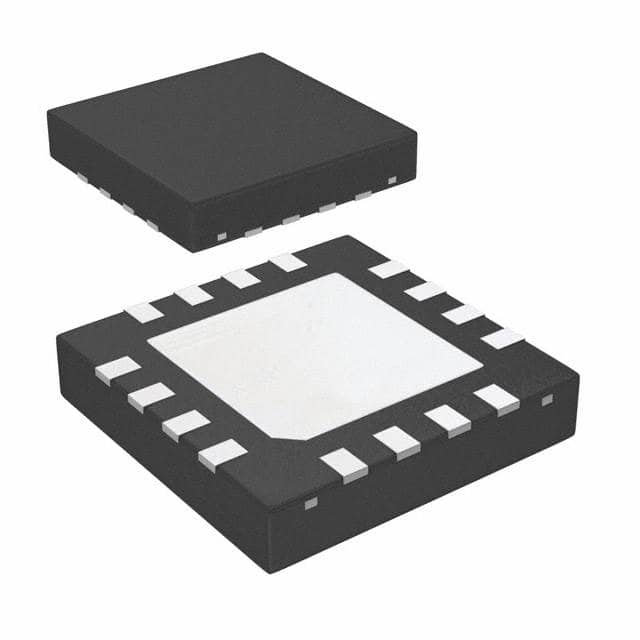
-
LMH0303SQ/NOPB
Texas Instruments
Tech Hub
Comparator circuit design covering voltage thresholds, input limits, open-collector outputs, LM393 wiring, op-amp differences, hysteresis, timing, window detection and practical fault diagnosis.
Schmitt triggers use separate rising and falling thresholds to stabilize slow or noisy signals. This guide covers hysteresis, 74HC14 and 74HCT14 selection, comparator calculations, RC oscillators and p…
Counterfeit components can hide behind convincing markings and passing basic function tests. This engineering reference covers source traceability, external inspection, X-ray, XRF, electrical testing, …
A practical engineering and sourcing framework covering lifecycle verification, lifetime-buy calculations, replacement qualification, supplier checks and counterfeit-risk controls.
TTL and CMOS logic families differ in thresholds, loading, output drive, power and timing. This engineering guide compares 74HC and 74HCT, calculates noise margins and checks 3.3 V/5 V compatibility.
A practical engineering guide to 3.3V and 5V logic compatibility, input thresholds, resistor dividers, translator ICs, MOSFET level shifting, I2C pull-ups, timing limits and power-sequencing risks.
The 74HC595 uses push-pull logic outputs, while the TPIC6B595 uses 50 V open-drain DMOS sinks for higher-power loads. This guide compares timing, current limits, 3.3 V interfacing, load wiring, thermal…
The 74HC595 converts serial data into eight stable parallel outputs. This guide covers pin functions, shift and storage timing, OE and MR behavior, drive-current limits, cascading, voltage compatibilit…
A technical comparison of level-sensitive latches and edge-triggered flip-flops, covering timing windows, setup and hold limits, master–slave operation, time borrowing, race-through, HDL inference and…
A D latch stores one bit while Enable controls when data can pass. This reference covers gate-level operation, truth tables, transparency, setup and hold timing, LE versus OE, common ICs and practical …